
How Do Airline Alliances Work
On June 2, 2026 by pubman
How Do Airline Alliances Work — Earn Miles, Get Lounges & Book Partner Awards
Affiliate disclosure: This article may contain affiliate links. Recommendations are independent and editorially driven.
TL;DR: How Airline Alliances Benefit You
- Expanded Reach: Alliances link airline networks, offering a wider array of destinations and seamless connections on a single itinerary, even with multiple carriers.
- Unified Loyalty: Earn and redeem miles or points across all member airlines within an alliance, boosting your loyalty program benefits and award travel opportunities.
- Reciprocal Perks: Elite status with one alliance member grants benefits like lounge access, priority boarding, extra baggage, and faster security across the entire alliance network.
- Credit Card Synergy: Maximize your credit card rewards by transferring points to alliance-affiliated airline programs, unlocking aspirational international award flights.
- Strategic Planning: Understanding alliances allows savvy travelers to optimize flight choices, status qualification, and award bookings for unparalleled value.
Understanding the Core Concept: How Do Airline Alliances Work?
At their core, airline alliances are strategic partnerships between multiple airlines to offer a more comprehensive global network and enhanced benefits to passengers. In an increasingly competitive and interconnected world, no single airline can serve every conceivable route or offer consistent premium services across all regions. This is precisely how do airline alliances work to bridge those gaps, creating a symbiotic relationship that benefits both the carriers and, more importantly, the end traveler.
Imagine planning a trip from a regional airport in the United States to a remote city in Southeast Asia. Without alliances, you might need to book separate tickets on different airlines, check and re-check your bags multiple times, and navigate complex transfer procedures. Airline alliances streamline this process. By joining forces, member airlines can sell seats on each other’s flights, allowing passengers to book a single itinerary from origin to destination, often with consistent baggage policies, synchronized schedules, and shared loyalty program benefits.
The concept extends far beyond simple route sharing. Alliances aim to create a seamless travel experience, offering benefits that mirror those you’d receive flying exclusively with your preferred carrier. This includes earning and redeeming miles across partner airlines, enjoying lounge access in various airports worldwide, and receiving priority services like expedited check-in and boarding, regardless of which alliance member operates your flight.
For the airlines themselves, alliances offer significant operational and financial advantages. They can expand their global reach without the prohibitive costs of acquiring new aircraft, opening new routes, or establishing new ground operations in distant markets. Alliances foster cost-sharing, optimize flight schedules, and allow airlines to pool resources for maintenance, IT systems, and marketing. This collaboration enables them to compete more effectively against other large carriers and, indeed, other alliances.
For goldpoints readers, understanding the intricacies of these alliances is paramount. It’s the key to unlocking the full potential of your credit card rewards and loyalty points. Knowing which airlines belong to which alliance, and how their partnerships function, directly impacts your ability to earn status, redeem miles for aspirational awards, and enjoy premium travel experiences around the globe.
The Genesis of Global Networks
The idea of airlines collaborating dates back decades, but the modern airline alliance structure as we know it began to solidify in the late 20th century. Deregulation of the airline industry in many countries opened doors for greater competition but also highlighted the need for carriers to maintain a global footprint. Airlines realized that by working together, they could offer a more compelling product to travelers seeking international connections and a unified loyalty experience.
Star Alliance, founded in 1997, was the pioneering force, demonstrating the immense potential of a truly global network. Its success quickly spurred the creation of Oneworld (1999) and SkyTeam (2000), cementing the “Big Three” alliances that dominate the international aviation landscape today. These alliances were born from a need to:
- Expand Reach Cost-Effectively: Rather than launching expensive new routes, airlines could simply partner with carriers already serving those regions.
- Retain Business Travelers: Corporate clients often require extensive global coverage. Alliances allowed airlines to offer “one-stop shop” solutions.
- Enhance Passenger Experience: From shared lounges to coordinated schedules and reciprocal loyalty benefits, alliances aimed to make international travel smoother.
- Optimize Operations: Joint purchasing, shared maintenance facilities, and coordinated flight planning could lead to efficiencies.
The journey has not been without its challenges, including antitrust scrutiny, varying national regulations, and the complexities of integrating diverse corporate cultures. However, the benefits have largely outweighed the difficulties, leading to the sophisticated global networks we see in 2026.
Beyond Simple Codeshares
While codesharing is a fundamental component of airline alliances, the relationship extends much deeper. A simple codeshare agreement, where one airline sells seats on another airline’s flight under its own flight number, can exist independently of an alliance. However, within an alliance, codeshares are just one piece of a much larger puzzle designed to create a cohesive travel ecosystem. Alliance members engage in:
- Joint Marketing and Branding: Alliances often have unified branding, marketing campaigns, and shared digital platforms, presenting a consistent image to customers.
- Integrated IT Systems: While challenging, efforts are made to integrate booking, check-in, and baggage handling systems to ensure seamless transfers and consistent service.
- Reciprocal Loyalty Program Benefits: This is a major draw for frequent flyers. Earning and redeeming miles, and enjoying elite status perks, across all member airlines is a cornerstone of the alliance model.
- Coordinated Scheduling: Member airlines often align their schedules to facilitate easy connections between flights, reducing layover times for passengers.
- Shared Airport Facilities: This can include co-located check-in counters, shared lounges, and coordinated ground staff services, particularly at major hubs.
Understanding that alliances are more than just a collection of codeshares helps you appreciate the full scope of benefits. It’s about a commitment to a common standard of service and a unified approach to global travel, all designed to enhance your journey.
The Big Three: Star Alliance, Oneworld, and SkyTeam Explained
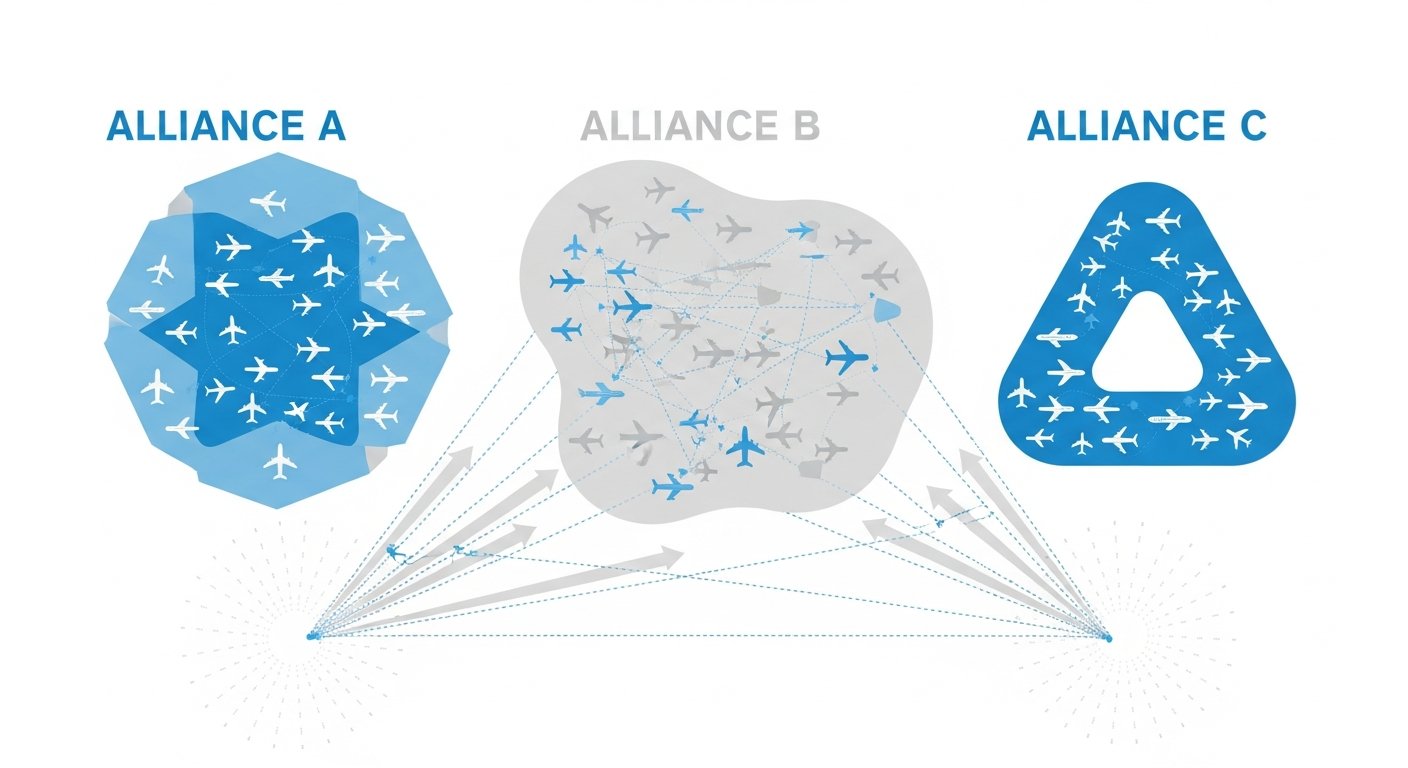
The world of airline alliances is predominantly defined by three major global groupings: Star Alliance, Oneworld, and SkyTeam. These “Big Three” represent the vast majority of international air travel capacity and connect hundreds of destinations worldwide. Each alliance has its own distinct personality, primary hubs, and a roster of member airlines that influence which credit card points and loyalty programs are most valuable for specific travel goals.
Knowing which alliance an airline belongs to is the first step in unlocking the full potential of your goldpoints strategy. It dictates where you can earn and redeem miles, which lounges you can access, and which elite status benefits will apply when you fly a partner airline.
Star Alliance: The Largest Network
As the world’s first and largest airline alliance, Star Alliance boasts an unparalleled global reach. Founded in 1997, it pioneered the alliance concept and continues to expand its network, offering connections to over 1,200 airports in 184 countries in 2026. With 26 member airlines, it represents a formidable force in the aviation industry.
Key Characteristics:
- Extensive Coverage: Its sheer size means it offers incredible route options, particularly across Europe, Asia, and North America.
- Diverse Membership: From major flag carriers to regional specialists, its members offer a broad range of service types.
- Strong Presence in Key Hubs: Frankfurt (Lufthansa), Istanbul (Turkish Airlines), Houston (United), Singapore (Singapore Airlines), and Zurich (SWISS) are just a few of its critical hubs.
Prominent Member Airlines Include:
- United Airlines (USA)
- Lufthansa (Germany)
- Turkish Airlines (Turkey)
- Singapore Airlines (Singapore)
- EVA Air (Taiwan)
- Air Canada (Canada)
- ANA (Japan)
- SWISS (Switzerland)
- Thai Airways (Thailand)
- Ethiopian Airlines (Ethiopia)
- Copa Airlines (Panama)
For goldpoints members, Star Alliance partners are often excellent choices for redeeming miles from programs like United MileagePlus (Chase Ultimate Rewards transfer partner) or Aeroplan (Chase, American Express, Capital One transfer partner). Its vast network provides extensive options for award travel.
Oneworld: A Premium-Focused Collective
Established in 1999, Oneworld positions itself as an alliance focused on premium travel and connectivity. While slightly smaller than Star Alliance in terms of member count (13 airlines) and overall destinations, it prides itself on high-quality service and a strong presence in key business and leisure markets. Oneworld serves over 900 destinations in more than 170 territories.
Key Characteristics:
- Premium Focus: Often associated with strong business and first-class products and excellent lounge networks.
- Strong Transatlantic & Transpacific Routes: Critical for travelers between North America, Europe, and Asia-Pacific.
- Key Hubs: London Heathrow (British Airways), Dallas/Fort Worth (American Airlines), Tokyo Narita/Haneda (Japan Airlines), Doha (Qatar Airways), and Sydney (Qantas).
Prominent Member Airlines Include:
- American Airlines (USA)
- British Airways (UK)
- Cathay Pacific (Hong Kong)
- Japan Airlines (Japan)
- Qantas (Australia)
- Qatar Airways (Qatar)
- Finnair (Finland)
- Iberia (Spain)
- Malaysia Airlines (Malaysia)
- Royal Jordanian (Jordan)
Oneworld is a favorite for goldpoints members leveraging programs like American Airlines AAdvantage (no direct transfer partners, but Barclaycard/Citi co-branded cards) or British Airways Avios (Chase, Amex, Capital One transfer partner). The ability to combine flights across these premium carriers makes it attractive for luxury award redemptions.
SkyTeam: Connecting Continents
Formed in 2000, SkyTeam focuses on providing a comprehensive global network with an emphasis on seamless connections and customer service. With 19 member airlines, it connects over 1,000 destinations in 170+ countries, making it a powerful force, particularly with its strong presence in Europe, North America, and Greater China.
Key Characteristics:
- Global Reach: Excellent connectivity across continents, with significant routes in emerging markets.
- Strong Cargo Operations: Many SkyTeam members also have robust cargo divisions, leveraging their network for freight.
- Key Hubs: Amsterdam (KLM), Paris Charles de Gaulle (Air France), Atlanta (Delta), Seoul Incheon (Korean Air), Mexico City (Aeromexico), and Rome (ITA Airways).
Prominent Member Airlines Include:
- Delta Air Lines (USA)
- Air France (France)
- KLM (Netherlands)
- Korean Air (South Korea)
- Aeromexico (Mexico)
- China Eastern (China)
- Saudia (Saudi Arabia)
- ITA Airways (Italy)
- Vietnam Airlines (Vietnam)
For goldpoints enthusiasts, SkyTeam offers excellent opportunities through programs like Delta SkyMiles (American Express transfer partner) or Air France/KLM Flying Blue (Chase, Amex, Capital One, Citi transfer partner). Its breadth of partners in Asia and Europe makes it ideal for diverse travel plans.
[INLINE IMAGE 1: place after second H2 | alt=”how do airline alliances work concept illustration”]
Unpacking the Mechanics: Codeshares, Interline Agreements, and Joint Ventures
To truly understand how do airline alliances work, it’s essential to delve into the operational agreements that bind member airlines together. These aren’t just informal friendships; they are legally binding contracts that allow airlines to present a unified front to the passenger, even when the underlying operations are complex. The primary mechanisms are codeshare agreements, interline agreements, and increasingly, deeper joint ventures.
These agreements facilitate the seamless experience travelers expect, from booking a single ticket for a multi-leg international journey to ensuring baggage is transferred automatically between different carriers. For the savvy goldpoints user, comprehending these mechanisms can illuminate strategies for earning maximum miles and optimizing award redemptions, as the rules can sometimes differ based on the specific type of partnership in play.
Codeshare Agreements: The Shared Flight Number
Codesharing is perhaps the most visible and widely recognized form of airline cooperation. In a codeshare agreement, one airline (the “operating carrier”) performs the flight, while another airline (the “marketing carrier”) sells seats on that same flight under its own flight number. For example, you might book a flight from New York to London on United Airlines, but a segment of that journey, perhaps from London to Edinburgh, is operated by Lufthansa under a United flight number.
How it Works:
- Expanded Network: Airlines can offer routes they don’t physically fly, significantly expanding their destination network without investing in new aircraft or staff.
- Seamless Booking: Travelers can book a single itinerary with one airline, even if multiple airlines operate different legs of the journey.
- Streamlined Ticketing: All segments are typically on one ticket, simplifying changes or cancellations.
- Loyalty Benefits: You typically earn and redeem miles with the marketing carrier, or sometimes the operating carrier, depending on the specific agreement and your loyalty program rules. This is where understanding your program’s earning charts for partners becomes crucial.
Within an alliance, codesharing is a standard practice, allowing alliance members to integrate their schedules and offer more connection possibilities. It ensures that when you search for a flight on your preferred alliance airline, you see a broader range of options that include flights operated by their partners.
Interline Agreements: Seamless Transfers
While codeshares allow airlines to sell seats on each other’s flights, interline agreements address the logistical challenge of transferring passengers and their baggage between different airlines. An interline agreement means that two airlines have an arrangement to handle tickets and baggage for itineraries that involve travel on both carriers.
Key Aspects:
- Baggage Transfer: The most significant benefit for travelers. With an interline agreement, you can often check your bags at your origin, and they will be transferred automatically to your connecting flight, even if it’s on a different airline, without you having to re-claim and re-check them.
- Single Ticket: Although you might have different flight numbers from different airlines, if booked on a single ticket, the interline agreement ensures your reservation is recognized across carriers.
- Protection in Delays: In some cases, if you miss a connection due to a delay on the first flight, the operating airline might rebook you on another interline partner.
All alliance members typically have comprehensive interline agreements with each other. This is fundamental to creating the “seamless journey” that alliances promise. Without it, the convenience of codesharing would be severely undermined by the hassle of manual baggage handling at every transfer point. However, it’s worth noting that non-alliance airlines can also have bilateral interline agreements.
Joint Ventures: Deeper Collaboration
Joint ventures (JVs) represent the deepest level of cooperation between airlines, going significantly beyond codeshares and interline agreements. In a joint venture, airlines essentially operate a specific set of routes or a market as if they were a single entity. They often coordinate scheduling, pricing, revenue sharing, and even sales and marketing efforts for those specific routes.
Characteristics of JVs:
- Antitrust Immunity: JVs typically require specific regulatory approval, often granted with antitrust immunity, allowing airlines to coordinate prices and capacity in ways that would otherwise be considered anti-competitive.
- Revenue Sharing: Instead of simply selling seats on each other’s flights, the airlines pool revenue and costs from the JV routes, sharing profits (or losses) according to a pre-defined formula.
- Integrated Operations: They coordinate schedules, sometimes even using a common fleet or shared ground services for the JV flights.
- Enhanced Customer Experience: JVs aim for complete consistency in service, branding, and loyalty program integration across the specific routes covered.
Many of the most lucrative transatlantic and transpacific routes are operated under joint ventures within the major alliances. For example, American Airlines, British Airways, and Iberia (all Oneworld members) operate a highly integrated joint venture across the Atlantic. Similarly, United and Lufthansa (Star Alliance) have a significant transatlantic JV. These deeper partnerships offer the most seamless experience for passengers on those routes and maximize the benefits of earning and redeeming miles, as programs are typically fully integrated for these JV flights.
Understanding the difference between these types of agreements can be subtle but important. While an interline agreement ensures your bags follow you, a codeshare expands your booking options, and a joint venture offers the most harmonized experience, especially for elite status recognition and mileage earning on specific routes. For a goldpoints member, prioritizing travel on JV routes can often yield the best loyalty program benefits and the most straightforward travel experience.
How Airline Alliances Benefit Travelers and Frequent Flyers
For the average traveler, and especially for frequent flyers and those adept at maximizing credit card rewards, airline alliances offer a wealth of tangible benefits. They transform what could be a fragmented and complicated global journey into a relatively smooth and rewarding experience. This section explores the primary ways in which understanding how do airline alliances work can directly enhance your travel and points-and-miles strategy.
From extending your reach to remote corners of the world to unlocking exclusive airport lounges, alliances are designed to make your travel more convenient, more comfortable, and ultimately, more valuable. For goldpoints readers, these benefits translate directly into better award redemptions, easier elite status qualification, and a more luxurious travel experience funded by your hard-earned points.
Expanded Route Networks and Connectivity
One of the most immediate and impactful benefits of airline alliances is the dramatically expanded route network they collectively offer. No single airline, no matter how large, can serve every destination in the world with direct flights. By partnering, airlines can effectively “share” their networks, providing travelers with an unparalleled range of options.
- Global Reach: Need to fly from a smaller city in North America to a remote town in Scandinavia? An alliance allows you to book a single itinerary, for example, on United Airlines connecting to SAS in Copenhagen, without the hassle of separate bookings or juggling different airlines.
- Seamless Connections: Alliances strive to coordinate schedules, making connections between partner flights smoother. This reduces layover times and the stress of international transfers.
- Convenience of One Ticket: Booking a multi-leg journey with a single ticket, even if operated by several alliance members, simplifies the entire process. If delays occur, the operating airline is often responsible for rebooking you on another alliance partner to your final destination.
This extended reach is particularly valuable for complex international itineraries or for reaching less-traveled destinations that might only be accessible via smaller, regional alliance partners. It means your journey to that exotic bucket-list location just became a whole lot easier to plan and execute.
Find out how to maximize award availability across alliance partners with our comprehensive guide.
Earning and Redeeming Miles Across Partners
This is arguably the most compelling benefit for goldpoints members: the ability to earn and redeem loyalty currency across an entire alliance. Your miles or points are not confined to a single airline; they become a passport to travel on dozens of partner carriers.
- Accumulate Miles Faster: Whether you fly on American Airlines, British Airways, or Qatar Airways, if they are all Oneworld members, you can often choose to credit your miles to your preferred Oneworld loyalty program (e.g., American AAdvantage). This helps you consolidate your earnings and reach elite status or award thresholds more quickly.
- Vast Redemption Opportunities: The real power lies in redemption. With miles in, say, United MileagePlus, you can book award flights not just on United but also on Lufthansa, Turkish Airlines, ANA, Singapore Airlines, and many other Star Alliance partners. This opens up a world of possibilities for aspirational award travel, from First Class suites to round-the-world itineraries.
- Flexibility with Credit Card Transfers: Many premium credit card rewards programs (like Chase Ultimate Rewards, American Express Membership Rewards, Capital One Venture Rewards) allow you to transfer points to specific airline loyalty programs. By understanding which airline programs belong to which alliance, you can strategically transfer points to the program that offers the best award chart for your desired alliance partner flight. For example, transferring Chase points to United can unlock Star Alliance awards, while transferring to British Airways can unlock Oneworld awards.
The key here is to understand the earning and redemption rules of each specific loyalty program within an alliance, as they can vary. Some programs offer better redemption rates for certain regions or cabins on partner airlines, creating “sweet spots” that savvy travelers actively seek out. Our guide to the best award redemptions dives deeper into these strategies.
Reciprocal Elite Status Benefits (Lounge Access, Priority Services)
Another monumental benefit for frequent flyers is the reciprocity of elite status across alliance members. Achieving elite status with one airline (e.g., Delta SkyMiles Platinum Medallion) often grants you equivalent benefits when flying with any other airline within the same alliance (e.g., Air France, KLM, Korean Air).
- Global Lounge Access: This is a major perk. As an elite member, you gain access to a vast network of airport lounges worldwide, regardless of which alliance airline operates the lounge or your flight. For example, Star Alliance Gold members can access hundreds of Star Alliance-branded or member-airline lounges globally, providing a quiet place to relax, work, or enjoy complimentary food and beverages.
- Priority Services:
- Priority Check-in: Use dedicated elite check-in counters, saving time.
- Priority Boarding: Be among the first to board, securing overhead bin space.
- Priority Baggage Handling: Your checked bags are often tagged with priority labels, meaning they’ll be among the first to arrive on the carousel.
- Priority Security Lanes: In some airports, elite status grants access to faster security lines.
- Extra Baggage Allowance: Elite members typically receive a higher complimentary baggage allowance, saving on fees.
- Preferred Seating: Access to better seats (e.g., exit rows, bulkhead) at the time of booking or check-in.
These reciprocal benefits significantly enhance the comfort and efficiency of travel, especially for business travelers or those on long-haul international flights. Imagine flying economy on a partner airline but still enjoying the quiet of a lounge, the convenience of priority boarding, and the peace of mind of extra baggage allowance – all thanks to your status earned with another alliance member. It’s a key reason why many travelers aim to achieve status within a specific alliance.
[INLINE IMAGE 2: place after fourth H2 | alt=”how do airline alliances work comparison illustration”]
Maximizing Your Goldpoints: Credit Card Rewards and Alliance Strategy
For readers of goldpoints, the strategic intersection of credit card rewards and airline alliances is where the true magic happens. Understanding how do airline alliances work is not just academic; it’s a practical roadmap to unlocking outsized value from your credit card points, enabling aspirational travel experiences that might otherwise be out of reach. Your credit card points are a powerful currency, and alliances multiply their utility exponentially.
This section will guide you through the process of choosing the right credit cards, strategically transferring points to alliance-affiliated loyalty programs, and identifying sweet spots for award redemptions that leverage the combined power of airline networks.
Strategic Credit Card Choices for Alliance Perks
The first step in leveraging alliances with your goldpoints is to select credit cards that earn flexible, transferable points. These cards are the bedrock of a successful points-and-miles strategy because they don’t tie you to a single airline. Instead, they give you the freedom to choose which alliance, and which specific airline program within that alliance, best suits your travel goals.
Top Flexible Points Programs & Their Alliance Reach:
- Chase Ultimate Rewards: Offers direct transfers to Star Alliance (United), Oneworld (British Airways, Iberia), and SkyTeam (Air France/KLM, Virgin Atlantic which partners with Delta). This makes Ultimate Rewards incredibly versatile.
- American Express Membership Rewards: Strong partners across all three alliances. Transfers to Star Alliance (Air Canada Aeroplan, Singapore Airlines KrisFlyer), Oneworld (British Airways Avios, Cathay Pacific Asia Miles, Qantas Frequent Flyer), and SkyTeam (Delta SkyMiles, Air France/KLM Flying Blue, ANA Mileage Club which has Star Alliance partners).
- Capital One Venture Rewards: Provides transfers to Star Alliance (Air Canada Aeroplan, Turkish Airlines Miles&Smiles, EVA Air Infinity MileageLands), Oneworld (British Airways Avios, Cathay Pacific Asia Miles, Qantas Frequent Flyer), and SkyTeam (Air France/KLM Flying Blue, Avianca LifeMiles).
- Citi ThankYou Points: Also offers a robust set of transfer partners, including Star Alliance (EVA Air Infinity MileageLands, Turkish Airlines Miles&Smiles, Singapore Airlines KrisFlyer), Oneworld (Cathay Pacific Asia Miles, Qantas Frequent Flyer, Qatar Airways Privilege Club which partners with Oneworld), and SkyTeam (Air France/KLM Flying Blue, Virgin Atlantic Flying Club).
When selecting a card, consider your primary travel destinations, your preferred airlines, and the alliance affiliations of those airlines. For instance, if you frequently fly to Europe, a card that transfers to Air France/KLM Flying Blue (SkyTeam) or British Airways Avios (Oneworld) could be highly valuable for booking partner flights across the Atlantic. If your focus is Asia, a card that transfers to Aeroplan or Singapore Airlines (Star Alliance) could be ideal for accessing their extensive networks.
Transferring Points to Alliance-Partner Programs
Once you’ve earned a substantial balance of flexible points, the next critical step is knowing how and when to transfer them to an airline loyalty program that is part of your desired alliance. This is where strategic point transfers come into play, allowing you to leverage alliance partnerships for maximum value.
Key Considerations for Transfers:
- Identify Your Target Award: Before transferring, find the specific award flight you want on an alliance partner’s website. Use tools like United.com (for Star Alliance), Britishairways.com (for Oneworld), or Airfrance.us (for SkyTeam) to search for availability.
- Know the Transfer Ratios and Times: Most flexible points programs transfer at a 1:1 ratio, but some can vary. Crucially, transfer times can range from instant to several business days. Always verify this before initiating a transfer, especially for time-sensitive award bookings.
- Avoid Speculative Transfers: Only transfer points when you have a confirmed award booking in mind and have verified availability. Once points are transferred to an airline program, they generally cannot be transferred back.
- Leverage Transfer Bonuses: Credit card programs frequently offer transfer bonuses (e.g., 20-30% extra miles) to specific airline partners. Timing your transfers with these promotions can significantly increase the value of your points.
For example, if you want to fly business class on ANA (Star Alliance) to Japan, you might transfer Chase Ultimate Rewards to United MileagePlus, or American Express Membership Rewards to Air Canada Aeroplan, and then use those miles to book the ANA flight. The alliance structure makes this indirect redemption possible and incredibly powerful.
Leveraging Alliance Status for Award Travel Sweet Spots
Beyond simply transferring points, understanding alliance dynamics allows you to uncover “sweet spots”—award redemptions that offer exceptional
How Do Airline Alliances Work — Earn Miles, Get Lounges & Book Partner Awards
Affiliate disclosure: This article may contain affiliate links. Recommendations are independent and editorially driven.
TL;DR: How Airline Alliances Benefit You
- Expanded Reach: Alliances link airline networks, offering a wider array of destinations and seamless connections on a single itinerary, even with multiple carriers.
- Unified Loyalty: Earn and redeem miles or points across all member airlines within an alliance, boosting your loyalty program benefits and award travel opportunities.
- Reciprocal Perks: Elite status with one alliance member grants benefits like lounge access, priority boarding, extra baggage, and faster security across the entire alliance network.
- Credit Card Synergy: Maximize your credit card rewards by transferring points to alliance-affiliated airline programs, unlocking aspirational international award flights.
- Strategic Planning: Understanding alliances allows savvy travelers to optimize flight choices, status qualification, and award bookings for unparalleled value.
Understanding the Core Concept: How Do Airline Alliances Work?
At their core, airline alliances are strategic partnerships between multiple airlines to offer a more comprehensive global network and enhanced benefits to passengers. In an increasingly competitive and interconnected world, no single airline can serve every conceivable route or offer consistent premium services across all regions. This is precisely how do airline alliances work to bridge those gaps, creating a symbiotic relationship that benefits both the carriers and, more importantly, the end traveler.
Imagine planning a trip from a regional airport in the United States to a remote city in Southeast Asia. Without alliances, you might need to book separate tickets on different airlines, check and re-check your bags multiple times, and navigate complex transfer procedures. Airline alliances streamline this process. By joining forces, member airlines can sell seats on each other’s flights, allowing passengers to book a single itinerary from origin to destination, often with consistent baggage policies, synchronized schedules, and shared loyalty program benefits.
The concept extends far beyond simple route sharing. Alliances aim to create a seamless travel experience, offering benefits that mirror those you’d receive flying exclusively with your preferred carrier. This includes earning and redeeming miles across partner airlines, enjoying lounge access in various airports worldwide, and receiving priority services like expedited check-in and boarding, regardless of which alliance member operates your flight.
For the airlines themselves, alliances offer significant operational and financial advantages. They can expand their global reach without the prohibitive costs of acquiring new aircraft, opening new routes, or establishing new ground operations in distant markets. Alliances foster cost-sharing, optimize flight schedules, and allow airlines to pool resources for maintenance, IT systems, and marketing. This collaboration enables them to compete more effectively against other large carriers and, indeed, other alliances.
For goldpoints readers, understanding the intricacies of these alliances is paramount. It’s the key to unlocking the full potential of your credit card rewards and loyalty points. Knowing which airlines belong to which alliance, and how their partnerships function, directly impacts your ability to earn status, redeem miles for aspirational awards, and enjoy premium travel experiences around the globe.
The Genesis of Global Networks
The idea of airlines collaborating dates back decades, but the modern airline alliance structure as we know it began to solidify in the late 20th century. Deregulation of the airline industry in many countries opened doors for greater competition but also highlighted the need for carriers to maintain a global footprint. Airlines realized that by working together, they could offer a more compelling product to travelers seeking international connections and a unified loyalty experience.
Star Alliance, founded in 1997, was the pioneering force, demonstrating the immense potential of a truly global network. Its success quickly spurred the creation of Oneworld (1999) and SkyTeam (2000), cementing the “Big Three” alliances that dominate the international aviation landscape today. These alliances were born from a need to:
- Expand Reach Cost-Effectively: Rather than launching expensive new routes, airlines could simply partner with carriers already serving those regions.
- Retain Business Travelers: Corporate clients often require extensive global coverage. Alliances allowed airlines to offer “one-stop shop” solutions.
- Enhance Passenger Experience: From shared lounges to coordinated schedules and reciprocal loyalty benefits, alliances aimed to make international travel smoother.
- Optimize Operations: Joint purchasing, shared maintenance facilities, and coordinated flight planning could lead to efficiencies.
The journey has not been without its challenges, including antitrust scrutiny, varying national regulations, and the complexities of integrating diverse corporate cultures. However, the benefits have largely outweighed the difficulties, leading to the sophisticated global networks we see in 2026.
Beyond Simple Codeshares
While codesharing is a fundamental component of airline alliances, the relationship extends much deeper. A simple codeshare agreement, where one airline sells seats on another airline’s flight under its own flight number, can exist independently of an alliance. However, within an alliance, codeshares are just one piece of a much larger puzzle designed to create a cohesive travel ecosystem. Alliance members engage in:
- Joint Marketing and Branding: Alliances often have unified branding, marketing campaigns, and shared digital platforms, presenting a consistent image to customers.
- Integrated IT Systems: While challenging, efforts are made to integrate booking, check-in, and baggage handling systems to ensure seamless transfers and consistent service.
- Reciprocal Loyalty Program Benefits: This is a major draw for frequent flyers. Earning and redeeming miles, and enjoying elite status perks, across all member airlines is a cornerstone of the alliance model.
- Coordinated Scheduling: Member airlines often align their schedules to facilitate easy connections between flights, reducing layover times for passengers.
- Shared Airport Facilities: This can include co-located check-in counters, shared lounges, and coordinated ground staff services, particularly at major hubs.
Understanding that alliances are more than just a collection of codeshares helps you appreciate the full scope of benefits. It’s about a commitment to a common standard of service and a unified approach to global travel, all designed to enhance your journey.
The Big Three: Star Alliance, Oneworld, and SkyTeam Explained
The world of airline alliances is predominantly defined by three major global groupings: Star Alliance, Oneworld, and SkyTeam. These “Big Three” represent the vast majority of international air travel capacity and connect hundreds of destinations worldwide. Each alliance has its own distinct personality, primary hubs, and a roster of member airlines that influence which credit card points and loyalty programs are most valuable for specific travel goals.
Knowing which alliance an airline belongs to is the first step in unlocking the full potential of your goldpoints strategy. It dictates where you can earn and redeem miles, which lounges you can access, and which elite status benefits will apply when you fly a partner airline.
Star Alliance: The Largest Network
As the world’s first and largest airline alliance, Star Alliance boasts an unparalleled global reach. Founded in 1997, it pioneered the alliance concept and continues to expand its network, offering connections to over 1,200 airports in 184 countries in 2026. With 26 member airlines, it represents a formidable force in the aviation industry.
Key Characteristics:
- Extensive Coverage: Its sheer size means it offers incredible route options, particularly across Europe, Asia, and North America.
- Diverse Membership: From major flag carriers to regional specialists, its members offer a broad range of service types.
- Strong Presence in Key Hubs: Frankfurt (Lufthansa), Istanbul (Turkish Airlines), Houston (United), Singapore (Singapore Airlines), and Zurich (SWISS) are just a few of its critical hubs.
Prominent Member Airlines Include:
- United Airlines (USA)
- Lufthansa (Germany)
- Turkish Airlines (Turkey)
- Singapore Airlines (Singapore)
- EVA Air (Taiwan)
- Air Canada (Canada)
- ANA (Japan)
- SWISS (Switzerland)
- Thai Airways (Thailand)
- Ethiopian Airlines (Ethiopia)
- Copa Airlines (Panama)
For goldpoints members, Star Alliance partners are often excellent choices for redeeming miles from programs like United MileagePlus (Chase Ultimate Rewards transfer partner) or Aeroplan (Chase, American Express, Capital One transfer partner). Its vast network provides extensive options for award travel.
Oneworld: A Premium-Focused Collective
Established in 1999, Oneworld positions itself as an alliance focused on premium travel and connectivity. While slightly smaller than Star Alliance in terms of member count (13 airlines) and overall destinations, it prides itself on high-quality service and a strong presence in key business and leisure markets. Oneworld serves over 900 destinations in more than 170 territories.
Key Characteristics:
- Premium Focus: Often associated with strong business and first-class products and excellent lounge networks.
- Strong Transatlantic & Transpacific Routes: Critical for travelers between North America, Europe, and Asia-Pacific.
- Key Hubs: London Heathrow (British Airways), Dallas/Fort Worth (American Airlines), Tokyo Narita/Haneda (Japan Airlines), Doha (Qatar Airways), and Sydney (Qantas).
Prominent Member Airlines Include:
- American Airlines (USA)
- British Airways (UK)
- Cathay Pacific (Hong Kong)
- Japan Airlines (Japan)
- Qantas (Australia)
- Qatar Airways (Qatar)
- Finnair (Finland)
- Iberia (Spain)
- Malaysia Airlines (Malaysia)
- Royal Jordanian (Jordan)
Oneworld is a favorite for goldpoints members leveraging programs like American Airlines AAdvantage (no direct transfer partners, but Barclaycard/Citi co-branded cards) or British Airways Avios (Chase, Amex, Capital One transfer partner). The ability to combine flights across these premium carriers makes it attractive for luxury award redemptions.
SkyTeam: Connecting Continents
Formed in 2000, SkyTeam focuses on providing a comprehensive global network with an emphasis on seamless connections and customer service. With 19 member airlines, it connects over 1,000 destinations in 170+ countries, making it a powerful force, particularly with its strong presence in Europe, North America, and Greater China.
Key Characteristics:
- Global Reach: Excellent connectivity across continents, with significant routes in emerging markets.
- Strong Cargo Operations: Many SkyTeam members also have robust cargo divisions, leveraging their network for freight.
- Key Hubs: Amsterdam (KLM), Paris Charles de Gaulle (Air France), Atlanta (Delta), Seoul Incheon (Korean Air), Mexico City (Aeromexico), and Rome (ITA Airways).
Prominent Member Airlines Include:
- Delta Air Lines (USA)
- Air France (France)
- KLM (Netherlands)
- Korean Air (South Korea)
- Aeromexico (Mexico)
- China Eastern (China)
- Saudia (Saudi Arabia)
- ITA Airways (Italy)
- Vietnam Airlines (Vietnam)
For goldpoints enthusiasts, SkyTeam offers excellent opportunities through programs like Delta SkyMiles (American Express transfer partner) or Air France/KLM Flying Blue (Chase, Amex, Capital One, Citi transfer partner). Its breadth of partners in Asia and Europe makes it ideal for diverse travel plans.
[INLINE IMAGE 1: place after second H2 | alt=”how do airline alliances work concept illustration”]
Unpacking the Mechanics: Codeshares, Interline Agreements, and Joint Ventures
To truly understand how do airline alliances work, it’s essential to delve into the operational agreements that bind member airlines together. These aren’t just informal friendships; they are legally binding contracts that allow airlines to present a unified front to the passenger, even when the underlying operations are complex. The primary mechanisms are codeshare agreements, interline agreements, and increasingly, deeper joint ventures.
These agreements facilitate the seamless experience travelers expect, from booking a single ticket for a multi-leg international journey to ensuring baggage is transferred automatically between different carriers. For the savvy goldpoints user, comprehending these mechanisms can illuminate strategies for earning maximum miles and optimizing award redemptions, as the rules can sometimes differ based on the specific type of partnership in play.
Codeshare Agreements: The Shared Flight Number
Codesharing is perhaps the most visible and widely recognized form of airline cooperation. In a codeshare agreement, one airline (the “operating carrier”) performs the flight, while another airline (the “marketing carrier”) sells seats on that same flight under its own flight number. For example, you might book a flight from New York to London on United Airlines, but a segment of that journey, perhaps from London to Edinburgh, is operated by Lufthansa under a United flight number.
How it Works:
- Expanded Network: Airlines can offer routes they don’t physically fly, significantly expanding their destination network without investing in new aircraft or staff.
- Seamless Booking: Travelers can book a single itinerary with one airline, even if multiple airlines operate different legs of the journey.
- Streamlined Ticketing: All segments are typically on one ticket, simplifying changes or cancellations.
- Loyalty Benefits: You typically earn and redeem miles with the marketing carrier, or sometimes the operating carrier, depending on the specific agreement and your loyalty program rules. This is where understanding your program’s earning charts for partners becomes crucial.
Within an alliance, codesharing is a standard practice, allowing alliance members to integrate their schedules and offer more connection possibilities. It ensures that when you search for a flight on your preferred alliance airline, you see a broader range of options that include flights operated by their partners.
Interline Agreements: Seamless Transfers
While codeshares allow airlines to sell seats on each other’s flights, interline agreements address the logistical challenge of transferring passengers and their baggage between different airlines. An interline agreement means that two airlines have an arrangement to handle tickets and baggage for itineraries that involve travel on both carriers.
Key Aspects:
- Baggage Transfer: The most significant benefit for travelers. With an interline agreement, you can often check your bags at your origin, and they will be transferred automatically to your connecting flight, even if it’s on a different airline, without you having to re-claim and re-check them.
- Single Ticket: Although you might have different flight numbers from different airlines, if booked on a single ticket, the interline agreement ensures your reservation is recognized across carriers.
- Protection in Delays: In some cases, if you miss a connection due to a delay on the first flight, the operating airline might rebook you on another interline partner.
All alliance members typically have comprehensive interline agreements with each other. This is fundamental to creating the “seamless journey” that alliances promise. Without it, the convenience of codesharing would be severely undermined by the hassle of manual baggage handling at every transfer point. However, it’s worth noting that non-alliance airlines can also have bilateral interline agreements.
Joint Ventures: Deeper Collaboration
Joint ventures (JVs) represent the deepest level of cooperation between airlines, going significantly beyond codeshares and interline agreements. In a joint venture, airlines essentially operate a specific set of routes or a market as if they were a single entity. They often coordinate scheduling, pricing, revenue sharing, and even sales and marketing efforts for those specific routes.
Characteristics of JVs:
- Antitrust Immunity: JVs typically require specific regulatory approval, often granted with antitrust immunity, allowing airlines to coordinate prices and capacity in ways that would otherwise be considered anti-competitive.
- Revenue Sharing: Instead of simply selling seats on each other’s flights, the airlines pool revenue and costs from the JV routes, sharing profits (or losses) according to a pre-defined formula.
- Integrated Operations: They coordinate schedules, sometimes even using a common fleet or shared ground services for the JV flights.
- Enhanced Customer Experience: JVs aim for complete consistency in service, branding, and loyalty program integration across the specific routes covered.
Many of the most lucrative transatlantic and transpacific routes are operated under joint ventures within the major alliances. For example, American Airlines, British Airways, and Iberia (all Oneworld members) operate a highly integrated joint venture across the Atlantic. Similarly, United and Lufthansa (Star Alliance) have a significant transatlantic JV. These deeper partnerships offer the most seamless experience for passengers on those routes and maximize the benefits of earning and redeeming miles, as programs are typically fully integrated for these JV flights.
Understanding the difference between these types of agreements can be subtle but important. While an interline agreement ensures your bags follow you, a codeshare expands your booking options, and a joint venture offers the most harmonized experience, especially for elite status recognition and mileage earning on specific routes. For a goldpoints member, prioritizing travel on JV routes can often yield the best loyalty program benefits and the most straightforward travel experience.
How Airline Alliances Benefit Travelers and Frequent Flyers
For the average traveler, and especially for frequent flyers and those adept at maximizing credit card rewards, airline alliances offer a wealth of tangible benefits. They transform what could be a fragmented and complicated global journey into a relatively smooth and rewarding experience. This section explores the primary ways in which understanding how do airline alliances work can directly enhance your travel and points-and-miles strategy.
From extending your reach to remote corners of the world to unlocking exclusive airport lounges, alliances are designed to make your travel more convenient, more comfortable, and ultimately, more valuable. For goldpoints readers, these benefits translate directly into better award redemptions, easier elite status qualification, and a more luxurious travel experience funded by your hard-earned points.
Expanded Route Networks and Connectivity
One of the most immediate and impactful benefits of airline alliances is the dramatically expanded route network they collectively offer. No single airline, no matter how large, can serve every destination in the world with direct flights. By partnering, airlines can effectively “share” their networks, providing travelers with an unparalleled range of options.
- Global Reach: Need to fly from a smaller city in North America to a remote town in Scandinavia? An alliance allows you to book a single itinerary, for example, on United Airlines connecting to SAS in Copenhagen, without the hassle of separate bookings or juggling different airlines.
- Seamless Connections: Alliances strive to coordinate schedules, making connections between partner flights smoother. This reduces layover times and the stress of international transfers.
- Convenience of One Ticket: Booking a multi-leg journey with a single ticket, even if operated by several alliance members, simplifies the entire process. If delays occur, the operating airline is often responsible for rebooking you on another alliance partner to your final destination.
This extended reach is particularly valuable for complex international itineraries or for reaching less-traveled destinations that might only be accessible via smaller, regional alliance partners. It means your journey to that exotic bucket-list location just became a whole lot easier to plan and execute.
Find out how to maximize award availability across alliance partners with our comprehensive guide.
Earning and Redeeming Miles Across Partners
This is arguably the most compelling benefit for goldpoints members: the ability to earn and redeem loyalty currency across an entire alliance. Your miles or points are not confined to a single airline; they become a passport to travel on dozens of partner carriers.
- Accumulate Miles Faster: Whether you fly on American Airlines, British Airways, or Qatar Airways, if they are all Oneworld members, you can often choose to credit your miles to your preferred Oneworld loyalty program (e.g., American AAdvantage). This helps you consolidate your earnings and reach elite status or award thresholds more quickly.
- Vast Redemption Opportunities: The real power lies in redemption. With miles in, say, United MileagePlus, you can book award flights not just on United but also on Lufthansa, Turkish Airlines, ANA, Singapore Airlines, and many other Star Alliance partners. This opens up a world of possibilities for aspirational award travel, from First Class suites to round-the-world itineraries.
- Flexibility with Credit Card Transfers: Many premium credit card rewards programs (like Chase Ultimate Rewards, American Express Membership Rewards, Capital One Venture Rewards) allow you to transfer points to specific airline loyalty programs. By understanding which airline programs belong to which alliance, you can strategically transfer points to the program that offers the best award chart for your desired alliance partner flight. For example, transferring Chase points to United can unlock Star Alliance awards, while transferring to British Airways can unlock Oneworld awards.
The key here is to understand the earning and redemption rules of each specific loyalty program within an alliance, as they can vary. Some programs offer better redemption rates for certain regions or cabins on partner airlines, creating “sweet spots” that savvy travelers actively seek out. Our guide to the best award redemptions dives deeper into these strategies.
Reciprocal Elite Status Benefits (Lounge Access, Priority Services)
Another monumental benefit for frequent flyers is the reciprocity of elite status across alliance members. Achieving elite status with one airline (e.g., Delta SkyMiles Platinum Medallion) often grants you equivalent benefits when flying with any other airline within the same alliance (e.g., Air France, KLM, Korean Air).
- Global Lounge Access: This is a major perk. As an elite member, you gain access to a vast network of airport lounges worldwide, regardless of which alliance airline operates the lounge or your flight. For example, Star Alliance Gold members can access hundreds of Star Alliance-branded or member-airline lounges globally, providing a quiet place to relax, work, or enjoy complimentary food and beverages.
- Priority Services:
- Priority Check-in: Use dedicated elite check-in counters, saving time.
- Priority Boarding: Be among the first to board, securing overhead bin space.
- Priority Baggage Handling: Your checked bags are often tagged with priority labels, meaning they’ll be among the first to arrive on the carousel.
- Priority Security Lanes: In some airports, elite status grants access to faster security lines.
- Extra Baggage Allowance: Elite members typically receive a higher complimentary baggage allowance, saving on fees.
- Preferred Seating: Access to better seats (e.g., exit rows, bulkhead) at the time of booking or check-in.
These reciprocal benefits significantly enhance the comfort and efficiency of travel, especially for business travelers or those on long-haul international flights. Imagine flying economy on a partner airline but still enjoying the quiet of a lounge, the convenience of priority boarding, and the peace of mind of extra baggage allowance – all thanks to your status earned with another alliance member. It’s a key reason why many travelers aim to achieve status within a specific alliance.
[INLINE IMAGE 2: place after fourth H2 | alt=”how do airline alliances work comparison illustration”]
Maximizing Your Goldpoints: Credit Card Rewards and Alliance Strategy
For readers of goldpoints, the strategic intersection of credit card rewards and airline alliances is where the true magic happens. Understanding how do airline alliances work is not just academic; it’s a practical roadmap to unlocking outsized value from your credit card points, enabling aspirational travel experiences that might otherwise be out of reach. Your credit card points are a powerful currency, and alliances multiply their utility exponentially.
This section will guide you through the process of choosing the right credit cards, strategically transferring points to alliance-affiliated loyalty programs, and identifying sweet spots for award redemptions that leverage the combined power of airline networks.
Strategic Credit Card Choices for Alliance Perks
The first step in leveraging alliances with your goldpoints is to select credit cards that earn flexible, transferable points. These cards are the bedrock of a successful points-and-miles strategy because they don’t tie you to a single airline. Instead, they give you the freedom to choose which alliance, and which specific airline program within that alliance, best suits your travel goals.
Top Flexible Points Programs & Their Alliance Reach:
- Chase Ultimate Rewards: Offers direct transfers to Star Alliance (United), Oneworld (British Airways, Iberia), and SkyTeam (Air France/KLM, Virgin Atlantic which partners with Delta). This makes Ultimate Rewards incredibly versatile.
- American Express Membership Rewards: Strong partners across all three alliances. Transfers to Star Alliance (Air Canada Aeroplan, Singapore Airlines KrisFlyer), Oneworld (British Airways Avios, Cathay Pacific Asia Miles, Qantas Frequent Flyer), and SkyTeam (Delta SkyMiles, Air France/KLM Flying Blue, ANA Mileage Club which has Star Alliance partners).
- Capital One Venture Rewards: Provides transfers to Star Alliance (Air Canada Aeroplan, Turkish Airlines Miles&Smiles, EVA Air Infinity MileageLands), Oneworld (British Airways Avios, Cathay Pacific Asia Miles, Qantas Frequent Flyer), and SkyTeam (Air France/KLM Flying Blue, Avianca LifeMiles).
- Citi ThankYou Points: Also offers a robust set of transfer partners, including Star Alliance (EVA Air Infinity MileageLands, Turkish Airlines Miles&Smiles, Singapore Airlines KrisFlyer), Oneworld (Cathay Pacific Asia Miles, Qantas Frequent Flyer, Qatar Airways Privilege Club which partners with Oneworld), and SkyTeam (Air France/KLM Flying Blue, Virgin Atlantic Flying Club).
When selecting a card, consider your primary travel destinations, your preferred airlines, and the alliance affiliations of those airlines. For instance, if you frequently fly to Europe, a card that transfers to Air France/KLM Flying Blue (SkyTeam) or British Airways Avios (Oneworld) could be highly valuable for booking partner flights across the Atlantic. If your focus is Asia, a card that transfers to Aeroplan or Singapore Airlines (Star Alliance) could be ideal for accessing their extensive networks.
Transferring Points to Alliance-Partner Programs
Once you’ve earned a substantial balance of flexible points, the next critical step is knowing how and when to transfer them to an airline loyalty program that is part of your desired alliance. This is where strategic point transfers come into play, allowing you to leverage alliance partnerships for maximum value.
Key Considerations for Transfers:
- Identify Your Target Award: Before transferring, find the specific award flight you want on an alliance partner’s website. Use tools like United.com (for Star Alliance), Britishairways.com (for Oneworld), or Airfrance.us (for SkyTeam) to search for availability.
- Know the Transfer Ratios and Times: Most flexible points programs transfer at a 1:1 ratio, but some can vary. Crucially, transfer times can range from instant to several business days. Always verify this before initiating a transfer, especially for time-sensitive award bookings.
- Avoid Speculative Transfers: Only transfer points when you have a confirmed award booking in mind and have verified availability. Once points are transferred to an airline program, they generally cannot be transferred back.
- Leverage Transfer Bonuses: Credit card programs frequently offer transfer bonuses (e.g., 20-30% extra miles) to specific airline partners. Timing your transfers with these promotions can significantly increase the value of your points.
For example, if you want to fly business class on ANA (Star Alliance) to Japan, you might transfer Chase Ultimate Rewards to United MileagePlus, or American Express Membership Rewards to Air Canada Aeroplan, and then use those miles to book the ANA flight. The alliance structure makes this indirect redemption possible and incredibly powerful.
Leveraging Alliance Status for Award Travel Sweet Spots
Beyond simply transferring points, understanding alliance dynamics allows you to uncover “sweet spots”—award redemptions that offer exceptional