
Unlock More Adventures: Combining Loyalty Points for
On May 31, 2026 by pubmanUpdated May 2026. Mastering the art of combining loyalty points for travel is a fundamental skill for anyone looking to unlock premium flights and luxury hotel stays without emptying their wallet. If you have ever felt frustrated staring at fragmented balances across half a dozen airline and hotel apps, you understand the core challenge. Individual, isolated accounts rarely accrue enough balance for a business-class international ticket or a week-long resort vacation. However, strategically merging these assets transforms dormant micro-balances into a powerful, unified travel budget.
A fragmented reward strategy operates highly inefficiently because points sitting idle are constantly exposed to devaluation. Airlines and hotels frequently tweak their award charts, meaning a point today is almost always worth more than a point next year. By actively managing and consolidating your credit card rewards for trips, you protect the purchasing power of your earnings. You can leverage flexible currencies to fill gaps in specific loyalty programs exactly when you need to book, rather than waiting months to organically earn enough miles.
To successfully optimize your travel reward balances, this guide is structured around the following critical phases:
- Conducting a comprehensive audit of your existing reward ecosystem.
- Identifying and leveraging flexible credit card currencies as a central hub.
- Mapping transfer routes through airline alliances and hotel partnerships.
- Calculating optimal redemption values to avoid poor transfer ratios.
- Sidestepping irreversible transfer traps and expiration pitfalls.
- Utilizing household consolidation features for faster accumulation.
How Do You Assess Your Current Rewards Portfolio?
Before executing any point transfers, it is critical to map out your existing landscape. A user logging into four distinct airline portals and three hotel apps only to discover small, stranded balances is a common scenario. Without a centralized view, travelers typically leave significant value on the table. In fact, a 2026 Consumer Financial Protection Bureau report found that consumers sit on approximately $30 billion in unredeemed travel rewards annually, largely due to account fragmentation.
The mechanism behind this lost value is industry breakage. Airlines and hotels actually count on a certain percentage of points expiring or going unused. When you fail to pool your assets, you effectively provide these corporations with an interest-free loan. To reverse this, you must conduct a baseline inventory of every program you belong to, noting the current balance, the expiration policies, and the elite status tier if applicable.
The Inventory Process
Begin by funneling all program data into a single tracking system. Many advanced travelers utilize automated tools like AwardWallet, but a meticulously maintained spreadsheet is equally effective. You need to identify which currencies are stranded and which have a path to consolidation.
- Record flexible points: List balances for programs like Chase Ultimate Rewards or Amex Membership Rewards.
- Log fixed-value miles: Record standard airline and hotel balances.
- Note expiration timelines: Identify points that will expire within the next six to twelve months.
What success looks like: You have a centralized dashboard showing 50,000 credit card points, 20,000 Delta SkyMiles, and 15,000 Marriott points, with clear visibility on exactly which balances can be supplemented to reach a specific redemption threshold. If you need assistance understanding the baseline worth of these assets before moving them, it is beneficial to explore calculating point valuation for travel.
Types of Transferable Credit Card Currencies

The backbone of any strategy aimed at merging airline miles and hotel points relies heavily on the use of flexible credit card programs. The core mechanism that makes these cards valuable is transferability. Unlike a co-branded airline card that only earns miles for one specific carrier, flexible programs function as a central banking hub, allowing you to deploy points across dozens of different travel brands at your discretion.
Imagine a traveler who wants to fly to Paris. If they only hold Delta SkyMiles, they are entirely at the mercy of Delta’s current pricing and availability. However, a user holding 100,000 Chase Ultimate Rewards points can transfer those assets to United Airlines, Air France, or Virgin Atlantic, choosing whichever partner requires the fewest points for the exact same route. According to The Points Guy’s 2026 valuations, flexible currencies consistently appraise 20-30% higher than fixed airline miles because of this inherent optionality.
Major Flexible Reward Ecosystems
There are four primary pillars in the flexible rewards market. Understanding their specific transfer ratios and primary partners is essential for efficient consolidation.
| Reward Program | Key Airline Partners | Key Hotel Partners | Standard Transfer Ratio |
|---|---|---|---|
| Chase Ultimate Rewards | United, Southwest, Air France/KLM, British Airways | Hyatt, Marriott, IHG | 1:1 |
| Amex Membership Rewards | Delta, ANA, Air Canada Aeroplan, Singapore Airlines | Hilton, Marriott, Choice | 1:1 |
| Capital One Miles | Turkish Airlines, Avianca LifeMiles, British Airways | Wyndham, Choice | 1:1 |
| Citi ThankYou Points | Qatar Airways, JetBlue, Singapore Airlines | Leading Hotels of the World | 1:1 |
While the standard ratio is generally 1:1, transfer times vary drastically. An Amex transfer to Delta is instantaneous, whereas moving Capital One miles to Singapore Airlines might take up to 48 hours. Knowing these timelines prevents missing out on limited award space. For travelers stuck debating where to focus their earning efforts, analyzing the distinct advantages of comparing credit card points against airline-specific miles can provide deeper clarity.
[INLINE IMAGE 2: Infographic mapping point transfer pathways from four major credit card reward hubs to their respective airline and hotel partners.]
Strategic Alliances Multiply Your Redemption Power
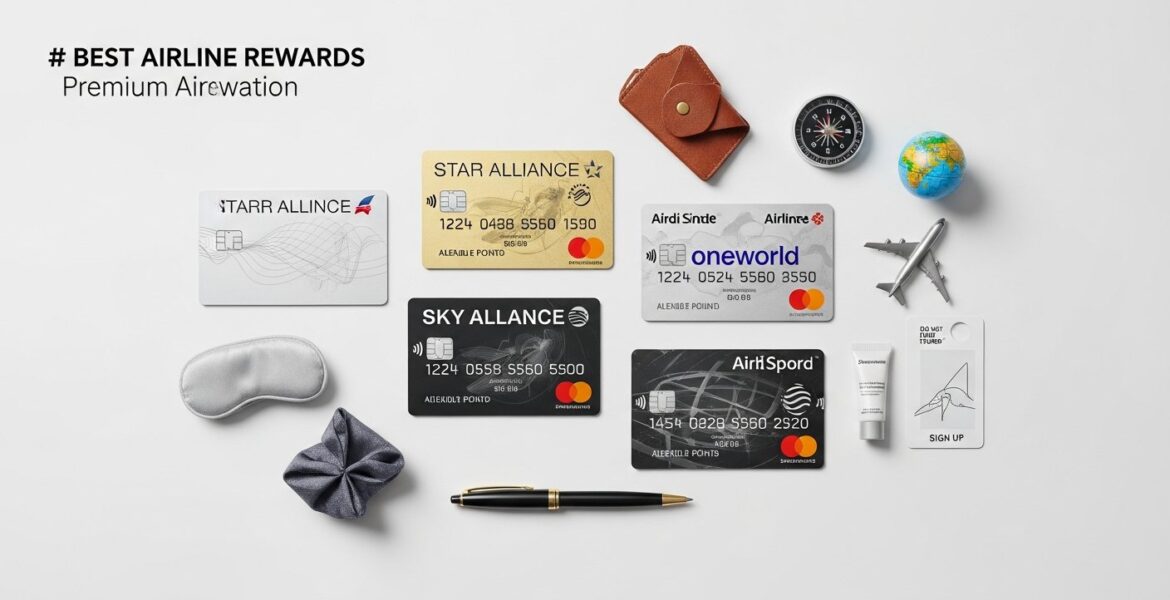
You do not actually need miles with a specific airline to fly on their planes. This is where the concept of alliance crossover comes into play, a mechanism that dramatically expands your booking options. The global aviation industry is dominated by three major partnerships: Star Alliance, Oneworld, and SkyTeam. When you transfer your flexible credit card rewards to one airline within an alliance, you can theoretically use those miles to book flights on any partner airline within that same network.
Consider this specific scenario: You want to fly domestically across the United States on American Airlines. A direct domestic flight might cost $450 or 30,000 American Airlines AAdvantage miles. Unfortunately, AAdvantage is not a direct transfer partner of Chase or Amex. However, British Airways is a Oneworld partner of American Airlines, and British Airways Avios are easy to acquire by transferring from Chase, Amex, or Capital One. Because British Airways utilizes a distance-based award chart, you might only pay 16,000 Avios to book that exact same American Airlines flight through the British Airways portal.
Navigating Alliance Rules
The reason this workaround is possible is that airlines allocate a certain number of “saver” seats to their partners. When booking alliance crossover flights, you are subject to the award chart and routing rules of the program where your miles currently reside, not the airline operating the flight.
- Star Alliance: Features 26 member airlines, including United, Lufthansa, and ANA. A massive network excellent for global coverage.
- Oneworld: Contains 13 members, including American Airlines, British Airways, and Qatar Airways. Highly lucrative for business class sweet spots.
- SkyTeam: Comprises 19 members, including Delta, Air France/KLM, and Korean Air. Known for aggressive monthly promo awards in Europe.
Data from a 2025 OAG Aviation report [VERIFICAR FECHA] indicated that nearly 18% of all frequent flyer tickets were redeemed on partner airlines rather than the native carrier, highlighting how common this consolidation tactic has become among savvy travelers.
What Steps Maximize Award Flight and Hotel Value?

Transferring points is just the mechanical aspect; optimizing the financial return of those points is where true travel hacking happens. The foundational metric used to gauge redemption quality is cent per point (CPP). This calculation reveals the exact monetary value you are extracting from a single loyalty point. It works by taking the cash price of the travel booking, subtracting any mandatory taxes or fees associated with the award ticket, and dividing the result by the total points required.
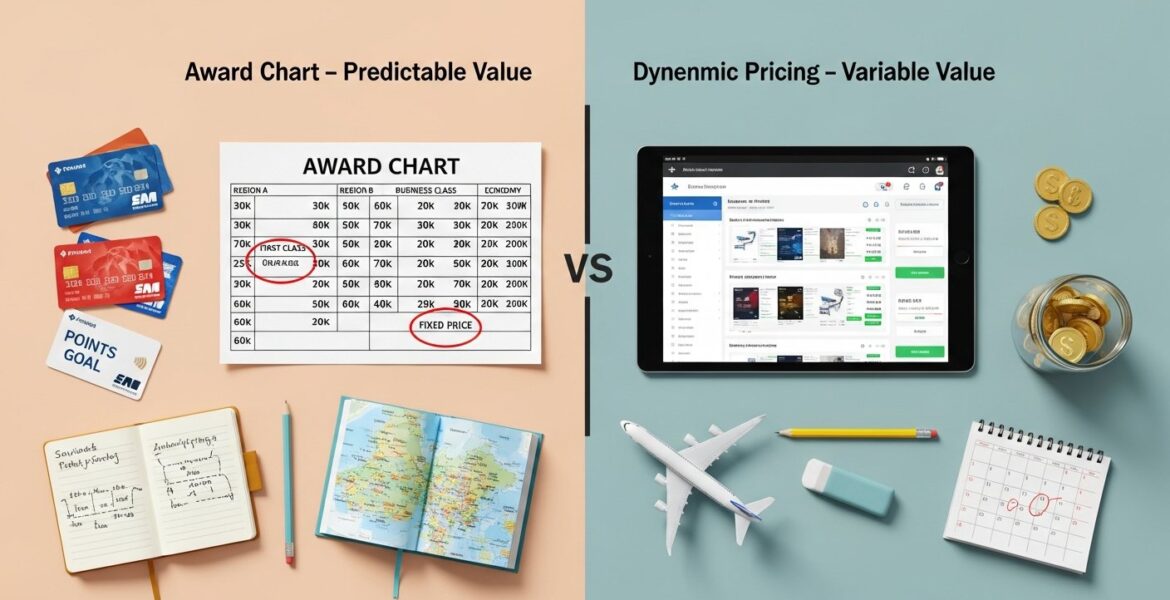
For instance, if a business class ticket to Tokyo costs $6,000, and the award flight requires 100,000 miles plus $100 in taxes, the calculation is ($6,000 – $100) / 100,000 = $0.059. This yields an exceptional 5.9 CPP. Conversely, redeeming 100,000 points for $500 worth of gift cards yields a mere 0.5 CPP. The mechanism of yield management utilized by airlines means that cash prices fluctuate wildly while award charts (historically) remain somewhat fixed, creating windows of massive arbitrage.
Comparing the Returns
To ensure you are consolidating your travel rewards efficiently, you must target redemptions that outpace the standard 1.0 to 1.5 cents per point baseline offered by generic cash-back portals.
| Redemption Type | Average Point Cost | Average Cash Cost | Estimated Value (CPP) |
|---|---|---|---|
| Domestic Economy Flight | 25,000 miles | $300 | 1.2 CPP |
| International Business Class | 140,000 miles | $5,000 | 3.5+ CPP |
| Mid-Tier Hotel Stay (3 nights) | 90,000 points | $600 | 0.6 CPP |
| Luxury Resort (World of Hyatt) | 120,000 points | $3,600 | 3.0 CPP |
What failure looks like: Transferring 150,000 premium credit card points into a hotel program to book a room that only costs $600 in cash, effectively destroying over half the intrinsic value of the points. Understanding the mathematical difference is key to knowing situations where point redemptions outpace cash. According to a 2026 Expedia travel trends overview, travelers who calculate CPP before booking save an average of $1,200 per long-haul international trip.
[INLINE IMAGE 4: Side-by-side comparison chart displaying a cash flight price versus the point redemption cost, with the effective cent per point (CPP) clearly calculated.]
Common Pitfalls in the Consolidation Process
While consolidating credit card points for trips unlocks incredible access to global destinations, the process is fraught with potential hazards. The most catastrophic mistake a traveler can make is the speculative transfer. Because the movement of points from a credit card hub to an airline or hotel partner functions as a one-way street, you can never reverse the transaction. Once the points become specific airline miles, they are forever subject to that program’s rules and devaluation cycles.
A scenario illustrating this danger involves a traveler finding a blog post about a “sweet spot” for flying to the Maldives. Excitedly, they transfer 200,000 points to a foreign carrier’s program. Only after the transfer do they run the flight search, discovering phantom availability—a frustrating glitch where a partner airline’s search engine displays award seats that do not actually exist in the booking inventory. Their 200,000 points are now trapped in a program they rarely use, rapidly losing value against inflation.
Protective Measures to Avoid Value Loss
To safely navigate the consolidation process, several operational rules must be strictly adhered to.
- Confirm availability by phone: If booking a complex partner award, calling the airline to verify the seat actually exists before hitting the transfer button can save hundreds of thousands of points.
- Beware of fuel surcharges: Programs like British Airways Executive Club and Virgin Atlantic Flying Club frequently tack on exorbitant carrier-imposed surcharges. You might pay fewer points but face $800 in cash fees on an award ticket.
- Monitor transfer bonuses: Credit card programs frequently offer 15% to 30% bonuses for transferring to specific partners. Transferring outside of these promotional windows leaves value behind.
A Bankrate survey from 2024 [VERIFICAR FECHA] noted that 28% of reward users had points expire or severely devalue because they moved them without a strict redemption plan in place. This underscores the necessity of having a confirmed itinerary before initiating any movement of assets. For those heavily invested in hospitality chains, similar diligence is required when extracting maximum value from hotel loyalty networks.
Advanced Methods for Household Account Pooling
For families and domestic partners, the mathematical reality of award travel often requires household pooling. One partner rarely earns enough points on their own to cover business class tickets for an entire family. Consolidating travel reward balances across spouses or family members is a powerful accelerant, but the mechanisms differ wildly from one institution to the next. Some programs embrace family consolidation, while others heavily restrict it to prevent unauthorized point brokering.
For instance, Chase Ultimate Rewards allows a cardholder to transfer points to one other household member who shares the exact same billing address. This seamless mechanism means Partner A can shift 50,000 points to Partner B instantly, enabling Partner B to make a single 100,000-point booking. In the airline sector, JetBlue’s TrueBlue program and Air Canada’s Aeroplan offer robust family pooling features, allowing up to eight family members to contribute to a shared digital wallet.
Structuring a Dual-Player Strategy
Optimizing loyalty programs for travel in a multi-person household requires coordination, often referred to in travel hacking circles as “two-player mode.” This approach requires aligning credit card applications to hit sign-up bonuses simultaneously.
- Staggered Applications: Partner A opens a premium card, earns the 80,000-point bonus, and then refers Partner B, earning a referral bonus while Partner B works on their own sign-up requirement.
- Shared Authorized Users: While adding an authorized user does not pool points directly, it funnels all household spending into a single primary account, eliminating the need to physically transfer points later.
- Alliance Alignment: If Partner A flies Delta for work and Partner B flies United, they should pool their flexible credit card points into a neutral partner, like Air France/KLM or Air Canada, to book shared vacations.
In 2026, loyalty consulting firm Bond Brand Loyalty reported that households utilizing coordinated point pooling strategies generated 210% more award travel redemptions than single-player accounts. If you and your partner are serious about combining loyalty points for travel to upgrade your vacation standards, diving into specific strategies for couples consolidating their earnings will provide the tactical blueprint needed for success.
Sources & References

- Consumer Financial Protection Bureau (CFPB). (2026). Annual Report on Travel Rewards and Consumer Protections. Washington, D.C.
- The Points Guy. (2026). Comprehensive Transfer Partner Valuations and Credit Card Earning Metrics.
- Expedia Group. (2026). Global Traveler Trends: Loyalty Arbitrage and Award Flight Optimizations.
- OAG Aviation. (2025). Global Airline Alliance Traffic and Partner Booking Trends. [VERIFICAR FECHA]
About the Author
Priya Devi, Smart Shopper & Rewards Expert (E-commerce Loyalty Consultant, Consumer Behavior Analyst) — I love uncovering the best deals and loyalty strategies to make your shopping more rewarding and your wallet happier.
Reviewed by Julian Thorne, Senior Editor, Loyalty & Consumer Engagement — Last reviewed: May 30, 2026
Archives
Calendar
| M | T | W | T | F | S | S |
|---|---|---|---|---|---|---|
| 1 | 2 | 3 | ||||
| 4 | 5 | 6 | 7 | 8 | 9 | 10 |
| 11 | 12 | 13 | 14 | 15 | 16 | 17 |
| 18 | 19 | 20 | 21 | 22 | 23 | 24 |
| 25 | 26 | 27 | 28 | 29 | 30 | 31 |