
Grocery Couponing for Beginners: Your Ultimate Guide to Unlocking Massive Savings & Maximizing Rewards
On March 10, 2026 by pubmanThe Golden Age of Grocery Savings: Why Couponing Still Reigns Supreme
In a world increasingly dominated by instant gratification and digital convenience, some might wonder if the traditional art of grocery couponing still holds its weight. The emphatic answer is yes, absolutely! Far from being a relic of the past, couponing has evolved, embracing digital platforms while retaining its core power to drastically reduce your weekly and monthly grocery expenditures. For beginners, understanding this fundamental truth is the first step toward unlocking a world of savings.
The allure of couponing isn’t just about saving a few cents here and there; it’s about making a tangible impact on your household budget. Imagine consistently cutting your grocery bill by 20%, 30%, or even 50% or more. Over a year, these savings can amount to hundreds, even thousands, of dollars. This freed-up capital can then be redirected towards other financial goals, whether it’s building an emergency fund, paying down debt, investing, or simply enjoying more discretionary spending without guilt. It’s a cornerstone of smart financial planning and a practical application of the principles we often discuss on Gold Points, such as leveraging loyalty programs and understanding how to use promo codes and discounts effectively.
Furthermore, couponing encourages a more mindful approach to shopping. Instead of impulsively grabbing items, you become a strategic consumer, planning your purchases around sales and available discounts. This often leads to healthier eating habits (as you become more aware of what you’re buying) and reduces food waste (because you’re only purchasing what you truly need and can store). It’s an empowering process that puts you in control of your spending, transforming a chore into a rewarding financial game.
The landscape of couponing in 2026 is dynamic and diverse, catering to various preferences. From the tactile satisfaction of clipping newspaper inserts to the seamless convenience of digital apps, there’s a method for everyone. This guide will introduce you to all these avenues, ensuring that no matter your tech savviness or time constraints, you can successfully integrate couponing into your routine and begin to experience the significant financial benefits it offers.
Building Your Couponing Arsenal: Where to Find Those Precious Discounts
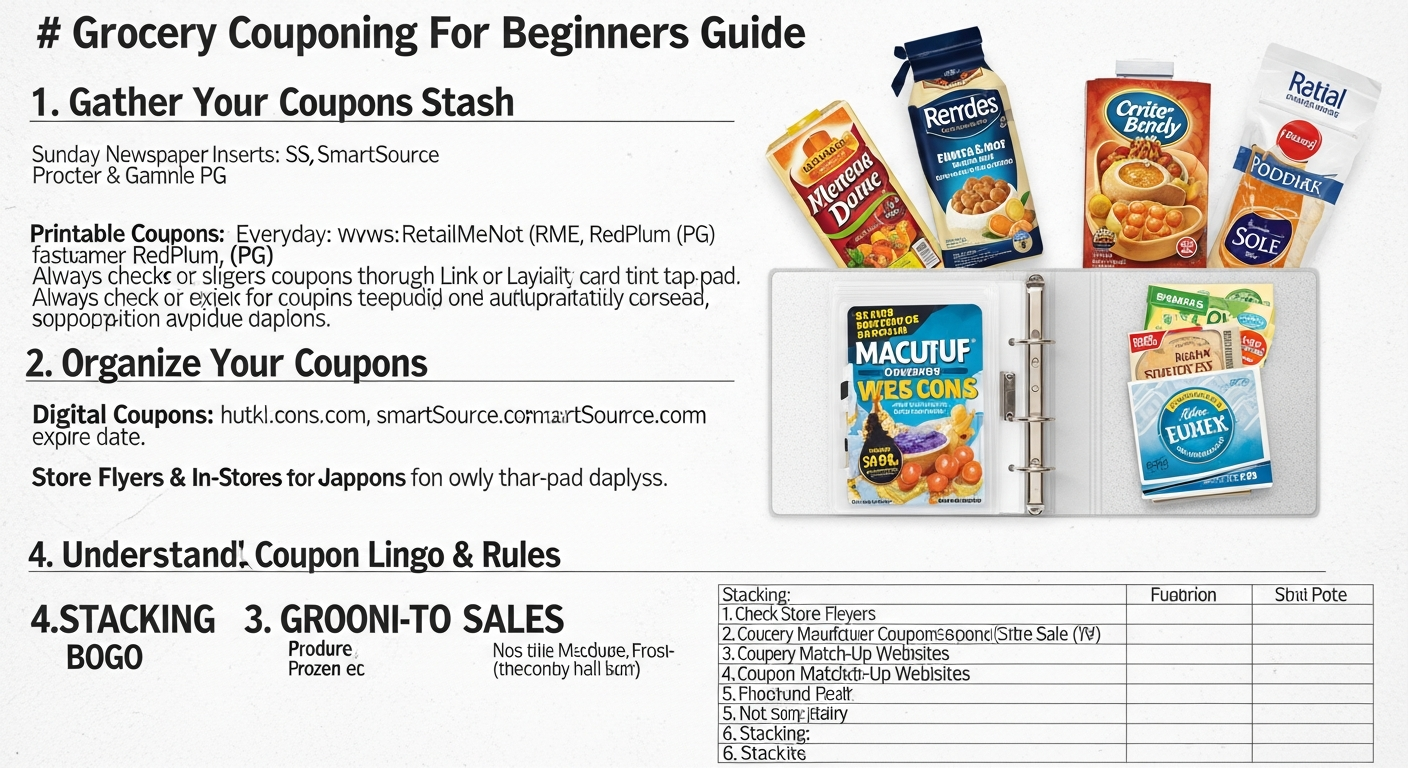
The first step in any successful grocery couponing for beginners journey is knowing where to hunt for the best deals. The sources for coupons are more varied than ever, combining traditional methods with innovative digital solutions. Building a robust “couponing arsenal” means familiarizing yourself with these different avenues and selecting the ones that best fit your lifestyle and shopping habits.
Printable Coupons: The Classic Approach
Despite the rise of digital, printable coupons remain a powerful force in the couponing world. These are typically manufacturer coupons that you print at home and present at checkout.
- Manufacturer Websites: Many major brands (e.g., Procter & Gamble, General Mills, Kimberly-Clark) offer printable coupons directly on their brand websites. This is often a reliable source for high-value coupons on products you regularly use.
- Coupon Aggregate Sites: Websites like Coupons.com, SmartSource.com, and RetailMeNot (which also specializes in how to use promo codes and discounts for online shopping, but has a strong printable coupon section) act as central hubs for hundreds of printable manufacturer coupons. You can browse by category, brand, or value, and often print multiple copies.
- Newspaper Inserts: The Sunday newspaper remains a treasure trove for coupons. Look for inserts from SmartSource (SS), Save (formerly RedPlum or RetailMeNot Everyday), and Procter & Gamble (PG). These often contain some of the highest-value coupons and are especially useful for stocking up on household staples.
When using printable coupons, always ensure your printer has enough ink and paper, and be mindful of print limits (often two prints per computer for many sites).
Digital Coupons: Convenience at Your Fingertips
The digital revolution has made couponing incredibly accessible. Digital coupons are typically loaded onto your store loyalty card or app, and the discount is automatically applied at checkout when you scan your card or enter your phone number.
- Store Apps and Websites: Almost every major grocery chain (Kroger, Safeway, Target, Walmart, etc.) has its own app and website where you can “clip” or “load” digital coupons directly to your loyalty account. These often include both manufacturer and store-specific coupons. This is a crucial element of leveraging store loyalty programs, which can be further enhanced by considering the best store credit cards rewards 2026 for additional savings.
- Manufacturer Apps: Some brands also offer their own apps with exclusive digital coupons or reward programs.
- Cash-Back Apps: While not traditional coupons, apps like Ibotta, Fetch Rewards, and Checkout 51 offer cash back on specific purchases after you upload your receipt. These can often be stacked with manufacturer and store coupons for even greater savings, essentially providing an additional layer of how to use promo codes and discounts.
- Email Newsletters: Signing up for your favorite grocery stores’ and brands’ email newsletters often grants you access to exclusive digital coupons, sale alerts, and promo codes.
The beauty of digital coupons is that there’s no physical clipping, no forgetting coupons at home, and often, you can load them just before you shop or even while you’re in the store.
In-Store and Local Sources
- Weekly Flyers/Circulars: These are available in-store, online, or delivered to your mailbox. They highlight weekly sales and often contain store-specific coupons or indicate where to find coupons in newspaper inserts.
- In-Store Kiosks: Some stores have kiosks where you can scan your loyalty card and print personalized coupons based on your shopping history.
- Shelf Peelies and Tear Pads: Look for coupons attached directly to products on the shelf (peelies) or on pads near the product (tear pads). These are often high-value and specific to that particular item.
By exploring these various sources, you’ll quickly discover a consistent stream of valuable coupons. The key is to be diligent and check multiple sources regularly to maximize your potential savings. Remember, the more diverse your couponing arsenal, the more opportunities you’ll have to snag those fantastic deals.
Decoding the Deal: Understanding Coupon Terminology and Rules
Manufacturer vs. Store Coupons: The Fundamental Distinction
- Manufacturer Coupons: These are issued by the product manufacturer (e.g., Procter & Gamble for Tide, General Mills for Cheerios). They are generally accepted at any retailer that carries the product and accepts coupons. Manufacturer coupons typically have a specific barcode that identifies them as such and will state “Manufacturer Coupon” clearly. You can only use ONE manufacturer coupon per item purchased.
- Store Coupons: These are issued by a specific grocery store (e.g., “Save $1 at Kroger”). They are only valid at that particular store or chain. Store coupons might be found in weekly flyers, store apps, or emailed newsletters. The good news is that you can often combine (or “stack”) one manufacturer coupon with one store coupon on a single item, which is a powerful strategy for maximizing savings.
Understanding this difference is paramount, as it dictates how you can combine coupons for maximum impact. If a coupon doesn’t explicitly state “Manufacturer Coupon,” it’s generally safe to assume it’s a store coupon if found in a store’s flyer or app.
Key Coupon Elements and Restrictions
- Expiration Date: This is non-negotiable. Coupons are only valid until the date printed on them. Always check this date before planning your shopping trip.
- UPC Code/Barcode: This code is scanned at checkout to apply the discount. Ensure it’s clear and readable.
- Redemption Value: This tells you how much the coupon is worth (e.g., “$1.00 Off,” “Buy One Get One Free”).
- Product Specifics: Coupons are almost always for specific products, sizes, flavors, or varieties. Read carefully! A coupon for “Tide Liquid Detergent” might not be valid for “Tide Pods,” or a coupon for “Oatmeal Cereal 18oz or larger” won’t work on a 12oz box.
- Purchase Requirements: Some coupons require you to buy a certain quantity (e.g., “Save $1.00 when you buy TWO boxes of cereal”).
- Limits:
- “One Coupon Per Purchase”: This is standard for manufacturer coupons, meaning one coupon per individual item you are buying.
- “One Coupon Per Transaction”: This is more restrictive, meaning you can only use that specific coupon once during your entire checkout process, regardless of how many qualifying items you buy.
- “Limit X Like Coupons Per Shopping Trip”: Some coupons, especially high-value ones, will limit how many identical coupons you can use in a single visit (e.g., “Limit of 4 like coupons per household per day”). Always respect these limits.
- BOGO (Buy One Get One):
- “Buy One Get One FREE”: You get two items, but only pay for one. If you have a coupon for the item, you can often use it on the item you are paying for, further reducing your cost.
- “Buy One Get One HALF OFF”: You pay full price for one, and half price for the second. Again, a coupon can typically be applied to the full-price item.
- Exclusions: Look for fine print like “Excludes trial/travel size,” “Excludes clearance items,” or “Not valid with any other offer.” These are important disclaimers.
The Art of Coupon Stacking
One of the most exciting aspects of couponing is “stacking” – using multiple discounts on a single item. The most common and effective stacking strategy is combining one manufacturer coupon with one store coupon for the same product. For example, if you have a manufacturer coupon for “$1.00 off Charmin Toilet Paper” and a Kroger store coupon for “$1.50 off Charmin Toilet Paper,” you can use both on one package, resulting in a $2.50 total discount! This is where the magic truly happens and where understanding how to use promo codes and discounts for maximum effect comes into play.
Some stores also allow you to stack a coupon with a sale price or even a percentage-off discount. Always check your specific store’s coupon policy (often available on their website or by asking a customer service representative) to understand what types of stacking are permitted. Mastering these terms and rules will build a strong foundation for your couponing success, ensuring smooth transactions and significant savings.
The Strategic Shopper: Planning Your Couponing Haul
Couponing is less about random clipping and more about strategic planning. For beginners, developing a systematic approach to your grocery shopping is the key to maximizing savings and avoiding impulse buys. This section will guide you through the essential steps of becoming a strategic coupon shopper.
1. Know Your Store’s Policies
Before you even begin collecting coupons, familiarize yourself with the coupon policy of your primary grocery stores. Every store has unique rules regarding:
- Acceptance of Competitor Coupons: Do they accept coupons from other stores?
- Coupon Stacking Rules: Can you combine a manufacturer and a store coupon? Can you use multiple of the same coupon?
- Digital Coupon Usage: How do their digital coupons work with paper coupons?
- Overage Policy: What happens if a coupon’s value exceeds the item’s price? (Some stores adjust the coupon value down, others apply the overage to your total bill, or give cash back – though this is rare).
- Rain Checks: Do they offer rain checks for out-of-stock sale items?
This information is usually available on the store’s website or by asking at the customer service desk. Knowing the rules beforehand prevents frustration at the checkout.
2. Master the Art of Match-Ups
The most lucrative couponing happens when you combine a coupon with an existing sale price. This is known as a “match-up.”
- Weekly Ad Scans: Start by reviewing your grocery store’s weekly ad (available online, in-store, or in your mailbox). Identify items that are on sale that you regularly buy or would like to try.
- Coupon Database Check: Use online coupon databases (many coupon blogs offer these) that allow you to search for coupons by product, brand, or even by store. These databases often list current sales and match them with available coupons (both printable and from newspaper inserts).
- Align with Sales Cycles: Most products go on a predictable sales cycle (every 6-8 weeks). Learning these cycles allows you to buy items when they are at their lowest price, and then use coupons to reduce that price even further. This is when you consider stockpiling.
The goal is to pay significantly less than the original price, ideally reaching rock-bottom prices or even getting items for free.
3. Create Your Organized Shopping List
A well-organized shopping list is your roadmap to success. Don’t just list items; integrate your coupons into it:
- List Items by Aisle: Organize your list by the layout of your store to save time and prevent backtracking.
- Attach Coupons Directly: Physically staple or paperclip the relevant physical coupons to the items on your list. For digital coupons, make a note next to the item that the coupon is loaded.
- Note the Final Price: Calculate the price after the coupon and any sale discount. This helps you track your savings and stick to your budget.
- Include Non-Coupon Items: Don’t forget items you need that don’t have coupons. Incorporate them into your strategic shopping list.
4. Organize Your Coupons Effectively
A cluttered pile of coupons leads to missed savings and frustration. Choose an organization system that works for you:
- Coupon Binder: This is a popular method for serious couponers. Use baseball card protector sheets to sort coupons by category (e.g., dairy, produce, frozen, household cleaners) or by expiration date. This allows you to quickly flip through and find what you need.
- Accordion File: A smaller, portable option, good for sorting by category.
- Envelope System: Use envelopes labeled by store or by date (e.g., “Expires This Week,” “Next Week’s Coupons”).
- Digital Folders/Apps: For digital-only couponers, ensure your store apps are updated and you’ve “clipped” all relevant offers before shopping.
Regularly purge expired coupons from your system to keep it efficient.
5. Price Matching and Coupons
Some stores offer price matching, meaning they’ll match a competitor’s advertised price. The interaction with coupons varies by store:
- Check Policy: Some stores allow you to price match and then use a coupon on top of the matched price, offering incredible savings. Others will only allow one or the other.
- Manufacturer vs. Store Coupons: Often, if a store allows price matching and coupons, they’ll differentiate between manufacturer and store coupons. A manufacturer coupon is more likely to be accepted on a price-matched item.
This strategic approach to grocery couponing for beginners will not only save you money but also transform your shopping experience into an efficient and rewarding activity. Remember, consistency is key – make planning a regular part of your routine, and the savings will accumulate.
Advanced Couponing Tactics for Maximum Savings
Once you’ve mastered the basics of finding coupons and planning your shopping trip, it’s time to elevate your game. Advanced couponing tactics involve thinking beyond the immediate discount and integrating your couponing efforts with broader financial strategies. This is where you truly unlock the potential for significant, long-term savings.
1. The Art of Stockpiling (Responsibly)
Stockpiling means purchasing multiple units of an item when it reaches its absolute lowest price, often due to a combination of a deep sale and a high-value coupon. The goal is to have enough of that item to last you until the next major sale cycle (typically 6-8 weeks).
- Know Your Needs: Only stockpile items your family regularly uses and that have a long shelf life (non-perishables, toiletries, cleaning supplies). Avoid stockpiling perishables unless you have a plan for consumption or proper storage (e.g., a deep freezer).
- Assess Storage Space: Don’t over-stockpile if you don’t have the space. A cluttered home defeats the purpose of smart shopping.
- Calculate “Stock-Up Price”: Learn what constitutes a truly great deal for items you buy frequently. This is the price point (after all discounts and coupons) where you should buy enough to last.
Responsible stockpiling ensures you rarely pay full price for household staples, leading to massive long-term savings.
2. Leveraging Rain Checks
What happens when a fantastic sale item, for which you have a coupon, is out of stock? Many stores offer “rain checks.”
- Request a Rain Check: If an advertised sale item is unavailable, ask customer service for a rain check. This allows you to purchase the item at the sale price once it’s back in stock.
- Coupon Expiration: The beauty of rain checks is that they often allow you to get the sale price even after the sale has ended. Crucially, many stores will also honor your coupon for that item even if the coupon itself has expired, as long as it was valid when the rain check was issued. Always confirm this with your store’s policy.
Rain checks prevent you from missing out on deals due to inventory issues and extend the life of your valuable coupons.
3. Seamlessly Integrating Loyalty Programs and Credit Card Rewards
True smart shopping means layering multiple savings strategies. Your couponing efforts can be significantly amplified by combining them with loyalty programs and strategic credit card use.
- Store Loyalty Programs: Always sign up for your grocery store’s loyalty program. These programs often provide exclusive discounts (digital coupons), personalized offers, and points that can be redeemed for future savings or fuel discounts. Many digital coupons are tied directly to your loyalty account. This is a fundamental aspect of maximizing the benefits discussed in articles about the best store credit cards rewards 2026, as these cards often integrate directly with store loyalty programs, offering enhanced points or cashback on your grocery purchases.
- Cash-Back and Rewards Credit Cards: This is where the savings truly become exponential. Using the right credit card for your grocery purchases can add another 1-5% (or more, depending on the card and category bonuses) back into your pocket, on top of your coupon savings. For instance, many of the best credit card rewards programs 2026 offer elevated rewards rates on groceries as a permanent category or through rotating quarterly bonuses.
- Look for cards that offer bonus points or cash back on grocery store purchases. Some cards might offer 3-5% back on groceries.
- Consider a store-branded credit card (like those discussed in articles about the best store credit cards rewards 2026). These cards often provide extra discounts, higher reward rates at that specific store, or exclusive financing options.
- Always pay your credit card balance in full to avoid interest charges, which would negate your savings.
- Synergy: Imagine buying an item on sale, applying a manufacturer coupon, stacking it with a store coupon, earning loyalty points on the purchase, and then getting 5% cashback on your credit card. This multi-layered approach is the pinnacle of smart shopping and significantly reduces your out-of-pocket expenses.
By integrating these advanced tactics, your grocery couponing for beginners journey evolves into a sophisticated system of financial optimization, ensuring you save money at every possible touchpoint.
Avoiding Common Couponing Pitfalls and Staying Ethical
While grocery couponing offers incredible savings, it’s essential to approach it with a clear strategy and an ethical mindset. Avoiding common pitfalls will ensure your couponing journey is both rewarding and stress-free. For beginners, understanding these potential traps is just as important as knowing where to find deals.
1. Don’t Buy What You Don’t Need
This is arguably the most critical rule. A coupon only saves you money if you were going to buy the item anyway, or if it’s a staple you genuinely need and will use. Buying items just because they are “cheap with a coupon” can lead to:
- Wasted Money: If the item sits in your pantry and expires, or you end up giving it away, you haven’t saved money; you’ve spent it unnecessarily.
- Clutter: Over-stockpiling items you don’t frequently use can lead to a cluttered home.
- Food Waste: Especially for perishables, buying too much can result in food going bad before you can consume it.
Focus on products your family regularly consumes or truly needs. Use coupons to lower the cost of your regular shopping list, not to inflate it with unnecessary purchases.
2. Respect Store Policies and Coupon Limits
Adhering to store rules and coupon limitations is not only ethical but also crucial for maintaining a positive relationship with store staff and ensuring your coupons are accepted.
- Read the Fine Print: Always double-check expiration dates, product specifications, and purchase limits on your coupons.
- Understand Stacking Rules: Don’t attempt to stack multiple manufacturer coupons on one item or violate your store’s specific stacking policy.
- Be Prepared: Have your coupons organized and ready for the cashier. If there’s a question, politely explain the coupon’s terms or your store’s policy (if you’re certain of it).
Attempting to use expired, invalid, or excessive coupons can lead to delays, embarrassment, and potentially even being banned from using coupons at that store. Good couponers are respectful and informed.
3. Beware of Counterfeit Coupons
Unfortunately, the world of couponing is not immune to fraud. Counterfeit coupons do exist, often circulating online. Using a fake coupon can have serious legal consequences.
- Stick to Reputable Sources: Only print coupons from trusted websites (manufacturer sites, Coupons.com, SmartSource.com, RetailMeNot) or obtain them from official newspaper inserts.
- Be Skeptical of Unusually High Values: If a coupon for a common item seems too good to be true (e.g., “$5 off any single candy bar”), it likely is.
- Look for Quality: Genuine printable coupons from official sources have high-quality barcodes and clear terms.
If you suspect a coupon is fake, do not use it. Report it to the Coupon Information Center (CIC), a non-profit association of consumer product manufacturers dedicated to fighting coupon fraud.
4. Maintain a Positive Relationship with Store Staff
Cashiers and customer service representatives are your allies, not your adversaries. A friendly and respectful approach goes a long way.
- Be Patient: Coupon transactions can sometimes take a little longer. Be understanding if a cashier needs to manually enter a coupon or call for assistance.
- Be Polite: A smile and a “thank you” can make a big difference.
- Educate, Don’t Argue: If there’s a misunderstanding about a coupon, calmly explain your understanding of the policy. If the cashier or manager still denies it, accept their decision gracefully. You can always follow up with corporate customer service later if you believe there was a legitimate error.
By adhering to these ethical guidelines and avoiding common pitfalls, your grocery couponing for beginners journey will be a positive, enjoyable, and financially rewarding experience. It’s about being a smart, respectful, and responsible consumer who leverages legitimate discounts to enhance their financial well-being, much like how you would strategically use the best credit card rewards programs 2026 or know how to use promo codes and discounts for online purchases.
FAQ Section: Your Top Couponing Questions Answered
Is couponing still worth it in 2026?
Absolutely! Despite the evolution of shopping habits, grocery couponing remains one of the most effective strategies for reducing your household budget. With the proliferation of digital coupons, store loyalty programs, and printable offers, the opportunities to save are more accessible than ever. When combined with strategic use of the best credit card rewards programs 2026 and other smart shopping tactics, couponing can lead to significant savings that compound over time, making it highly valuable for financial wellness.
What’s the difference between a manufacturer coupon and a store coupon?
A manufacturer coupon is issued by the brand that makes the product (e.g., Procter & Gamble for Tide) and is generally accepted at any retailer that sells that product. You can typically only use one manufacturer coupon per item. A store coupon is issued by a specific grocery chain (e.g., “Save $1 at Kroger”) and is only valid at that store. The power of couponing often lies in “stacking,” where you can use one manufacturer coupon and one store coupon on a single item for combined savings.
Can I use multiple coupons on one item?
Generally, you can only use one manufacturer coupon per item. However, many stores allow you to “stack” a manufacturer coupon with a store coupon on the same item, which significantly boosts your savings. Always check your specific grocery store’s coupon policy to understand their stacking rules, as policies can vary. Additionally, you might be able to combine these with cash-back app offers for further discounts, similar to how to use promo codes and discounts in an online setting.
How do I organize my coupons effectively?
Effective organization is crucial for successful couponing. Popular methods include using a small binder with baseball card protector sheets (sorted by category like dairy, frozen, or household) or an accordion file. For digital coupons, regularly checking and “clipping” offers within your store’s app or website is key. The best system is one you’ll consistently use, ensuring your coupons are easy to find and don’t expire before you can use them.
What are the best apps for digital coupons?
Many major grocery chains have their own apps (e.g., Kroger, Safeway, Target, Walmart) where you can load digital coupons directly to your loyalty card. Beyond store-specific apps, popular cash-back apps like Ibotta, Fetch Rewards, and Checkout 51 offer additional savings on groceries after purchase by scanning your receipts. These digital solutions are excellent ways to integrate couponing into a modern, smart shopping routine, complementing strategies like finding the best store credit cards rewards 2026.
How can credit card rewards enhance my couponing efforts?
Using the right credit card can add another layer of savings on top of your coupon discounts. Many of the best credit card rewards programs 2026 offer bonus points or cash back (often 3-5%) on grocery store purchases. By paying for your coupon-reduced grocery bill with such a card, you effectively earn rewards on an already discounted purchase. If you use a store-branded credit card (as explored in guides on the best store credit cards rewards 2026), you might receive even higher rewards or exclusive discounts, maximizing your overall savings.
Recommended Resources
Learn more about this topic in Retargeting Ads Strategy For Ecommerce at E-ComProfits.
You might also enjoy Robo Advisor Vs Financial Advisor from Fin3go.