
sweet spots in airline award charts 2026
On April 13, 2026 by pubmanMastering the Skies: The Ultimate Guide to Airline Award Chart Sweet Spots in 2026
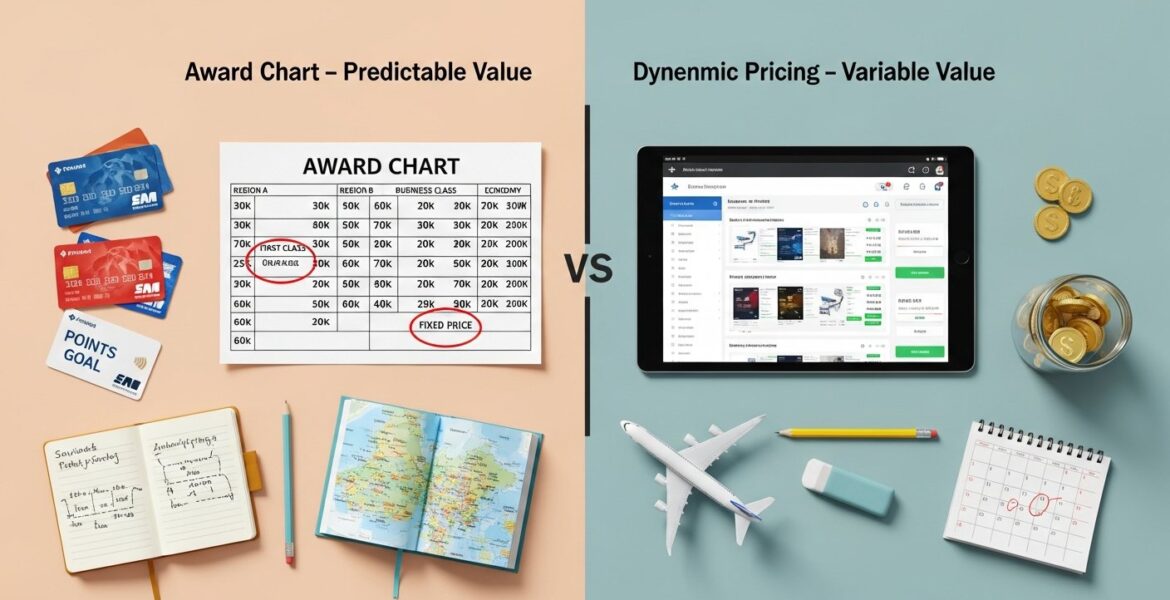
The landscape of travel hacking is in a constant state of flux. As we navigate the travel environment of 2026, the “Golden Age” of fixed award charts has transitioned into a more complex, hybrid era. Many airlines have shifted toward dynamic pricing, where the cost of a seat in points fluctuates with the cash price. However, for the diligent points enthusiast, this shift hasn’t eliminated value; it has simply hidden it behind new layers of strategy.
To maximize your rewards in 2026, you must look beyond the standard “search and book” method. You need to identify the remaining fixed-rate niches, the partner booking loopholes, and the geographical anomalies that allow you to fly in luxury for a fraction of the cost. Whether you are hoarding Amex Membership Rewards, Chase Ultimate Rewards, or niche airline miles, the following sweet spots represent the pinnacle of redemption value for the current year. Welcome to the definitive guide to 2026 award chart mastery.
1. The Avios Ecosystem: Iberia and Qatar’s Transatlantic Dominance
In 2026, the unification of the Avios currency across British Airways, Iberia, Qatar Airways, Aer Lingus, and Finnair has created a powerhouse for award redemptions. By being able to move Avios 1:1 between these programs, travelers can exploit specific “sweet spots” that remain some of the best deals in the sky.
**Iberia Plus: The 34,000-Point Business Class Ticket**
Iberia remains the undisputed champion for low-cost transatlantic Business Class. If you can find “Off-Peak” dates, you can fly from East Coast hubs (like New York, Boston, or Chicago) to Madrid for just 34,000 Avios in Business Class. Even in 2026, while other carriers charge 80,000 to 100,000 miles for the same route, Iberia’s distance-based chart remains remarkably resilient.
**Qatar Airways: The Qsuite Gateway**
For those looking toward the Middle East or Asia, Qatar Airways’ Privilege Club offers incredible value using Avios. Booking a Qsuite—widely considered the world’s best business class—from the U.S. to Doha typically costs 70,000 to 85,000 Avios. In 2026, the key is to book through the Qatar website directly while transferring points from British Airways to avoid the higher surcharges often found on other partner platforms.
**Pro-Tip for 2026:** Use the British Airways “Reward Flight Finder” to spot the availability, then move your points to the specific Avios partner that offers the lowest taxes and fees for that specific segment.
2. Air Canada Aeroplan: The King of Versatility and Stopovers
Air Canada’s Aeroplan program has solidified its position as the most flexible program for travel hackers in 2026. Unlike many U.S.-based carriers, Aeroplan uses a hybrid distance-and-zone-based chart that is transparent and predictable.
**The 5,000-Point Stopover Trick**
One of the most powerful features of Aeroplan in 2026 is the ability to add a stopover to any one-way international award for just 5,000 additional points. This allows you to turn a single trip into two. For example, you could fly from New York to Singapore, stop in Frankfurt for three days to visit friends, and then continue your journey—all on one ticket.
**Short-Haul Gems**
Aeroplan’s “North America” zone offers incredible value for short-haul flights under 500 miles, often costing as little as 6,000 to 10,000 points. In an era where domestic cash prices have surged, using Aeroplan points to book United Airlines flights within the U.S. remains a top-tier strategy for 2026.
**Partner Prowess**
Aeroplan has more partners than almost any other airline, including non-Star Alliance carriers like Etihad, Emirates, and Gulf Air. This makes it a “one-stop shop” for booking premium cabins across diverse regions without the headache of devalued domestic charts.
3. ANA Mileage Club: The Round-the-World Holy Grail
While many programs have moved toward one-way pricing, Japan’s ANA (All Nippon Airways) still thrives on its legendary Round-the-World (RTW) award chart. For the enthusiast who has the time and the points, this remains the single greatest value in the world of points and miles in 2026.
**The 125,000-Mile Global Adventure**
In 2026, you can still book a Round-the-World itinerary in Business Class for between 115,000 and 145,000 miles, depending on the total distance flown. You could fly from Los Angeles to Tokyo, Tokyo to Bangkok, Bangkok to Istanbul, Istanbul to Lisbon, and Lisbon back to Los Angeles, all in lie-flat seats, for a price that most airlines charge for a single round-trip to Europe.
**The Catch (and how to solve it)**
The catch with ANA has always been the fuel surcharges and the fact that you must book a round-trip or RTW; one-way awards are not permitted. To maximize this in 2026, target Star Alliance partners with low or no fuel surcharges, such as United, Air Canada, SAS, and Turkish Airlines.
**Why it works in 2026:** While ANA has seen some minor adjustments to its zone-based charts, the RTW chart has remained a protected sanctuary for high-value redemptions, making it a favorite for “bucket list” travelers.
4. Turkish Airlines Miles&Smiles: The Hidden Domestic Gem
Turkish Airlines remains the “dark horse” of the 2026 points landscape. While their website can be notoriously difficult to navigate, those who persevere are rewarded with some of the lowest award prices in the industry.
**10,000 Miles to Hawaii**
The most famous sweet spot in the Turkish Miles&Smiles program is the domestic U.S. award. Because Turkish views all 50 U.S. states as a single “domestic” zone, you can fly from Newark to Honolulu on United Airlines for just 10,000 miles in economy or 15,000 miles in business class (if you can find “I” class availability).
**Central Asia and Beyond**
Turkish also offers exceptional value for flights from Europe to Central Asia or the Middle East. Often, these flights can be found for 20,000 to 30,000 miles in Business Class, which is significantly lower than what major U.S. carriers charge for the same distance.
**2026 Strategy:** To book these, you often have to email a Turkish Airlines ticket office or use their “Star Alliance Search” tool specifically. It takes patience, but the 80% “discount” compared to other programs makes it worth the effort.
5. Alaska Airlines: The New Distance-Based Powerhouse
Following its integration with the Oneworld alliance and a revamped award chart in the mid-2020s, Alaska Airlines has emerged in 2026 as a premier choice for high-value partner redemptions, especially for travel to Asia and the South Pacific.
**Predictable Pricing for Partners**
Alaska has moved to a simplified distance-based structure. In 2026, this means that short-haul international flights (like Tokyo to Seoul or London to Paris) on partner airlines start as low as 4,500 miles. For long-haul enthusiasts, the value lies in partners like Japan Airlines (JAL) and Starlux.
**The Starlux and JAL Advantage**
Alaska remains one of the best ways to book Starlux Business Class to Taipei or JAL First Class to Tokyo. By utilizing their distance-based tiers, you can often find these premium seats for 60,000 to 85,000 miles. In 2026, Alaska’s “Search with Calendar” feature remains the gold standard for finding these elusive seats.
**Free Stopovers on One-Way Awards**
Similar to Aeroplan, Alaska allows a free stopover even on one-way award tickets. This is particularly useful for exploring a hub city like Seattle, Tokyo, or Hong Kong for a few days before continuing to your final destination.
6. Flying Blue: Monthly Promo Rewards and SkyTeam Value
The joint loyalty program for Air France and KLM, Flying Blue, has leaned heavily into “Promo Rewards” in 2026. While their standard pricing is dynamic, their monthly discounts have become a staple for savvy travelers.
**Monthly Promo Rewards**
Every month, Flying Blue releases a list of routes discounted by 25% to 50%. In 2026, it is common to find Business Class seats from various North American cities to Europe for 37,500 to 50,000 miles. Since Flying Blue is a transfer partner of every major credit card currency (Amex, Chase, Citi, Capital One, Bilt), these miles are incredibly easy to accumulate.
**The Virgin Atlantic Partnership**
In 2026, the partnership between Flying Blue and Virgin Atlantic allows for unique arbitrage. Sometimes, a Delta-operated flight will be cheaper when booked through Flying Blue than through Delta’s own SkyMiles program. Always cross-check both portals before clicking “book.”
FAQ: Frequently Asked Questions about 2026 Award Charts
**Q1: Is 2026 a good year to use points, or should I wait?**
A: With the continued trend of “mileage inflation,” the best time to use points is almost always as soon as you have a plan. In 2026, points are a “devaluing currency.” Sitting on a million points for five years is generally a losing strategy. Earn them and burn them to lock in current sweet spot rates.
**Q2: How do I find “Saver” availability in 2026?**
A: Use tools like Point.me, Roame.travel, or Seats.aero. These aggregators search across multiple airline programs simultaneously to find the lowest-priced “Saver” seats that correspond to the sweet spots mentioned above.
**Q3: Are fuel surcharges still a major issue in 2026?**
A: Yes, especially with European carriers like Lufthansa and British Airways. To avoid them, focus on programs like Air Canada Aeroplan, Avianca LifeMiles, or United MileagePlus, which do not pass on fuel surcharges to the consumer.
**Q4: Can I still transfer credit card points to these programs in 2026?**
A: Absolutely. Most major flexible currency programs (Amex, Chase, Capital One) have maintained or even expanded their transfer partner lists in 2026. The ability to move points to where the value is highest remains the core of travel hacking.
**Q5: What is the “best” airline mile to earn in 2026?**
A: For sheer flexibility, **Air Canada Aeroplan** or **Avios** (specifically for the ability to move them between five different airlines) are currently the most valuable for the average enthusiast.
Conclusion: Navigating the New Frontier
As we look at the state of travel rewards in 2026, it’s clear that the “lazy” redemption—simply booking whatever the first search result shows—is a recipe for low value. However, for those willing to learn the nuances of partner booking, distance-based charts, and the Avios ecosystem, the rewards are greater than ever.
The sweet spots of 2026 require a bit more legwork than they did a decade ago. You might have to call an overseas office to book a Turkish award, or wait for the first of the month to snag a Flying Blue Promo Reward. But when you find yourself in a $6,000 lie-flat seat for the cost of a few grocery runs and a clever transfer, the effort pays for itself ten times over.
The key to success this year is diversification. Don’t just collect one type of mile. Build a portfolio of flexible points that allow you to pivot when one program devalues and another shines. The sky isn’t the limit in 2026; it’s your playground. Happy hunting, and may your next Business Class flight cost you less than a pair of economy shoes.