
Skip to content
  • About
  • Our Top Picks
  • Products
  • Tech
  • Services

Calendar

March 2026
M T W T F S S
 1
2345678
9101112131415
16171819202122
23242526272829
3031  
     

Archives

  • March 2026

Categories

  • Our Top Picks
  • Products
  • Services
Gold Points
  • About
  • Our Top Picks
  • Products
  • Tech
  • Services
Our Top Picks

How Credit Card Sign-Up Bonuses Work: Your Ultimate Guide to Unlocking Massive Rewards

On March 6, 2026 by pubman

How Credit Card Sign-Up Bonuses Work: Your Ultimate Guide to Unlocking Massive Rewards

Imagine flying first class to an exotic destination, staying in a luxurious hotel suite, or simply getting hundreds of dollars back in your bank account—all without paying a cent beyond your everyday spending. This isn’t a fantasy; it’s the tangible power of credit card sign-up bonuses, and it’s a strategy points enthusiasts at Gold Points leverage constantly. For deal-seekers and smart money enthusiasts, understanding how these lucrative offers work is the cornerstone of unlocking incredible value.

At Gold Points, we believe in data-backed strategies and actionable advice that genuinely moves the needle for your finances and travel dreams. This comprehensive guide will strip away the jargon, lay bare the mechanics, and equip you with the insider strategies to consistently earn substantial sign-up bonuses. We’ll dive deep into specific cards, earning rates, redemption values, and step-by-step approaches that transform your ordinary spending into extraordinary rewards.

Understanding the Mechanics of a Credit Card Sign-Up Bonus

A credit card sign-up bonus, also known as a welcome offer or new cardmember bonus, is a promotional incentive offered by credit card issuers to attract new customers. In essence, the bank offers you a significant chunk of points, miles, or cash back if you meet certain conditions within a specified timeframe. It’s their way of enticing you to choose their product over a competitor’s, and for savvy consumers, it’s a golden opportunity.

The core components of nearly every sign-up bonus are:

  • The Bonus Itself: This is the reward you’re aiming for—e.g., 60,000 Chase Ultimate Rewards points, 75,000 American Express Membership Rewards points, or $200 cash back.
  • Minimum Spend Requirement (MSR): The amount of money you must spend on the card within the introductory period. This is non-negotiable.
  • Time Limit: The window you have to meet the MSR, typically 3 months, but sometimes 4 or 6 months.

For example, you might see an offer like, “Earn 60,000 bonus points after you spend $4,000 on purchases in the first 3 months from account opening.” This means if you charge $4,000 worth of eligible purchases to your new card within those three months, the bank will deposit 60,000 bonus points into your account.

Banks offer these bonuses because acquiring new customers is valuable. They anticipate that a percentage of new cardholders will carry balances, incur interest, or simply become long-term, loyal customers who generate transaction fees. For you, the goal is to extract maximum value from the bonus without altering your spending habits in a detrimental way. The key is to integrate the MSR into your natural, budgeted expenses, not to overspend.

The Anatomy of a Minimum Spend Requirement (MSR): Strategies for Success

Meeting the Minimum Spend Requirement (MSR) is the single most critical step to unlocking your sign-up bonus. Fail to meet it, and you get nothing. But with smart planning, it’s entirely achievable for most households.

Budgeting First: Aligning MSR with Natural Spending

Before you even apply for a card, look at your monthly budget. What are your typical expenses? Groceries, utilities, rent, car payments, insurance, dining out, entertainment? Add them up. If an MSR is $4,000 in 3 months, that’s roughly $1,333 per month. If your average monthly spending easily covers that, you’re in a good position. If it’s a stretch, you need to strategize.

Proven Strategies to Meet MSRs

Here are Gold Points’ go-to strategies for hitting those MSRs efficiently and responsibly:

  1. Everyday Expenses: This is your bread and butter. Put everything you can on the new card: groceries, gas, dining, streaming services, subscriptions, cell phone bills, internet, utilities. Most of these automatically count towards the MSR.
  2. Planned Large Purchases: Are you planning a home repair, new appliance, medical procedure, or perhaps new tires for your car? If these purchases are already budgeted for, time them to coincide with a new card application.
  3. Prepaying Bills: Many service providers allow you to prepay for services. Consider prepaying your car insurance for six months or a year, or even certain utility bills if your provider allows it without extra fees. Be cautious with rent; some platforms charge a hefty fee that negates the bonus value.
  4. Authorized Users: Adding an authorized user (e.g., a spouse or partner) can help accelerate spending, as their purchases also count towards the MSR. Just ensure you trust them implicitly, as you are ultimately responsible for all charges.
  5. Tax Payments: If you owe federal or state taxes, you can often pay them via a credit card through third-party processors. Be aware that these processors typically charge a fee (around 1.8-2.5%). Do the math: if the fee is less than the value of the points you’ll earn, it can be a viable option, especially for very large MSRs.
  6. Gift Cards for Future Use: While not ideal for every situation, buying gift cards to places you know you’ll spend money (e.g., your regular grocery store, Amazon, gas stations) can be a way to “front-load” spending. Only do this for businesses you frequent regularly, and never buy more than you’ll genuinely use.

Tracking Your Progress

Don’t just guess. Keep a simple spreadsheet or use a budgeting app to track your MSR progress. Note the date you opened the card, the MSR amount, the deadline, and a running total of your qualifying purchases. This prevents costly mistakes and ensures you hit the target.

Common Pitfalls to Avoid

  • Missing the Deadline: The most common error. Set reminders!
  • Returns: If you make a large purchase to meet an MSR and then return it, the refunded amount will be deducted from your MSR total.
  • Non-Qualifying Purchases: Cash advances, balance transfers, fees (like annual fees), and sometimes even gift card purchases from certain merchants may not count towards the MSR. Always read the terms and conditions.
  • Overspending: Never spend money you wouldn’t have spent otherwise just to hit a bonus. The value of the bonus will quickly be negated by interest payments or unnecessary purchases.

Decoding Bonus Values: Points, Miles, and Cash Back

Not all sign-up bonuses are created equal. Their true value depends on whether they offer cash back, fixed-value points, or the highly coveted transferable points. Understanding the nuances is key to maximizing your rewards.

Cash Back Bonuses: Simple and Direct

Cash back bonuses are the most straightforward. You spend X, and you get Y dollars back. For example, a card might offer “$200 cash back after spending $500 in 3 months.”

  • Pros: No complexity, easy to understand, direct value.
  • Cons: Generally offer less overall value than travel points for the same MSR.
  • Example Cards:
    • Chase Freedom Flex: Often offers $200 cash back (20,000 Ultimate Rewards points) after spending $500 in 3 months.
    • Discover it Cash Back: Offers an unlimited dollar-for-dollar match of all the cash back you’ve earned at the end of your first year.

Travel Points and Miles: The Path to Premium Experiences

This is where the real excitement begins for travel enthusiasts. Travel points and miles can be redeemed for flights, hotels, and experiences, often yielding significantly higher value than cash back.

Fixed-Value Points

These points have a consistent value when redeemed for travel through the issuer’s portal or for specific travel purchases. Typically, they are worth 1 cent per point.

  • Example: Capital One Venture Rewards Credit Card
    • Bonus: Often 75,000 miles after spending $4,000 in 3 months.
    • Value: 75,000 miles are worth $750 when redeemed as a statement credit for travel purchases.

Transferable Points: The Gold Standard for Maximizing Value

These are the most powerful and flexible points currencies. They allow you to transfer your points to various airline and hotel loyalty programs, often unlocking outsized value (well over 1 cent per point) for premium travel.

  • Chase Ultimate Rewards (UR):
    • Cards: Chase Sapphire Preferred (CSP), Chase Sapphire Reserve (CSR), Chase Freedom Flex, Chase Freedom Unlimited.
    • Bonus Example (CSP): Currently, 60,000 UR points after spending $4,000 in 3 months.
    • Redemption Value:
      • Via Chase Travel Portal: 60,000 UR points = $750 (with CSP’s 1.25 cents/point value).
      • Transfer Partners (e.g., United, Southwest, Hyatt): Can often yield 1.5 cents, 2 cents, or even more per point. For example, 60,000 UR points transferred to Hyatt could get you 2 nights at a luxurious Category 6 hotel often valued at $300-400 per night, making the bonus worth $600-$800+.
  • American Express Membership Rewards (MR):
    • Cards: Amex Gold Card, Amex Platinum Card, Amex EveryDay Preferred.
    • Bonus Example (Amex Gold): Often 60,000-75,000 MR points after spending $4,000-$6,000 in 6 months.
    • Redemption Value:
      • Via Amex Travel Portal: Fixed value, usually 0.5-1 cent/point, generally not recommended.
      • Transfer Partners (e.g., Delta, ANA, Virgin Atlantic, Marriott): Excellent for international business/first class flights. 60,000 MR points could transfer to Virgin Atlantic and be enough for a round-trip economy flight to Europe or a one-way business class flight to Asia if redeemed strategically.
  • Citi ThankYou Points (TYP):
    • Cards: Citi Premier Card.
    • Bonus Example (Citi Premier): Often 60,000 TYP after spending $4,000 in 3 months.
    • Redemption Value:
      • Via Citi Travel Portal: 1 cent/point.
      • Transfer Partners (e.g., Turkish Miles&Smiles, Avianca LifeMiles, Singapore Airlines KrisFlyer): Known for incredible sweet spots, like domestic flights on United via Turkish Miles&Smiles for just 7,500 miles one-way.
  • Capital One Miles (Transferable Option):
    • Cards: Capital One Venture X Rewards Credit Card, Capital One Venture Rewards Credit Card.
    • Bonus Example (Venture X): Often 75,000 miles after spending $4,000 in 3 months.
    • Redemption Value:
      • As statement credit for travel: 1 cent/mile ($750).
      • Transfer Partners (e.g., Air Canada Aeroplan, Turkish Miles&Smiles, Virgin Red): Can yield higher value, especially for international travel.

Airline and Hotel Specific Points/Miles

These are loyalty points tied directly to a single airline or hotel chain. While they lack the flexibility of transferable points, their sign-up bonuses can be significant if you’re loyal to a particular brand.

  • Airline Cards: Southwest Rapid Rewards, Delta SkyMiles, American AAdvantage, United MileagePlus.
    • Example: Southwest Rapid Rewards Priority Credit Card
      • Bonus: Often 50,000-75,000 Rapid Rewards points after spending $3,000 in 3 months.
      • Value: Can easily cover multiple domestic flights.
  • Hotel Cards: Marriott Bonvoy, Hilton Honors, World of Hyatt, IHG One Rewards.
    • Example: Marriott Bonvoy Boundless Credit Card
      • Bonus: Often 3 Free Night Awards (each valued up to 50,000 points) after spending $3,000 in 3 months.
      • Value: Potentially worth $1,500+ for three nights at high-end Marriott properties.

For maximum flexibility and the highest potential redemption value, Gold Points always recommends prioritizing transferable points currencies like Chase Ultimate Rewards, American Express Membership Rewards, Citi ThankYou Points, and Capital One Miles.

Strategic Card Selection: Which Bonuses to Target?

Choosing the right credit card sign-up bonus isn’t just about the biggest number; it’s about aligning with your financial goals, understanding bank rules, and considering ongoing benefits. This is where strategic planning truly pays off.

Define Your Goals: Travel or Cash Back?

Before you apply, ask yourself: What do I want to achieve with these rewards?

  • Travel: Do you dream of business class flights, luxury hotel stays, or simply saving money on your next vacation? Focus on transferable points or co-branded airline/hotel cards.
  • Cash Back: Do you prefer direct savings on everyday expenses or reducing debt? Cash back cards are simpler and offer immediate, tangible value.

Your Credit Score Matters

To qualify for the most lucrative sign-up bonuses, especially on premium travel cards, you generally need a good to excellent credit score (typically FICO 700+). Ensure your credit health is in order before applying.

Navigating Bank Application Rules: The Insider’s Playbook

This is crucial. Banks have specific rules that limit how frequently you can earn a sign-up bonus, regardless of your credit score. Ignoring these rules can lead to wasted applications and hard inquiries on your credit report without a bonus.

  • Chase 5/24 Rule: This is arguably the most important rule for beginners. If you’ve opened 5 or more personal credit cards from ANY issuer (not just Chase) in the last 24 months, Chase will almost certainly deny your application for most of their cards, including the highly valuable Sapphire and Freedom cards.
    • Strategy: Prioritize Chase cards first if you’re under 5/24, especially the Chase Sapphire Preferred or Chase Sapphire Reserve, as their Ultimate Rewards points are foundational for many travel hackers.
  • American Express “Once Per Lifetime” Rule: Amex generally limits you to earning a sign-up bonus on a specific card product once per lifetime. However, “lifetime” is loosely interpreted as 7-10 years, and Amex often has targeted offers that bypass this rule. They also have a helpful “pop-up” warning that tells you if you’re ineligible for a bonus before you submit your application.
  • Citi 48-Month Rule: For most Citi ThankYou Points-earning cards (like the Citi Premier), you’re ineligible for a bonus if you’ve opened or closed any other Citi ThankYou card in the previous 48 months.
  • Capital One: Capital One is generally more sensitive to recent credit applications. While they don’t have a strict “rule” like 5/24, applying for too many cards in a short period can lead to denials. They typically only approve one new card every 6 months.

Annual Fees: A Calculated Investment

Many of the most rewarding cards come with an annual fee. Don’t shy away from them automatically. Instead, calculate the net value:

(Sign-up Bonus Value + Ongoing Benefits Value) - Annual Fee = Net Value

  • Example: Chase Sapphire Preferred
    • Bonus: 60,000 UR points (minimum $750 travel value).
    • Annual Fee: $95.
    • Net Value (Year 1): $750 – $95 = $655. This is an excellent return for a $95 investment.
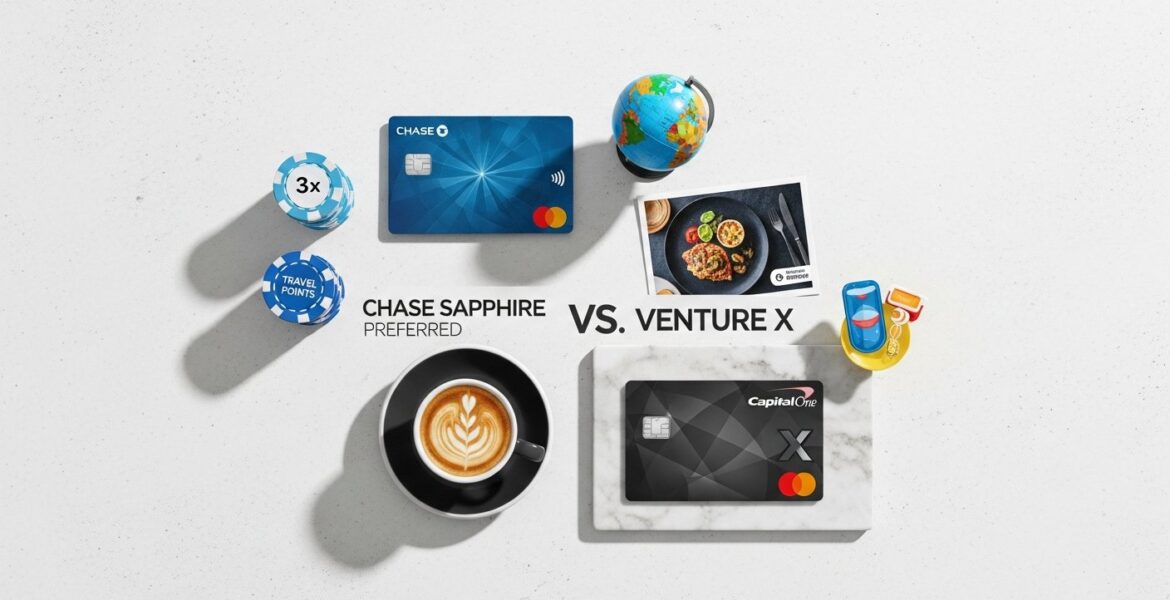
  • Example: Capital One Venture X Rewards Credit Card
    • Bonus: 75,000 miles (minimum $750 travel value).
    • Annual Fee: $395.
    • Ongoing Benefits: $300 annual travel credit, 10,000 bonus miles anniversary bonus (worth $100).
    • Net Value (Year 1): $750 (bonus) + $300 (travel credit) + $100 (anniversary miles) – $395 (AF) = $755. This card effectively pays for itself and then some, even with a higher annual fee.

Entry-Level vs. Premium Cards

  • Entry-Level (Often No Annual Fee): Great for building credit and earning small cash back bonuses. E.g., Chase Freedom Flex, Discover it Cash Back.
  • Mid-Tier (Moderate Annual Fee, $95-$250): Excellent value for sign-up bonuses and ongoing earning. E.g., Chase Sapphire Preferred, Capital One Venture, Amex Gold Card. These are often the sweet spot for many points enthusiasts.
  • Premium (Higher Annual Fee, $395+): Offer massive bonuses and extensive travel perks (lounge access, elite status, statement credits) that can easily offset the fee if utilized. E.g., Chase Sapphire Reserve, Amex Platinum Card, Capital One Venture X.

Gold Points’ Recommended Starting Strategy: If you’re new to the game and under Chase’s 5/24 rule, start with a Chase Sapphire Preferred. Its 60,000+ Ultimate Rewards point bonus is a fantastic entry point into transferable points, and the card’s earning structure is solid. From there, you can diversify into other ecosystems like Amex or co-branded airline/hotel cards based on your travel goals.

The Application Process and Beyond: From Approval to Redemption

You’ve done your research, picked your card, and understand the MSR. Now it’s time to apply and execute your plan to earn that bonus.

The Application

Most applications are done online. Be honest and accurate with your income and employment details. Banks use this information to assess your ability to pay. Some issuers offer “pre-qualification” or “pre-approval” tools, which can give you an idea of your likelihood of approval without a hard inquiry on your credit report. While not a guarantee, it’s a good preliminary step.

Upon submission, you might get an instant approval, or your application might go into “pending” status. If pending, don’t fret. Call the bank’s reconsideration line (a department specifically designed to review applications that weren’t instantly approved). Politely explain why you want the card, highlight your good credit history, and answer any questions they have. Often, a brief conversation can turn a denial into an approval.

Meeting the MSR: Execution is Key

Once approved, the clock starts ticking.

  • Activate your card immediately.
  • Start tracking your spending from day one. Use the strategies outlined earlier to ensure every eligible purchase goes on the new card.
  • Don’t wait until the last minute. Aim to hit the MSR at least a few weeks before the deadline to account for any delayed posting of transactions.

Receiving Your Bonus

After you meet the MSR, the bonus points/miles/cash back typically post to your account within 1-2 billing cycles. Banks need time to verify all transactions. Patiently check your online account for the bonus to appear.

Redemption Strategies: Unlocking Maximum Value

This is where your hard work pays off. How you redeem your points significantly impacts their value.

  • Travel Portals:
    • Ease: Simplest method. You book travel directly through the credit card issuer’s portal (e.g., Chase Travel, Amex Travel) like any online travel agency.
    • Value: Often offers a fixed value (e.g., Chase Sapphire Preferred gives 1.25 cents per point, Chase Sapphire Reserve gives 1.5 cents per point). This is a reliable option for good value without complexity.
  • Transfer Partners: The “Sweet Spot” Strategy
    • Complexity: Requires more research and flexibility, but yields the highest potential value.
    • Process: You transfer your credit card points (e.g., Ultimate Rewards) to an airline or hotel loyalty program (e.g., Hyatt, United). Then, you book your award travel directly through the partner’s website.
    • Value: This is where you can find “sweet spots”—disproportionately good redemptions. For example, transferring Chase Ultimate Rewards to Hyatt often yields 2+ cents per point for luxury hotel stays. Transferring Amex Membership Rewards to ANA for a round-trip first-class flight to Japan can deliver incredible value.
  • Cash Back:
    • Ease: Most direct. Redeem points for a statement credit or direct deposit.
    • Value: Usually 1 cent per point for transferable currencies (e.g., 60,000 UR points = $600 cash back). This is generally the lowest value redemption for travel points, so it’s best avoided unless cash is your primary goal.

When to Cancel or Downgrade Your Card

After you’ve earned and utilized your sign-up bonus, you’ll face the next annual fee.

  • Keep at Least One Year: It’s crucial to keep a card open for at least one year to avoid having the bonus clawed back by the issuer and to maintain a good relationship with the bank.
  • Evaluate Ongoing Value: Before the second annual fee hits, assess if the card’s ongoing benefits and earning rates justify the fee.
  • Product Change (Downgrade): If you don’t want to pay the annual fee, consider downgrading the card to a no-annual-fee version within the same card family (e.g., Chase Sapphire Preferred to Chase Freedom Flex). This preserves your credit history and often allows you to keep your points.
  • Cancel: If no suitable downgrade option exists and the card doesn’t provide enough value, you can cancel it. Be aware that canceling a card can slightly impact your credit utilization and average age of accounts.

Frequently Asked Questions About Credit Card Sign-Up Bonuses

Q: Will applying for multiple credit cards hurt my credit score?

A: When you apply for a new credit card, a “hard inquiry” is placed on your credit report, which can cause a small, temporary dip (typically 2-5 points) in your score. Opening new accounts also lowers your average age of accounts, another factor in your score. However, for responsible credit users who pay on time and keep utilization low, these effects are usually minor and short-lived. Over time, a higher total credit limit and a diverse credit mix can actually improve your score. The key is strategic, not reckless, applications.

Q: What if I can’t meet the minimum spend requirement?

A: It’s crucial not to force spending you wouldn’t otherwise do just to hit an MSR. Going into debt or buying unnecessary items negates the value of any bonus. If you realize you genuinely can’t meet the MSR without overspending, it’s better to miss the bonus than to incur interest or regretful purchases. Before applying for your next card, re-evaluate your average monthly spending and choose offers with MSRs that align naturally with your budget.

Q: Is it worth paying an annual fee for a sign-up bonus?

A: Absolutely, in many cases! The value of a sign-up bonus almost always significantly outweighs the first year’s annual fee. For example, a $95 annual fee for a bonus worth $750 in travel is a fantastic return. Many premium cards also offer statement credits or benefits (like lounge access or free night certificates

Archives

  • March 2026

Calendar

March 2026
M T W T F S S
 1
2345678
9101112131415
16171819202122
23242526272829
3031  
     

Categories

  • Our Top Picks
  • Products
  • Services
  • About
  • Our Top Picks
  • Products
  • Tech
  • Services

Copyright Gold Points 2026 | Theme by ThemeinProgress | Proudly powered by WordPress