
Gold Mine 2026: Unearthing the Best Credit Card Rewards Programs for Savvy Shoppers
On March 10, 2026 by pubmanThe Evolving Landscape of Credit Card Rewards in 2026
The credit card industry is a constantly shifting ecosystem, driven by competition, technological advancements, and evolving consumer behaviors. As we approach 2026, several key trends are likely to shape the rewards programs we interact with. We anticipate a continued emphasis on personalization, with issuers leveraging data to offer tailored bonuses and redemption options. Sustainability and ethical spending may also play a larger role, with some cards potentially offering elevated rewards for purchases from eco-friendly businesses or charitable donations. Moreover, digital wallets and contactless payments will likely become even more integrated into our daily routines, influencing how points are earned and redeemed.
2026 Best Credit Card Rewards — Quick Comparison by Use Case
Use this table to quickly identify the right program for your goals before diving deeper:
| Best For | Top Card | Annual Fee | Key Benefit | Est. Point Value |
|---|---|---|---|---|
| Flexible travel | Chase Sapphire Reserve | $550 | 3x travel/dining + $300 travel credit | 1.5–2.0¢ per point |
| Dining & groceries | Amex Gold Card | $325 | 4x U.S. supermarkets + 4x restaurants | 1.5–2.0¢ per MR point |
| Simple cash back | Citi Double Cash | $0 | 2% on everything (1% buy + 1% pay) | 1.0¢ per point (cash) |
| Amazon / Whole Foods | Amazon Prime Rewards Visa | $0 (Prime req.) | 5% Amazon.com + Whole Foods | 1.0¢ per point (cash) |
| Flat-rate travel simplicity | Capital One Venture X | $395 | 2x all + $300 travel credit + 10K anniversary miles | 1.0–1.5¢ per mile |
| Luxury travel perks | Amex Platinum | $695 | 5x flights direct/AmexTravel + Centurion Lounge access | 1.5–2.0¢ per MR point |
Point value note: Estimates based on transfer partner redemptions for economy and business class awards. Cash-equivalent redemptions typically yield 1¢/point. Transfer partner sweet spots (e.g., Hyatt for luxury hotels, Singapore Airlines for business class) can yield 2–4¢+ per point/mile for aspirational travel.
For consumers, this dynamic environment means that staying informed is paramount. What was once the “best” card last year might not hold the same value in 2026. Annual fees, redemption rates, transfer partners, and bonus categories are all subject to change. Our aim is to provide a snapshot of programs that have consistently demonstrated strong value and adaptability, along with strategies to help you navigate these shifts effectively. Whether you’re a seasoned points hacker or just starting your rewards journey, understanding these underlying currents is the first step toward maximizing your benefits in the coming years.
Top-Tier Flexible Travel & Everyday Rewards Programs for 2026

Flexible points currencies remain the gold standard for many, offering unparalleled versatility in how you earn and redeem your rewards. These programs are particularly valuable because their points can often be transferred to various airline and hotel loyalty programs, providing the potential for outsized value compared to simple cash back.
Chase Ultimate Rewards (UR)
For many years, Chase Ultimate Rewards has consistently ranked among the best, and we foresee its continued strength into 2026. The program’s value stems from its excellent transfer partners (including United Airlines, Southwest Airlines, Hyatt, and Marriott Bonvoy), coupled with the ability to redeem points directly for travel through the Chase travel portal, often at an elevated rate (e.g., 1.25x or 1.5x for Chase Sapphire Preferred and Reserve cardholders, respectively). The ecosystem of cards is also a major draw, allowing you to combine points from various cards (like the Chase Freedom Flex or Freedom Unlimited) into a premium card for maximum redemption value.
- Key Cards:
- Chase Sapphire Reserve: A premium travel card offering 3x points on travel and dining, a $300 annual travel credit, and 1.5 cents per point value when redeemed for travel through Chase.
- Chase Sapphire Preferred: A popular entry-level travel card, earning 2x points on travel and dining, and 1.25 cents per point value through the Chase travel portal.
- Chase Freedom Flex: Earns 5x points on rotating quarterly bonus categories (up to a spending cap) and 3x on drugstore purchases and dining.
- Chase Freedom Unlimited: Offers a flat 1.5x points on all non-bonus spending, plus 3x on dining and drugstore purchases.
- Why it’s great for 2026: The robust transfer partner list, coupled with the ability to pool points across cards, provides incredible flexibility for both aspirational travel redemptions and everyday savings. The consistent value proposition makes it a bedrock program for serious rewards collectors.
American Express Membership Rewards (MR)
American Express Membership Rewards stand out for their extensive list of airline and hotel transfer partners, often including unique international options not found with other programs (e.g., Emirates, ANA, Singapore Airlines). While some redemptions can be complex, the potential for luxury travel experiences is immense. Amex also frequently offers valuable Amex Offers, providing statement credits for spending with specific merchants, effectively reducing the cost of many purchases.
- Key Cards:
- The Platinum Card from American Express: A luxury travel card known for its extensive list of perks including airport lounge access, hotel elite status, and significant statement credits for various lifestyle categories (e.g., digital entertainment, Uber, airline fees). Earns 5x points on flights booked directly with airlines or AmexTravel.com and on prepaid hotels booked on AmexTravel.com.
- American Express Gold Card: An excellent card for foodies, offering 4x points on U.S. supermarkets (up to an annual cap) and at restaurants worldwide, plus useful dining credits.
- American Express Green Card: A mid-tier option earning 3x points on travel, transit, and restaurants.
- Blue Business Plus Credit Card from American Express: A fantastic card for small businesses, offering 2x points on all eligible purchases up to an annual spending cap, with no annual fee.
- Why it’s great for 2026: The sheer volume and quality of transfer partners, alongside the premium benefits offered by cards like the Platinum Card, make Amex MR indispensable for those seeking high-value international travel or luxury experiences. The Amex Offers program continues to add significant, tangible value for cardholders.
Capital One Miles
Capital One has significantly enhanced its rewards ecosystem in recent years, transforming its miles into a highly competitive flexible currency. What was once primarily a fixed-value redemption option now boasts a growing list of valuable airline and hotel transfer partners. This evolution positions Capital One Miles as a strong contender for 2026, especially for those who appreciate simplicity combined with flexibility.
- Key Cards:
- Capital One Venture X Rewards Credit Card: A premium travel card offering 2x miles on every purchase, a $300 annual travel credit, 10,000 bonus miles every anniversary, and access to Capital One Lounges and Priority Pass.
- Capital One Venture Rewards Credit Card: Earns 2x miles on every purchase, with a more modest annual fee.
- Capital One SavorOne Cash Rewards Credit Card: While technically a cash back card, its rewards can be converted to Capital One Miles if paired with a Venture or Venture X card, offering 3% cash back (3x miles) on dining, entertainment, popular streaming services, and at grocery stores.
- Why it’s great for 2026: The straightforward earning rate (2x on everything for Venture cards) combined with a solid and expanding list of transfer partners makes Capital One Miles incredibly user-friendly and powerful. The Venture X, in particular, offers compelling value with its travel credits effectively offsetting its annual fee for many users.
Best Cash Back Rewards Programs for 2026
Flat-Rate Cash Back Cards
Bank of America Preferred Rewards: The Multiplier Strategy
Often overlooked in top rewards card discussions, the Bank of America Preferred Rewards program can deliver among the highest flat cash back rates available — if you hold significant assets at Bank of America or Merrill:
| Preferred Rewards Tier | 3-Month Balance Required | Bonus Multiplier | Effective Rate (Customized Cash 3% cat.) |
|---|---|---|---|
| Gold | $20,000–$49,999 | +25% | 3.75% |
| Platinum | $50,000–$99,999 | +50% | 4.5% |
| Platinum Honors | $100,000+ | +75% | 5.25% (with BoA Customized Cash Rewards) |
The Bank of America Customized Cash Rewards card lets you choose your 3% category (online shopping, dining, travel, drug stores, home improvement/furnishings, or gas). Combined with Platinum Honors status, 5.25% on a chosen category rivals or beats many premium cards — with no annual fee on the base card. The Unlimited Cash Rewards card earns 1.5% base, or up to 2.625% flat at Platinum Honors — the best flat-rate cash back available without an annual fee for qualifying customers.
Caveat: The Preferred Rewards multiplier requires maintaining qualifying combined balances at Bank of America banking and/or Merrill investment accounts. This program is ideal for customers already banking or investing with Bank of America, not as a standalone card strategy.
These cards offer a consistent cash back percentage on every purchase, making them ideal for those who prefer not to track bonus categories.
- Citi Double Cash Card: Consistently a top choice, offering 2% cash back on every purchase (1% when you buy, 1% when you pay). Its simplicity and high flat rate make it a perennial favorite.
- Fidelity Rewards Visa Signature Card: Earns an unlimited 2% cash back on every purchase, with the option to deposit rewards directly into an eligible Fidelity account.
- Alliant Cashback Visa Signature Card: For those who meet specific banking requirements, this card can offer up to 2.5% cash back on the first $10,000 in eligible purchases per billing cycle.
Tiered & Rotating Category Cash Back Cards
These cards offer higher cash back rates in specific categories that rotate quarterly or are fixed for certain types of spending.
- Discover it Cash Back: Known for its 5% cash back on rotating categories (up to a quarterly maximum) and an unlimited dollar-for-dollar match of all cash back earned in the first year for new cardmembers. Categories often include gas stations, grocery stores, Amazon.com, and restaurants.
- Chase Freedom Flex: As mentioned in the flexible points section, this card also works as a fantastic cash back option, offering 5% cash back on rotating categories (up to a quarterly maximum) and 3% on dining and drugstore purchases. The rewards can be redeemed as cash back at 1 cent per point.
- U.S. Bank Cash+ Visa Signature Card: Allows cardholders to choose two 5% cash back categories (up to a quarterly maximum) from a list that often includes utilities, cell phone providers, department stores, and fast food, plus a 2% category of choice.
The key to maximizing cash back in 2026 will be to combine a solid flat-rate card for everyday spending with one or two tiered/rotating category cards to hit those bonus multipliers.
Elite Travel Rewards Programs for Specific Needs in 2026

Beyond flexible points, many dedicated travel credit cards offer significant value for specific airlines or hotel chains. These are often co-branded cards that provide elite status benefits, free nights, or accelerated earning within a particular loyalty program.
Airline Co-Branded Cards
For frequent flyers loyal to a specific airline, these cards can unlock benefits like free checked bags, priority boarding, discounted in-flight purchases, and the ability to earn elite status qualifying miles or segments.
- Southwest Airlines Rapid Rewards Credit Cards (Chase): Excellent for domestic travel, offering generous sign-up bonuses, anniversary points, and sometimes even companion pass qualifying points. Free checked bags for all passengers are a major perk.
- United MileagePlus Credit Cards (Chase): Provide benefits like free first checked bag, priority boarding, and United Club passes for premium cards. Miles can be valuable for international Star Alliance redemptions.
- Delta SkyMiles Credit Cards (American Express): Offer free checked bags, priority boarding, and access to Delta Sky Clubs (with premium cards). Known for frequent transfer bonuses from Amex MR.
- American Airlines AAdvantage Credit Cards (Citi/Barclays): Benefits include free checked bags, preferred boarding, and sometimes credit towards elite status.
Hotel Co-Branded Cards
Hotel cards are fantastic for earning free nights, receiving automatic elite status (which can mean upgrades, late checkout, and free breakfast), and enjoying enhanced experiences during your stays.
- Marriott Bonvoy Credit Cards (Chase/American Express): A wide range of cards offering free night certificates, automatic Silver or Gold Elite status, and accelerated earning at Marriott properties worldwide.
- Hilton Honors Credit Cards (American Express): Known for offering automatic elite status (Silver, Gold, or Diamond depending on the card), free night rewards, and high earning rates at Hilton properties.
- Hyatt Credit Cards (Chase): Highly regarded due to the high value of World of Hyatt points. Cards often offer free night certificates and automatic Discoverist or Explorist status.
When considering these specialized cards for 2026, evaluate your true loyalty. If you consistently fly one airline or stay with one hotel brand, the benefits can easily outweigh the annual fees. However, if your travel patterns are diverse, flexible points programs might offer more overall utility.
Co-Branded & Niche Rewards Programs for Everyday Spending in 2026
Beyond travel, a variety of co-branded and niche cards cater to specific spending habits or retailers, providing enhanced rewards where you spend the most. These cards often work best when integrated into a broader credit card strategy.
Retailer-Specific Cards
Many major retailers offer their own credit cards, often providing special discounts, financing options, or elevated rewards for purchases made with that brand.
- Amazon Prime Rewards Visa Signature Card (Chase): This card is a standout for frequent Amazon shoppers, offering 5% back at Amazon.com and Whole Foods Market with an eligible Prime membership. It also offers 2% back at restaurants, gas stations, and drugstores, and 1% on all other purchases. For those wondering, is my Amazon Prime membership worth it?, this card certainly adds to the value proposition. Our comprehensive Amazon Prime Benefits Worth It Guide delves deeper into all the perks, but for shoppers, this card is a key component of maximizing Prime benefits.
- Target RedCard (Debit or Credit): Offers a straightforward 5% discount on most Target purchases, making it a powerful tool for regular Target shoppers.
- Costco Anywhere Visa Card by Citi: Provides 4% cash back on eligible gas and EV charging purchases (up to an annual cap), 3% on restaurants and eligible travel, 2% on all Costco and Costco.com purchases, and 1% on everything else.
Gas & Grocery Specific Cards
While many general rewards cards offer bonus categories for gas or groceries, some cards specialize in these areas, often without rotating categories, making them reliable for consistent savings.
- Blue Cash Preferred Card from American Express: Offers a market-leading 6% cash back on U.S. supermarkets (up to an annual spending cap) and on select U.S. streaming subscriptions, plus 3% cash back on U.S. gas stations and transit.
- Citi Custom Cash Card: Automatically earns 5% cash back on purchases in your top eligible spending category each billing cycle (up to an annual cap), which can include gas stations or grocery stores.
Integrating these niche cards into your 2026 strategy means identifying where you spend the most consistently outside of travel and dining, and selecting a card that rewards those specific habits. They can be excellent companions to your primary flexible rewards or flat-rate cash back cards.
How To Maximize Credit Card Points in 2026: A Strategic Approach
How We Value Credit Card Points: Our Methodology
Point values listed in this guide are estimates based on real-world redemption examples as of 2026. Here’s exactly how we calculate them:
- Formula: Point Value (cents per point) = (Cash cost of the same booking) ÷ (Points required)
- Baseline: 1.0¢/point = cash redemption via portal (lowest reasonable value)
- Transfer partner values: Based on real booking examples on partner airline/hotel websites for specific routes and dates. We use business class transatlantic and economy domestic as benchmarks.
- Assumptions: Values assume (1) actual award space is available on the dates you want, (2) you are transferring at the standard 1:1 ratio unless noted, and (3) you have flexibility on dates and routing (+/- 3 days). Real-world results will vary.
- Sources: Chase, Amex, and Capital One official transfer partner pages; World of Hyatt award chart; Air Canada Aeroplan award chart; Avianca LifeMiles award chart; British Airways Avios distance-based chart; IRS Publication 525 (tax treatment); CFPB credit card complaint data.
- Last updated: March 2026. We update this guide quarterly and after any major program devaluation announcement.
Disclaimer: Point valuations are estimates for educational purposes only. They are not financial advice. Award availability, transfer ratios, and redemption costs may change at any time without notice. Always verify current terms on the issuer’s official website before applying for a card or transferring points.
Transfer Partner Sweet Spots: Maximizing Point Value in 2026
More High-Value Transfer Partners for 2026
Beyond the flagship sweet spots above, these additional transfer programs consistently deliver strong CPP for savvy redeemers:
| Program + Partner | Best Redemption | Transfer Ratio | Est. CPP |
|---|---|---|---|
| Chase UR / Amex MR → Air Canada Aeroplan | Round-trip economy US–Europe via Star Alliance (e.g., Lufthansa, SWISS, Turkish) | 1:1 | 2.0–3.5¢ |
| Amex MR / Chase UR → British Airways Avios | Short-haul partner flights (e.g., AA domestic <1,151 mi for 7,500 Avios one-way) | 1:1 | 1.5–2.5¢ |
| Amex MR / Capital One → Avianca LifeMiles | Business class US–Europe on Star Alliance partners (no fuel surcharges) | 1:1 | 3.0–5.5¢ |
| Chase UR → World of Hyatt (hotel sweet spots) | Category 1–2 Hyatt properties (budget/select service, 3,500–8,000 pts/night) | 1:1 | 1.5–3.0¢ |
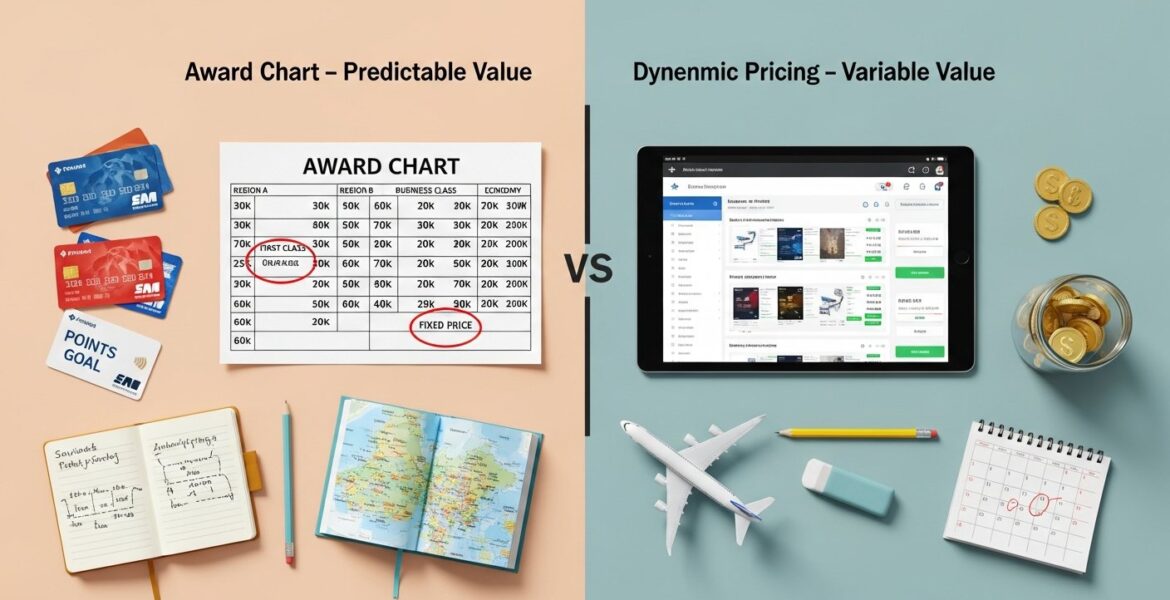
Dynamic pricing note: Some programs (Delta SkyMiles, United MileagePlus, Marriott Bonvoy) have moved to dynamic award pricing, where redemption costs fluctuate based on cash price — making it harder to find consistent sweet spots. Programs still using fixed award charts (Hyatt, Aeroplan, Avianca) tend to offer more predictable high-value redemptions. Prioritize fixed-chart programs for aspirational travel.
The true power of flexible points currencies (Chase UR, Amex MR, Capital One Miles) lies in transferring to airline and hotel partners at the right time. Here are proven high-value redemptions for 2026:
| Program + Partner | Sweet Spot Redemption | Approx. Points Needed | Est. Cash Value | CPP |
|---|---|---|---|---|
| Chase UR → Hyatt | Category 4 Hyatt hotel (1 free night) | ~15,000 pts | $200–$400/night | 1.3–2.7¢ |
| Amex MR → Air France/KLM (Flying Blue) | Round-trip business class Europe promo award | ~50,000–70,000 pts | $2,500–$5,000 | 3.5–5.0¢ |
| Chase UR → United MileagePlus | Saver economy US–Europe one-way | ~30,000 miles | $500–$900 | 1.7–3.0¢ |
| Amex MR → Singapore Airlines (KrisFlyer) | Business class US–Asia (Suites on SQ) | ~95,000–115,000 pts | $5,000–$12,000 | 4.3–10.4¢ |
| Capital One Miles → Turkish Airlines (Miles&Smiles) | Round-trip US domestic business (via partner) | ~10,000–14,000 miles | $400–$700 | 2.9–5.0¢ |
How to find sweet spots: Award charts and pricing change frequently. Check the program’s official award chart before transferring — transfers are typically irreversible. Research routes on the partner airline’s own website, not just the issuer’s travel portal, to see partner award availability. Flexibility on dates and routing can dramatically improve point value.
Earning points is only half the battle; truly maximizing their value requires strategic planning and execution. As we look to 2026, these are the core principles that will help you extract the most from your credit card rewards.
1. Understand Your Spending Habits
The first step to maximizing rewards is to honestly assess where you spend your money. Do you frequently dine out? Travel often? Spend a lot on groceries or online shopping (e.g., on Amazon, where a card like the Amazon Prime Rewards Visa Signature can shine)? Aligning your cards with your spending patterns is fundamental. A card offering 5x points on travel won’t do you much good if you rarely leave home, just as a grocery bonus card is wasted on someone who eats out every night.
2. Master the Art of Sign-Up Bonuses (SUBs)
Sign-up bonuses are often the single largest infusion of points you’ll receive from any credit card. These bonuses can be worth hundreds, if not thousands, of dollars in travel or cash back. Plan your applications strategically, ensuring you can comfortably meet the minimum spending requirements without going into debt. Be mindful of issuer rules (e.g., Chase’s 5/24 rule, Amex once-per-lifetime rule) to ensure eligibility for future bonuses.
3. Leverage Category Bonuses and Stacking
Many cards offer elevated rewards in specific categories (e.g., 3x on dining, 5% on gas). Use the right card for the right purchase. This is where a multi-card strategy comes into play. For example, use your American Express Gold Card for groceries and dining, your Chase Freedom Flex for its rotating 5% categories, and a flat 2x/2% card for everything else. “Stacking” involves combining rewards from different programs, such as using a bonus category card at a retailer that also offers a loyalty program or through a shopping portal.
4. Utilize Transfer Partners Wisely
For flexible points currencies like Chase Ultimate Rewards, American Express Membership Rewards, and Capital One Miles, the highest value often comes from transferring points to airline and hotel loyalty programs. Research “sweet spots” – specific redemptions that offer exceptional value (e.g., flying business class on a partner airline for fewer points than booking directly). Be flexible with your travel dates and destinations to find these opportunities. Keep an eye out for transfer bonuses, where issuers offer extra points when you transfer to a specific partner.
5. Don’t Overlook Card Perks and Credits
Many premium travel cards come with an array of benefits like airport lounge access, travel credits, statement credits for specific services (e.g., Uber, CLEAR, Global Entry/TSA PreCheck), and rental car insurance. Factor these into the card’s annual fee. If you use these benefits regularly, they can easily offset, or even exceed, the cost of the card. For instance, the $300 travel credit on the Chase Sapphire Reserve significantly reduces its effective annual fee.
6. Consider Authorized Users (Strategically)
Adding an authorized user can sometimes help meet minimum spending requirements for sign-up bonuses faster. It also allows another person to contribute to earning points on your account. However, ensure the authorized user is responsible, as you are ultimately liable for all charges on the account.
7. Regularly Review Your Portfolio
The rewards landscape changes. Periodically (at least once a year, preferably before annual fees are due), review your credit card portfolio. Are you still getting value from each card? Have the benefits changed? Is there a new card that better fits your spending or travel goals for 2026? Don’t be afraid to downgrade, close, or apply for new cards as your needs evolve.
How To Avoid Credit Card Rewards Expiring and Losing Value
One of the most frustrating experiences for any points enthusiast is seeing hard-earned rewards vanish or diminish in value. Protecting your points and miles from expiration or devaluation is a critical aspect of smart rewards management for 2026 and beyond.
1. Understand Expiration Policies
Not all rewards programs have the same expiration rules. Some points, like those from Chase Ultimate Rewards, typically do not expire as long as your account is open and in good standing. Others, particularly airline miles or hotel points, might expire after a period of inactivity (e.g., 18-24 months without earning or redeeming activity). Cash back rewards usually don’t expire, but it’s always wise to check the terms and conditions of each specific program you participate in.
- Action: Review the terms and conditions for each of your rewards programs. Set reminders in your calendar for programs with inactivity clauses.
2. Keep Your Account Active
For programs with inactivity-based expiration, the simplest solution is to keep your account active. This doesn’t always mean making a large purchase. Often, a small transaction, earning points from a shopping portal, or even redeeming a small amount of points can reset the expiration clock. Transferring points from a flexible currency program (like Amex Membership Rewards to a hotel program) also counts as activity.
- Action: Make a small purchase, redeem a nominal amount of points, or transfer points to a partner account at least once a year for programs with inactivity rules.
3. Use or Transfer Points Before Closing Cards
If you decide to close a credit card, especially one tied to a specific loyalty program (e.g., an airline co-branded card), ensure you use or transfer any accumulated points first. In many cases, points earned directly with the issuer (like Chase Ultimate Rewards or Amex Membership Rewards) can be retained if you have another card in the same family. However, points earned directly with an airline or hotel often disappear if the associated card is closed and you have no other activity with that loyalty program.
- Action: Before closing any card, check if the points will be lost. If so, redeem them for travel, cash back, or transfer them to a partner program.
4. Be Aware of Program Devaluations
While not strictly “expiration,” devaluations can feel just as impactful, as your points lose purchasing power. Airlines and hotels frequently adjust their award charts, often increasing the number of points required for redemptions. There’s no foolproof way to prevent devaluations, but staying informed and redeeming points for aspirational travel within a reasonable timeframe (rather than hoarding them indefinitely) can mitigate the risk.
- Action: Avoid hoarding points for too long, especially for specific airline or hotel programs. Have a redemption goal in mind and work towards it.
5. Monitor Your Points Balances
Regularly log into your credit card and loyalty program accounts to monitor your points balances. This helps you track expiration dates, spot any discrepancies, and ensure you’re aware of how many points you have available for redemption. Many programs offer email alerts or notifications if points are nearing expiration.
- Action: Add points balances to your monthly financial review. Sign up for email notifications from your loyalty programs.
By proactively managing your points and understanding the rules of each program, you can ensure that your credit card rewards remain a valuable asset for your financial well-being and travel aspirations in 2026 and beyond.
Card Network Basics: Visa vs Mastercard vs Amex vs Discover
The card network is separate from the issuer (Chase, Amex, Citi) — it determines where your card is accepted globally and what built-in benefits come with it:
- Visa (issued by Chase, Capital One, Citi, Bank of America, others): Widest global acceptance — accepted in 200+ countries. Visa Signature/Infinite cards include purchase protection, extended warranty, travel/emergency assistance, and auto rental CDW. No direct issuer fees from Visa.
- Mastercard (issued by Citi, Barclays, Capital One, others): Near-identical global acceptance to Visa. World/World Elite Mastercard tiers include cell phone protection (covers damage/theft), Lyft credits, free ShopRunner membership, and Priceline discounts.
- American Express (acts as both issuer and network): Accepted in 160+ countries — slightly less ubiquitous than Visa/Mastercard in rural/developing areas. Amex is the issuer for most Amex-branded cards, retaining more control over benefits and dispute resolution. Offers a wider range of premium perks directly through its card portfolio.
- Discover (issued primarily by Discover Financial Services): Accepted in 200+ countries via network agreements. Strong in the U.S., improving internationally. The Discover it Cash Back card’s first-year match is one of the best cash back promotions available, particularly for new cardholders with moderate spending.
Practical tip: For international travel, always carry both a Visa/Mastercard and an Amex card. Most merchants worldwide accept Visa and Mastercard. Amex provides superior benefits and rewards on many premium cards, but have a backup for smaller merchants that don’t accept it.
Regulatory & Tax Essentials for Credit Card Rewards (2026)
Before maximizing your rewards strategy, understand the regulatory and tax framework that governs credit card rewards in the U.S.:
- IRS treatment of sign-up bonuses: The IRS generally does not consider credit card rewards (cash back, points, miles) as taxable income when they are tied to a spending requirement — they are treated as a purchase price reduction/rebate. However, referral bonuses or no-spend-required bonuses (rare) may be reportable as “other income.” Always consult a tax professional for your specific situation. (Source: IRS Publication 525, Taxable and Nontaxable Income)
- Business card rewards: If you earn rewards on business expenses and deduct those expenses, you may need to reduce your deduction by the value of rewards received. The tax treatment can vary; consult a CPA.
- CFPB consumer protections: The Consumer Financial Protection Bureau (CFPB) regulates credit card issuers and requires clear disclosure of reward terms, expiration policies, and any changes. If an issuer devalues or modifies a rewards program, they must notify cardholders. You can file complaints about deceptive practices at consumerfinance.gov/complaint.
- Foreign transaction fees: Most premium travel rewards cards waive foreign transaction fees (typically 3% of the transaction). If you travel internationally, always use a card with no foreign transaction fee to avoid erasing your rewards earnings. Common no-FTF cards: Chase Sapphire Reserve/Preferred, all Capital One cards, Amex Platinum/Gold, Citi Strata Premier.
- Interest charges: Carrying a balance on a rewards card eliminates all rewards value. The average credit card APR in 2026 exceeds 20%. Always pay your statement balance in full each month to capture net positive value from rewards.
Frequently Asked Questions
What is the single best credit card rewards program for 2026?▾
Are credit card annual fees worth it for rewards cards in 2026?▾
How does my credit score impact my ability to get the best rewards cards?▾
Can I earn rewards on business expenses in 2026?▾
What’s the difference between points and miles, and which is better for 2026?▾
Is it possible to combine rewards from different credit card programs?▾
Recommended Resources
You might also enjoy Peer To Peer Lending Guide 2026 from Trading Costs.
Check out Best Business Ideas For Beginners 2025 on AssetBar for a deeper dive.
Archives
Calendar
| M | T | W | T | F | S | S |
|---|---|---|---|---|---|---|
| 1 | 2 | 3 | 4 | 5 | ||
| 6 | 7 | 8 | 9 | 10 | 11 | 12 |
| 13 | 14 | 15 | 16 | 17 | 18 | 19 |
| 20 | 21 | 22 | 23 | 24 | 25 | 26 |
| 27 | 28 | 29 | 30 | |||