
Find Your Gold: Best
On April 15, 2026 by pubmanUpdated October 2023. Navigating the world of points and miles can feel overwhelming, but seeing the best bank rewards programs compared side-by-side reveals clear paths to maximizing your daily spending. Whether you want to fund your next international vacation or simply reduce your monthly expenses through statement credits, aligning your wallet with the right financial institution makes a massive difference.
In my years analyzing consumer shopping habits, I have found that a strategic approach to earning and redeeming points separates casual spenders from those who extract thousands of dollars in annual value. Understanding the nuances between different banking ecosystems prevents you from leaving money on the table.
A system that works perfectly for a frequent business traveler might be entirely wrong for a family prioritizing cashback on groceries. We will break down exactly how these systems function, the core metrics used to evaluate them, and the proven methods for optimizing your return on every single dollar you spend.
How Do Bank Loyalty Ecosystems Generate Value?
Financial institutions design programs to incentivize ongoing consumer spending by offering proprietary loyalty currencies in exchange for transactional volume. When you swipe a card, the bank collects a merchant interchange fee, typically ranging from 1.5% to 3% of the transaction total. A portion of this revenue is returned to the consumer as points, miles, or cashback.
Key Terms for Beginners
- Interchange Fee: The processing fee a merchant pays to the bank when you swipe your card, which helps fund your rewards.
- Points Deflation: The gradual loss of a point’s purchasing power as loyalty programs increase the cost of award redemptions over time.
The primary goal for the consumer is to accumulate these assets efficiently and deploy them for maximum outsized value. According to a recent Consumer Financial Protection Bureau (CFPB) analysis, 78% of active credit card users are enrolled in at least one rewards program, yet fewer than a third optimize their redemptions effectively.
The underlying value of a point fluctuates drastically based on how you choose to use it. Redeeming a point for a statement credit typically yields a fixed baseline value, often one cent per point. Transferring that same point to an airline partner alters the math completely. A traveler looking to book a last-minute transcontinental flight might face a cash price of $850. By transferring 35,000 points to the airline’s frequent flyer program, that traveler secures the seat while effectively earning 2.4 cents per point. This arbitrage opportunity is why consumers obsess over highly rated credit card points systems.
Banks also generate revenue through annual fees and interest charges, funding the lucrative sign-up bonuses used to acquire new customers. When evaluating these systems, it becomes vital to weigh the upfront cost against the realistic value you can extract based on your organic spending habits. A premium program with a high annual fee easily pays for itself if the user frequently utilizes the included travel credits, lounge access, and elevated earning categories.
The Core Evaluation Metrics for Premier Financial Programs

Comparing different rewards ecosystems requires looking past the flashy marketing and analyzing the mathematical realities of earning and redeeming. The most critical metric is the baseline earning potential combined with category multipliers. A card that offers 4x points on dining and groceries accelerates your balance much faster than a flat 1.5% earning card, provided those categories represent the bulk of your household budget. Understanding your opportunity cost is essential; every dollar spent on a suboptimal card represents lost value.
The Power of Transfer Partners
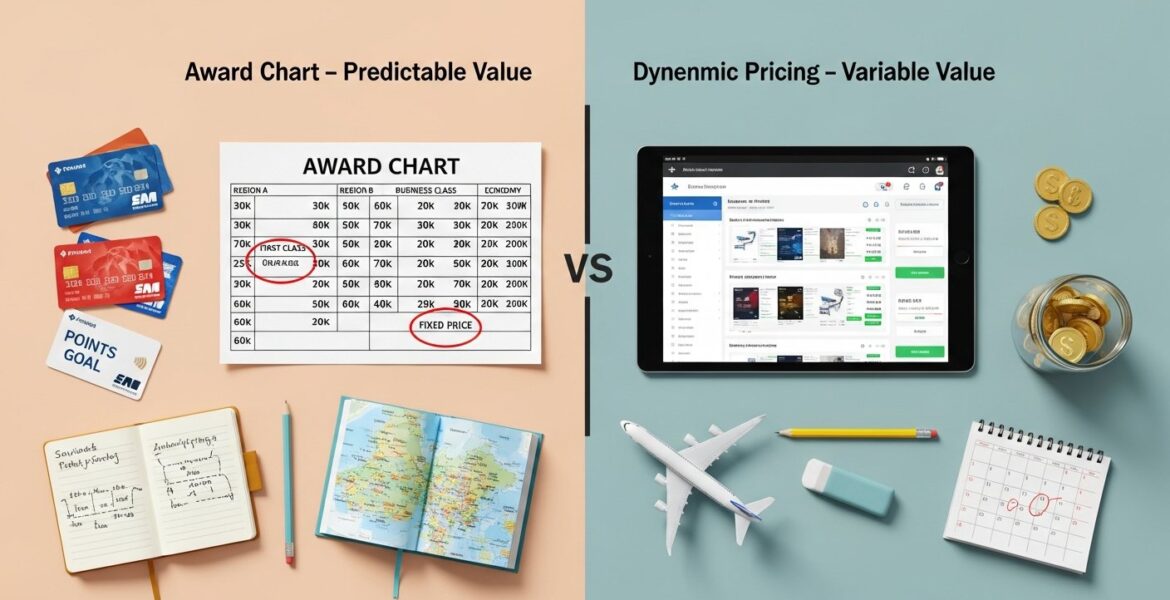
Direct portal redemptions tie the value of your points to the cash price of a flight or hotel. Airline and hotel transfer partners break this link, offering fixed award charts where the point cost remains stable regardless of the cash price. Moving points directly to a partner program like World of Hyatt allows users to book luxury suites that might retail for $1,200 a night for just 30,000 points, yielding an exceptional 4 cents per point. Not all banks partner with the same airlines or hotels, making the partner list a crucial deciding factor.
| Program Ecosystem | Primary Card Example | Key Earning Highlights | Travel Redemption Value | Top Transfer Partners | Average Annual Fee |
|---|---|---|---|---|---|
| Chase Ultimate Rewards | Sapphire Reserve | 3x Dining & Travel | 1.5c via portal, higher via transfers | United, Hyatt, Southwest | $550 |
| Amex Membership Rewards | Gold Card | 4x Groceries & Dining | 1.0c via portal, higher via transfers | Delta, ANA, British Airways | $250 |
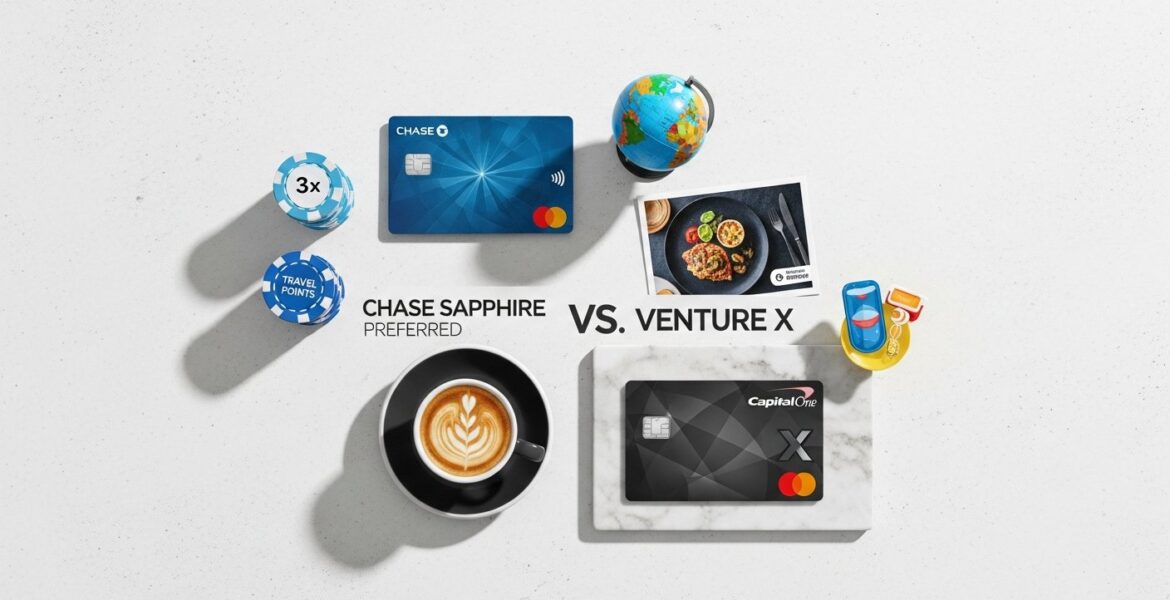
| Capital One Venture | Venture X | 2x on all purchases | 1.0c statement credit, high transfer value | Air France, Turkish Airlines | $395 |
| Citi ThankYou | Premier | 3x Gas, Groceries, Dining | 1.0c via portal, higher via transfers | JetBlue, Avianca, Singapore Airlines | $95 |
[INLINE IMAGE 2: Comparative matrix chart of bank loyalty programs showing earning rates and redemption values.]
Major Bank Point Systems and Their Ideal Use Cases
Chase Ultimate Rewards remains the benchmark for versatility and ease of use. The system appeals to both beginners and advanced optimizers due to its robust domestic transfer partners, particularly United Airlines and World of Hyatt. Chase enforces a strict 5/24 rule, automatically declining applicants who have opened five or more credit cards across any bank in the past 24 months. This artificial scarcity forces savvy shoppers to prioritize Chase applications early in their rewards journey. Earning points is streamlined through category multipliers on dining, travel, and quarterly rotating categories depending on the specific card held.
American Express Membership Rewards
American Express caters heavily to premium travelers and big spenders. The Membership Rewards (MR) ecosystem lacks a simple, high-value cash-out option, forcing users into travel redemptions to realize the program’s worth. However, Amex provides unparalleled access to international airline alliances. Booking first-class international cabins often relies on Amex MR points due to frequent transfer bonuses, where the bank offers a 20% to 30% bump in points when transferring to specific partners like Virgin Atlantic or Air France. The steep annual fees attached to premium Amex cards are offset by monthly statement credits for rideshares, dining, and airline incidentals.
Capital One and Citi
Capital One Venture miles have evolved from a simple travel eraser program into a formidable transfer ecosystem. Their flat 2x earning structure across all purchases removes the cognitive load of memorizing category multipliers. Citi ThankYou points thrive on diverse earning categories, with mid-tier cards offering exceptional returns on everyday expenses like groceries and gas. Both programs feature extensive international airline partnerships. By maximizing the top transfer partners, users of these supposedly secondary systems frequently uncover niche redemptions, such as utilizing Turkish Airlines Miles&Smiles to book domestic United flights for a fraction of the cost United would charge directly.
How Do Strategic Card Combinations Multiply Yields?

Isolating your spend to a single card severely limits your earning velocity. Card stacking involves holding multiple products from the same financial institution to ensure every dollar spent earns a multiplier. Banks intentionally design their product portfolios to complement each other. A premium travel card might offer 3x on dining and flights but only 1x on general purchases. By adding a no-annual-fee card from the same bank that earns 1.5x or 2x on all other spend, you pool those points into a single, highly valuable central account. According to a recent survey by The Points Guy, users who strategically combine three cards from the same ecosystem earn 45% more points annually than those using a single-card strategy.
Executing the Perfect Strategy
Consider a household spending $4,000 monthly, split evenly between groceries, dining, travel, and miscellaneous expenses. Putting all $4,000 on a basic 1% cashback card yields exactly 40,000 points ($400) a year. By shifting grocery and dining spend to a card earning 4x, and utilizing a solid base earning card for the rest, the total balloons to over 115,000 points annually. Those pooled points can then be transferred to a high-value travel partner.
What success looks like: A user meticulously routes their $800 monthly grocery bill through an Amex Gold to capture 4x points, yielding 38,400 points a year, while directing their non-category utility bills to a flat 2% earning card, optimizing every transaction.
What failure looks like: A consumer pays a $550 annual fee for a premium travel card, then proceeds to use it for thousands of dollars in medical bills and auto repairs, earning a mere 1x on massive expenses where a 2x flat-rate card would have doubled their return instantly. Utilizing a solid base earning card prevents this exact scenario.
[INLINE IMAGE 4: Flowchart demonstrating credit card stacking strategy for maximizing points across spending categories.]
The Science of Avoiding Redemption Pitfalls and Lost Value
Accumulating a massive points balance feels rewarding, but the actual value is realized entirely at the point of redemption. One of the most severe mistakes consumers make is hoarding points for years. Unlike cash in a high-yield savings account, loyalty points do not earn interest. They suffer from continuous points deflation. Banks and travel partners regularly alter their award charts, increasing the number of points required for a flight or hotel stay. Unredeemed balances lose roughly 4% to 8% of their purchasing power annually (Bankrate, 2023). A business-class ticket that costs 60,000 points today might require 85,000 points two years from now.
Portal Traps and Suboptimal Cash-Outs
- Redeeming for merchandise: Using travel-oriented points to purchase electronics or gift cards through a bank portal consistently yields less than 0.8 cents per point, destroying the value you worked hard to accumulate.
- Ignoring overlapping credits: Premium cards charge high fees justified by statement credits for dining, rideshares, or travel incidentals. Failing to use these use-it-or-lose-it monthly credits effectively increases your out-of-pocket cost for the card.
- Transferring without availability: Transferring points to an airline partner is irreversible. If you transfer 50,000 points before confirming award space on the specific flight you want, those points are trapped in the airline’s ecosystem, rendering them useless if the flight sells out.
Another major error involves misunderstanding dynamic pricing. When an airline removes fixed award charts and ties the point cost directly to the cash fare, the outsized value proposition vanishes. Consumers must learn to identify sweet spots within partner networks that still utilize region-based or distance-based fixed charts to protect their margins.
Strategies for Aligning a Loyalty Ecosystem with Your Lifestyle
Choosing the ideal ecosystem requires a brutally honest assessment of your financial habits and travel aspirations. If you refuse to spend time researching flight availability and transfer ratios, investing in a complex points system will lead to frustration and suboptimal redemptions. For those individuals, a robust cashback setup or a fixed-value travel card offers peace of mind without the homework. Conversely, if you enjoy the puzzle of award booking and aspire to fly international business class, committing to Chase or American Express is non-negotiable.
You must also factor in the risk of ecosystem lock-in. Consolidating all your financial activity into one bank maximizes your short-term point balance but makes it administratively difficult to switch if that bank devalues its program. Diversifying across two complementary systems—such as holding a Chase card for domestic hotel stays and a Capital One card for international flights—provides a safety net against sudden program alterations. Furthermore, adding top-tier hospitality co-branded options to a flexible points strategy can elevate travel experiences through automatic elite status and free night certificates without requiring massive daily spend.
Ultimately, evaluating financial loyalty networks directly against your personal household budget ensures you select a system that organically enhances your life. By leveraging category multipliers, understanding transfer partnerships, and aggressively avoiding common redemption traps, you transform everyday expenses into a powerful economic engine. The right strategy not only offsets the cost of premium travel but also provides tangible, ongoing value that compounds year after year.
Sources & References

- J.D. Power. (2023). U.S. Credit Card Satisfaction Study. J.D. Power Financial Services Insights.
- Consumer Financial Protection Bureau (CFPB). (2023). The State of Consumer Credit and Rewards Ecosystems. CFPB Annual Report.
- The Points Guy. (2023). Maximizing Rewards: The Mathematical Advantage of Card Combinations. TPG Analytics.
- Bankrate. (2023). The Hidden Cost of Point Hoarding and Program Devaluations. Bankrate Financial Data Hub.
About the Author
Priya Devi, Smart Shopper & Rewards Expert (E-commerce Loyalty Consultant, Consumer Behavior Analyst) — I love uncovering the best deals and loyalty strategies to make your shopping more rewarding and your wallet happier.
Reviewed by Julian Thorne, Senior Editor, Loyalty & Consumer Engagement — Last reviewed: April 15, 2023