
when points are worth more for travel
On April 13, 2026 by pubmanDecoding the Sweet Spot: When Credit Card Points & Miles Are Worth More for Travel
So, you’ve diligently racked up credit card points and airline miles, a veritable dragon’s hoard ready to be unleashed on your next adventure. But before you start picturing yourself sipping cocktails on a beach for pennies on the dollar, there’s a crucial question to answer: when are those points *actually* worth more for travel? The value of your rewards can fluctuate wildly depending on several factors, turning that dream vacation into a disappointing compromise if you don’t play your cards right. This guide will equip you with the knowledge to identify those sweet spots where your points and miles stretch further, maximizing your travel rewards and making those aspirational trips a reality. We’ll delve into seasonal trends, program nuances, and strategic booking techniques to ensure you’re always getting the most bang for your buck (or, more accurately, your point!).
#
1. Off-Peak Travel: The Golden Rule of Redemption
One of the most consistent ways to boost the value of your travel rewards is to travel during off-peak seasons. This is a fundamental principle applicable to almost all airlines and hotel loyalty programs. Think beyond the obvious summer vacations, Christmas holidays, and Spring Break rushes. Instead, consider traveling during the shoulder seasons – the periods immediately before and after peak times.
**Why does this work?** Simply put, demand drives pricing. During peak seasons, airlines and hotels know they can charge a premium because everyone wants to travel then. This increased demand translates directly into higher point and mile redemption rates. Think of trying to book a hotel in Paris during Fashion Week. The same room could cost twice or even three times as many points as it would in November.
**Examples:**
* **Europe in the Spring or Fall:** Enjoy pleasant weather, fewer crowds, and significantly lower redemption rates compared to the summer months.
* **Caribbean in late April/early May or September/October:** You might encounter a bit of rain, but you’ll also find far fewer tourists and substantially cheaper award bookings.
* **Ski Destinations in early December or late March/early April:** Hit the slopes without the holiday crowds or peak-season prices.
**How to Find Off-Peak Dates:**
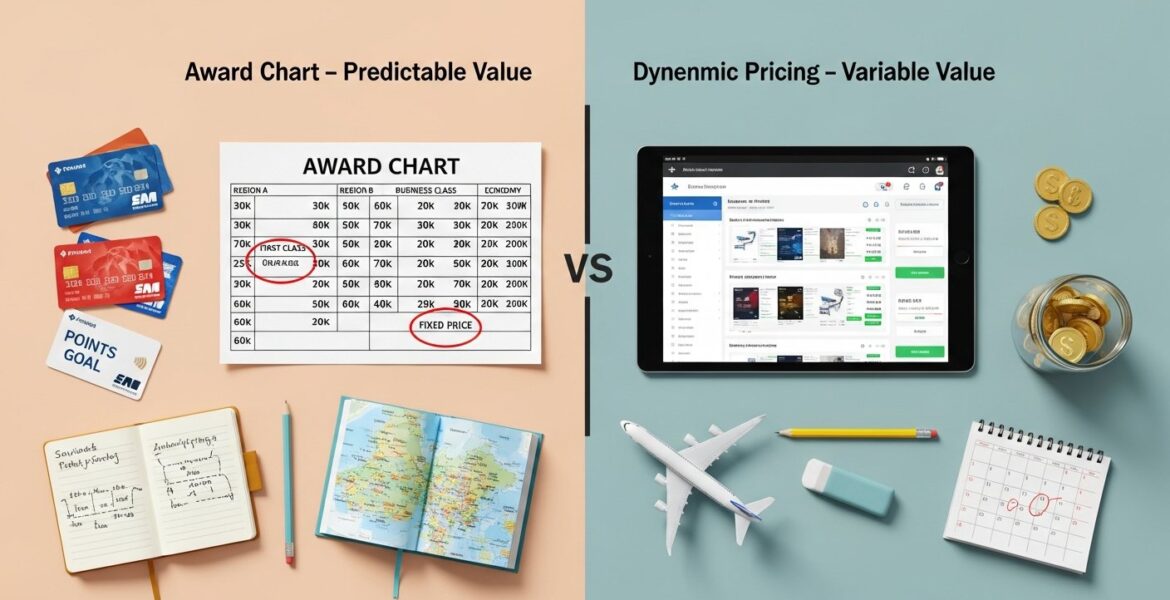
* **Check the loyalty program’s award charts:** Some programs have clearly defined off-peak, standard, and peak dates. Look for these charts on the airline or hotel’s website.
* **Use flexible date search tools:** Many airline and hotel websites allow you to search for award availability across a range of dates. This helps you identify the periods with the lowest point requirements.
* **Consider using third-party award search tools:** These tools can often provide a comprehensive overview of award availability across multiple airlines and programs.
By strategically choosing your travel dates, you can potentially redeem the same number of points for a longer trip, a better hotel, or a higher class of service.
#
2. The Transatlantic Trick: Leveraging Partner Airlines
Navigating transatlantic travel with points and miles can be tricky, but it also presents opportunities for significant value. Often, booking flights with partner airlines within an alliance (like Star Alliance, Oneworld, or SkyTeam) can yield better redemption rates than booking directly with the major US carriers.
**Why does this work?** Airlines sometimes offer preferential award pricing to partner airlines to fill seats and optimize revenue management. They might also have different fuel surcharges or redemption fees.
**Examples:**
* **Flying to Europe with United Miles:** Instead of booking directly with United, explore using your United miles to book a flight on Lufthansa, Swiss, or Austrian Airlines (all Star Alliance partners). You might find lower redemption rates or fewer fuel surcharges.
* **Flying to Asia with American Airlines Miles:** Consider using your American Airlines miles to book a flight on Japan Airlines (JAL) or Cathay Pacific (both Oneworld partners). Their service is often considered superior, and you might find better award availability.
**How to Find Partner Airline Availability:**
* **Use the airline’s website to search for partner awards:** Most airline websites have a dedicated section for searching award flights on partner airlines.
* **Use a dedicated award search tool:** These tools are designed to search for award availability across multiple airlines and alliances simultaneously.
* **Consider booking over the phone:** Sometimes, the website might not display all available partner awards. Calling the airline’s customer service can reveal hidden availability.
Always compare the total cost (including points/miles, taxes, and fees) across different airlines before making a booking. This simple step can save you thousands of points.
#
3. Utilizing Hotel Free Night Certificates Strategically
Many hotel credit cards offer an annual free night certificate, which can be a valuable perk… if used strategically. These certificates typically have restrictions, such as limitations on the category or point value of hotels you can book. The key is to redeem them for high-value stays that maximize their worth.
**How to Maximize Free Night Certificate Value:**
* **Target expensive hotels:** Look for hotels where a paid night would cost significantly more than the annual fee of your credit card. Think luxury hotels in major cities or resort destinations.
* **Use them during peak seasons or events:** This is when hotel prices are at their highest, making the certificate even more valuable.
* **Combine with other promotions:** Some hotels offer promotions like “stay three nights, get the fourth night free.” If your free night certificate can cover one of those nights, you’re effectively getting a four-night stay for the price of two.
* **Check for restrictions carefully:** Be aware of any limitations on the certificate, such as eligible hotel categories or blackout dates.
* **Book in advance:** Popular hotels book up quickly, especially during peak seasons. Secure your stay well in advance to avoid disappointment.
**Examples:**
* Using a Marriott free night certificate at a luxury resort in Hawaii during the Christmas holidays.
* Redeeming a Hyatt free night certificate at a Category 7 hotel in a major city like New York or London.
#
4. Redeeming for Premium Cabin Awards (Business/First Class)
While economy class redemptions can offer good value in certain situations, redeeming your points and miles for business or first class travel can unlock the highest potential value. This is especially true on long-haul international flights.
**Why are premium cabin awards valuable?**
* **The cash price is significantly higher:** The price difference between an economy class ticket and a business or first class ticket can be astronomical. Redeeming points for a premium cabin allows you to experience luxury travel at a fraction of the cost.
* **Enhanced travel experience:** Enjoy lie-flat seats, gourmet meals, priority boarding, lounge access, and other perks that make the journey as enjoyable as the destination.
* **Higher redemption value per point:** While you’ll need more points for a premium cabin award, the redemption value per point is often much higher compared to economy class.
**Tips for Finding Premium Cabin Award Availability:**
* **Book well in advance:** Premium cabin award seats are limited, so booking as far in advance as possible increases your chances of finding availability.
* **Be flexible with your dates and destinations:** Consider traveling on less popular days of the week or to alternative airports.
* **Utilize award search tools:** These tools can help you identify airlines and routes with available premium cabin award seats.
* **Consider positioning flights:** Sometimes, flying to a nearby airport and then taking a connecting flight in your desired class can be more cost-effective.
**Considerations:**
* Premium cabin awards require a significant amount of points, so make sure you have enough before you start searching.
* Be aware of fuel surcharges and other fees, which can sometimes offset the value of the redemption.
#
5. Transfer Bonuses: Amplify Your Point Power
Keep an eye out for transfer bonuses offered by credit card issuers like Chase, American Express, Citi, and Capital One. These bonuses allow you to transfer your points to participating airline or hotel loyalty programs at an enhanced rate, effectively multiplying your point value.
**How do Transfer Bonuses Work?**
Typically, credit card points transfer to airline and hotel programs at a 1:1 ratio. However, during a transfer bonus, you might receive a bonus of 20%, 30%, or even 50% on your transfer. For example, a 25% bonus means that for every 1,000 credit card points you transfer, you’ll receive 1,250 airline miles or hotel points.
**When to Use Transfer Bonuses:**
* **When you have a specific redemption in mind:** Don’t transfer points speculatively. Only transfer when you have a concrete travel plan and have confirmed award availability.
* **When the bonus significantly improves your redemption value:** Calculate the redemption value with and without the bonus to ensure it’s worth the transfer.
* **When you’re close to having enough points for an award:** A transfer bonus can help you bridge the gap and secure your desired redemption.
**How to Find Transfer Bonuses:**
* **Sign up for email alerts from your credit card issuer:** They will typically announce transfer bonuses via email.
* **Follow travel blogs and websites:** These sources often report on the latest transfer bonus offers.
Transfer bonuses are a fantastic way to stretch your points further and unlock even greater value from your travel rewards.
#
FAQ: Maximizing Your Travel Rewards
**Q: Are all points and miles created equal?**
**A:** No. The value of points and miles varies widely depending on the program, the airline, the hotel, and the specific redemption. Always research and compare different options before making a booking.
**Q: How do I calculate the value of my points and miles?**
**A:** Divide the cash price of the flight or hotel by the number of points/miles required for the redemption. This gives you the cents-per-point (CPP) value. A good rule of thumb is to aim for at least 1.5 CPP for economy class redemptions and 2 CPP or higher for premium cabin redemptions.
**Q: Should I pool my points with family members?**
**A:** Some loyalty programs allow you to pool points with family members, which can be helpful for reaching award thresholds faster. Check the program’s rules and restrictions before pooling your points.
**Q: What happens to my points and miles if I cancel a flight or hotel booking?**
**A:** Most airlines and hotels will redeposit your points/miles if you cancel your booking, but there may be cancellation fees involved. Always check the cancellation policy before making a booking.
**Q: Can I buy points and miles? Is it a good idea?**
**A:** Most loyalty programs allow you to buy points and miles, but it’s generally not a good idea unless you’re short a small number of points for a specific redemption and the cost of buying the points is less than the cash price of the flight or hotel. Buying points speculatively is rarely a good value.
#
Conclusion: Travel Smarter, Not Harder
Maximizing the value of your credit card points and airline miles requires a strategic approach and a willingness to do your homework. By understanding the principles outlined in this guide – traveling during off-peak seasons, leveraging partner airlines, utilizing free night certificates strategically, redeeming for premium cabin awards, and taking advantage of transfer bonuses – you can unlock significantly greater value from your travel rewards and turn your dream vacations into a reality. Remember to always compare different options, be flexible with your dates and destinations, and stay informed about the latest promotions and offers. With a little planning and effort, you can travel smarter, not harder, and experience the world for less.