


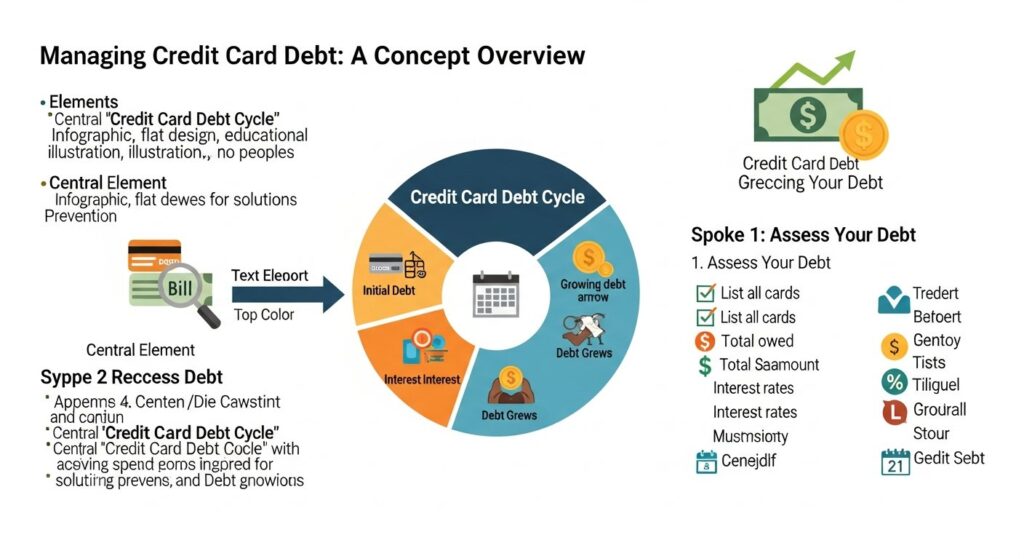
Navigating financial challenges is a common experience, and for many, managing credit card debt becomes a significant hurdle. However, this critical task doesn’t mean you have to abandon all avenues for financial gain. This comprehensive guide from goldpoints will empower you to effectively reduce your outstanding credit card balances while strategically leveraging the power of credit card rewards and smart shopping techniques. It requires discipline, a clear understanding of your financial situation, and an innovative approach to everyday spending. By integrating smart shopping and reward maximization into your debt management plan, you can accelerate your payoff journey and build healthier financial habits simultaneously, transforming a burden into an opportunity for smarter financial growth.
What is the First Step to Effectively Handling Credit Card Balances?
Before you can begin to tackle your credit card obligations, a thorough assessment of your current financial situation is absolutely essential. This initial step sets the foundation for any successful repayment strategy. Without a clear picture of what you owe, to whom, and under what terms, any subsequent efforts might be misdirected or inefficient. Begin by gathering all your credit card statements, whether physical or digital, and consolidate the key information for each account. This includes identifying the creditor, your current outstanding balance, the minimum payment due, and critically, the annual percentage rate (APR) applied to purchases and cash advances.
Understanding your overall credit utilization ratio is also paramount. This ratio, calculated by dividing your total credit card balances by your total available credit, significantly impacts your credit score. Lenders typically view a ratio above 30% as a sign of higher risk, which can lead to lower credit scores and make future borrowing more expensive. By actively monitoring and aiming to reduce this ratio, you not only improve your financial health but also position yourself for better credit opportunities down the line.
Beyond just the numbers, assess your current spending habits. Where is your money truly going each month? Are there discretionary expenses that can be temporarily reduced or eliminated to free up more funds for repayment? This honest evaluation is not about deprivation, but about prioritization and identifying areas where smart shopping strategies and reward redemptions can make a tangible difference.
Assessing Your Current Credit Card Debt Landscape
To truly gain control over your financial obligations, you need to dissect the specifics of each credit card account. This goes beyond a superficial glance at your statements. It involves a deep dive into the terms and conditions that govern your debt, as these can dramatically influence the most effective path to resolution. Focusing on these details allows you to prioritize repayment efforts where they will have the greatest impact, either by reducing the total interest paid or by clearing smaller debts quickly to build momentum.
Consider the impact of various charges and fees. Late payment fees can quickly add to your principal, and over-limit fees can further strain your budget. By understanding the full spectrum of costs associated with your outstanding balances, you can better anticipate your monthly outgoings and avoid surprises that derail your repayment plan. This detailed assessment is the bedrock upon which all successful debt reduction techniques are built.
Furthermore, evaluating any deferred interest offers or promotional periods is crucial. If you have an account with a 0% introductory APR that is about to expire, understanding this deadline is key to avoiding a sudden surge in interest charges. Strategic repayment during such periods can significantly reduce your overall cost of borrowing and is a prime example of proactive credit card debt management.
[INLINE IMAGE 1: diagram illustrating different components of credit card debt: balance, APR, minimum payment, and their interconnectedness]
Understanding Your APR and Minimum Payments
The Annual Percentage Rate (APR) is arguably the single most critical factor to understand when dealing with credit card obligations. It represents the annual cost of borrowing money on your credit card, expressed as a percentage. Credit card APRs can vary wildly, often ranging from 18% to over 25% or even higher for some cards or specific types of transactions like cash advances. A higher APR means more of your monthly payment goes towards interest, and less toward reducing your principal balance, effectively making your debt more expensive and slower to pay off. For instance, on a $5,000 balance with a 20% APR, you could be paying hundreds of dollars in interest annually, even if you’re consistently making minimum payments.
Minimum payments are another deceptive element of credit card debt. While they keep your account in good standing, they are often calculated to be a very small percentage of your outstanding balance, typically 1-3%, plus interest. This means that making only the minimum payment can trap you in a cycle of debt for years, if not decades, costing you many times the original purchase price due to compounding interest. For example, a $2,000 balance at 20% APR with a 2% minimum payment might take over 10 years to pay off, accumulating more than $2,000 in interest alone. Understanding this reality is key to motivating yourself to pay more than the minimum whenever possible.
Negotiating a lower APR with your credit card issuer is often an overlooked, yet effective, strategy. If you have a good payment history, even with existing debt, a simple phone call might result in a reduction of your interest rate, which can significantly accelerate your debt payoff. The money saved on interest can then be directly applied to the principal, making your money work harder for you.
Crafting a Debt Payoff Strategy That Works For You
Once you understand the scope of your credit card debt, the next crucial step in reducing credit card debt is to implement a structured payoff strategy. This section will outline proven methods, and importantly, how to integrate your reward-earning potential into each one to make your money work harder. A solid budget is the cornerstone of any effective debt reduction plan, identifying precisely how much extra money you can allocate towards your principal each month. Beyond establishing a budget, choosing the right method for accelerating your payments can significantly impact your timeline and overall financial relief.
Remember, the goal is not just to pay off debt, but to do so in a way that feels sustainable and, where possible, still allows you to leverage financial tools like rewards. This integration ensures that your focus on debt doesn’t completely negate your ability to benefit from smart financial planning. The right strategy aligns with your psychological makeup and financial circumstances, fostering long-term success rather than quick burnout.
The Snowball vs. Avalanche Method: Which is Right?
When it comes to structured debt repayment, the two most popular strategies are the debt snowball and debt avalanche methods. Both require you to make minimum payments on all accounts, but then dedicate any extra funds to one specific debt.
- Debt Snowball Method: This strategy focuses on psychological wins. You list your debts from the smallest balance to the largest, regardless of interest rate. You then put all extra money towards paying off the smallest debt first. Once that debt is paid off, you take the money you were paying on it (minimum payment + extra funds) and “snowball” it into the next smallest debt. This method provides quick victories, building momentum and motivation as each debt is eliminated. While it may not be the mathematically cheapest option, the psychological boost can be invaluable for those who need consistent encouragement.
- Debt Avalanche Method: This strategy is mathematically superior and focuses on saving the most money on interest. You list your debts from the highest interest rate to the lowest, regardless of the balance. You then put all extra money towards paying off the debt with the highest APR first. Once that debt is cleared, you move to the next highest interest rate. This method minimizes the total interest paid over the life of your debts, potentially saving you thousands of dollars, especially with high-APR credit card balances.
Choosing between these methods depends on your personality and how you stay motivated. If you need frequent wins to stay on track, the snowball method might be more effective. If you are highly disciplined and focused purely on saving money, the avalanche method is generally the better choice. Some individuals even combine aspects of both, perhaps tackling a very small debt first for a quick win, then switching to the avalanche method for the remaining larger balances.
| Strategy | Description | Primary Focus | Pros | Cons | Best Use Case |
|---|---|---|---|---|---|
| Debt Snowball | Pay smallest balance first, then roll payments to next smallest. | Psychological Momentum | Quick wins, high motivation, builds confidence. | May pay more interest overall. | Individuals needing quick successes to stay motivated. |
| Debt Avalanche | Pay highest interest rate first, then roll payments to next highest. | Interest Savings | Saves most money on interest, financially efficient. | May take longer to see first debt paid off, potentially less motivating initially. | Disciplined individuals focused on minimizing total cost. |
| Balance Transfer (0% APR) | Move high-interest debt to a new card with 0% introductory APR. | Temporary Interest Relief | No interest for a period (e.g., 12-18 months), frees up funds for principal. | Transfer fees (typically 3-5%), requires discipline to pay off before promo ends. | Consolidating multiple high-APR debts; ability to pay off quickly. |
| Debt Consolidation Loan | Take out a new loan to pay off multiple credit card debts, ideally at a lower interest rate. | Simplified Payments & Lower Interest | One fixed monthly payment, potentially lower overall interest rate. | May extend repayment period, requires good credit for best rates, doesn’t address root spending issues. | Individuals with multiple debts seeking simplified repayment and potentially lower rates. |
Can You Really Maximize Rewards While Paying Off Debt?
The conventional wisdom often suggests putting rewards on hold when aggressively tackling credit card obligations. However, with a disciplined approach, you absolutely can continue to earn valuable rewards, even strategically leveraging them to accelerate your debt payoff. The key lies in being intentional and using your reward-earning cards for purchases you would make anyway – essentials that are already accounted for in your budget. This isn’t about increasing spending; it’s about optimizing the spending you can’t avoid.
Think of it as finding efficiencies. Every dollar spent on groceries, gas, utilities, or other fixed expenses can potentially generate cash back or points. When managed correctly, these rewards aren’t a distraction but a small, consistent bonus that can be directed back into your financial goals. The focus shifts from “how much can I earn?” to “how can I make every necessary expense contribute to my debt reduction?”
Strategic Spending: Earning Rewards on Essential Purchases
The foundation of earning rewards while focusing on debt reduction is ensuring every rewarded purchase is an essential, budgeted expense that you would incur regardless. This means avoiding new spending simply to earn points. Here’s how to approach strategic spending:
- Identify Category Bonus Cards: If you have cards that offer bonus rewards (e.g., 5% cash back) on rotating categories like groceries, gas, or dining, activate those bonuses. Use the card for those specific purchases within your budget, then pay off the balance in full immediately or at least before the statement due date to avoid interest.
- Everyday Cash Back on Fixed Expenses: For non-category bonus spending, use a flat-rate cash back card (e.g., 1.5% or 2% cash back on everything) for bills like utilities, insurance, or subscription services if they don’t charge a credit card processing fee. These are expenses you can’t typically avoid, so earning a small percentage back is pure gain.
- Grocery and Gas Rewards: Many credit cards offer elevated rewards for grocery stores and gas stations year-round. These are prime areas for consistent earning. Consider using a card that gives 3-4% back in these categories.
- Avoid Overspending: This is critical. Earning 5% cash back on a purchase you didn’t need and can’t pay off immediately is a net loss when you consider credit card APRs (e.g., 20% interest). The “reward” quickly gets eaten up by interest charges.
- Use for Small, Manageable Payments: Consider using your rewards card for small, frequent purchases that you can easily track and pay off, like your daily coffee (if budgeted) or transit fares. The cumulative effect of these small rewards can add up.
The core principle here is to view your rewards as a discount on your essential spending, not an excuse to spend more. By doing so, you can generate a small but consistent stream of value that can then be directed towards your debt.
Smart Redemption: Using Rewards to Accelerate Debt Payoff
Once you’ve strategically earned rewards, the next step is to redeem them in a way that directly supports your goal of debt reduction. While travel or merchandise redemptions can be appealing, cash-equivalent options are usually the most impactful when you’re focusing on managing credit card debt.
- Cash Back Statement Credits: The simplest and most direct method. Many cash back cards allow you to redeem your earnings as a statement credit. This effectively reduces your outstanding balance, which can then be applied to your principal. It’s like finding extra money in your budget specifically for debt. For example, if you earn $20 in cash back, applying it as a statement credit means you effectively owe $20 less on your next bill.
- Gift Cards for Essential Spending: Some points programs offer gift cards for grocery stores, gas stations, or general retailers like Amazon at a favorable redemption rate. If you can redeem points for a $50 grocery gift card that would otherwise cost you cash, that $50 of your budgeted grocery money can now be redirected to your credit card payment. This frees up cash flow that directly impacts your debt.
- Emergency Travel/Necessity: While the focus is debt, life happens. If an urgent, unavoidable travel expense arises (e.g., family emergency, essential work trip), redeeming miles or points for that travel can prevent you from incurring new debt on your credit card. This is a defensive move to protect your debt reduction progress. However, this should be reserved for genuine emergencies, not leisure travel.
The goal is to ensure that every reward earned is either directly applied to your debt or used to offset an essential cash expense, thereby freeing up cash to apply to your balances. This approach integrates reward maximization into your debt repayment plan seamlessly.
[INLINE IMAGE 2: infographic illustrating different ways to redeem credit card rewards for debt reduction: statement credit, gift cards for essentials, paying bills directly]
Leveraging Smart Shopping Tactics to Reduce Spending
Beyond optimizing your credit card rewards, smart shopping tactics play an equally vital role in freeing up additional funds for debt repayment. Every dollar saved on everyday purchases is a dollar that can be directed towards your principal balance, accelerating your journey towards financial freedom. This approach involves being a savvy consumer, actively seeking out value, and making conscious choices that reduce your overall cost of living without sacrificing necessities.
The philosophy here is simple: if you need to buy something, make sure you’re getting the best possible price. This isn’t just about saving a few cents; cumulatively, these small savings can add up to significant amounts each month, providing a consistent boost to your debt reduction efforts. It also fosters a mindset of financial vigilance, which is crucial for long-term financial health and preventing future credit card obligations.
Price Matching, Coupons, and Shopping Portals
Here are specific strategies to implement smart shopping:
- Coupon Codes and Deals: Before making any purchase, especially online, search for coupon codes. Websites like RetailMeNot, Coupons.com, or even a quick Google search for “[store name] coupon code” can yield significant savings. For in-store purchases, check store apps or weekly flyers for digital coupons and sales. Combining these with loyalty programs can amplify savings.
- Price Matching Guarantees: Many major retailers offer price matching. If you find an item cheaper at a competitor, ask the store to match the lower price. This saves you time and ensures you’re getting the best deal without having to travel to multiple locations. Always check the store’s price match policy in advance, as terms can vary.
- Shopping Portals: This is a powerful, often overlooked, strategy. Shopping portals (e.g., Rakuten, TopCashback, specific airline/hotel portals) offer cash back or bonus points for purchases made through their links. Simply log into a portal, search for the retailer you want to shop at, click through their link, and make your purchase as usual. You’ll earn the specified percentage back or points on top of any credit card rewards you’re already earning. This is “stacking” rewards, effectively making your money work twice as hard.
- Sales Cycles and Bulk Buying: Understand the sales cycles for items you frequently purchase. Stock up on non-perishable goods, toiletries, or household essentials when they are at their lowest price. Buying in bulk (if it makes financial sense and you have storage) can lead to considerable savings over time.
- Loyalty Programs: Enroll in loyalty programs for stores where you frequently shop. These programs often provide exclusive discounts, early access to sales, and points that can be redeemed for future savings, all contributing to a lower overall spending footprint.
| Debt Management Goal | Smart Shopping Tactic | How Rewards Apply | Potential Benefit/Example |
|---|---|---|---|
| Reducing Grocery Costs | Coupon apps, weekly sales flyers, store loyalty programs, generic brands. | Use 3-5% cash back grocery card; redeem points for grocery gift cards. | Save 10-20% on groceries, redirect $50-100/month to debt. |
| Lowering Utility Bills | Energy-efficient habits, smart home devices, comparing provider rates. | Pay with flat-rate cash back card (if no fee); check for bill pay rewards. | Reduce utility spend by 5-15%, freeing up $20-50/month. |
| Essential Purchases (e.g., clothing, home goods) | Shopping portals, price matching, clearance sales, second-hand options. | Earn 1-10% cash back/points via shopping portals; use category bonus cards. | Get best price on essentials, earn extra 2-5% for debt reduction. |
| Travel Savings (for emergencies/necessity) | Booking in advance, comparing travel sites, off-peak travel. | Redeem existing travel points/miles instead of cash for unavoidable trips. | Avoid incurring new credit card debt for necessary travel. |
When Should You Consider Debt Consolidation or Balance Transfers?
For individuals grappling with significant credit card obligations spread across multiple accounts, debt consolidation or balance transfers can be powerful tools. These strategies aim to simplify your repayment process and, ideally, reduce the amount of interest you pay, thereby accelerating your path to becoming debt-free. However, they are not a magic bullet and come with their own set of considerations and potential pitfalls. It’s crucial to evaluate these options carefully, ensuring they align with your financial discipline and long-term goals.
The primary benefit of these methods is the potential to reduce your interest rate. High APRs are often the biggest obstacle to efficient debt repayment, as a substantial portion of each payment goes directly to interest rather than the principal. By securing a lower interest rate through consolidation or a balance transfer, more of your money goes towards directly reducing what you owe. This can shorten your repayment timeline and save you a considerable amount of money over time, making your overall debt reduction techniques far more effective.
However, these tools are most effective when coupled with a renewed commitment to responsible spending and budgeting. Without addressing the underlying habits that led to the debt, consolidation or balance transfers merely move the problem around and can even create new, larger debt burdens if not managed carefully.
Weighing the Pros and Cons of Debt Consolidation Loans
A debt consolidation loan is a personal loan taken out to pay off multiple unsecured debts, typically credit card balances. The goal is to combine several payments into one, often with a lower overall interest rate and a fixed repayment schedule.
Pros:
- Simplified Payments: Instead of managing multiple credit card payments with different due dates and minimums, you have one single, predictable monthly payment.
- Potentially Lower Interest Rate: If you have good credit, you might qualify for a personal loan with a significantly lower APR than your credit cards, saving you money on interest.
- Fixed Repayment Term: Unlike revolving credit, a personal loan has a set payoff date, providing a clear end goal for your debt.
- Improved Credit Mix: Replacing revolving credit (credit cards) with an installment loan (personal loan) can sometimes positively impact your credit mix, which is one factor in your credit score.
Cons:
- Requires Good Credit: The best interest rates on consolidation loans are reserved for borrowers with excellent credit scores. If your credit is poor due to high debt, you might not qualify for a favorable rate, or any loan at all.
- Doesn’t Address Spending Habits: A consolidation loan provides financial relief but doesn’t solve the root causes of debt. Without a change in spending, you risk racking up new credit card debt while still paying off the loan.
- Longer Repayment Period: While the monthly payment might be lower, the repayment term could be longer, potentially increasing the total interest paid if the new APR isn’t significantly lower.
- Origination Fees: Some personal loans come with origination fees (typically 1-5% of the loan amount), which can reduce the amount of debt you effectively consolidate.
Navigating Balance Transfer Offers
A balance transfer involves moving outstanding credit card debt from one or more cards to a new credit card, often one that offers an introductory 0% APR for a promotional period (e.g., 12 to 21 months). This can provide a crucial window of opportunity to pay down your principal without accumulating additional interest.
Pros:
- 0% Interest Period: The most significant benefit is the ability to pay down debt without interest for the entire promotional period, allowing 100% of your payments to go towards the principal balance.
- Consolidation: Like a loan, it can consolidate multiple credit card balances onto a single card, simplifying management.
- Potential for Rapid Payoff: If you can aggressively pay down the balance during the 0% APR period, you can eliminate debt much faster and cheaper.
Cons:
- Balance Transfer Fees: Most balance transfer cards charge a fee, typically 3-5% of the transferred amount. On a $5,000 transfer, a 3% fee would be $150, which adds to your debt.
- Expiration of 0% APR: If the balance isn’t paid off before the promotional period ends, the remaining balance will accrue interest at a much higher, standard APR (often 18-25% or more), negating much of the benefit.
- New Credit Card temptation: Opening a new credit card means another line of credit. If not managed responsibly, there’s a risk of accumulating new debt on both the old (now empty) and new cards.
- Impact on Credit Score: Applying for a new card results in a hard inquiry, which can temporarily lower your credit score. Also, closing old accounts can reduce your overall available credit, potentially increasing your credit utilization ratio if you still carry balances.
Common Mistakes When Using Debt Consolidation or Balance Transfers
While powerful, these tools are often misused, leading to further financial distress:
- Not Addressing Spending Habits: The most critical error is failing to change the underlying spending behaviors that led to the debt in the first place. Without a budget and discipline, you risk running up new balances on emptied credit cards while still paying off the consolidated loan or balance transfer.
- Ignoring Fees: Neglecting to factor in balance transfer fees or loan origination fees into the total cost. These fees can sometimes make the “lower interest” option less attractive than it initially appears.
- Not Paying Off 0% APR Balance in Time: Underestimating the payment required to clear the balance transfer before the 0% introductory APR expires. A concrete payoff plan is essential, ensuring you make significantly more than the minimum payments.
- Closing Old Accounts Rashly: While it’s tempting to close old credit card accounts once they’re paid off, this can inadvertently hurt your credit score by reducing your total available credit and shortening your credit history. It’s often better to keep old, paid-off accounts open and unused.
- Taking on Too Much Debt: Consolidating debt into a single, larger loan or credit card can feel liberating, but it’s important not to see this as an opportunity to take on more debt. The focus must remain on reducing the total amount owed.
Maintaining Momentum: Long-Term Debt Management & Reward Optimization
Paying off credit card debt is a significant accomplishment, but the journey doesn’t end there. True financial mastery involves maintaining that momentum, preventing future debt, and intelligently optimizing your credit card rewards for the long haul. This phase focuses on building sustainable habits and integrating smart financial strategies into your everyday life to ensure lasting financial health.
The lessons learned during your debt repayment journey are invaluable. The discipline, budgeting skills, and awareness of your spending patterns are assets that should be carried forward. The goal is to shift from a reactive state of “tackling credit card debt” to a proactive state of “preventing credit card debt” while continually enhancing your financial well-being through strategic reward accumulation.
Here are key strategies for long-term success:
- Build and Maintain an Emergency Fund: A robust emergency fund (3-6 months of living expenses) is your primary defense against future debt. Unexpected expenses are a common reason people fall back into credit card debt. With a cash buffer, you can cover these costs without resorting to high-interest credit cards.
- Stick to a Budget: Your budget isn’t just for debt repayment; it’s a tool for ongoing financial clarity. Continue to track your income and expenses to ensure you’re living within your means and allocating funds towards savings and investments.
- Pay Credit Card Balances in Full Every Month: Once your high-interest debt is gone, commit to paying off your credit card statements in full, every single month. This is the golden rule of credit card use, allowing you to enjoy rewards without paying any interest.
- Regularly Review Your Credit Report: Monitor your credit score and report regularly (e.g., via AnnualCreditReport.com). This helps you spot errors, identify potential fraud, and track your progress in maintaining excellent credit health.
- Optimize Your Reward Strategy: With debt out of the way, you can be more aggressive in maximizing rewards. This might involve:
- Category Optimization: Using specific cards for specific spending categories where they earn the highest rewards (e.g., one card for groceries, another for dining, a third for travel).
- Sign-Up Bonuses (with caution): If you are disciplined, strategically applying for new credit cards for their lucrative sign-up bonuses, but only if you can easily meet the spending requirements with your normal, budgeted expenses and pay off the balance in full.
- Redemption Value: Researching the best ways to redeem your points or miles for maximum value, whether for premium travel, high-value cash back, or experiences.
- Automate Savings and Investments: Treat savings and investments as non-negotiable “bills.” Set up automatic transfers from your checking account to savings, retirement accounts, or investment portfolios each payday.
Frequently Asked Questions About Managing Credit Card Debt
What is the fastest way to pay off credit card debt?
The fastest way to pay off credit card debt is typically the debt avalanche method, combined with maximizing extra payments. By focusing on the debt with the highest annual percentage rate (APR) first, you minimize the total interest paid, which allows more of your money to go towards the principal. Consolidating high-interest debt into a lower-interest loan or a 0% APR balance transfer can also significantly accelerate payoff, provided you maintain strict payment discipline.
How does credit card debt impact my credit score?
Credit card debt significantly impacts your credit score primarily through your credit utilization ratio. This ratio compares your total credit card balances to your total available credit. Keeping your utilization below 30% is generally recommended for a healthy score; going above this can cause a noticeable drop. High debt also indicates higher risk to lenders, potentially impacting your ability to secure new credit or get favorable interest rates.
Can I negotiate with my credit card company to lower my interest rate?
Yes, it’s often possible to negotiate with your credit card company. If you have a history of on-time payments, even if you carry a balance, you can call your card issuer and ask for a lower APR or inquire about hardship programs. Many companies prefer to work with customers to retain them rather than risk charge-offs, so it’s always worth a call.
Is it better to pay the minimum or pay more than the minimum on credit cards?
It is almost always better to pay more than the minimum payment. Minimum payments are designed to keep you in debt for as long as possible, accruing maximum interest. Paying extra ensures more of your payment goes towards the principal, reducing the overall cost of your debt and shortening your repayment timeline. Every extra dollar paid saves you future interest.
Should I stop using my credit cards entirely while paying off debt?
While some find it helpful to put credit cards away to avoid accumulating new debt, you don’t necessarily have to stop using them entirely. If you have rewards cards with category bonuses, you can continue to use them for essential, budgeted purchases (like groceries or gas) that you would make anyway. The crucial rule is to pay off the entire balance for these new purchases immediately to avoid accruing any new interest. This allows you to continue earning rewards while prioritizing debt repayment.
Sources & References
- Consumer Financial Protection Bureau (CFPB). (2026). “Paying credit card debt.” https://www.consumerfinance.gov/consumer-tools/debt-collection/paying-credit-card-debt/
- National Foundation for Credit Counseling (NFCC). (2026). “Credit Counseling and Debt Management.” https://www.nfcc.org/debt-management/
- Experian. (2026). “What Is a Good Credit Utilization Ratio?” https://www.experian.com/blogs/ask-experian/what-is-a-good-credit-utilization-rate/
- Ramsey, Dave. (2026). The Total Money Makeover: A Proven Plan for Financial Fitness. (While this is a general book, it popularizes the debt snowball method which is discussed).
- FICO. (2026). “What is a FICO Score?” https://www.ficoscore.com/about
Successfully managing credit card debt doesn’t mean putting your financial life on hold. By meticulously assessing your current situation, crafting a disciplined payoff strategy, and integrating smart shopping and reward optimization tactics, you can accelerate your path to debt freedom. Remember, every dollar saved through smart spending and every reward earned and strategically redeemed directly contributes to your goal. The journey requires commitment, but with these proven methods, you can transform your debt burden into a stepping stone towards lasting financial health and savvy consumer habits. Ready to master your finances? Explore more strategies on [PILLAR LINK: Credit Card Rewards Mastery].
Reviewed by Julian Thorne, Senior Editor, Loyalty & Consumer Engagement — Last reviewed: March 27, 2026