


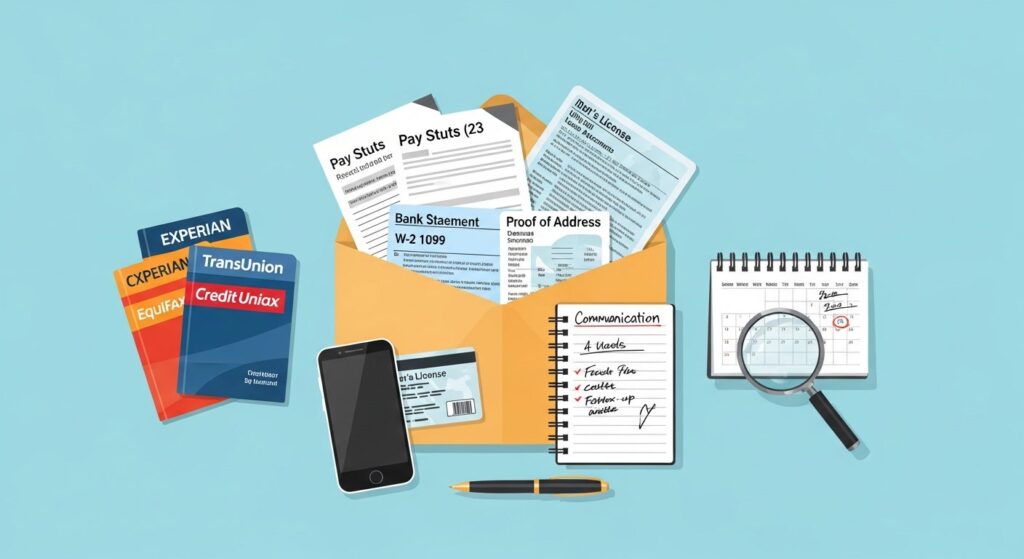
Updated May 2024. Facing a rejected application can feel like a sudden roadblock when you are aiming to maximize travel points and cash back. Mastering credit card application denial recovery is essential for any savvy consumer looking to maintain their financial momentum. Instead of viewing a rejection letter as a final verdict, you should treat it as an actionable diagnostic tool. The path forward involves systematically uncovering the exact reasons behind the issuer’s decision, presenting new information through the appropriate channels, and fine-tuning your long-term credit profile.
By addressing the underlying issues head-on, you can regain access to premium travel perks and lucrative sign-up bonuses. This approach turns a temporary setback into a stepping stone for smarter spending and sustainable rewards generation. To successfully overturn a refusal and optimize your financial standing, follow these strategic steps:
- Diagnose the specific reasons for application rejection.
- Initiate a strategic reconsideration call.
- Audit and repair your credit report.
- Optimize core scoring factors.
- Avoid common appeal mistakes.
- Re-strategize for future premium card applications.
Types of Application Rejections and Their Triggers
Decoding the Underwriting Algorithm
Imagine applying for a premium travel card to secure a massive welcome offer, only to receive a generic unable to approve message within thirty seconds of clicking submit. A recent Federal Reserve consumer credit report (2023) indicates that approximately 18.5% of rewards-focused credit card applications are declined annually across the United States. The automated algorithms issuers use to evaluate risk rely heavily on immediate data points pulled directly from major bureaus. If an applicant triggers a specific risk threshold—such as too many newly opened accounts or a high balance on an existing card—the system auto-generates a refusal, entirely bypassing manual human review.
Credit-seeking velocity refers to the frequency and speed at which a consumer applies for new credit lines within a specific timeframe (e.g., 30, 60, or 90 days). High velocity signals financial distress to automated systems. One of the most frequent culprits is an elevated debt-to-income (DTI) ratio, which is the percentage of your gross monthly income that goes toward paying your monthly debt obligations. Issuers use this metric to gauge whether you can handle additional credit without defaulting. Beyond numerical metrics, banks also enforce strict internal rules regarding how often you can apply for their products, regardless of your credit health. Familiarizing yourself with bank-specific application frequency limitations prevents you from wasting a hard inquiry on a guaranteed algorithmic rejection.
Analyzing the Adverse Action Letter
By law, any lender that denies you credit must send an adverse action letter detailing the specific reasons for their decision. This document is your primary diagnostic tool. It will list the credit reporting agency used, your credit score at the time of the pull, and up to four key factors that negatively impacted your application.
| Denial Reason | Issuer Explanation | Immediate Action Plan | Long-Term Solution |
|---|---|---|---|
| High Credit Utilization | Outstanding balances are too high relative to total available limits. | Pay down current balances immediately before calling reconsideration. | Request credit limit increases across all existing accounts. |
| Insufficient Credit History | The average age of open accounts is too low for the product tier. | Offer to move credit from an existing card with the same issuer. | Keep oldest accounts open and consider authorized user status. |
| Too Many Inquiries | Multiple hard pulls indicate credit-seeking distress. | Explain specific reasons for recent inquiries (e.g., mortgage shopping). | Institute a strict 6-month resting period between applications. |
How Do You Successfully Navigate a Reconsideration Call?


The Mechanics of Manual Underwriting Review
The process of overturning a negative automated decision hinges entirely on direct communication with a human underwriter. The reconsideration line connects you with a bank representative who possesses the authority to review the initial algorithmic rejection, consider contextual financial factors not captured in a standard application, and manually approve the account. When executing this maneuver, an applicant might inform the representative that they recently relocated and their housing costs decreased by $800 a month, thereby freeing up substantial disposable income that the initial online form failed to capture. According to a 2023 survey by Bankrate on consumer lending, nearly 30% of applicants who proactively call the issuer to contextually explain a rejection end up getting their decision reversed.
Structuring Your Appeal Argument
Success on these calls requires a polite, factual, and solutions-oriented demeanor. Start by confirming you received the adverse action letter and ask if they can manually review the application. If the denial was due to maximum credit extended by that specific bank, you can offer to shift a portion of your credit line from an older card to open the new one. This technique results in a net-zero risk increase for the issuer while allowing you to secure the new product and its associated sign-up bonus.
- Gather Documentation: Have your adverse action letter, recent pay stubs, and exact figures for your monthly rent or mortgage ready.
- Prepare a Defense: If denied for limited history, highlight your flawless payment record across other financial products.
- Leverage Existing Relationships: Mention your long-standing checking account or investment portfolio with the bank to prove loyalty and liquidity.
For those looking to perfect their approach, studying proven appeal scripts tailored to specific banks can dramatically increase the likelihood of a positive outcome. Representatives are more likely to override the system if you provide logical, verifiable reasons that mitigate the risk factors flagged by the algorithm.


[INLINE IMAGE 2: Flowchart detailing the decision tree and optimal responses during a credit card reconsideration phone call.]
The Mechanics of Credit Report Assessment and Repair
Identifying Reporting Inaccuracies
A comprehensive 2021 study by the Federal Trade Commission (FTC) revealed that one in five consumers possessed a verified error on at least one of their credit reports. Credit bureaus function as massive data aggregators, constantly importing files from lenders, public records, and debt collection agencies. When disparate data sources merge, identity mismatches, outdated account statuses, or duplicated debts frequently occur. These inaccuracies directly and unfairly drag down risk scores. An individual reviewing their Equifax file might discover an unrecognized hard inquiry from a telecommunications company they never did business with, which artificially suppressed their score just three days before they submitted a rewards card application.
Executing Bureau Disputes
Repairing your credit file involves formal disputes with Experian, TransUnion, and Equifax. Under the Fair Credit Reporting Act (FCRA), bureaus must investigate disputed items within 30 days. If the creditor cannot verify the information, the bureau is legally obligated to remove it.
When filing a dispute, always submit your request via certified mail rather than using the automated online portals, as paper trails legally bind the bureaus to stricter compliance standards. Include copies of your ID, proof of address, and any documentation—like a final payoff statement—that proves the account in question is closed or in good standing. Cleaning up a report not only prepares you for future applications but is also critical when executing a lucrative welcome bonus strategy securely. A clean profile ensures that your genuine credit behavior is the only thing underwriters evaluate.
What Factors Truly Drive Score Improvement for Future Approvals?
Understanding the Scoring Algorithms
Long-term approval velocity depends entirely on mastering the underlying math of modern credit scoring models. FICO 8 and VantageScore 3.0 evaluate different financial behaviors, heavily penalizing late payments while generously rewarding low monthly balances. The credit utilization rate—the ratio of your current revolving debt to your total available limits—alone dictates 30% of your total FICO score (FICO, 2023). If a consumer holding a $10,000 aggregate credit limit strategically pays down a $4,000 balance to $500 three days before their statement closes, their reported utilization drops from 40% to 5%. This specific timing maneuver can trigger a rapid 15-to-30 point score increase the moment the new balance hits the bureaus.
Core Metrics for Optimal Approvals
While fixing utilization yields immediate results, other factors require long-term discipline. Payment history remains the bedrock of consumer lending.
| Credit Factor | Impact Weight | Optimization Strategy |
|---|---|---|
| Payment History | 35% | Set up autopay for the minimum balance on every account to mathematically guarantee zero late marks. |
| Amounts Owed (Utilization) | 30% | Pre-pay significant expenses mid-cycle so the statement balance reports at exactly 1% to 4%. |
| Length of Credit History | 15% | Never close your oldest no-annual-fee cards; downgrade premium cards instead of canceling them. |
| Credit Mix | 10% | Maintain a healthy combination of revolving credit (cards) and installment loans (auto, student, mortgage). |
| New Credit | 10% | Space out applications by a minimum of 90 days to prevent inquiry clustering. |
To establish a profile that auto-approves for travel cards, consumers must demonstrate a track record of handling high limits responsibly. Asking for credit limit increases on existing cards every six months (if the issuer uses a soft pull) mathematically pads your utilization ratio, making future balances look smaller to the algorithm.

[INLINE IMAGE 4: Pie chart breaking down the five main components of a FICO credit score, highlighting the heavy weight of payment history and utilization.]
Types of Common Missteps in the Appeal Process
Navigating Post-Denial Pitfalls
Many consumers react to an unexpected rejection by immediately applying for three other cards from competing banks in a panic, hoping one will stick. This rapid accumulation of hard inquiries broadcasts severe financial distress to underwriting algorithms, creating a cascading effect of subsequent denials that can lock a user out of the rewards ecosystem for a year. Lenders actively track churning velocity to identify risky behavior associated with bonus hunting or impending default. Churning velocity specifically tracks the rapid opening and closing of accounts solely to harvest sign-up bonuses, a behavior lenders actively penalize. A 2023 Consumer Financial Protection Bureau (CFPB) analysis noted that individuals with three or more hard pulls in a rolling 30-day window face a 60% higher likelihood of rejection across all unsecured financial products.
Communication and Behavioral Errors
Another major mistake occurs during the reconsideration phone call itself. Applicants frequently argue with the representative or demand approval based on their income alone. Underwriters are risk assessors, not customer service agents for complaints. Becoming combative drastically reduces the chances of a manual override.
Furthermore, many applicants fail to leverage the HUCA method (Hang Up, Call Again). If the first representative denies your appeal, politeness dictates you accept their answer, but strategy dictates you call back the next day. Different underwriters have different risk tolerances and interpretations of your file. Giving up after a single phone call leaves potential approvals on the table. Understanding these behavioral pitfalls is a crucial component of effective recovery from a declined application.
Executing a Robust Strategy for Premium Rewards
Re-entering the Application Cycle
Formulating a timeline for your next attempt requires aligning your target card’s underwriting strictness with your newly optimized credit profile. Rather than guessing and risking another hard inquiry, strategic applicants actively utilize pre-qualification tools that rely exclusively on soft pulls, safeguarding their file from further damage while checking for bank-targeted offers. Occasionally, the most mathematically sound move is executing a product change on an existing account to gain better multiplier categories without incurring a new inquiry or opening a new tradeline. An internal 2023 industry report from Experian highlighted that consumers who wait a minimum of six months after a rejection before applying for a comparable premium product increase their approval odds by 45%.
Long-Term Financial Architecture
The goal is not just to get approved for one card, but to build a resilient financial architecture that withstands economic fluctuations and algorithmic tightening. By continuously auditing your reports, carefully timing your applications, and understanding the specific rules of each issuing bank, you insulate yourself from future rejections. A comprehensive application strategy ensures that every hard pull results in a highly profitable account addition.
Your journey through recovering from a declined application ultimately leads to smarter financial habits and a stronger foundation. Armed with a clean credit report, strategic utilization timing, and the confidence to negotiate with underwriters, you are well-positioned to resume extracting maximum value from the credit card rewards ecosystem.
Read more in our overarching guide: Credit Card Rewards & Strategy
Glossary of Key Underwriting and Credit Terms
To fully master the underwriting process and optimize your future applications, it is essential to understand the specialized terminology used by banks and credit bureaus. Below is a concise glossary of key terms that frequently appear in adverse action letters and reconsideration discussions.
- Debt-to-Income (DTI) Ratio: The percentage of your gross monthly income that goes toward paying your monthly debt obligations. A lower DTI indicates a higher capacity to take on new credit.
- Credit Utilization Rate: The amount of revolving credit you are currently using divided by the total amount of revolving credit you have available. Keeping this below 10% is optimal for scoring algorithms.
- Hard Inquiry: A formal request by a lender to check your credit report when you apply for new credit. Hard inquiries temporarily lower your score and remain on your report for two years.
- Reconsideration Line: A dedicated phone number provided by credit card issuers that connects applicants directly with human underwriters who can manually review and potentially overturn automated application denials.
- Credit-Seeking Velocity: The frequency and speed at which a consumer applies for new credit lines within a specific timeframe. High velocity is often flagged as a sign of financial distress.
- Churning Velocity: A specific type of credit-seeking velocity that tracks the rapid opening and closing of accounts solely to harvest sign-up bonuses. Lenders actively monitor and penalize this behavior to prevent unprofitable customer relationships.
By familiarizing yourself with these concepts, you can communicate more effectively with underwriters and proactively manage the metrics that dictate your approval odds.
Sources & References
- Federal Reserve System. (2023). Consumer Credit Profile and Application Acceptance Rates. Washington, D.C.
- Fair Isaac Corporation (FICO). (2023). Understanding FICO Scoring Models and Score Weights.
- Consumer Financial Protection Bureau (CFPB). (2023). Impact of High-Velocity Inquiries on Unsecured Lending.
- Federal Trade Commission (FTC). (2021). Report to Congress on the Accuracy of Credit Reports.
- Bankrate. (2023). Consumer Lending and Reconsideration Success Statistics.