


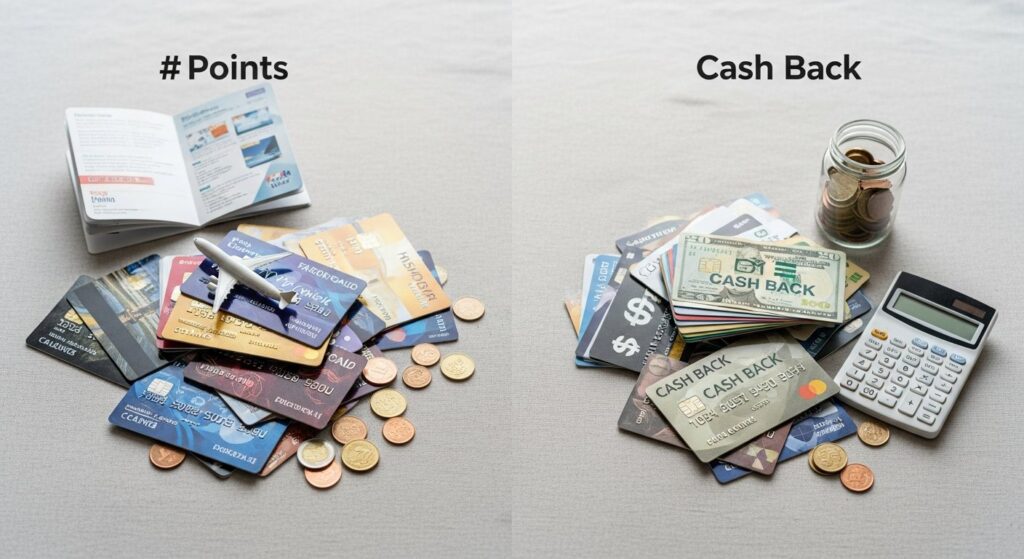
Points vs Cash Back: The Definitive goldpoints Guide to Maximizing Your Credit Card Rewards
Affiliate disclosure: This article may contain affiliate links. Recommendations are independent and editorially driven.
In the expansive and often exhilarating world of credit card rewards, few debates spark as much passion and strategic contemplation as the classic standoff between points and cash back. For anyone looking to truly optimize their financial health and enhance their lifestyle through smart spending, understanding the nuances of points vs cash back isn’t just an advantage—it’s essential. At goldpoints, we believe that informed decisions lead to maximized benefits, whether you’re dreaming of a luxurious international getaway, aiming to offset everyday expenses, or simply seeking to grow your savings.
The choice between points and cash back isn’t a one-size-fits-all proposition. It’s a highly personal decision influenced by your spending habits, financial goals, travel aspirations, and even your willingness to engage with the intricate redemption processes. While cash back offers straightforward simplicity and immediate, tangible value, points programs, particularly those linked to major travel currencies, promise the potential for outsized value and aspirational experiences. Navigating this dichotomy requires a deep dive into how each reward type functions, their respective advantages and disadvantages, and, most importantly, how they align with your unique circumstances.
This comprehensive guide from the goldpoints experts will dismantle the complexities of points vs cash back, providing you with the insights and strategies needed to make an informed choice. We’ll explore the core mechanics of each reward system, delve into the scenarios where one clearly outperforms the other, and even discuss hybrid approaches that allow you to harness the best of both worlds. By the end of this article, you won’t just understand the difference; you’ll have a personalized framework for selecting the reward strategy that truly elevates your financial journey in 2026 and beyond.
Understanding the Landscape of Credit Card Rewards: A Foundational Overview
Before we dissect the “points vs cash back” debate, it’s crucial to establish a clear understanding of what each reward type entails. While both are designed to incentivize credit card usage and reward consumers for their spending, their fundamental structures and potential applications differ significantly.
What are Cash Back Rewards?
Cash back rewards are arguably the simplest and most intuitive form of credit card reward. In essence, you receive a percentage of your spending back as actual money. This percentage can be flat across all purchases (e.g., 1.5% or 2% on everything) or structured with tiered bonuses for specific spending categories (e.g., 5% on groceries and gas, 1% on everything else). The beauty of cash back lies in its universality and lack of complexity. It’s money, and money is always valuable.
- Direct Value: Cash back provides a fixed, transparent value. If you earn 2% cash back on a $100 purchase, you know you’re getting $2 back. There’s no guesswork or variable redemption rates.
- Redemption Options: Redemption is typically straightforward. Common methods include:
- Statement credit (reducing your credit card bill).
- Direct deposit into a bank account.
- Physical check.
- Gift cards (though often at a 1:1 value, sometimes with minor bonuses).
- Simplicity: There’s generally no need to navigate complex transfer partners, hunt for award space, or worry about fluctuating point valuations. What you see is what you get.
- Broad Applicability: Cash back can be used for anything. It’s not tied to specific airlines, hotels, or merchandise. This flexibility makes it an excellent choice for offsetting everyday expenses, building savings, or paying down debt.
What are Points Rewards?
Points rewards, on the other hand, introduce an element of abstraction and potential for elevated value. Instead of a direct monetary percentage, you earn points for every dollar spent. These points are then redeemed for various rewards, which can include travel, merchandise, gift cards, or even statement credits. The critical distinction is that the value of a point is rarely fixed and can vary dramatically depending on how you redeem it.
- Variable Value: A single point might be worth 0.5 cents when redeemed for a statement credit, 1 cent for merchandise, or potentially 2 cents or more when transferred to an airline or hotel partner for a premium travel redemption. This variability is where the “game” of points and miles truly begins.
- Redemption Options: Points programs offer a broader, though often more complex, array of redemption avenues:
- Travel Portal: Redeeming points directly through the credit card issuer’s travel portal (e.g., Chase Ultimate Rewards portal, Amex Travel). Value here is often fixed (e.g., 1 to 1.5 cents per point).
- Transfer Partners: Transferring points to airline frequent flyer programs (e.g., United MileagePlus, British Airways Avios) or hotel loyalty programs (e.g., Marriott Bonvoy, Hyatt Globalist). This is often where the highest value lies, particularly for business or first-class flights and luxury hotel stays.
- Cash Back/Statement Credit: While possible, this usually yields a significantly lower value (e.g., 0.5 to 1 cent per point), making it a less optimal redemption for points enthusiasts.
- Merchandise/Gift Cards: Generally offer poor value compared to travel redemptions.
- Complexity and Optimization: Maximizing points requires research, strategic planning, and an understanding of different loyalty programs. It’s a hobby for some, involving tracking transfer bonuses, finding sweet spots in award charts, and navigating dynamic pricing.
- Aspirational Experiences: Points can unlock experiences that might otherwise be financially out of reach, such as flying lie-flat in business class or staying at five-star resorts.
The Core Difference: Value and Redemption Flexibility


The fundamental divergence between points and cash back boils down to two critical factors: the inherent value of the reward and the flexibility of its redemption. Understanding this distinction is paramount to choosing the reward system that best suits your lifestyle and financial objectives.
[INLINE IMAGE 1: place after second H2 | alt=”points vs cash back concept illustration”]
Fixed Value vs. Variable Value
This is perhaps the most significant differentiator. Cash back operates on a fixed-value principle. When a card advertises 2% cash back, it means that for every dollar you spend, you receive two cents back. This value is constant, predictable, and transparent. There are no hidden multipliers or complex calculations required to determine what your rewards are truly worth. This predictability is a major draw for many consumers, as it simplifies budgeting and financial planning.
Points, conversely, thrive on variable value. A single point from a premium travel card might be worth as little as 0.5 cents when redeemed for a statement credit, but could soar to 2 cents, 5 cents, or even higher when strategically transferred to an airline partner and used for a high-value flight redemption. For instance, a flight that costs $5,000 cash might only require 50,000 points if redeemed wisely through a transfer partner, effectively giving each point a value of 10 cents. This potential for “out of proportion” value is the siren call of points programs. However, achieving this high value requires effort, research, and often, flexibility with travel dates and destinations.
The variable nature of points means that the “value” isn’t intrinsic to the point itself, but rather to the skill and timing of its redemption. An unoptimized point redemption can easily yield a worse return than a basic cash back card, making the perceived high value of points a double-edged sword for the uninitiated.
Redemption Mechanisms: Simplicity vs. Optimization
The paths to actually utilizing your rewards also diverge sharply. Cash back is built for simplicity.
- Cash Back Redemption: You accumulate rewards, and at a certain threshold or interval, you can request them as a statement credit, direct deposit, or check. The process is usually automated or takes just a few clicks within your online account. There’s no need to compare options, search for availability, or worry about blackout dates. It’s a straightforward transfer of value back into your pocket. This effortless redemption makes cash back ideal for those who prefer minimal fuss and immediate financial benefit.
Points redemption, particularly for travel, is a world of optimization. It requires a strategic mindset and a willingness to engage with multiple platforms and loyalty programs.
- Points Redemption:
- Travel Portals: The simplest points redemption for travel is often through the issuer’s own travel portal. While convenient, the value per point here is usually fixed and modest, often around 1 to 1.5 cents per point.
- Transfer Partners: This is where the true value of many points programs lies. You transfer your credit card points to an airline or hotel loyalty program at a set ratio (e.g., 1:1). Once transferred, these points become the currency of that specific loyalty program. To maximize value, you then need to search for “award availability” within the airline or hotel program. This can be complex, involving understanding award charts, searching different dates, and sometimes even calling loyalty program customer service. The rewards are often disproportionately valuable (e.g., a $10,000 business class flight for 100,000 points, yielding 10 cents per point), but finding such redemptions requires patience and flexibility.
- Other Redemptions: Points can also be used for merchandise, gift cards, or even statement credits. However, these options typically offer the lowest value per point, essentially turning your potentially high-value points into a low-value cash back equivalent.
In essence, cash back offers universal currency with fixed value and minimal effort. Points offer a specialized currency with variable value, requiring strategic effort for maximum benefit, particularly in the realm of premium travel.
The Case for Cash Back: Simplicity and Predictability
For a significant segment of consumers, cash back isn’t just a viable option; it’s the optimal choice. Its inherent simplicity, direct financial benefit, and universal applicability make it an attractive and stress-free reward system. Let’s delve into why cash back continues to hold a prominent position in the rewards landscape.
Straightforward Redemption
The greatest strength of cash back is its utter lack of complexity when it comes to redemption. There are no confusing award charts, no need to navigate foreign airline websites, and no frantic searches for elusive award availability. When you’ve accumulated a sufficient amount of cash back, typically $25 or more, you simply log into your credit card account and choose how you want to receive your rewards: a statement credit, a direct deposit into your bank account, or a paper check. The value is unambiguous: a dollar of cash back is a dollar. This “no-brainer” aspect appeals greatly to those who value convenience and immediate gratification over potential, but uncertain, high-value redemptions.
This ease of use ensures that rewards are actually utilized, rather than sitting dormant or expiring due to complex redemption hurdles. For many, the peace of mind that comes with knowing their rewards are always worth what they expect is invaluable.
Universal Applicability
Cash is king, and cash back embodies this principle. Unlike points, which are often best optimized for specific types of travel or merchandise, cash back is universally applicable. Once you receive your cash back, it can be used for anything you desire:
- Offsetting your monthly credit card bill, effectively reducing your overall expenses.
- Contributing to your savings account or investment portfolio.
- Paying for groceries, utilities, or rent.
- Funding a specific purchase, whether it’s a new appliance or a night out.
- Reducing debt more quickly.
This unfettered flexibility means your rewards directly contribute to your overall financial well-being without dictating how or where they must be spent. It’s real money that can be deployed to meet your most pressing financial needs or desires, irrespective of their category.
Ease of Budgeting and Financial Management
For individuals and families focused on meticulous budgeting and financial planning, cash back offers unparalleled predictability. Knowing that you will receive a fixed percentage back on your spending allows for accurate forecasting of your reward income. This makes it easier to:
- Project how much you can expect to save or offset each month or year.
- Factor rewards into your financial goals, such as building an emergency fund or saving for a down payment.
- Maintain a clear picture of your net spending after rewards, simplifying your financial tracking.
This predictability contrasts sharply with points, where the true value of your accumulated rewards might fluctuate based on market conditions, award chart changes, or your ability to find optimal redemptions. Cash back removes this uncertainty, providing a stable and reliable stream of value.
Best for Non-Travelers and Those Seeking Liquidity
While points are often synonymous with travel, cash back excels for those who either do not travel frequently, prefer to pay for travel outright, or simply have other financial priorities. If your primary goal isn’t to fly first class or stay at luxury resorts, the complex world of points optimization may simply not be worth the effort.
Furthermore, cash back provides liquidity. In times of financial uncertainty or when unexpected expenses arise, having a readily available source of cash from your rewards can be a significant benefit. It’s a versatile financial tool that provides a safety net or a boost to your spending power for anything life throws your way. For many, the peace of mind derived from having direct, spendable funds is far more valuable than the potential for an aspirational flight that might take years to accumulate enough points for.
Consider the value of a $500 statement credit when you need it most, versus 50,000 points that might only yield $500 in statement credit, or require extensive research to get more for a trip you hadn’t planned. The immediate and guaranteed value of cash back often wins out for those prioritizing financial stability and straightforward utility.
For more detailed strategies on managing your personal finances with cash back, visit our guide on budgeting effectively with credit card rewards.
The Allure of Points: Maximizing Value and Experiential Rewards
While cash back appeals to those who prioritize simplicity and direct financial utility, points programs are a different beast entirely, designed for those who seek to unlock outsized value, particularly in the realm of travel and premium experiences. For the savvy optimizer, points represent a currency that, when wielded strategically, can deliver returns far exceeding what cash back typically offers.
[INLINE IMAGE 2: place after fourth H2 | alt=”points vs cash back comparison illustration”]
The Power of Transfer Partners
The true magic of many points programs, especially those offered by major issuers like Chase Ultimate Rewards, American Express Membership Rewards, and Citi ThankYou Points, lies in their robust network of transfer partners. These partners are typically airline frequent flyer programs and hotel loyalty programs. Instead of redeeming points directly through your credit card issuer’s portal at a fixed, often modest, rate, you can transfer your points to these partners, usually at a 1:1 ratio, sometimes with promotional bonuses.
Once your points are within an airline or hotel loyalty program, they can often be redeemed for significantly higher value than if they remained with the credit card issuer. This is because partner loyalty programs often have their own award charts and redemption rules, which may offer “sweet spots” – instances where a large cash cost for a flight or hotel can be covered by a relatively small number of points. For example, a business class flight that costs $4,000 might only require 50,000 points when transferred to an airline partner, yielding an effective value of 8 cents per point. This kind of value is almost impossible to achieve with cash back.
Mastering transfer partners involves understanding different award charts, knowing which programs offer the best value for specific routes or hotels, and being flexible with travel dates to find award availability. It’s a learning curve, but one that can pay off handsomely in luxurious travel experiences.
Outsized Value for Travel
The primary reason points enthusiasts gravitate towards these programs is the potential for outsized value, particularly for travel. While a 2% cash back card will give you $20 for every $1,000 spent, a points card, when optimized, can yield significantly more. Consider a scenario where you’ve accumulated 100,000 points. Redeeming them for cash back might give you $1,000 (at 1 cent per point). However, those same 100,000 points, transferred to an airline partner, could secure a round-trip business class flight to Europe, an experience that might cost $4,000-$6,000 if paid with cash. In this case, your points are yielding 4-6 cents per point, a return far beyond any cash back offering.
This isn’t just about luxurious travel; it can also be about stretching your travel budget further. Even for economy flights or standard hotel stays, strategic use of points can often provide a better return than simply booking through the issuer’s portal or paying with cash. The key is finding those opportunities where the cash price is high, but the points cost is relatively low.
Dive deeper into specific loyalty program strategies with our guide to maximizing airline miles for international travel.
Premium Experiences and Luxury Perks
Beyond simply getting more for your money, points unlock premium experiences that might otherwise be out of reach. Think about:
- First and Business Class Travel: Experience lie-flat seats, gourmet dining, and dedicated service on long-haul flights.
- Luxury Hotel Stays: Redeem points for nights at top-tier hotels and resorts, often including benefits like free breakfast, room upgrades, and late checkout.
- Unique Experiences: Some programs offer opportunities to redeem points for exclusive events, concerts, or culinary experiences.
These aspirational redemptions are a core motivator for many points and miles collectors. They transform travel from a mere means of transport or accommodation into an integral part of the vacation experience itself, offering comfort, convenience, and a touch of luxury.
Strategic Earning and Redemption
Engaging with points programs is often described as a “hobby” because it rewards strategic thinking. This strategy encompasses both earning and redeeming:
- Targeted Spending: Using specific cards for category bonuses (e.g., a card that gives 3x points on dining for all restaurant purchases).
- Sign-Up Bonuses: Leveraging lucrative sign-up bonuses, which are often the fastest way to accumulate a large number of points.
- Travel Hacking: Learning the intricacies of various loyalty programs, identifying award chart sweet spots, and even utilizing manufactured spending techniques (though these carry risks and are often against terms of service).
- Flexibility: Being flexible with travel dates, routes, and even destinations to find the best award availability.
For those who enjoy the challenge of optimization and are willing to invest time in research and planning, points programs offer an intellectually stimulating and financially rewarding pursuit. They empower you to stretch your spending power considerably and enjoy experiences that would be prohibitively expensive if paid for with cash.
Key Factors to Consider When Choosing: Points vs Cash Back
The decision between points and cash back isn’t arbitrary; it should be a carefully considered choice based on your individual circumstances, financial discipline, and personal preferences. To help you navigate this pivotal decision, consider the following key factors.
Your Spending Habits
How and where you spend your money is a critical determinant. Do you have significant expenditures in specific categories that typically offer bonus rewards, such as dining, travel, or groceries? Or is your spending more generalized?
- High Category Spending (e.g., travel, dining, specific merchants): Points cards often offer higher multipliers in these categories (e.g., 3x, 4x, 5x points per dollar). If you consistently spend heavily in these areas, you can accumulate points much faster.
- Generalized Spending: If your spending is spread across many categories without particular concentrations, a flat-rate cash back card (e.g., 2% on everything) might offer a more consistent and easier-to-track return than a points card with complex bonus categories.
- Large Purchases: For big expenses, points cards with high sign-up bonuses often make more sense, allowing you to hit spending thresholds quickly and unlock a substantial influx of points.
Your Financial Goals
What are you trying to achieve with your credit card rewards? Are you looking for immediate financial relief, long-term savings, or aspirational experiences?
- Debt Reduction / Emergency Fund: Cash back provides direct financial liquidity that can be applied immediately to reduce debt or build an emergency fund. It’s a pragmatic choice for those prioritizing financial stability.
- Everyday Savings: If you want to offset daily expenses like groceries or utilities, cash back’s direct nature is often more efficient.
- Luxury Travel / Premium Experiences: Points excel here. If your dream is a business class flight, a stay at a five-star resort, or exploring far-flung destinations, points offer the potential to achieve these goals at a fraction of the cash cost.
- Simplicity / Low Effort: If you want to earn rewards without any extra thought or effort, cash back is superior.
Your Travel Frequency and Preferences
This is perhaps the biggest swing factor. Your travel habits heavily influence the optimal choice.
- Frequent Traveler (especially internationally or in premium cabins): Points programs are designed for you. The ability to transfer points to airlines and hotels can unlock incredible value, often several times greater than the equivalent cash back. You’re likely willing to put in the effort to find those optimal redemptions.
- Infrequent Traveler / Domestic-Only / Budget Traveler: Cash back might be a better fit. If you only travel once or twice a year, primarily domestically, or prefer budget-friendly options, the effort required to maximize points might not be worth the return. A 2% cash back card can help offset the cash cost of your travel without the redemption headaches.
- Specific Travel Goals: If you have a specific airline or hotel chain you’re loyal to, a co-branded credit card (which earns points specific to that brand) might be worth considering alongside or instead of a flexible points program.
Your Willingness to Optimize
Are you someone who enjoys delving into the details, researching the best deals, and strategically planning your redemptions? Or do you prefer a “set it and forget it” approach?
- High Optimization Willingness: If you love a good challenge, enjoy researching award charts, tracking transfer bonuses, and learning the intricacies of loyalty programs, points can be a highly rewarding “game.” You’ll extract maximum value.
- Low Optimization Willingness: If the idea of searching for award space or comparing transfer ratios sounds like a chore, cash back is the clear winner. You’ll get consistent value without the mental load.
Your Tolerance for Complexity
Some people thrive on complexity, seeing it as an opportunity for greater reward. Others find it a deterrent.
- High Tolerance: Points programs, with their numerous transfer partners, dynamic pricing, and award charts, offer a complex but potentially lucrative ecosystem.
- Low Tolerance: Cash back is inherently simple. It requires minimal ongoing management beyond ensuring you meet any spending requirements for bonuses.
Consider the following comparison table to quickly assess the core differences and see where your priorities align:
| Feature | Cash Back Rewards | Points Rewards (Travel Focused) | Hybrid Approach |
|---|---|---|---|
| Value Proposition | Fixed and predictable (e.g., 1-2% of spending). | Variable, potential for outsized value (2-10+ cents/point for travel). | Combines predictability with high-value travel potential. |
| Redemption Ease | Very High (statement credit, direct deposit, check). | Moderate to Low (complex transfer partners, award availability searches). | Moderate (simple for cash back, complex for points). |
| Ideal User | Prioritizes simplicity, direct financial savings, non-travelers. | Frequent travelers, seeks luxury experiences, willing to optimize. | Mix of financial goals, willing to manage multiple cards. |
| Best Use Case | Offsetting daily expenses, building savings, reducing debt. | Premium air travel, luxury hotel stays, international trips. | |
| Effort Required | Minimal (automatic redemption often available). | Significant (research, planning, flexibility, tracking). | Moderate (managing multiple reward types). |
| Flexibility of Use | Universal (can be used for anything). | Specialized (best for travel, lower value for other redemptions). | High (direct cash for some needs, optimized travel for others). |
Hybrid Strategies and Evolving Reward Programs
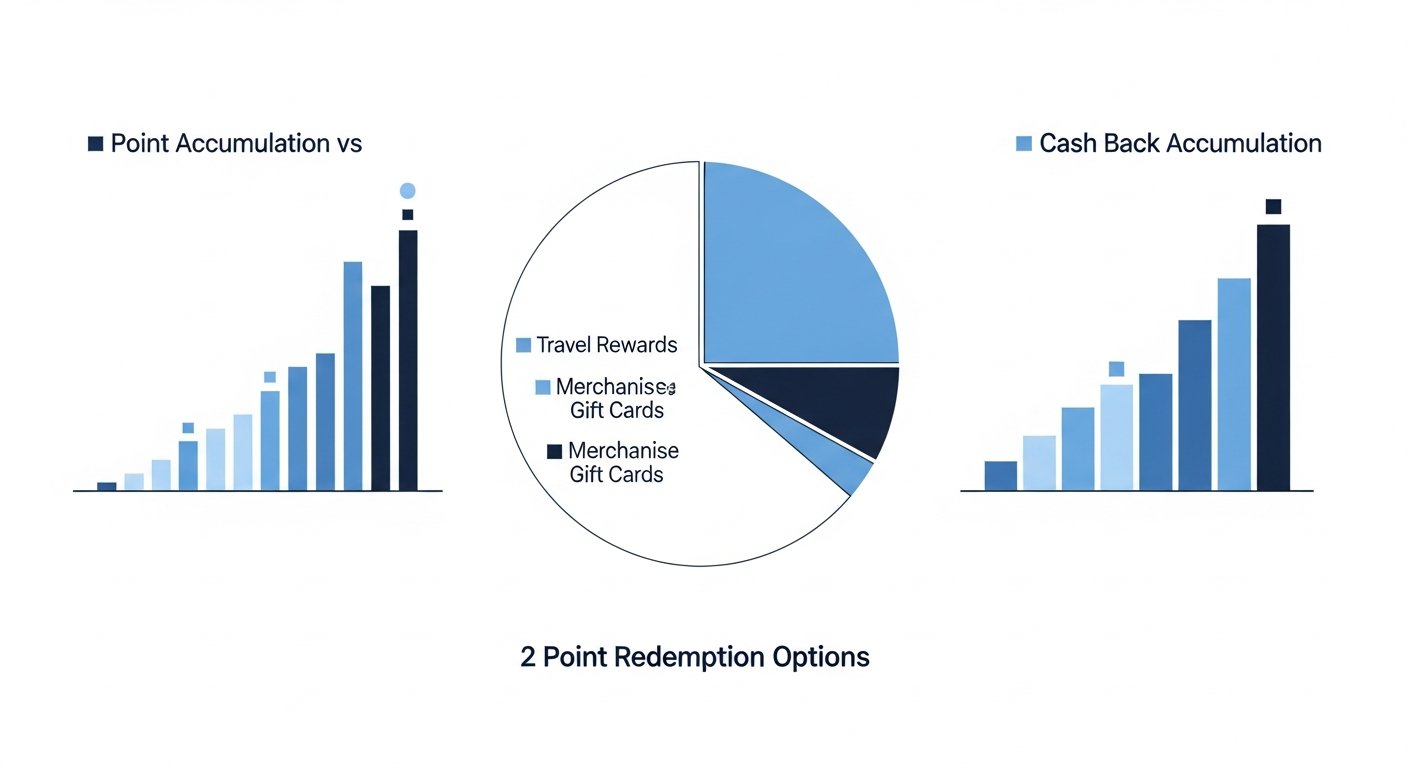
The choice between points and cash back doesn’t have to be an exclusive one. In fact, many savvy consumers and points optimizers adopt a hybrid approach, strategically combining different types of reward cards to maximize their returns across various spending categories and financial goals. Furthermore, the rewards landscape itself is constantly evolving, with new types of “flexible points” emerging to bridge the gap between traditional points and cash back.
Combining Cash Back and Points Cards
One of the most effective strategies is to build a diversified “wallet” of credit cards, each chosen for its specific strengths. This allows you to earn optimal rewards for every dollar you spend, regardless of the category.
- The Core Strategy: Use a cash back card for categories where points cards don’t offer a compelling bonus, or for general, everyday spending where you want simplicity. Simultaneously, use a points-earning card for categories where it offers high multipliers (e.g., travel, dining, specific bonus categories) or for large purchases that help you meet sign-up bonus thresholds.
- Example Scenario:
- You might use a 2% flat-rate cash back card for all non-bonus spending, effectively getting a solid return on everything else.
- For dining and travel, you might use a premium travel card that earns 3x or 4x points, knowing those points can be leveraged for high-value travel redemptions.
- For groceries, you might use a card that offers 5% cash back or 5x points, depending on whether you value direct cash savings or potential travel value more for that category.
- Benefits: This approach ensures that you’re always earning a strong return, whether it’s through direct cash savings or through points that can be transformed into aspirational travel. It eliminates the “opportunity cost” of using a single type of card for all purchases.
- Consideration: This requires more active management of multiple cards and an awareness of which card to use for which purchase.
“Flexible Points” Programs
Credit card issuers have recognized the desire for both value and flexibility, leading to the rise of “flexible points” programs. These programs offer the best of both worlds, allowing you to choose how you want to redeem your rewards at the point of redemption. Examples include:
- Proprietary Points Programs (e.g., Chase Ultimate Rewards, American Express Membership Rewards, Citi ThankYou Points): These are the quintessential flexible points. You earn a single type of point that can be redeemed in multiple ways:
- Transfer to airline/hotel partners for potentially high value.
- Redeem for travel through their own portals (often at 1 to 1.5 cents per point).
- Redeem for statement credits/cash back (usually at 0.5 to 1 cent per point).
- Redeem for gift cards or merchandise (variable, often poor value).
The key here is that you’re not locked into a redemption path when you earn; you decide later based on your needs and the best available value.
- Cash Back Portals with Point Options: Some cash back cards, particularly those with fixed-value rewards, might brand their rewards as “points” (e.g., 1 point = 1 cent) but effectively function as cash back, with the option to convert them to travel or other rewards at a 1:1 ratio. While less flexible than the major travel points programs, they still offer options.
Flexible points programs are excellent for those who want the option to save for a big trip but also appreciate the safety net of being able to convert their rewards to cash if an urgent financial need arises.
The Dynamic Nature of Redemption Values
It’s crucial to remember that the value of points, particularly for travel, is not static. Airline and hotel loyalty programs constantly adjust their award charts, introduce dynamic pricing, and change transfer ratios. What might be a “sweet spot” today could be devalued tomorrow. This dynamic nature means that:
- Continuous Learning is Key: Staying informed about loyalty program changes is vital for maximizing points. goldpoints continually monitors these shifts to bring you the latest strategies.
- Don’t Hoard Points Indefinitely: While it’s tempting to save points for a “someday” dream trip, extreme hoarding can be risky due to devaluations. It’s often better to earn and burn points for valuable redemptions when they arise.
- Flexibility Is Your Friend: Being adaptable with your travel dates, destinations, and even airlines can help you find valuable redemptions even in a dynamic environment.
Embracing a hybrid strategy and understanding the evolving landscape of reward programs empowers you to consistently maximize your credit card benefits, adapting your approach as your goals and the reward environment change.
Advanced Strategies for Maximizing Your Rewards
Once you’ve decided whether points, cash back, or a hybrid approach is right for you, the next step is to master the art of maximization. This goes beyond simply using your card; it involves strategic planning, understanding valuations, and leveraging every available opportunity.
Understanding Redemption Valuations (CPP)
For points earners, the concept of “Cents Per Point” (CPP) is fundamental. This metric helps you understand the true value you’re getting from your points redemptions.
CPP Calculation: (Cash Value of Redemption / Number of Points Used) * 100 = Cents Per Point
Example: If a flight costs $500 in cash but requires 25,000 points, your CPP is ($500 / 25,000) * 100 = 2 cents per point. This is generally considered a good redemption value for points.
- Benchmark Values:
- Cash Back: Typically 1 CPP for standard cash back cards.
- Travel Portal (Issuers): Often 1 to 1.5 CPP.
- Transfer Partners (Airlines/Hotels): Can range from 2 CPP to 10+ CPP for premium travel.
- Statement Credit/Merchandise: Usually 0.5 to 1 CPP (often the lowest value).
- Why it Matters: By calculating CPP, you can compare different redemption options and ensure you’re getting the best possible return for your hard-earned points. It helps you avoid “bad” redemptions that yield less value than a simple cash back equivalent.
Sign-Up Bonuses: The Most Lucrative Opportunity
For both points and cash back cards, the initial sign-up bonus is almost always the most significant reward you’ll earn. These bonuses are designed to attract new customers and can provide an enormous boost to your rewards balance.
- Cash Back Bonuses: Often $150-$300 for meeting a spending threshold (e.g., $500 after spending $1,000 in 3 months).
- Points Bonuses: Can range from 50,000 to 150,000+ points for meeting higher spending thresholds (e.g., $3,000-$5,000 in 3 months). When these points are redeemed strategically for travel, their value can easily exceed $1,000, sometimes even $2,000-$3,000, making them incredibly powerful.
- Strategy:
- Target Bonuses: Identify cards with attractive sign-up bonuses that align with your spending capacity.
- Plan Spending: Don’t overspend to meet a bonus. Align your organic spending with the bonus requirements. If you have a large upcoming purchase (e.g., home repairs, insurance premiums), timing a new card application can be very effective.
- Responsible Credit Management: While tempting to open many cards for bonuses, always prioritize responsible credit behavior. Only apply for cards you can manage, and never carry a balance.
Category Bonuses and Spending Optimization
Most rewards cards offer bonus categories where you earn accelerated rewards (e.g., 3x points on dining, 5% cash back on groceries). Maximizing your rewards involves understanding these categories and using the right card for the right purchase.
- Category Strategy:
- Daily Drivers: Identify a few cards that cover your highest spending categories (e.g., one for groceries, one for dining, one for travel, one for gas).
- Rotating Categories: Some cards offer 5% cash back or 5x points on rotating categories that change quarterly (e.g., Amazon, wholesale clubs, streaming services). Activating these and planning your spending accordingly can yield significant rewards.
- Uncategorized Spending: Always have a solid flat-rate card for purchases that don’t fall into a bonus category (e.g., 2% cash back or 1.5x/2x points on everything).
- Payment Optimization: Utilize online shopping portals offered by credit card issuers (e.g., Chase Shopping Portal, Amex Offers) to earn additional points or cash back on purchases you were already going to make.
Annual Fees: Justifying the Cost
Many of the most rewarding credit cards come with annual fees, ranging from under $100 to several hundred dollars. It’s crucial to evaluate whether the benefits outweigh the cost.
- Calculate Net Value: Add up all the benefits (travel credits, lounge access, free night certificates, bonus points, enhanced redemption values) and subtract the annual fee. If the net value is positive and you’ll genuinely use the benefits, the fee is justified.
- Wa
Points vs Cash Back: The Definitive goldpoints Guide to Maximizing Your Credit Card Rewards
Affiliate disclosure: This article may contain affiliate links. Recommendations are independent and editorially driven.
In the expansive and often exhilarating world of credit card rewards, few debates spark as much passion and strategic contemplation as the classic standoff between points and cash back. For anyone looking to truly optimize their financial health and enhance their lifestyle through smart spending, understanding the nuances of points vs cash back isn’t just an advantage—it’s essential. At goldpoints, we believe that informed decisions lead to maximized benefits, whether you’re dreaming of a luxurious international getaway, aiming to offset everyday expenses, or simply seeking to grow your savings.
The choice between points and cash back isn’t a one-size-fits-all proposition. It’s a highly personal decision influenced by your spending habits, financial goals, travel aspirations, and even your willingness to engage with the intricate redemption processes. While cash back offers straightforward simplicity and immediate, tangible value, points programs, particularly those linked to major travel currencies, promise the potential for outsized value and aspirational experiences. Navigating this dichotomy requires a deep dive into how each reward type functions, their respective advantages and disadvantages, and, most importantly, how they align with your unique circumstances.
This comprehensive guide from the goldpoints experts will dismantle the complexities of points vs cash back, providing you with the insights and strategies needed to make an informed choice. We’ll explore the core mechanics of each reward system, delve into the scenarios where one clearly outperforms the other, and even discuss hybrid approaches that allow you to harness the best of both worlds. By the end of this article, you won’t just understand the difference; you’ll have a personalized framework for selecting the reward strategy that truly elevates your financial journey in 2026 and beyond.
Understanding the Landscape of Credit Card Rewards: A Foundational Overview
Before we dissect the “points vs cash back” debate, it’s crucial to establish a clear understanding of what each reward type entails. While both are designed to incentivize credit card usage and reward consumers for their spending, their fundamental structures and potential applications differ significantly.
What are Cash Back Rewards?
Cash back rewards are arguably the simplest and most intuitive form of credit card reward. In essence, you receive a percentage of your spending back as actual money. This percentage can be flat across all purchases (e.g., 1.5% or 2% on everything) or structured with tiered bonuses for specific spending categories (e.g., 5% on groceries and gas, 1% on everything else). The beauty of cash back lies in its universality and lack of complexity. It’s money, and money is always valuable.
- Direct Value: Cash back provides a fixed, transparent value. If you earn 2% cash back on a $100 purchase, you know you’re getting $2 back. There’s no guesswork or variable redemption rates.
- Redemption Options: Redemption is typically straightforward. Common methods include:
- Statement credit (reducing your credit card bill).
- Direct deposit into a bank account.
- Physical check.
- Gift cards (though often at a 1:1 value, sometimes with minor bonuses).
- Simplicity: There’s generally no need to navigate complex transfer partners, hunt for award space, or worry about fluctuating point valuations. What you see is what you get.
- Broad Applicability: Cash back can be used for anything. It’s not tied to specific airlines, hotels, or merchandise. This flexibility makes it an excellent choice for offsetting everyday expenses, building savings, or paying down debt.
What are Points Rewards?
Points rewards, on the other hand, introduce an element of abstraction and potential for elevated value. Instead of a direct monetary percentage, you earn points for every dollar spent. These points are then redeemed for various rewards, which can include travel, merchandise, gift cards, or even statement credits. The critical distinction is that the value of a point is rarely fixed and can vary dramatically depending on how you redeem it.
- Variable Value: A single point might be worth 0.5 cents when redeemed for a statement credit, 1 cent for merchandise, or potentially 2 cents or more when transferred to an airline or hotel partner for a premium travel redemption. This variability is where the “game” of points and miles truly begins.
- Redemption Options: Points programs offer a broader, though often more complex, array of redemption avenues:
- Travel Portal: Redeeming points directly through the credit card issuer’s travel portal (e.g., Chase Ultimate Rewards portal, Amex Travel). Value here is often fixed (e.g., 1 to 1.5 cents per point).
- Transfer Partners: Transferring points to airline frequent flyer programs (e.g., United MileagePlus, British Airways Avios) or hotel loyalty programs (e.g., Marriott Bonvoy, Hyatt Globalist). This is often where the highest value lies, particularly for business or first-class flights and luxury hotel stays.
- Cash Back/Statement Credit: While possible, this usually yields a significantly lower value (e.g., 0.5 to 1 cent per point), making it a less optimal redemption for points enthusiasts.
- Merchandise/Gift Cards: Generally offer poor value compared to travel redemptions.
- Complexity and Optimization: Maximizing points requires research, strategic planning, and an understanding of different loyalty programs. It’s a hobby for some, involving tracking transfer bonuses, finding sweet spots in award charts, and navigating dynamic pricing.
- Aspirational Experiences: Points can unlock experiences that might otherwise be financially out of reach, such as flying lie-flat in business class or staying at five-star resorts.
The Core Difference: Value and Redemption Flexibility
The fundamental divergence between points and cash back boils down to two critical factors: the inherent value of the reward and the flexibility of its redemption. Understanding this distinction is paramount to choosing the reward system that best suits your lifestyle and financial objectives.
[INLINE IMAGE 1: place after second H2 | alt=”points vs cash back concept illustration”]
Fixed Value vs. Variable Value
This is perhaps the most significant differentiator. Cash back operates on a fixed-value principle. When a card advertises 2% cash back, it means that for every dollar you spend, you receive two cents back. This value is constant, predictable, and transparent. There are no hidden multipliers or complex calculations required to determine what your rewards are truly worth. This predictability is a major draw for many consumers, as it simplifies budgeting and financial planning.
Points, conversely, thrive on variable value. A single point from a premium travel card might be worth as little as 0.5 cents when redeemed for a statement credit, but could soar to 2 cents, 5 cents, or even higher when strategically transferred to an airline partner and used for a high-value flight redemption. For instance, a flight that costs $5,000 cash might only require 50,000 points if redeemed wisely through a transfer partner, effectively giving each point a value of 10 cents. This potential for “out of proportion” value is the siren call of points programs. However, achieving this high value requires effort, research, and often, flexibility with travel dates and destinations.
The variable nature of points means that the “value” isn’t intrinsic to the point itself, but rather to the skill and timing of its redemption. An unoptimized point redemption can easily yield a worse return than a basic cash back card, making the perceived high value of points a double-edged sword for the uninitiated.
Redemption Mechanisms: Simplicity vs. Optimization
The paths to actually utilizing your rewards also diverge sharply. Cash back is built for simplicity.
- Cash Back Redemption: You accumulate rewards, and at a certain threshold or interval, you can request them as a statement credit, direct deposit, or check. The process is usually automated or takes just a few clicks within your online account. There’s no need to compare options, search for availability, or worry about blackout dates. It’s a straightforward transfer of value back into your pocket. This effortless redemption makes cash back ideal for those who prefer minimal fuss and immediate financial benefit.
Points redemption, particularly for travel, is a world of optimization. It requires a strategic mindset and a willingness to engage with multiple platforms and loyalty programs.
- Points Redemption:
- Travel Portals: The simplest points redemption for travel is often through the issuer’s own travel portal. While convenient, the value per point here is usually fixed and modest, often around 1 to 1.5 cents per point.
- Transfer Partners: This is where the true value of many points programs lies. You transfer your credit card points to an airline or hotel loyalty program at a set ratio (e.g., 1:1). Once transferred, these points become the currency of that specific loyalty program. To maximize value, you then need to search for “award availability” within the airline or hotel program. This can be complex, involving understanding award charts, searching different dates, and sometimes even calling loyalty program customer service. The rewards are often disproportionately valuable (e.g., a $10,000 business class flight for 100,000 points, yielding 10 cents per point), but finding such redemptions requires patience and flexibility.
- Other Redemptions: Points can also be used for merchandise, gift cards, or even statement credits. However, these options typically offer the lowest value per point, essentially turning your potentially high-value points into a low-value cash back equivalent.
In essence, cash back offers universal currency with fixed value and minimal effort. Points offer a specialized currency with variable value, requiring strategic effort for maximum benefit, particularly in the realm of premium travel.
The Case for Cash Back: Simplicity and Predictability
For a significant segment of consumers, cash back isn’t just a viable option; it’s the optimal choice. Its inherent simplicity, direct financial benefit, and universal applicability make it an attractive and stress-free reward system. Let’s delve into why cash back continues to hold a prominent position in the rewards landscape.
Straightforward Redemption
The greatest strength of cash back is its utter lack of complexity when it comes to redemption. There are no confusing award charts, no need to navigate foreign airline websites, and no frantic searches for elusive award availability. When you’ve accumulated a sufficient amount of cash back, typically $25 or more, you simply log into your credit card account and choose how you want to receive your rewards: a statement credit, a direct deposit into your bank account, or a paper check. The value is unambiguous: a dollar of cash back is a dollar. This “no-brainer” aspect appeals greatly to those who value convenience and immediate gratification over potential, but uncertain, high-value redemptions.
This ease of use ensures that rewards are actually utilized, rather than sitting dormant or expiring due to complex redemption hurdles. For many, the peace of mind that comes with knowing their rewards are always worth what they expect is invaluable.
Universal Applicability
Cash is king, and cash back embodies this principle. Unlike points, which are often best optimized for specific types of travel or merchandise, cash back is universally applicable. Once you receive your cash back, it can be used for anything you desire:
- Offsetting your monthly credit card bill, effectively reducing your overall expenses.
- Contributing to your savings account or investment portfolio.
- Paying for groceries, utilities, or rent.
- Funding a specific purchase, whether it’s a new appliance or a night out.
- Reducing debt more quickly.
This unfettered flexibility means your rewards directly contribute to your overall financial well-being without dictating how or where they must be spent. It’s real money that can be deployed to meet your most pressing financial needs or desires, irrespective of their category.
Ease of Budgeting and Financial Management
For individuals and families focused on meticulous budgeting and financial planning, cash back offers unparalleled predictability. Knowing that you will receive a fixed percentage back on your spending allows for accurate forecasting of your reward income. This makes it easier to:
- Project how much you can expect to save or offset each month or year.
- Factor rewards into your financial goals, such as building an emergency fund or saving for a down payment.
- Maintain a clear picture of your net spending after rewards, simplifying your financial tracking.
This predictability contrasts sharply with points, where the true value of your accumulated rewards might fluctuate based on market conditions, award chart changes, or your ability to find optimal redemptions. Cash back removes this uncertainty, providing a stable and reliable stream of value.
Best for Non-Travelers and Those Seeking Liquidity
While points are often synonymous with travel, cash back excels for those who either do not travel frequently, prefer to pay for travel outright, or simply have other financial priorities. If your primary goal isn’t to fly first class or stay at luxury resorts, the complex world of points optimization may simply not be worth the effort.
Furthermore, cash back provides liquidity. In times of financial uncertainty or when unexpected expenses arise, having a readily available source of cash from your rewards can be a significant benefit. It’s a versatile financial tool that provides a safety net or a boost to your spending power for anything life throws your way. For many, the peace of mind derived from having direct, spendable funds is far more valuable than the potential for an aspirational flight that might take years to accumulate enough points for.
Consider the value of a $500 statement credit when you need it most, versus 50,000 points that might only yield $500 in statement credit, or require extensive research to get more for a trip you hadn’t planned. The immediate and guaranteed value of cash back often wins out for those prioritizing financial stability and straightforward utility.
For more detailed strategies on managing your personal finances with cash back, visit our guide on budgeting effectively with credit card rewards.
The Allure of Points: Maximizing Value and Experiential Rewards
While cash back appeals to those who prioritize simplicity and direct financial utility, points programs are a different beast entirely, designed for those who seek to unlock outsized value, particularly in the realm of travel and premium experiences. For the savvy optimizer, points represent a currency that, when wielded strategically, can deliver returns far exceeding what cash back typically offers.
[INLINE IMAGE 2: place after fourth H2 | alt=”points vs cash back comparison illustration”]
The Power of Transfer Partners
The true magic of many points programs, especially those offered by major issuers like Chase Ultimate Rewards, American Express Membership Rewards, and Citi ThankYou Points, lies in their robust network of transfer partners. These partners are typically airline frequent flyer programs and hotel loyalty programs. Instead of redeeming points directly through your credit card issuer’s portal at a fixed, often modest, rate, you can transfer your points to these partners, usually at a 1:1 ratio, sometimes with promotional bonuses.
Once your points are within an airline or hotel loyalty program, they can often be redeemed for significantly higher value than if they remained with the credit card issuer. This is because partner loyalty programs often have their own award charts and redemption rules, which may offer “sweet spots” – instances where a large cash cost for a flight or hotel can be covered by a relatively small number of points. For example, a business class flight that costs $4,000 might only require 50,000 points when transferred to an airline partner, yielding an effective value of 8 cents per point. This kind of value is almost impossible to achieve with cash back.
Mastering transfer partners involves understanding different award charts, knowing which programs offer the best value for specific routes or hotels, and being flexible with travel dates to find award availability. It’s a learning curve, but one that can pay off handsomely in luxurious travel experiences.
Outsized Value for Travel
The primary reason points enthusiasts gravitate towards these programs is the potential for outsized value, particularly for travel. While a 2% cash back card will give you $20 for every $1,000 spent, a points card, when optimized, can yield significantly more. Consider a scenario where you’ve accumulated 100,000 points. Redeeming them for cash back might give you $1,000 (at 1 cent per point). However, those same 100,000 points, transferred to an airline partner, could secure a round-trip business class flight to Europe, an experience that might cost $4,000-$6,000 if paid with cash. In this case, your points are yielding 4-6 cents per point, a return far beyond any cash back offering.
This isn’t just about luxurious travel; it can also be about stretching your travel budget further. Even for economy flights or standard hotel stays, strategic use of points can often provide a better return than simply booking through the issuer’s portal or paying with cash. The key is finding those opportunities where the cash price is high, but the points cost is relatively low.
Dive deeper into specific loyalty program strategies with our guide to maximizing airline miles for international travel.
Premium Experiences and Luxury Perks
Beyond simply getting more for your money, points unlock premium experiences that might otherwise be out of reach. Think about:
- First and Business Class Travel: Experience lie-flat seats, gourmet dining, and dedicated service on long-haul flights.
- Luxury Hotel Stays: Redeem points for nights at top-tier hotels and resorts, often including benefits like free breakfast, room upgrades, and late checkout.
- Unique Experiences: Some programs offer opportunities to redeem points for exclusive events, concerts, or culinary experiences.
These aspirational redemptions are a core motivator for many points and miles collectors. They transform travel from a mere means of transport or accommodation into an integral part of the vacation experience itself, offering comfort, convenience, and a touch of luxury.
Strategic Earning and Redemption
Engaging with points programs is often described as a “hobby” because it rewards strategic thinking. This strategy encompasses both earning and redeeming:
- Targeted Spending: Using specific cards for category bonuses (e.g., a card that gives 3x points on dining for all restaurant purchases).
- Sign-Up Bonuses: Leveraging lucrative sign-up bonuses, which are often the fastest way to accumulate a large number of points.
- Travel Hacking: Learning the intricacies of various loyalty programs, identifying award chart sweet spots, and even utilizing manufactured spending techniques (though these carry risks and are often against terms of service).
- Flexibility: Being flexible with travel dates, routes, and even destinations to find the best award availability.
For those who enjoy the challenge of optimization and are willing to invest time in research and planning, points programs offer an intellectually stimulating and financially rewarding pursuit. They empower you to stretch your spending power considerably and enjoy experiences that would be prohibitively expensive if paid for with cash.
Key Factors to Consider When Choosing: Points vs Cash Back
The decision between points and cash back isn’t arbitrary; it should be a carefully considered choice based on your individual circumstances, financial discipline, and personal preferences. To help you navigate this pivotal decision, consider the following key factors.
Your Spending Habits
How and where you spend your money is a critical determinant. Do you have significant expenditures in specific categories that typically offer bonus rewards, such as dining, travel, or groceries? Or is your spending more generalized?
- High Category Spending (e.g., travel, dining, specific merchants): Points cards often offer higher multipliers in these categories (e.g., 3x, 4x, 5x points per dollar). If you consistently spend heavily in these areas, you can accumulate points much faster.
- Generalized Spending: If your spending is spread across many categories without particular concentrations, a flat-rate cash back card (e.g., 2% on everything) might offer a more consistent and easier-to-track return than a points card with complex bonus categories.
- Large Purchases: For big expenses, points cards with high sign-up bonuses often make more sense, allowing you to hit spending thresholds quickly and unlock a substantial influx of points.
Your Financial Goals
What are you trying to achieve with your credit card rewards? Are you looking for immediate financial relief, long-term savings, or aspirational experiences?
- Debt Reduction / Emergency Fund: Cash back provides direct financial liquidity that can be applied immediately to reduce debt or build an emergency fund. It’s a pragmatic choice for those prioritizing financial stability.
- Everyday Savings: If you want to offset daily expenses like groceries or utilities, cash back’s direct nature is often more efficient.
- Luxury Travel / Premium Experiences: Points excel here. If your dream is a business class flight, a stay at a five-star resort, or exploring far-flung destinations, points offer the potential to achieve these goals at a fraction of the cash cost.
- Simplicity / Low Effort: If you want to earn rewards without any extra thought or effort, cash back is superior.
Your Travel Frequency and Preferences
This is perhaps the biggest swing factor. Your travel habits heavily influence the optimal choice.
- Frequent Traveler (especially internationally or in premium cabins): Points programs are designed for you. The ability to transfer points to airlines and hotels can unlock incredible value, often several times greater than the equivalent cash back. You’re likely willing to put in the effort to find those optimal redemptions.
- Infrequent Traveler / Domestic-Only / Budget Traveler: Cash back might be a better fit. If you only travel once or twice a year, primarily domestically, or prefer budget-friendly options, the effort required to maximize points might not be worth the return. A 2% cash back card can help offset the cash cost of your travel without the redemption headaches.
- Specific Travel Goals: If you have a specific airline or hotel chain you’re loyal to, a co-branded credit card (which earns points specific to that brand) might be worth considering alongside or instead of a flexible points program.
Your Willingness to Optimize
Are you someone who enjoys delving into the details, researching the best deals, and strategically planning your redemptions? Or do you prefer a “set it and forget it” approach?
- High Optimization Willingness: If you love a good challenge, enjoy researching award charts, tracking transfer bonuses, and learning the intricacies of loyalty programs, points can be a highly rewarding “game.” You’ll extract maximum value.
- Low Optimization Willingness: If the idea of searching for award space or comparing transfer ratios sounds like a chore, cash back is the clear winner. You’ll get consistent value without the mental load.
Your Tolerance for Complexity
Some people thrive on complexity, seeing it as an opportunity for greater reward. Others find it a deterrent.
- High Tolerance: Points programs, with their numerous transfer partners, dynamic pricing, and award charts, offer a complex but potentially lucrative ecosystem.
- Low Tolerance: Cash back is inherently simple. It requires minimal ongoing management beyond ensuring you meet any spending requirements for bonuses.
Consider the following comparison table to quickly assess the core differences and see where your priorities align:
Feature Cash Back Rewards Points Rewards (Travel Focused) Hybrid Approach Value Proposition Fixed and predictable (e.g., 1-2% of spending). Variable, potential for outsized value (2-10+ cents/point for travel). Combines predictability with high-value travel potential. Redemption Ease Very High (statement credit, direct deposit, check). Moderate to Low (complex transfer partners, award availability searches). Moderate (simple for cash back, complex for points). Ideal User Prioritizes simplicity, direct financial savings, non-travelers. Frequent travelers, seeks luxury experiences, willing to optimize. Mix of financial goals, willing to manage multiple cards. Best Use Case Offsetting daily expenses, building savings, reducing debt. Premium air travel, luxury hotel stays, international trips. Effort Required Minimal (automatic redemption often available). Significant (research, planning, flexibility, tracking). Moderate (managing multiple reward types). Flexibility of Use Universal (can be used for anything). Specialized (best for travel, lower value for other redemptions). High (direct cash for some needs, optimized travel for others). Hybrid Strategies and Evolving Reward Programs
The choice between points and cash back doesn’t have to be an exclusive one. In fact, many savvy consumers and points optimizers adopt a hybrid approach, strategically combining different types of reward cards to maximize their returns across various spending categories and financial goals. Furthermore, the rewards landscape itself is constantly evolving, with new types of “flexible points” emerging to bridge the gap between traditional points and cash back.
Combining Cash Back and Points Cards
One of the most effective strategies is to build a diversified “wallet” of credit cards, each chosen for its specific strengths. This allows you to earn optimal rewards for every dollar you spend, regardless of the category.
- The Core Strategy: Use a cash back card for categories where points cards don’t offer a compelling bonus, or for general, everyday spending where you want simplicity. Simultaneously, use a points-earning card for categories where it offers high multipliers (e.g., travel, dining, specific bonus categories) or for large purchases that help you meet sign-up bonus thresholds.
- Example Scenario:
- You might use a 2% flat-rate cash back card for all non-bonus spending, effectively getting a solid return on everything else.
- For dining and travel, you might use a premium travel card that earns 3x or 4x points, knowing those points can be leveraged for high-value travel redemptions.
- For groceries, you might use a card that offers 5% cash back or 5x points, depending on whether you value direct cash savings or potential travel value more for that category.
- Benefits: This approach ensures that you’re always earning a strong return, whether it’s through direct cash savings or through points that can be transformed into aspirational travel. It eliminates the “opportunity cost” of using a single type of card for all purchases.
- Consideration: This requires more active management of multiple cards and an awareness of which card to use for which purchase.
“Flexible Points” Programs
Credit card issuers have recognized the desire for both value and flexibility, leading to the rise of “flexible points” programs. These programs offer the best of both worlds, allowing you to choose how you want to redeem your rewards at the point of redemption. Examples include:
- Proprietary Points Programs (e.g., Chase Ultimate Rewards, American Express Membership Rewards, Citi ThankYou Points): These are the quintessential flexible points. You earn a single type of point that can be redeemed in multiple ways:
- Transfer to airline/hotel partners for potentially high value.
- Redeem for travel through their own portals (often at 1 to 1.5 cents per point).
- Redeem for statement credits/cash back (usually at 0.5 to 1 cent per point).
- Redeem for gift cards or merchandise (variable, often poor value).
The key here is that you’re not locked into a redemption path when you earn; you decide later based on your needs and the best available value.
- Cash Back Portals with Point Options: Some cash back cards, particularly those with fixed-value rewards, might brand their rewards as “points” (e.g., 1 point = 1 cent) but effectively function as cash back, with the option to convert them to travel or other rewards at a 1:1 ratio. While less flexible than the major travel points programs, they still offer options.
Flexible points programs are excellent for those who want the option to save for a big trip but also appreciate the safety net of being able to convert their rewards to cash if an urgent financial need arises.
The Dynamic Nature of Redemption Values
It’s crucial to remember that the value of points, particularly for travel, is not static. Airline and hotel loyalty programs constantly adjust their award charts, introduce dynamic pricing, and change transfer ratios. What might be a “sweet spot” today could be devalued tomorrow. This dynamic nature means that:
- Continuous Learning is Key: Staying informed about loyalty program changes is vital for maximizing points. goldpoints continually monitors these shifts to bring you the latest strategies.
- Don’t Hoard Points Indefinitely: While it’s tempting to save points for a “someday” dream trip, extreme hoarding can be risky due to devaluations. It’s often better to earn and burn points for valuable redemptions when they arise.
- Flexibility Is Your Friend: Being adaptable with your travel dates, destinations, and even airlines can help you find valuable redemptions even in a dynamic environment.
Embracing a hybrid strategy and understanding the evolving landscape of reward programs empowers you to consistently maximize your credit card benefits, adapting your approach as your goals and the reward environment change.
Advanced Strategies for Maximizing Your Rewards
Once you’ve decided whether points, cash back, or a hybrid approach is right for you, the next step is to master the art of maximization. This goes beyond simply using your card; it involves strategic planning, understanding valuations, and leveraging every available opportunity.
Understanding Redemption Valuations (CPP)
For points earners, the concept of “Cents Per Point” (CPP) is fundamental. This metric helps you understand the true value you’re getting from your points redemptions.
CPP Calculation: (Cash Value of Redemption / Number of Points Used) * 100 = Cents Per Point
Example: If a flight costs $500 in cash but requires 25,000 points, your CPP is ($500 / 25,000) * 100 = 2 cents per point. This is generally considered a good redemption value for points.
- Benchmark Values:
- Cash Back: Typically 1 CPP for standard cash back cards.
- Travel Portal (Issuers): Often 1 to 1.5 CPP.
- Transfer Partners (Airlines/Hotels): Can range from 2 CPP to 10+ CPP for premium travel.
- Statement Credit/Merchandise: Usually 0.5 to 1 CPP (often the lowest value).
- Why it Matters: By calculating CPP, you can compare different redemption options and ensure you’re getting the best possible return for your hard-earned points. It helps you avoid “bad” redemptions that yield less value than a simple cash back equivalent.
Sign-Up Bonuses: The Most Lucrative Opportunity
For both points and cash back cards, the initial sign-up bonus is almost always the most significant reward you’ll earn. These bonuses are designed to attract new customers and can provide an enormous boost to your rewards balance.
- Cash Back Bonuses: Often $150-$300 for meeting a spending threshold (e.g., $500 after spending $1,000 in 3 months).
- Points Bonuses: Can range from 50,000 to 150,000+ points for meeting higher spending thresholds (e.g., $3,000-$5,000 in 3 months). When these points are redeemed strategically for travel, their value can easily exceed $1,000, sometimes even $2,000-$3,000, making them incredibly powerful.
- Strategy:
- Target Bonuses: Identify cards with attractive sign-up bonuses that align with your spending capacity.
- Plan Spending: Don’t overspend to meet a bonus. Align your organic spending with the bonus requirements. If you have a large upcoming purchase (e.g., home repairs, insurance premiums), timing a new card application can be very effective.
- Responsible Credit Management: While tempting to open many cards for bonuses, always prioritize responsible credit behavior. Only apply for cards you can manage, and never carry a balance.
Category Bonuses and Spending Optimization
Most rewards cards offer bonus categories where you earn accelerated rewards (e.g., 3x points on dining, 5% cash back on groceries). Maximizing your rewards involves understanding these categories and using the right card for the right purchase.
- Category Strategy:
- Daily Drivers: Identify a few cards that cover your highest spending categories (e.g., one for groceries, one for dining, one for travel, one for gas).
- Rotating Categories: Some cards offer 5% cash back or 5x points on rotating categories that change quarterly (e.g., Amazon, wholesale clubs, streaming services). Activating these and planning your spending accordingly can yield significant rewards.
- Uncategorized Spending: Always have a solid flat-rate card for purchases that don’t fall into a bonus category (e.g., 2% cash back or 1.5x/2x points on everything).
- Payment Optimization: Utilize online shopping portals offered by credit card issuers (e.g., Chase Shopping Portal, Amex Offers) to earn additional points or cash back on purchases you were already going to make.
Annual Fees: Justifying the Cost
Many of the most rewarding credit cards come with annual fees, ranging from under $100 to several hundred dollars. It’s crucial to evaluate whether the benefits outweigh the cost.
- Calculate Net Value: Add up all the benefits (travel credits, lounge access, free night certificates, bonus points, enhanced redemption values) and subtract the annual fee. If the net value is positive and you’ll genuinely use the benefits, the fee is justified.
- Wa