


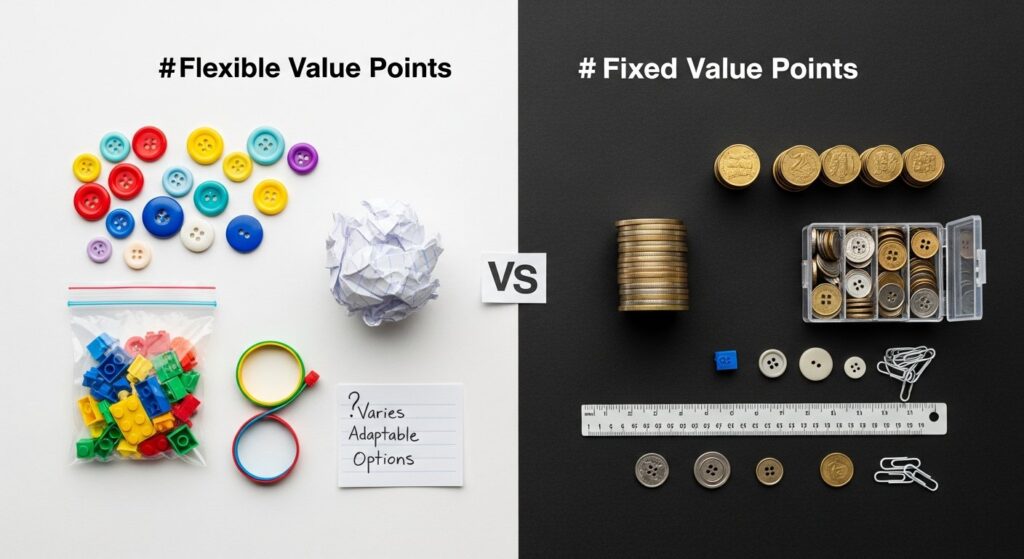
The Ultimate Showdown: Flexible vs Fixed Value Points in Credit Card Rewards
Affiliate disclosure: This article may contain affiliate links. Recommendations are independent and editorially driven.
In the expansive and often intricate world of credit card rewards, travel points, and loyalty programs, understanding the fundamental mechanics of how your points are valued is paramount to maximizing their potential. For beginners and seasoned points-and-miles enthusiasts alike, one of the most critical distinctions to grasp is the difference between “flexible value points” and “fixed value points.” This distinction doesn’t just represent a minor nuance; it forms the very bedrock of strategic redemption, dictating everything from your potential travel experiences to the actual cash equivalent you derive from your hard-earned rewards.
At goldpoints, our mission is to demystify these complex systems, empowering you to make informed decisions that align with your financial goals and travel aspirations. This comprehensive guide will dissect flexible and fixed value points, exploring their characteristics, advantages, disadvantages, and ideal use cases. By the end of this deep dive, you’ll be equipped with the knowledge to identify which type of point best suits your spending habits, redemption preferences, and overall rewards strategy in 2026 and beyond.
Whether you dream of first-class international travel, seamless domestic flights, luxury hotel stays, or simply wish to offset everyday expenses, the choice between flexible and fixed value points will significantly influence the trajectory of your rewards journey. Let’s embark on this essential exploration to unlock the true power of your points.
Understanding the Fundamentals: What Are Points?
Before we delve into the nuances of flexibility and fixed values, it’s essential to establish a clear understanding of what “points” represent within the context of credit card rewards and loyalty programs. At their core, points are a form of proprietary currency issued by banks, airlines, hotels, and other merchants as an incentive for customer loyalty and spending. These points are typically earned through credit card purchases, program participation, or promotional activities.
The Core Concept of Rewards Points
Imagine points as a parallel financial system, albeit one specifically designed for rewards. When you use a credit card that offers points, you’re not just making a purchase; you’re also accumulating a digital currency. The value of this currency isn’t always immediately obvious, and that’s where the distinction between flexible and fixed comes into play. These points can then be redeemed for a variety of goods, services, or experiences, depending on the rules of the issuing program. The goal, always, is to redeem them for the highest possible value, converting your spending into tangible benefits.
Historically, loyalty programs began as simple punch cards or stamp collections, evolving into complex digital ecosystems that track every transaction. Today’s points systems are sophisticated, often involving intricate partnerships between banks and travel providers. Understanding this ecosystem is the first step towards mastering your rewards strategy. The perceived value of a point can fluctuate wildly, making strategic accumulation and redemption a skill that pays significant dividends.
How Points Are Earned
The primary method of earning points is through credit card spending. Different cards offer varying earning rates, often categorized by spending categories. For instance, a card might offer 3 points per dollar on dining, 2 points per dollar on travel, and 1 point per dollar on all other purchases. These bonus categories are designed to incentivize spending in specific areas.
Beyond everyday spending, points can also be earned through:
- **Sign-up Bonuses:** The most lucrative way to earn a large chunk of points, these bonuses are offered to new cardholders who meet a specified spending requirement within an initial period (e.g., spend $3,000 in the first three months).
- **Referral Bonuses:** Many programs reward existing cardholders for referring new applicants who are approved.
- **Shopping Portals:** Online shopping portals (e.g., airline, hotel, or bank portals) allow you to earn extra points per dollar spent at participating merchants.
- **Promotional Offers:** Banks and loyalty programs frequently offer limited-time promotions for specific spending categories or activities.
- **Everyday Habits:** Some programs even reward for things like surveys, watching videos, or linking accounts, though these usually yield fewer points.
Strategic earning involves understanding your spending patterns and aligning them with the bonus categories of your credit cards. This ensures you’re always earning at the highest possible rate, building up your points balance efficiently for future redemptions.
Diving Deep into Flexible Value Points

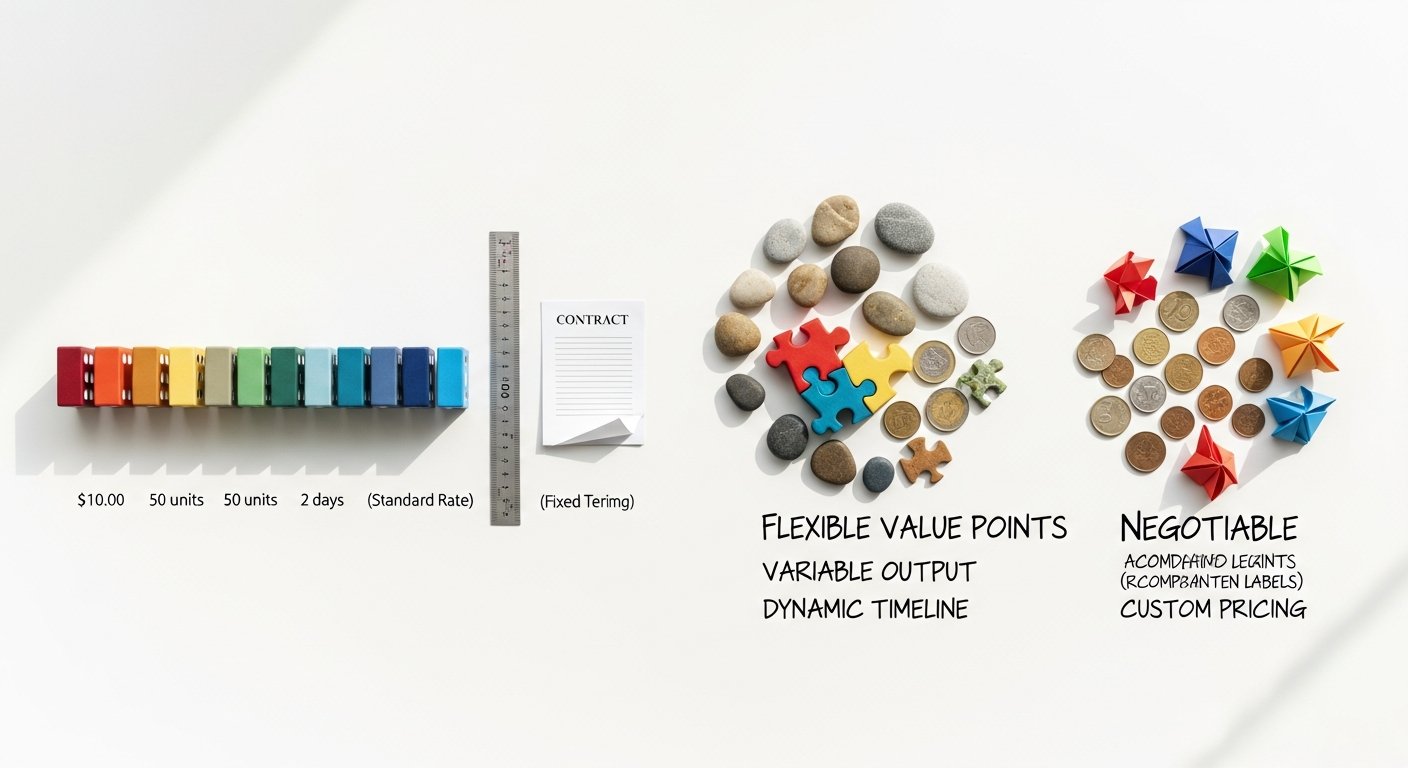
Flexible value points are the darlings of the points-and-miles community for a reason: their versatility. These are points issued by major credit card issuers, like Chase, American Express, and Capital One, that are not tied to a single airline or hotel chain. Instead, they operate as a central currency within the bank’s own rewards ecosystem, offering a multitude of redemption options.
Defining Flexible Points and Their Mechanisms
Flexible points derive their name from their primary characteristic: the ability to transfer them to various airline and hotel loyalty programs at a predetermined ratio (often 1:1, but sometimes higher or lower). This transferability is what unlocks immense value and strategic potential. Instead of being locked into a single program, your points become a universal key to a diverse portfolio of travel partners.
When you earn flexible points, they reside in your bank’s rewards account. From there, you can choose to:
- Transfer them to partner airlines (e.g., United, Southwest, British Airways, Singapore Airlines).
- Transfer them to partner hotels (e.g., Marriott, Hyatt, Hilton).
- Redeem them for travel through the bank’s own travel portal.
- Redeem them for cash back, gift cards, or merchandise (though these usually offer lower value).
The “flexible value” aspect comes from the fact that the value you get from each point can vary significantly depending on which redemption option you choose. For instance, a point transferred to an airline partner for a first-class international ticket might yield 3-5 cents per point in value, while redeeming it for cash back might only yield 1 cent per point.
Key Characteristics and Advantages
The advantages of flexible value points are numerous, making them a preferred choice for savvy travelers and rewards optimizers:
- **Maximized Value Potential:** This is the biggest draw. By transferring points to airline or hotel partners during promotional periods or for high-value redemptions (like premium cabin flights or luxury hotel suites), you can often achieve redemption values significantly higher than 1 cent per point.
- **Diversification and Hedging:** Your points are not subject to the devaluation of a single loyalty program. If one airline program devalues its chart, you still have other airline and hotel partners to choose from. This diversification acts as a hedge against program changes.
- **Strategic Planning:** Flexible points allow for “just-in-time” redemptions. You don’t need to commit your points to a specific airline or hotel until you’ve found the perfect award availability. This is crucial for booking popular routes or exclusive accommodations.
- **Enhanced Travel Options:** With a broad network of transfer partners, you gain access to a wider array of airlines, routes, and hotel brands globally. This opens doors to experiences that might be out of reach with a fixed-value system.
- **Pooling Opportunities:** In some cases, points from different flexible programs can indirectly complement each other if they share common transfer partners, allowing you to combine balances for larger redemptions.
Examples of Major Flexible Point Currencies
Three primary players dominate the flexible points landscape in the US market, each with its unique suite of cards and transfer partners:
Chase Ultimate Rewards (UR)
Chase Ultimate Rewards are highly esteemed for their robust travel partners and their ability to be redeemed directly through the Chase travel portal with an enhanced value (e.g., 1.25 or 1.5 cents per point for Sapphire Preferred or Sapphire Reserve cardholders, respectively). Key transfer partners include:
- **Airlines:** Southwest Airlines Rapid Rewards, United MileagePlus, British Airways Executive Club, Air Canada Aeroplan, Singapore Airlines KrisFlyer, Virgin Atlantic Flying Club, Iberia Plus, Aer Lingus AerClub, KLM/Air France Flying Blue.
- **Hotels:** World of Hyatt, Marriott Bonvoy, IHG One Rewards.
The high value offered by World of Hyatt transfers, often yielding 2+ cents per point for luxury hotel stays, is a particular highlight for UR cardholders.
American Express Membership Rewards (MR)
American Express Membership Rewards are known for their extensive list of international airline partners and frequent transfer bonuses. While Amex doesn’t offer a direct boost in value through their travel portal like Chase, their strength lies in unlocking aspirational travel through their partners. Key transfer partners include:
- **Airlines:** Delta SkyMiles, ANA Mileage Club, Cathay Pacific Asia Miles, Singapore Airlines KrisFlyer, Emirates Skywards, Etihad Guest, British Airways Executive Club, Virgin Atlantic Flying Club, Air France/KLM Flying Blue, HawaiianMiles, Avianca LifeMiles, Qantas Frequent Flyer.
- **Hotels:** Marriott Bonvoy, Hilton Honors, Choice Privileges.
Amex is often the go-to for travelers eyeing premium cabins on international carriers due to their wide range of global airline partners.
Capital One Venture Miles
Capital One Venture Miles offer a slightly different approach to flexibility. While they can be redeemed at a fixed 1 cent per mile for travel purchases (effectively erasing travel expenses off your statement), they also feature a growing list of airline and hotel transfer partners. Key partners include:
- **Airlines:** Air Canada Aeroplan, British Airways Executive Club, Cathay Pacific Asia Miles, Emirates Skywards, Etihad Guest, EVA Air Infinity MileageLands, Finnair Plus, Qantas Frequent Flyer, Singapore Airlines KrisFlyer, Turkish Airlines Miles&Smiles, Virgin Red (includes Virgin Atlantic), Avianca LifeMiles, Flying Blue (Air France/KLM), JAL Mileage Bank (select cards).
- **Hotels:** Wyndham Rewards, Accor Live Limitless (ALL).
Capital One has been aggressively expanding its transfer partner network, making its miles increasingly competitive for maximizing travel value.
Strategic Redemption for Maximum Value
Maximizing flexible points requires research and flexibility in your travel plans. Here are strategies:
- **Airline Partner Transfers:** This is where the highest value often lies. Look for “sweet spots” – specific routes or cabin classes where a partner airline’s award chart requires fewer points than expected. For example, using Chase Ultimate Rewards to transfer to World of Hyatt for a luxury hotel stay, or Amex Membership Rewards to transfer to ANA for round-the-world flights, can yield immense value.
- **Transfer Bonuses:** Banks frequently offer bonuses for transferring points to specific partners (e.g., 20-30% extra points). Always try to time your transfers with these promotions.
- **Award Availability:** The biggest challenge with partner transfers is finding award availability, especially for premium cabins. Be flexible with your dates and destinations, and utilize tools like ExpertFlyer or seat alerts.
- Using Travel Portals (When Appropriate): While direct transfers usually yield higher value, the bank’s own travel portal can be convenient for specific situations, especially if you have an eligible card that offers a redemption bonus (like the Chase Sapphire Reserve’s 1.5 cents per point).
The power of flexible points lies in your ability to adapt your strategy to current award charts, promotional offers, and personal travel goals, ensuring you’re always getting the best possible return on your spending.
[INLINE IMAGE 1: place after second H2 | alt=”flexible vs fixed value points concept illustration”]
Exploring Fixed Value Points
On the opposite end of the spectrum from flexible points are fixed value points. As their name suggests, these points maintain a consistent, predictable value regardless of how they are redeemed. This simplicity is their defining characteristic and, for many, their greatest appeal.
Defining Fixed Points and Their Simplicity
Fixed value points are typically tied directly to a monetary value, most commonly 1 cent per point. This means 10,000 fixed value points will always be worth $100, whether you redeem them for a flight, a hotel room, a statement credit, or merchandise. There’s no complex math, no searching for award availability, and no worrying about devaluations based on partner award charts.
These types of points are often associated with:
- **Cash Back Cards:** While technically “cash back,” many cash back programs operate on a points system where 1 point = 1 cent.
- **Certain Proprietary Bank Points:** Some bank reward programs offer points that can only be redeemed through their own portal at a fixed rate, or for statement credits.
- **Some Co-branded Airline/Hotel Points (with specific redemption types):** While many co-branded points have dynamic pricing, some can effectively become fixed value if redeemed for specific, less optimal options like gift cards or merchandise within their own loyalty program.
The mechanism is straightforward: accumulate points, and then redeem them for their stated cash equivalent. This directness makes them incredibly user-friendly and removes much of the guesswork inherent in flexible point programs.
Key Characteristics and Trade-offs
Fixed value points come with a distinct set of characteristics, offering clear advantages but also notable trade-offs:
Advantages:
- **Simplicity and Predictability:** The value of your points is always clear. There are no complicated transfer ratios, no award charts to memorize, and no dynamic pricing algorithms to decipher. You know exactly what your points are worth.
- **Ease of Redemption:** Redemption is usually a simple click of a button. You can apply points as a statement credit, for gift cards, or book travel through a simple portal where points directly offset the cash cost.
- **No Blackout Dates or Availability Issues:** Since you’re essentially using your points to pay for a cash price, you’re not restricted by limited award availability. If a flight or hotel room is available for cash, you can “buy” it with your points.
- **Consistent Value:** While the maximum value of flexible points can fluctuate, fixed points provide a stable, reliable value. This is especially comforting in times of economic uncertainty or program changes.
- **Broad Applicability:** Fixed value points can often be used for a wider range of expenses beyond just travel, such as statement credits for everyday purchases, gift cards, or merchandise.
Trade-offs:
- **Limited Maximization Potential:** The primary downside is the cap on value. You will almost never achieve more than 1 cent per point in value, whereas flexible points can often yield 2-5 cents per point or more for aspirational travel.
- **Less Aspirational Travel:** Booking first-class international flights or luxury suites with fixed value points can be prohibitively expensive, as you’d need an enormous number of points to cover the high cash cost.
- **Lack of Transfer Partners:** By definition, fixed value points lack the ability to transfer to external loyalty programs, removing a powerful tool for value maximization.
For those who prioritize ease, predictability, and broad utility over the pursuit of outsized travel value, fixed value points are an excellent choice.
Examples of Fixed Value Points
While some point currencies can technically be redeemed for fixed value (e.g., Chase Ultimate Rewards for cash back at 1 cent per point), here we focus on programs primarily designed around a fixed redemption rate:
- **Cash Back Rewards:** The most common example. Many credit cards offer “cash back,” which is often just points with a direct 1:1 conversion to cents. For example, a card offering 2% cash back essentially gives you 2 points per dollar, each worth 1 cent. This can be redeemed as a statement credit, direct deposit, or check.
- **Certain Bank-Specific Travel Portals:** Some smaller banks or credit unions may offer their own travel booking portals where points can be redeemed directly against the cash cost of flights or hotels at a fixed rate, without any transfer options to external programs.
- **Certain Store or Brand Loyalty Programs:** While not always credit card points, many retail loyalty programs operate on a fixed value system. For example, some coffee shop rewards might offer 1 point per dollar spent, with 100 points equaling $1 off a purchase.
- **Capital One Venture Miles (when used as a statement credit):** While Venture Miles *do* have transfer partners, a very popular redemption option is to use them to “erase” travel purchases made on the card at a rate of 1 cent per mile. This offers incredible flexibility for those who prefer to book travel directly and then apply their points as a statement credit.
The key differentiator here is the lack of a “hidden” or variable value. What you see is what you get, making budgeting and redemption planning incredibly straightforward.
When Fixed Value Points Shine
Fixed value points aren’t just for beginners; they have specific scenarios where they outperform flexible points:
- **Budget-Conscious Travelers:** For those who prioritize saving money on travel rather than luxury experiences, fixed value points offer predictable savings on any flight or hotel.
- **Spontaneous Travel:** Since there’s no need to find award availability, you can book last-minute flights or hotels and still apply your points, just as you would with cash.
- **Everyday Expenses:** If your primary goal isn’t travel, or if you simply want to offset everyday spending, fixed value points (especially in the form of cash back) are unmatched in their utility.
- **Uncertain Travel Plans:** If your travel plans are sporadic or unpredictable, fixed value points don’t expire for a specific use case, offering peace of mind.
- **”Odd” Travel Expenses:** Flexible points often have minimum transfer amounts or specific booking requirements. Fixed value points can be used to offset small travel purchases like ride-shares, train tickets, or even Airbnb bookings that might not be covered by transfer partners.
The reliability and broad utility of fixed value points make them an indispensable tool in a well-rounded rewards strategy, particularly for those who value simplicity and direct monetary value.
The Crucial Comparison: Flexible vs Fixed Value
Now that we’ve explored each type of point individually, it’s time to bring them together for a direct, side-by-side comparison. This section will highlight the critical distinctions that will inform your rewards strategy, helping you choose the path that best aligns with your financial and travel goals.
Redemption Options and Versatility
This is arguably the most significant divergence between the two. Flexible points offer a broad spectrum of redemption avenues, with a strong emphasis on leveraging transfer partners for outsized value. Their versatility allows you to pivot your strategy as travel goals or loyalty program landscapes change.
- **Flexible Points:** Offer a diverse range of redemption options, including transfers to numerous airline and hotel partners, booking through a bank’s travel portal, and less valuable options like cash back or gift cards. The key is the ability to choose *how* to redeem based on potential value.
- **Fixed Value Points:** Primarily offer direct cash equivalents, either as statement credits, direct deposits, or gift cards. When used for travel, they typically offset a cash booking at a fixed rate, providing straightforward savings without the complexity of partner programs.
For the traveler seeking specific, premium experiences, flexible points provide the toolkit. For the individual seeking simplicity and direct monetary relief, fixed value points are superior.
Value Potential and Maximization
Here lies the core argument for the points-and-miles hobbyists. The potential for outsized value is the main draw of flexible points.
- **Flexible Points:** Have a variable value per point, ranging from a low of 0.6-1 cent per point (for cash back) to a high of 2-5 cents per point (for strategic premium travel redemptions). The ceiling for value maximization is significantly higher.
- **Fixed Value Points:** Maintain a consistent value, typically 1 cent per point. This predictability ensures you always know what your points are worth, but it also caps your potential gains. You won’t get “outsize” value, but you also won’t get less than expected.
If you’re willing to invest time in learning award charts and searching for availability, flexible points can deliver phenomenal returns. If you prefer guaranteed savings without the strategic overhead, fixed value points provide that peace of mind.
Complexity and Learning Curve
The higher the potential reward, often the higher the complexity. This holds true for flexible points.
- **Flexible Points:** Come with a steeper learning curve. Understanding transfer partners, deciphering award charts (which can be dynamic), finding award availability, and navigating different loyalty program rules requires time and effort.
- **Fixed Value Points:** Are remarkably simple. The value is transparent, and redemption is typically a few clicks away. There’s virtually no learning curve beyond understanding your redemption options.
For those who enjoy the “game” of maximizing points, flexible points offer an engaging challenge. For those who want rewards with minimal fuss, fixed value points are the clear winner.
Program Partners and Transferability
This is the defining mechanical difference between the two types of points.
- **Flexible Points:** Are inherently designed for transferability. They act as a gateway to dozens of airline and hotel loyalty programs, allowing you to convert your bank points into airline miles or hotel points. This vast network is their superpower.
- **Fixed Value Points:** Generally lack transfer partners. Their value is locked within the issuing program, redeemable for cash or direct offsets against purchases.
The ability to transfer points is what gives flexible currencies their strategic depth and hedging capabilities against devaluations in individual programs.
Strategic Decision-Making
Your choice between flexible and fixed value points ultimately boils down to your personal strategy.
- **Flexible Points Strategy:** Focuses on accumulation, strategic transfers, and high-value redemptions for aspirational travel. It often involves holding points until the “perfect” redemption opportunity arises.
- **Fixed Value Points Strategy:** Emphasizes simplicity, consistent savings, and broad utility. It’s often about offsetting everyday costs or ensuring reliable savings on any travel booking without complex planning.
Many savvy individuals adopt a hybrid approach, using flexible points for big travel goals and fixed value (cash back) for everyday expenses or as a backup.
[INLINE IMAGE 2: place after fourth H2 | alt=”flexible vs fixed value points comparison illustration”]
| Feature | Flexible Value Points (e.g., Chase UR, Amex MR) | Fixed Value Points (e.g., Cash Back, Capital One Venture “Erase Travel”) |
|---|---|---|
| Core Mechanism | Points held by bank, transferable to external travel partners. Value varies based on redemption. | Points directly tied to a cash equivalent (e.g., 1 cent/point). Value is fixed. |
| Value Potential | Highly variable, often 1.5-5+ cents per point for optimal travel redemptions. | Generally 1 cent per point (or slightly higher via specific travel portals). |
| Redemption Options | Airline/hotel transfers (numerous partners), bank travel portals (sometimes enhanced value), cash back, gift cards, merchandise. | Statement credit, direct deposit, gift cards, merchandise, travel purchases (offset at fixed rate). |
| Complexity & Learning Curve | High. Requires research into transfer partners, award charts, and availability. | Low. Simple conversion to cash or travel offset. No complex calculations. |
| Award Availability / Blackouts | Subject to airline/hotel award availability and blackout dates when transferring. | No award availability issues; if available for cash, you can use points to pay. |
| Best Use Cases | Aspirational travel (first/business class, luxury hotels), leveraging transfer bonuses, maximizing value. | Everyday savings, budget travel, convenience, offsetting any travel expense, direct cash back. |
| Ideal User Profile | Strategic traveler, points-and-miles enthusiast, comfortable with research and planning. | Budget-conscious, values simplicity, prefers direct savings, spontaneous traveler. |
| Examples (Card Programs) | Chase Sapphire Reserve, American Express Platinum Card, Citi Premier. | Capital One Venture X (for ‘erase travel’), Fidelity Rewards Visa Signature, various 2% cash back cards. |
Maximizing Your Points: Advanced Strategies for Both Types
Whether you lean towards flexible or fixed value points, advanced strategies can help you squeeze every drop of value from your rewards. The key is understanding not just how to earn and redeem, but how to strategically integrate them into your financial and travel planning.
The Art of Point Transfers (for Flexible Points)
For flexible points, mastering point transfers is the ultimate value-maximization technique. It’s not enough to just transfer; you must transfer intelligently.
- **Identifying Sweet Spots:** Research award charts for partner airlines and hotels. Some programs offer incredible value on specific routes or regions. For example, using British Airways Avios for short-haul flights on American Airlines or Alaska Airlines can be incredibly efficient, or transferring Chase Ultimate Rewards to World of Hyatt for luxurious stays that would otherwise cost thousands of dollars. These “sweet spots” are constantly changing, so staying updated is crucial.
- **Timing Transfers with Bonuses:** Always be on the lookout for transfer bonuses. Banks frequently offer 10-50% more points when you transfer to a specific partner. A 30% transfer bonus can turn a good redemption into an amazing one, significantly reducing the number of points required for your desired flight or hotel.
- **Speculative vs. Just-in-Time Transfers:** Generally, it’s best to transfer points only when you have a confirmed award booking. Points transferred to an airline or hotel become locked in that program and are subject to its specific terms and potential devaluations. However, experienced users might make speculative transfers during a significant bonus if they have a high degree of certainty about an upcoming redemption.
- **Understanding Dynamic Pricing:** Many loyalty programs have moved towards dynamic pricing, where the points required for a flight or hotel vary with the cash price. While this can reduce traditional “sweet spots,” it also means you can often find decent redemptions even during peak times if the cash price isn’t exorbitant.
The essence of advanced flexible point strategy is being a meticulous planner and an opportunistic hunter for the best value.
Sweet Spots and Arbitrage Opportunities
Beyond simple transfers, some advanced users find “arbitrage” opportunities by leveraging the differences in how various programs value points or specific routes.
- **Partner Award Charts:** An airline might have an excellent award chart for flights on its partners, even if its own flights are expensive in points. For example, booking Lufthansa first class via United MileagePlus (Chase UR transfer partner) can sometimes be better than booking via Air Canada Aeroplan (also a UR transfer partner, and Amex MR transfer partner), depending on the route and current availability.
- **Stopovers and Open-Jaws:** Some loyalty programs allow for free or cheap stopovers on award tickets, turning a single redemption into a multi-city adventure. Understanding these rules can drastically increase the value of your points. ANA Mileage Club (Amex MR transfer partner) is famous for its generous round-the-world award chart, allowing multiple stopovers.
- Leveraging Award Charts (Fixed vs. Dynamic): Knowing which partners still use fixed award charts (offering predictable value) versus those with fully dynamic pricing is key. Fixed charts are often where the highest value “sweet spots” are found.
Leveraging Fixed Points for Simplicity and Reliability
Don’t underestimate the power of fixed value points, even for advanced users. They serve as a crucial complement to a flexible point strategy or as a primary strategy for those who value efficiency.
- **Covering “Leftover” Expenses:** For expenses not easily covered by flexible points (e.g., obscure hotels, local transport, small flight segments where award space is nil, or even taxes/fees on award tickets), fixed value points (like Capital One’s “erase travel” feature) are invaluable.
- **Strategic Cash Back for Non-Travel Spending:** For categories where flexible points cards don’t offer bonus earnings, a high-percentage cash back card (a form of fixed value points) can ensure you’re always earning maximum value. A flat 2% cash back card is often superior to a 1 point per dollar flexible points card for non-bonus spending.
- **Building an Emergency Travel Fund:** Accumulating fixed value points can serve as a reliable “emergency travel fund,” allowing you to book travel quickly without worrying about award availability or complex transfers if unexpected travel arises.
- **Simplicity for Group Travel:** When booking for multiple people, finding enough award space with flexible points can be a nightmare. Using fixed value points to offset cash tickets for a group can be far simpler and less stressful.
The Hybrid Approach: Combining Both Strategies
For many, the most effective rewards strategy involves a hybrid approach, leveraging the strengths of both flexible and fixed value points.
- **The “Big Redemption” Card:** Use a flexible points card (e.g., Chase Sapphire Reserve, Amex Platinum) for major spending categories like travel and dining, accumulating points for aspirational trips.
- **The “Everyday Spender” Card:** Pair it with a high-earning cash back card (e.g., a 2% flat cash back card) for all other purchases, ensuring a minimum 1 cent per point value without needing to strategize.
- **The “Travel Eraser” Card:** Consider a card like the Capital One Venture X, which offers flexible transfer partners but also a fixed 1 cent per mile for erasing travel purchases. This provides a valuable safety net for situations where a transfer partner isn’t ideal or award space is scarce.
- **Category Maximization:** Utilize cards that offer bonus points in specific rotating categories (e.g., grocery stores, gas stations) which can earn either flexible or fixed points, depending on the card issuer.
This balanced approach allows you to pursue extraordinary travel experiences while also maintaining a practical, reliable safety net for everyday savings and smaller travel needs. It’s about optimizing your entire rewards ecosystem, not just a single card or point type.
Real-World Scenarios and Case Studies
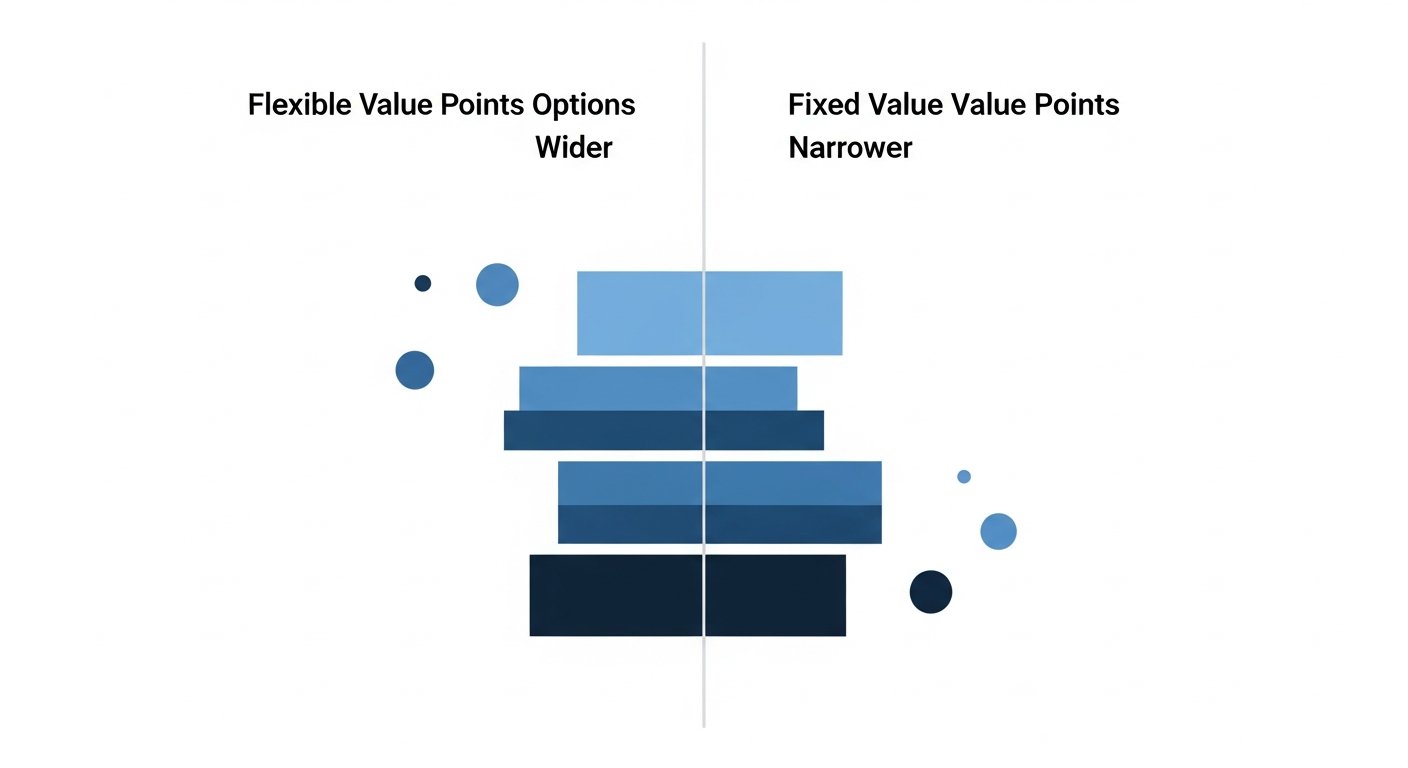
To truly understand the implications of flexible vs. fixed value points, let’s look at how different individuals might apply these strategies to their unique situations. These scenarios illustrate the practical advantages and disadvantages of each approach.
The International Traveler’s Dilemma: Jane, the Globetrotter
Jane, a software engineer, earns a good salary and loves to travel internationally in business or first class at least once a year. She also takes a couple of domestic trips annually. She enjoys the thrill of finding travel deals and is willing to put in the time to research.
- **Jane’s Strategy:** Jane is an ideal candidate for flexible value points. She primarily uses cards like the Chase Sapphire Reserve and the American Express Platinum Card. She funnels all her travel, dining, and major online shopping (via shopping portals) through these cards. Her goal is to accumulate large balances of Ultimate Rewards and Membership Rewards points.
- **Why it Works for Jane:**
- **Aspirational Travel:** She transferred 150,000 Amex MR points during a 25% bonus to Virgin Atlantic Flying Club to book a Round-Trip Upper Class (Business Class) flight to London on a partner airline, which would have cost over $7,000 cash. Her redemption value was approximately 4.7 cents per point.
- **Flexibility:** When a planned trip to Asia fell through due to unforeseen circumstances, she wasn’t stuck with airline-specific miles; her points remained flexible until she found a new destination.
- **Domestic Travel:** For domestic trips, she sometimes transfers Chase UR to Southwest Rapid Rewards or uses the Chase Travel Portal (getting 1.5 cents/point value with her Sapphire Reserve) to book flights that don’t have good award availability on partner airlines.
- **Considerations:** Jane spends significant time researching award availability and understanding complex transfer rules. If her travel plans were less fixed or she disliked research, this strategy would be less effective.
The Family Vacation Planner: Mark and Sarah
Mark and Sarah have two young children and prioritize annual family vacations that are comfortable, predictable, and budget-friendly. They value simplicity and don’t have the time to hunt for obscure award redemptions.
- **Mark and Sarah’s Strategy:** They lean heavily on fixed value points, primarily through a Capital One Venture X card and a high-earning cash back card for everyday spending.
- **Why it Works for Mark and Sarah:**
- **Predictable Savings:** For their annual trip to Disney World, they booked flights and a hotel directly through various websites. They then used their Capital One Venture Miles to “erase” over $2,000 worth of travel expenses at a solid 1 cent per mile, knowing exactly how much value they were getting. This simplicity avoided the stress of finding four award seats on the same flight.
- **Everyday Savings:** Their 2% cash back card provides a consistent stream of savings on groceries, school supplies, and other family expenses, which they can either redeem as a statement credit or for a direct deposit to their savings account.
- **No Blackout Dates:** They can travel during school holidays without worrying about limited award availability, as they are essentially paying cash with their points.
- **Considerations:** While they enjoy significant savings, they will never experience a first-class international flight with this strategy unless they pay cash. Their focus is on practical, reliable travel rather than luxury.
The Everyday Spender’s Choice: David, the Entrepreneur
David runs a small online business and has significant business expenses, alongside personal spending. He travels occasionally for conferences but mostly focuses on maximizing value for his business and personal finances without intricate rewards strategies.
- **David’s Strategy:** David adopts a hybrid approach, but with a strong emphasis on ease of use. He primarily uses a business card that earns flexible points (e.g., Chase Ink Business Preferred) for his business expenses and a high flat-rate cash back card for personal spending.
- **Why it Works for David:**
- **Business Travel:** For his business trips, he uses his Chase Ultimate Rewards to book flights and hotels through the Chase Travel Portal, leveraging the 1.25 cents per point value offered by his Ink Business Preferred card. This is simple, offers good value, and integrates directly with his business booking processes. He doesn’t need to spend time researching transfer partners.
- **Personal Savings:** His cash back card gives him direct financial relief on his personal expenses, which he values for cash flow and simplicity.
- **Backup for Aspiration:** He has the *option* to transfer his Chase UR to partners if a truly amazing personal travel opportunity arises (like a honeymoon in 2026), but it’s not his primary goal.
- **Considerations:** David might miss out on the absolute peak value from transfer partners, but he gains significant time back and ensures solid value on all his spending, both business and personal. This approach balances potential with practicality.
These scenarios highlight that there’s no single “best” type of point; rather, the optimal choice is deeply personal and dependent on individual circumstances, priorities, and willingness to engage with the complexities of loyalty programs. Take our points strategy quiz to find out which approach aligns best with your lifestyle.
Choosing the Right Points Strategy for You
The decision between focusing on flexible or fixed value points isn’t a permanent one, and many people successfully integrate both into their financial lives. However, understanding your own profile is the first step to making the most effective choice. Consider these factors when crafting your optimal rewards strategy.
Assess Your Travel Style and
The Ultimate Showdown: Flexible vs Fixed Value Points in Credit Card Rewards
Affiliate disclosure: This article may contain affiliate links. Recommendations are independent and editorially driven.
In the expansive and often intricate world of credit card rewards, travel points, and loyalty programs, understanding the fundamental mechanics of how your points are valued is paramount to maximizing their potential. For beginners and seasoned points-and-miles enthusiasts alike, one of the most critical distinctions to grasp is the difference between “flexible value points” and “fixed value points.” This distinction doesn’t just represent a minor nuance; it forms the very bedrock of strategic redemption, dictating everything from your potential travel experiences to the actual cash equivalent you derive from your hard-earned rewards.
At goldpoints, our mission is to demystify these complex systems, empowering you to make informed decisions that align with your financial goals and travel aspirations. This comprehensive guide will dissect flexible and fixed value points, exploring their characteristics, advantages, disadvantages, and ideal use cases. By the end of this deep dive, you’ll be equipped with the knowledge to identify which type of point best suits your spending habits, redemption preferences, and overall rewards strategy in 2026 and beyond.
Whether you dream of first-class international travel, seamless domestic flights, luxury hotel stays, or simply wish to offset everyday expenses, the choice between flexible and fixed value points will significantly influence the trajectory of your rewards journey. Let’s embark on this essential exploration to unlock the true power of your points.
Understanding the Fundamentals: What Are Points?
Before we delve into the nuances of flexibility and fixed values, it’s essential to establish a clear understanding of what “points” represent within the context of credit card rewards and loyalty programs. At their core, points are a form of proprietary currency issued by banks, airlines, hotels, and other merchants as an incentive for customer loyalty and spending. These points are typically earned through credit card purchases, program participation, or promotional activities.
The Core Concept of Rewards Points
Imagine points as a parallel financial system, albeit one specifically designed for rewards. When you use a credit card that offers points, you’re not just making a purchase; you’re also accumulating a digital currency. The value of this currency isn’t always immediately obvious, and that’s where the distinction between flexible and fixed comes into play. These points can then be redeemed for a variety of goods, services, or experiences, depending on the rules of the issuing program. The goal, always, is to redeem them for the highest possible value, converting your spending into tangible benefits.
Historically, loyalty programs began as simple punch cards or stamp collections, evolving into complex digital ecosystems that track every transaction. Today’s points systems are sophisticated, often involving intricate partnerships between banks and travel providers. Understanding this ecosystem is the first step towards mastering your rewards strategy. The perceived value of a point can fluctuate wildly, making strategic accumulation and redemption a skill that pays significant dividends.
How Points Are Earned
The primary method of earning points is through credit card spending. Different cards offer varying earning rates, often categorized by spending categories. For instance, a card might offer 3 points per dollar on dining, 2 points per dollar on travel, and 1 point per dollar on all other purchases. These bonus categories are designed to incentivize spending in specific areas.
Beyond everyday spending, points can also be earned through:
- **Sign-up Bonuses:** The most lucrative way to earn a large chunk of points, these bonuses are offered to new cardholders who meet a specified spending requirement within an initial period (e.g., spend $3,000 in the first three months).
- **Referral Bonuses:** Many programs reward existing cardholders for referring new applicants who are approved.
- **Shopping Portals:** Online shopping portals (e.g., airline, hotel, or bank portals) allow you to earn extra points per dollar spent at participating merchants.
- **Promotional Offers:** Banks and loyalty programs frequently offer limited-time promotions for specific spending categories or activities.
- **Everyday Habits:** Some programs even reward for things like surveys, watching videos, or linking accounts, though these usually yield fewer points.
Strategic earning involves understanding your spending patterns and aligning them with the bonus categories of your credit cards. This ensures you’re always earning at the highest possible rate, building up your points balance efficiently for future redemptions.
Diving Deep into Flexible Value Points
Flexible value points are the darlings of the points-and-miles community for a reason: their versatility. These are points issued by major credit card issuers, like Chase, American Express, and Capital One, that are not tied to a single airline or hotel chain. Instead, they operate as a central currency within the bank’s own rewards ecosystem, offering a multitude of redemption options.
Defining Flexible Points and Their Mechanisms
Flexible points derive their name from their primary characteristic: the ability to transfer them to various airline and hotel loyalty programs at a predetermined ratio (often 1:1, but sometimes higher or lower). This transferability is what unlocks immense value and strategic potential. Instead of being locked into a single program, your points become a universal key to a diverse portfolio of travel partners.
When you earn flexible points, they reside in your bank’s rewards account. From there, you can choose to:
- Transfer them to partner airlines (e.g., United, Southwest, British Airways, Singapore Airlines).
- Transfer them to partner hotels (e.g., Marriott, Hyatt, Hilton).
- Redeem them for travel through the bank’s own travel portal.
- Redeem them for cash back, gift cards, or merchandise (though these usually offer lower value).
The “flexible value” aspect comes from the fact that the value you get from each point can vary significantly depending on which redemption option you choose. For instance, a point transferred to an airline partner for a first-class international ticket might yield 3-5 cents per point in value, while redeeming it for cash back might only yield 1 cent per point.
Key Characteristics and Advantages
The advantages of flexible value points are numerous, making them a preferred choice for savvy travelers and rewards optimizers:
- **Maximized Value Potential:** This is the biggest draw. By transferring points to airline or hotel partners during promotional periods or for high-value redemptions (like premium cabin flights or luxury hotel suites), you can often achieve redemption values significantly higher than 1 cent per point.
- **Diversification and Hedging:** Your points are not subject to the devaluation of a single loyalty program. If one airline program devalues its chart, you still have other airline and hotel partners to choose from. This diversification acts as a hedge against program changes.
- **Strategic Planning:** Flexible points allow for “just-in-time” redemptions. You don’t need to commit your points to a specific airline or hotel until you’ve found the perfect award availability. This is crucial for booking popular routes or exclusive accommodations.
- **Enhanced Travel Options:** With a broad network of transfer partners, you gain access to a wider array of airlines, routes, and hotel brands globally. This opens doors to experiences that might be out of reach with a fixed-value system.
- **Pooling Opportunities:** In some cases, points from different flexible programs can indirectly complement each other if they share common transfer partners, allowing you to combine balances for larger redemptions.
Examples of Major Flexible Point Currencies
Three primary players dominate the flexible points landscape in the US market, each with its unique suite of cards and transfer partners:
Chase Ultimate Rewards (UR)
Chase Ultimate Rewards are highly esteemed for their robust travel partners and their ability to be redeemed directly through the Chase travel portal with an enhanced value (e.g., 1.25 or 1.5 cents per point for Sapphire Preferred or Sapphire Reserve cardholders, respectively). Key transfer partners include:
- **Airlines:** Southwest Airlines Rapid Rewards, United MileagePlus, British Airways Executive Club, Air Canada Aeroplan, Singapore Airlines KrisFlyer, Virgin Atlantic Flying Club, Iberia Plus, Aer Lingus AerClub, KLM/Air France Flying Blue.
- **Hotels:** World of Hyatt, Marriott Bonvoy, IHG One Rewards.
The high value offered by World of Hyatt transfers, often yielding 2+ cents per point for luxury hotel stays, is a particular highlight for UR cardholders.
American Express Membership Rewards (MR)
American Express Membership Rewards are known for their extensive list of international airline partners and frequent transfer bonuses. While Amex doesn’t offer a direct boost in value through their travel portal like Chase, their strength lies in unlocking aspirational travel through their partners. Key transfer partners include:
- **Airlines:** Delta SkyMiles, ANA Mileage Club, Cathay Pacific Asia Miles, Singapore Airlines KrisFlyer, Emirates Skywards, Etihad Guest, British Airways Executive Club, Virgin Atlantic Flying Club, Air France/KLM Flying Blue, HawaiianMiles, Avianca LifeMiles, Qantas Frequent Flyer.
- **Hotels:** Marriott Bonvoy, Hilton Honors, Choice Privileges.
Amex is often the go-to for travelers eyeing premium cabins on international carriers due to their wide range of global airline partners.
Capital One Venture Miles
Capital One Venture Miles offer a slightly different approach to flexibility. While they can be redeemed at a fixed 1 cent per mile for travel purchases (effectively erasing travel expenses off your statement), they also feature a growing list of airline and hotel transfer partners. Key partners include:
- **Airlines:** Air Canada Aeroplan, British Airways Executive Club, Cathay Pacific Asia Miles, Emirates Skywards, Etihad Guest, EVA Air Infinity MileageLands, Finnair Plus, Qantas Frequent Flyer, Singapore Airlines KrisFlyer, Turkish Airlines Miles&Smiles, Virgin Red (includes Virgin Atlantic), Avianca LifeMiles, Flying Blue (Air France/KLM), JAL Mileage Bank (select cards).
- **Hotels:** Wyndham Rewards, Accor Live Limitless (ALL).
Capital One has been aggressively expanding its transfer partner network, making its miles increasingly competitive for maximizing travel value.
Strategic Redemption for Maximum Value
Maximizing flexible points requires research and flexibility in your travel plans. Here are strategies:
- **Airline Partner Transfers:** This is where the highest value often lies. Look for “sweet spots” – specific routes or cabin classes where a partner airline’s award chart requires fewer points than expected. For example, using Chase Ultimate Rewards to transfer to World of Hyatt for a luxury hotel stay, or Amex Membership Rewards to transfer to ANA for round-the-world flights, can yield immense value.
- **Transfer Bonuses:** Banks frequently offer bonuses for transferring points to specific partners (e.g., 20-30% extra points). Always try to time your transfers with these promotions.
- **Award Availability:** The biggest challenge with partner transfers is finding award availability, especially for premium cabins. Be flexible with your dates and destinations, and utilize tools like ExpertFlyer or seat alerts.
- Using Travel Portals (When Appropriate): While direct transfers usually yield higher value, the bank’s own travel portal can be convenient for specific situations, especially if you have an eligible card that offers a redemption bonus (like the Chase Sapphire Reserve’s 1.5 cents per point).
The power of flexible points lies in your ability to adapt your strategy to current award charts, promotional offers, and personal travel goals, ensuring you’re always getting the best possible return on your spending.
[INLINE IMAGE 1: place after second H2 | alt=”flexible vs fixed value points concept illustration”]
Exploring Fixed Value Points
On the opposite end of the spectrum from flexible points are fixed value points. As their name suggests, these points maintain a consistent, predictable value regardless of how they are redeemed. This simplicity is their defining characteristic and, for many, their greatest appeal.
Defining Fixed Points and Their Simplicity
Fixed value points are typically tied directly to a monetary value, most commonly 1 cent per point. This means 10,000 fixed value points will always be worth $100, whether you redeem them for a flight, a hotel room, a statement credit, or merchandise. There’s no complex math, no searching for award availability, and no worrying about devaluations based on partner award charts.
These types of points are often associated with:
- **Cash Back Cards:** While technically “cash back,” many cash back programs operate on a points system where 1 point = 1 cent.
- **Certain Proprietary Bank Points:** Some bank reward programs offer points that can only be redeemed through their own portal at a fixed rate, or for statement credits.
- **Some Co-branded Airline/Hotel Points (with specific redemption types):** While many co-branded points have dynamic pricing, some can effectively become fixed value if redeemed for specific, less optimal options like gift cards or merchandise within their own loyalty program.
The mechanism is straightforward: accumulate points, and then redeem them for their stated cash equivalent. This directness makes them incredibly user-friendly and removes much of the guesswork inherent in flexible point programs.
Key Characteristics and Trade-offs
Fixed value points come with a distinct set of characteristics, offering clear advantages but also notable trade-offs:
Advantages:
- **Simplicity and Predictability:** The value of your points is always clear. There are no complicated transfer ratios, no award charts to memorize, and no dynamic pricing algorithms to decipher. You know exactly what your points are worth.
- **Ease of Redemption:** Redemption is usually a simple click of a button. You can apply points as a statement credit, for gift cards, or book travel through a simple portal where points directly offset the cash cost.
- **No Blackout Dates or Availability Issues:** Since you’re essentially using your points to pay for a cash price, you’re not restricted by limited award availability. If a flight or hotel room is available for cash, you can “buy” it with your points.
- **Consistent Value:** While the maximum value of flexible points can fluctuate, fixed points provide a stable, reliable value. This is especially comforting in times of economic uncertainty or program changes.
- **Broad Applicability:** Fixed value points can often be used for a wider range of expenses beyond just travel, such as statement credits for everyday purchases, gift cards, or merchandise.
Trade-offs:
- **Limited Maximization Potential:** The primary downside is the cap on value. You will almost never achieve more than 1 cent per point in value, whereas flexible points can often yield 2-5 cents per point or more for aspirational travel.
- **Less Aspirational Travel:** Booking first-class international flights or luxury suites with fixed value points can be prohibitively expensive, as you’d need an enormous number of points to cover the high cash cost.
- **Lack of Transfer Partners:** By definition, fixed value points lack the ability to transfer to external loyalty programs, removing a powerful tool for value maximization.
For those who prioritize ease, predictability, and broad utility over the pursuit of outsized travel value, fixed value points are an excellent choice.
Examples of Fixed Value Points
While some point currencies can technically be redeemed for fixed value (e.g., Chase Ultimate Rewards for cash back at 1 cent per point), here we focus on programs primarily designed around a fixed redemption rate:
- **Cash Back Rewards:** The most common example. Many credit cards offer “cash back,” which is often just points with a direct 1:1 conversion to cents. For example, a card offering 2% cash back essentially gives you 2 points per dollar, each worth 1 cent. This can be redeemed as a statement credit, direct deposit, or check.
- **Certain Bank-Specific Travel Portals:** Some smaller banks or credit unions may offer their own travel booking portals where points can be redeemed directly against the cash cost of flights or hotels at a fixed rate, without any transfer options to external programs.
- **Certain Store or Brand Loyalty Programs:** While not always credit card points, many retail loyalty programs operate on a fixed value system. For example, some coffee shop rewards might offer 1 point per dollar spent, with 100 points equaling $1 off a purchase.
- **Capital One Venture Miles (when used as a statement credit):** While Venture Miles *do* have transfer partners, a very popular redemption option is to use them to “erase” travel purchases made on the card at a rate of 1 cent per mile. This offers incredible flexibility for those who prefer to book travel directly and then apply their points as a statement credit.
The key differentiator here is the lack of a “hidden” or variable value. What you see is what you get, making budgeting and redemption planning incredibly straightforward.
When Fixed Value Points Shine
Fixed value points aren’t just for beginners; they have specific scenarios where they outperform flexible points:
- **Budget-Conscious Travelers:** For those who prioritize saving money on travel rather than luxury experiences, fixed value points offer predictable savings on any flight or hotel.
- **Spontaneous Travel:** Since there’s no need to find award availability, you can book last-minute flights or hotels and still apply your points, just as you would with cash.
- **Everyday Expenses:** If your primary goal isn’t travel, or if you simply want to offset everyday spending, fixed value points (especially in the form of cash back) are unmatched in their utility.
- **Uncertain Travel Plans:** If your travel plans are sporadic or unpredictable, fixed value points don’t expire for a specific use case, offering peace of mind.
- **”Odd” Travel Expenses:** Flexible points often have minimum transfer amounts or specific booking requirements. Fixed value points can be used to offset small travel purchases like ride-shares, train tickets, or even Airbnb bookings that might not be covered by transfer partners.
The reliability and broad utility of fixed value points make them an indispensable tool in a well-rounded rewards strategy, particularly for those who value simplicity and direct monetary value.
The Crucial Comparison: Flexible vs Fixed Value
Now that we’ve explored each type of point individually, it’s time to bring them together for a direct, side-by-side comparison. This section will highlight the critical distinctions that will inform your rewards strategy, helping you choose the path that best aligns with your financial and travel goals.
Redemption Options and Versatility
This is arguably the most significant divergence between the two. Flexible points offer a broad spectrum of redemption avenues, with a strong emphasis on leveraging transfer partners for outsized value. Their versatility allows you to pivot your strategy as travel goals or loyalty program landscapes change.
- **Flexible Points:** Offer a diverse range of redemption options, including transfers to numerous airline and hotel partners, booking through a bank’s travel portal, and less valuable options like cash back or gift cards. The key is the ability to choose *how* to redeem based on potential value.
- **Fixed Value Points:** Primarily offer direct cash equivalents, either as statement credits, direct deposits, or gift cards. When used for travel, they typically offset a cash booking at a fixed rate, providing straightforward savings without the complexity of partner programs.
For the traveler seeking specific, premium experiences, flexible points provide the toolkit. For the individual seeking simplicity and direct monetary relief, fixed value points are superior.
Value Potential and Maximization
Here lies the core argument for the points-and-miles hobbyists. The potential for outsized value is the main draw of flexible points.
- **Flexible Points:** Have a variable value per point, ranging from a low of 0.6-1 cent per point (for cash back) to a high of 2-5 cents per point (for strategic premium travel redemptions). The ceiling for value maximization is significantly higher.
- **Fixed Value Points:** Maintain a consistent value, typically 1 cent per point. This predictability ensures you always know what your points are worth, but it also caps your potential gains. You won’t get “outsize” value, but you also won’t get less than expected.
If you’re willing to invest time in learning award charts and searching for availability, flexible points can deliver phenomenal returns. If you prefer guaranteed savings without the strategic overhead, fixed value points provide that peace of mind.
Complexity and Learning Curve
The higher the potential reward, often the higher the complexity. This holds true for flexible points.
- **Flexible Points:** Come with a steeper learning curve. Understanding transfer partners, deciphering award charts (which can be dynamic), finding award availability, and navigating different loyalty program rules requires time and effort.
- **Fixed Value Points:** Are remarkably simple. The value is transparent, and redemption is typically a few clicks away. There’s virtually no learning curve beyond understanding your redemption options.
For those who enjoy the “game” of maximizing points, flexible points offer an engaging challenge. For those who want rewards with minimal fuss, fixed value points are the clear winner.
Program Partners and Transferability
This is the defining mechanical difference between the two types of points.
- **Flexible Points:** Are inherently designed for transferability. They act as a gateway to dozens of airline and hotel loyalty programs, allowing you to convert your bank points into airline miles or hotel points. This vast network is their superpower.
- **Fixed Value Points:** Generally lack transfer partners. Their value is locked within the issuing program, redeemable for cash or direct offsets against purchases.
The ability to transfer points is what gives flexible currencies their strategic depth and hedging capabilities against devaluations in individual programs.
Strategic Decision-Making
Your choice between flexible and fixed value points ultimately boils down to your personal strategy.
- **Flexible Points Strategy:** Focuses on accumulation, strategic transfers, and high-value redemptions for aspirational travel. It often involves holding points until the “perfect” redemption opportunity arises.
- **Fixed Value Points Strategy:** Emphasizes simplicity, consistent savings, and broad utility. It’s often about offsetting everyday costs or ensuring reliable savings on any travel booking without complex planning.
Many savvy individuals adopt a hybrid approach, using flexible points for big travel goals and fixed value (cash back) for everyday expenses or as a backup.
[INLINE IMAGE 2: place after fourth H2 | alt=”flexible vs fixed value points comparison illustration”]
| Feature | Flexible Value Points (e.g., Chase UR, Amex MR) | Fixed Value Points (e.g., Cash Back, Capital One Venture “Erase Travel”) |
|---|---|---|
| Core Mechanism | Points held by bank, transferable to external travel partners. Value varies based on redemption. | Points directly tied to a cash equivalent (e.g., 1 cent/point). Value is fixed. |
| Value Potential | Highly variable, often 1.5-5+ cents per point for optimal travel redemptions. | Generally 1 cent per point (or slightly higher via specific travel portals). |
| Redemption Options | Airline/hotel transfers (numerous partners), bank travel portals (sometimes enhanced value), cash back, gift cards, merchandise. | Statement credit, direct deposit, gift cards, merchandise, travel purchases (offset at fixed rate). |
| Complexity & Learning Curve | High. Requires research into transfer partners, award charts, and availability. | Low. Simple conversion to cash or travel offset. No complex calculations. |
| Award Availability / Blackouts | Subject to airline/hotel award availability and blackout dates when transferring. | No award availability issues; if available for cash, you can use points to pay. |
| Best Use Cases | Aspirational travel (first/business class, luxury hotels), leveraging transfer bonuses, maximizing value. | Everyday savings, budget travel, convenience, offsetting any travel expense, direct cash back. |
| Ideal User Profile | Strategic traveler, points-and-miles enthusiast, comfortable with research and planning. | Budget-conscious, values simplicity, prefers direct savings, spontaneous traveler. |
| Examples (Card Programs) | Chase Sapphire Reserve, American Express Platinum Card, Citi Premier. | Capital One Venture X (for ‘erase travel’), Fidelity Rewards Visa Signature, various 2% cash back cards. |
Maximizing Your Points: Advanced Strategies for Both Types
Whether you lean towards flexible or fixed value points, advanced strategies can help you squeeze every drop of value from your rewards. The key is understanding not just how to earn and redeem, but how to strategically integrate them into your financial and travel planning.
The Art of Point Transfers (for Flexible Points)
For flexible points, mastering point transfers is the ultimate value-maximization technique. It’s not enough to just transfer; you must transfer intelligently.
- **Identifying Sweet Spots:** Research award charts for partner airlines and hotels. Some programs offer incredible value on specific routes or regions. For example, using British Airways Avios for short-haul flights on American Airlines or Alaska Airlines can be incredibly efficient, or transferring Chase Ultimate Rewards to World of Hyatt for luxurious stays that would otherwise cost thousands of dollars. These “sweet spots” are constantly changing, so staying updated is crucial.
- **Timing Transfers with Bonuses:** Always be on the lookout for transfer bonuses. Banks frequently offer 10-50% more points when you transfer to a specific partner. A 30% transfer bonus can turn a good redemption into an amazing one, significantly reducing the number of points required for your desired flight or hotel.
- **Speculative vs. Just-in-Time Transfers:** Generally, it’s best to transfer points only when you have a confirmed award booking. Points transferred to an airline or hotel become locked in that program and are subject to its specific terms and potential devaluations. However, experienced users might make speculative transfers during a significant bonus if they have a high degree of certainty about an upcoming redemption.
- **Understanding Dynamic Pricing:** Many loyalty programs have moved towards dynamic pricing, where the points required for a flight or hotel vary with the cash price. While this can reduce traditional “sweet spots,” it also means you can often find decent redemptions even during peak times if the cash price isn’t exorbitant.
The essence of advanced flexible point strategy is being a meticulous planner and an opportunistic hunter for the best value.
Sweet Spots and Arbitrage Opportunities
Beyond simple transfers, some advanced users find “arbitrage” opportunities by leveraging the differences in how various programs value points or specific routes.
- **Partner Award Charts:** An airline might have an excellent award chart for flights on its partners, even if its own flights are expensive in points. For example, booking Lufthansa first class via United MileagePlus (Chase UR transfer partner) can sometimes be better than booking via Air Canada Aeroplan (also a UR transfer partner, and Amex MR transfer partner), depending on the route and current availability.
- **Stopovers and Open-Jaws:** Some loyalty programs allow for free or cheap stopovers on award tickets, turning a single redemption into a multi-city adventure. Understanding these rules can drastically increase the value of your points. ANA Mileage Club (Amex MR transfer partner) is famous for its generous round-the-world award chart, allowing multiple stopovers.
- Leveraging Award Charts (Fixed vs. Dynamic): Knowing which partners still use fixed award charts (offering predictable value) versus those with fully dynamic pricing is key. Fixed charts are often where the highest value “sweet spots” are found.
Leveraging Fixed Points for Simplicity and Reliability
Don’t underestimate the power of fixed value points, even for advanced users. They serve as a crucial complement to a flexible point strategy or as a primary strategy for those who value efficiency.
- **Covering “Leftover” Expenses:** For expenses not easily covered by flexible points (e.g., obscure hotels, local transport, small flight segments where award space is nil, or even taxes/fees on award tickets), fixed value points (like Capital One’s “erase travel” feature) are invaluable.
- **Strategic Cash Back for Non-Travel Spending:** For categories where flexible points cards don’t offer bonus earnings, a high-percentage cash back card (a form of fixed value points) can ensure you’re always earning maximum value. A flat 2% cash back card is often superior to a 1 point per dollar flexible points card for non-bonus spending.
- **Building an Emergency Travel Fund:** Accumulating fixed value points can serve as a reliable “emergency travel fund,” allowing you to book travel quickly without worrying about award availability or complex transfers if unexpected travel arises.
- **Simplicity for Group Travel:** When booking for multiple people, finding enough award space with flexible points can be a nightmare. Using fixed value points to offset cash tickets for a group can be far simpler and less stressful.
The Hybrid Approach: Combining Both Strategies
For many, the most effective rewards strategy involves a hybrid approach, leveraging the strengths of both flexible and fixed value points.
- **The “Big Redemption” Card:** Use a flexible points card (e.g., Chase Sapphire Reserve, Amex Platinum) for major spending categories like travel and dining, accumulating points for aspirational trips.
- **The “Everyday Spender” Card:** Pair it with a high-earning cash back card (e.g., a 2% flat cash back card) for all other purchases, ensuring a minimum 1 cent per point value without needing to strategize.
- **The “Travel Eraser” Card:** Consider a card like the Capital One Venture X, which offers flexible transfer partners but also a fixed 1 cent per mile for erasing travel purchases. This provides a valuable safety net for situations where a transfer partner isn’t ideal or award space is scarce.
- **Category Maximization:** Utilize cards that offer bonus points in specific rotating categories (e.g., grocery stores, gas stations) which can earn either flexible or fixed points, depending on the card issuer.
This balanced approach allows you to pursue extraordinary travel experiences while also maintaining a practical, reliable safety net for everyday savings and smaller travel needs. It’s about optimizing your entire rewards ecosystem, not just a single card or point type.
Real-World Scenarios and Case Studies
To truly understand the implications of flexible vs. fixed value points, let’s look at how different individuals might apply these strategies to their unique situations. These scenarios illustrate the practical advantages and disadvantages of each approach.
The International Traveler’s Dilemma: Jane, the Globetrotter
Jane, a software engineer, earns a good salary and loves to travel internationally in business or first class at least once a year. She also takes a couple of domestic trips annually. She enjoys the thrill of finding travel deals and is willing to put in the time to research.
- **Jane’s Strategy:** Jane is an ideal candidate for flexible value points. She primarily uses cards like the Chase Sapphire Reserve and the American Express Platinum Card. She funnels all her travel, dining, and major online shopping (via shopping portals) through these cards. Her goal is to accumulate large balances of Ultimate Rewards and Membership Rewards points.
- **Why it Works for Jane:**
- **Aspirational Travel:** She transferred 150,000 Amex MR points during a 25% bonus to Virgin Atlantic Flying Club to book a Round-Trip Upper Class (Business Class) flight to London on a partner airline, which would have cost over $7,000 cash. Her redemption value was approximately 4.7 cents per point.
- **Flexibility:** When a planned trip to Asia fell through due to unforeseen circumstances, she wasn’t stuck with airline-specific miles; her points remained flexible until she found a new destination.
- **Domestic Travel:** For domestic trips, she sometimes transfers Chase UR to Southwest Rapid Rewards or uses the Chase Travel Portal (getting 1.5 cents/point value with her Sapphire Reserve) to book flights that don’t have good award availability on partner airlines.
- **Considerations:** Jane spends significant time researching award availability and understanding complex transfer rules. If her travel plans were less fixed or she disliked research, this strategy would be less effective.
The Family Vacation Planner: Mark and Sarah
Mark and Sarah have two young children and prioritize annual family vacations that are comfortable, predictable, and budget-friendly. They value simplicity and don’t have the time to hunt for obscure award redemptions.
- **Mark and Sarah’s Strategy:** They lean heavily on fixed value points, primarily through a Capital One Venture X card and a high-earning cash back card for everyday spending.
- **Why it Works for Mark and Sarah:**
- **Predictable Savings:** For their annual trip to Disney World, they booked flights and a hotel directly through various websites. They then used their Capital One Venture Miles to “erase” over $2,000 worth of travel expenses at a solid 1 cent per mile, knowing exactly how much value they were getting. This simplicity avoided the stress of finding four award seats on the same flight.
- **Everyday Savings:** Their 2% cash back card provides a consistent stream of savings on groceries, school supplies, and other family expenses, which they can either redeem as a statement credit or for a direct deposit to their savings account.
- **No Blackout Dates:** They can travel during school holidays without worrying about limited award availability, as they are essentially paying cash with their points.
- **Considerations:** While they enjoy significant savings, they will never experience a first-class international flight with this strategy unless they pay cash. Their focus is on practical, reliable travel rather than luxury.
The Everyday Spender’s Choice: David, the Entrepreneur
David runs a small online business and has significant business expenses, alongside personal spending. He travels occasionally for conferences but mostly focuses on maximizing value for his business and personal finances without intricate rewards strategies.
- **David’s Strategy:** David adopts a hybrid approach, but with a strong emphasis on ease of use. He primarily uses a business card that earns flexible points (e.g., Chase Ink Business Preferred) for his business expenses and a high flat-rate cash back card for personal spending.
- **Why it Works for David:**
- **Business Travel:** For his business trips, he uses his Chase Ultimate Rewards to book flights and hotels through the Chase Travel Portal, leveraging the 1.25 cents per point value offered by his Ink Business Preferred card. This is simple, offers good value, and integrates directly with his business booking processes. He doesn’t need to spend time researching transfer partners.
- **Personal Savings:** His cash back card gives him direct financial relief on his personal expenses, which he values for cash flow and simplicity.
- **Backup for Aspiration:** He has the *option* to transfer his Chase UR to partners if a truly amazing personal travel opportunity arises (like a honeymoon in 2026), but it’s not his primary goal.
- **Considerations:** David might miss out on the absolute peak value from transfer partners, but he gains significant time back and ensures solid value on all his spending, both business and personal. This approach balances potential with practicality.
These scenarios highlight that there’s no single “best” type of point; rather, the optimal choice is deeply personal and dependent on individual circumstances, priorities, and willingness to engage with the complexities of loyalty programs. Take our points strategy quiz to find out which approach aligns best with your lifestyle.
Choosing the Right Points Strategy for You
The decision between focusing on flexible or fixed value points isn’t a permanent one, and many people successfully integrate both into their financial lives. However, understanding your own profile is the first step to making the most effective choice. Consider these factors when crafting your optimal rewards strategy.