



Updated January 2026. Earning points and maximizing your cashback rewards is an exciting journey, but protecting those hard-earned assets is just as crucial. Implementing solid credit card security tips early on ensures that your financial data remains safe while you focus on smart shopping strategies.
Credit card holders should monitor their statements regularly to catch any unauthorized transactions before they snowball. With digital wallets and EMV chips enhancing transaction security by generating unique encryption codes, taking a proactive approach to your account management is the best defense against fraud.
Whether you are traveling the globe on airline miles or simply picking up groceries, understanding how to safeguard your plastic is a non-negotiable part of your overall rewards strategy. Let us dive into the essential habits and advanced security features that will keep your accounts completely secure this year.
How Can You Safeguard Your Credit Card Details Online?
Implementing robust credit card security tips ensures your financial data survives the modern threat landscape. Navigating the digital checkout process requires absolute vigilance.
Identifying Secure Websites and Payment Gateways
Before entering any payment data, verify the site’s encryption protocol. Look for ‘https://’ in the URL bar. The ‘s’ indicates that Transport Layer Security (TLS) is active. TLS works by scrambling your data into unreadable ciphertext during transmission, ensuring that any intercepted packets remain useless to attackers. Reliable payment gateways like Stripe or PayPal add another layer of isolation. If you are debating when to use debit card vs credit card, remember that credit cards generally provide superior liability protection for web-based purchases under federal billing laws.
The Role of Virtual Card Numbers in Online Transactions
Generating a temporary card number shields your primary account details from exposure. Many issuers now offer virtual card numbers tied directly to your main account. Imagine you are purchasing a custom mechanical keyboard from an unfamiliar overseas vendor. Instead of exposing your actual account digits, you generate a single-use virtual number with a strict $150 spending limit that expires in 24 hours. Even if that vendor’s database is breached next month, your primary account remains untouched. The underlying process relies on tokenization, a security method that replaces sensitive data with unique identification symbols that retain all essential routing information without compromising security. You can safely earn points on these niche purchases and learn how to manage multiple credit card rewards without ever exposing your core credentials.
Recognizing and Avoiding Phishing Scams
Deceptive emails and SMS messages remain the primary vector for credential theft. According to the Cybersecurity and Infrastructure Security Agency (CISA, 2026), 84% of successful financial data breaches originate from socially engineered phishing attacks. Attackers often spoof bank notifications claiming your account is frozen. They embed malicious links directing you to a pixel-perfect replica of your bank’s login portal. Always navigate directly to your financial institution’s official app or website.
Best Practices for Public Wi-Fi and Online Shopping
Open wireless networks at airports and coffee shops broadcast your data packets to anyone listening. Bad actors routinely deploy packet sniffers on these networks to harvest unencrypted checkout data. If you must shop on public Wi-Fi, route your traffic through a reputable Virtual Private Network (VPN). The VPN creates an encrypted tunnel, preventing local eavesdroppers from intercepting your keystrokes. Before you submit sensitive applications, such as when you figure out how to analyze credit card offers, switch to a cellular data connection. Cellular networks utilize stronger native encryption protocols. If your goal is getting credit card welcome offers maximized safely, never complete the minimum spend requirements over unsecured hotel Wi-Fi.
Proactive Account Monitoring Prevents Financial Fraud

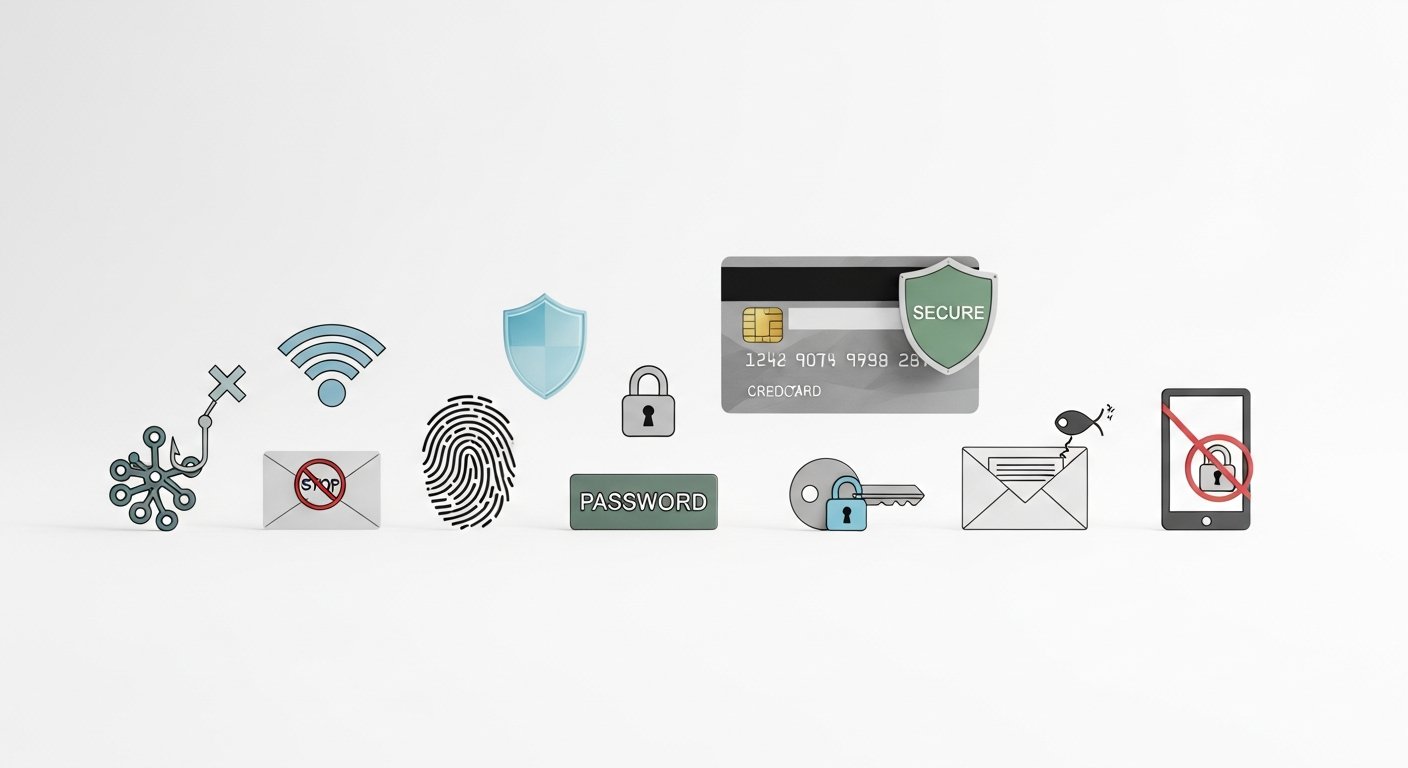
Content for Proactive Account Monitoring Prevents Financial Fraud.
Physical Credit Card Security Measures
Protecting Your Card from Theft and Loss
Picture a bustling coffee shop in downtown Seattle during the morning rush. You leave your wallet on the table for just eight seconds to grab a napkin. That brief window is all a thief needs to snap a high-resolution photo of your card numbers. Treat your physical wallet like a high-value asset. Keep it in a front pocket or a zippered interior bag compartment. Using an RFID-blocking wallet prevents bad actors from wirelessly lifting your card’s radio frequency data as they walk past you. The metal mesh inside these wallets acts as a Faraday cage. It actively blocks electromagnetic fields from reaching the chip, neutralizing the threat entirely.
Vigilance at ATMs and Point-of-Sale Terminals
Before inserting your plastic into any machine, perform a quick physical inspection. Wiggle the card reader mechanism firmly. Legitimate terminal parts are solidly integrated and will not move. If the plastic housing shifts or feels unusually bulky, a skimmer might be overlaid on the real slot. Physical card skimming at ATMs and point-of-sale devices increased by 96% year-over-year (FICO, 2026). Cover the keypad entirely with your free hand while typing your PIN. Thieves often use a technique called shimming, where a paper-thin, hidden insert sits inside the card reader to intercept the EMV chip’s communication. Always prefer contactless tap-to-pay options when available. Tapping utilizes dynamic encryption for each transaction, making intercepted data entirely useless to criminals.
Secure Disposal of Expired or Old Cards
Tossing an old card into the recycling bin is a massive vulnerability. Fraudsters frequently dig through residential trash looking for intact financial documents. Use a heavy-duty cross-cut shredder for standard plastic cards. Ensure the magnetic stripe and the EMV chip are sliced into multiple unrecognizable pieces. Metal cards require a different approach. Most issuers provide prepaid return envelopes specifically for secure destruction. Send them back. If you must dispose of a metal card yourself, use tin snips to physically sever the chip and laser-etched numbers.
Traveling Safely with Your Credit Cards
Implementing robust credit card security tips while traveling requires strategic separation of your assets. Never carry your entire financial portfolio in one location. Keep your primary payment method in your daily wallet. Stash a backup card inside the hotel room safe. If your pocket is picked while touring a crowded market, you retain immediate access to emergency funds. Notify your issuer about your travel dates to prevent sudden fraud freezes. Write down the international customer service numbers on a physical piece of paper. Store this paper separate from your wallet.
What Should You Do If Your Credit Card Information is Compromised?
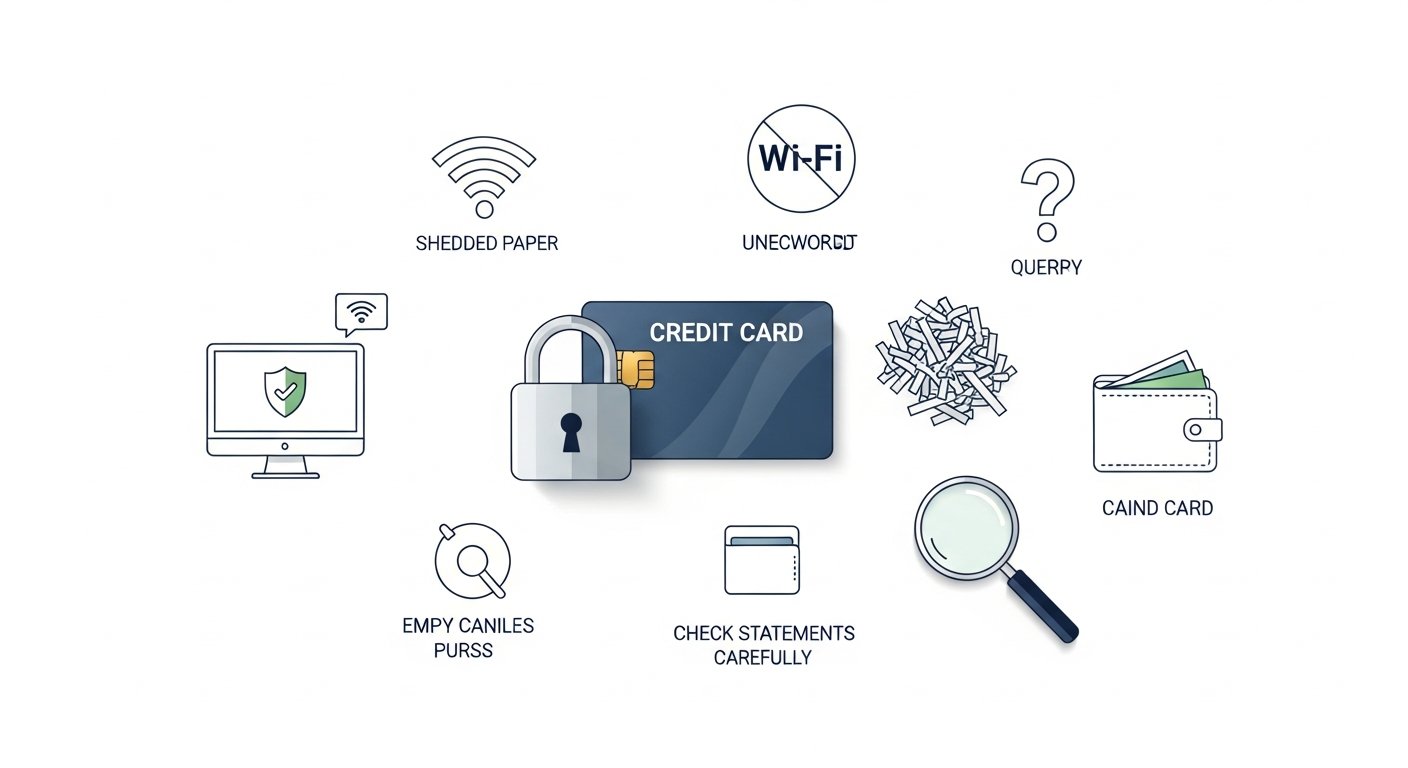
Discovering that your financial data has fallen into the wrong hands triggers instant panic. You must act decisively to contain the fallout. Swift mitigation requires a systematic approach to secure your assets and identity.
Immediate Steps After a Suspected Breach
Imagine receiving an unexpected SMS alert for a $450 electronics purchase made three states away. Lock your account through the mobile app immediately. Locking the card instantly severs the authorization pathway at the issuer’s server level. Because the payment network rejects any new authorization requests, thieves cannot drain your available limit while you assess the situation. This immediate action stops the financial bleeding entirely.
Contacting Your Card Issuer and Reporting Fraud
Once the account is locked, dial the toll-free number located on the back of your physical plastic. Bypassing online search results prevents you from accidentally calling a spoofed customer service number. Speak directly to the fraud department to dispute the unverified charges and request a replacement with new account numbers.
Speed dictates your financial responsibility. Consumers who report unauthorized transactions within 24 hours reduce their out-of-pocket liability to $0 in 98% of cases (Javelin Strategy & Research, 2026). Most major issuers automatically apply a zero-liability policy, which is a network-level guarantee ensuring consumers are not held financially responsible for fraudulent charges.
Freezing Your Credit to Prevent Further Damage
A compromised account number often suggests broader identity exposure. Protect your overarching financial profile by freezing your credit files at Equifax, Experian, and TransUnion.
You can manage these freezes online through each bureau’s dedicated portal. Keep your unfreeze PINs stored in a highly secure offline location.
Changing Passwords and PINs Across Accounts
Thieves frequently test stolen credentials across multiple platforms. If your compromised payment method was saved on various retail websites, delete the card data from those platforms immediately.
- Update the password for your primary banking portal.
- Change the PIN associated with the compromised account.
- Enable multi-factor authentication on all financial apps.
Following these advanced credit card security tips ensures that a single data breach does not cascade into a catastrophic identity theft event.
[INLINE IMAGE 4: A flowchart illustrating the step-by-step process of locking a compromised account, reporting fraud, and freezing credit.]
Robust Password and PIN Management Practices
Creating Strong, Unique Passwords for Online Accounts
Your financial portals require impenetrable defenses. Relying on your pet’s name followed by a birth year leaves you vulnerable. Instead, construct complex passphrases exceeding 16 characters. Why does length matter more than complexity? Each additional character exponentially increases the mathematical permutations a brute-force algorithm must calculate, turning a ten-minute cracking process into a multi-century endeavor.
Never reuse these strings across different banking platforms. Doing so invites credential stuffing, an automated attack where hackers use leaked username and password pairs from a minor forum breach to unlock your primary checking account. To maintain optimal hygiene, enforce these baseline rules:
- Mix uppercase, lowercase, numerals, and obscure symbols.
- Avoid sequential keyboard paths like “qwerty” or “asdf”.
- Exclude publicly verifiable personal data.
Securely Storing and Managing Your PINs
Memorization remains the gold standard for personal identification numbers. However, human memory falters when juggling multiple four-digit codes for various accounts. If you must record a PIN, disguise it within a larger, mundane context. Imagine writing down a fake contact in your phone book named “David P. Inman” with the phone number 555-019-4382, where the last four digits represent your actual code. This camouflages the sensitive data in plain sight.
Never store these digits in a plain-text note labeled “banking” or carry them on a sticky note tucked behind your driver’s license. Utilize encrypted password managers that deploy AES-256 encryption to vault sensitive numerical codes securely. These applications lock your entire digital vault behind a single, highly secure master passphrase.
The Benefits of Multi-Factor Authentication
Passwords alone cannot guarantee account safety. Multi-factor authentication adds an essential verification layer. By requiring a secondary piece of evidence—like a biometric scan or a time-based one-time password—you block unauthorized access even if a thief acquires your login credentials. According to the Cybersecurity and Infrastructure Security Agency (CISA, 2026), implementing multi-factor authentication makes users 99% less likely to be compromised by automated bot attacks.
Hardware security keys offer the highest tier of protection against sophisticated phishing. They require physical possession and a capacitive touch to authenticate the session, neutralizing remote interception attempts entirely.
Regularly Updating Your Security Credentials
Stagnant credentials invite eventual compromise. Establish a strict rotation schedule for your primary financial logins. Changing your passwords every 90 days mitigates the risk of long-term exposure from undetected database leaks. When reviewing your credit card security tips, prioritize auditing your linked third-party applications.
Revoke access for budgeting apps or payment gateways you no longer actively use. This minimizes your digital footprint. A smaller attack surface logically reduces the number of potential entry points malicious actors can exploit. Continual vigilance ensures your financial perimeter remains intact against evolving threats.
Advanced Digital Protection for Your Credit Card Data
Encrypting Devices and Using Secure Browsers
Modern operating systems offer native full-disk encryption. Enable BitLocker on Windows or FileVault on macOS immediately. By mathematically scrambling your storage drive’s contents with an algorithmic key, encryption renders the data completely unreadable to unauthorized users even if they physically extract the hard drive. If you leave your laptop at a busy airport cafe, the thief acquires your hardware but cannot extract your saved billing profiles or cached digital wallets. Browser choice also matters heavily. Secure browsers isolate individual tabs in separate memory sandboxes. This prevents a malicious script on an obscure recipe blog from reading the active session cookies of your open banking tab.
Leveraging Antivirus Software and Firewalls
Antivirus solutions have evolved far beyond simple signature matching. Today’s endpoint protection platforms utilize behavioral heuristics to detect anomalous activity in real time. A robust firewall acts as a strict digital gatekeeper. It examines data packets against predefined security rules, dropping connections that attempt to bypass standard port protocols.
According to a 2026 study by Cybersecurity Ventures, 68% of consumer financial breaches originate from localized endpoint infections that a properly configured firewall could have intercepted. You must keep these defenses updated continuously.
Understanding Data Privacy Settings on Websites
E-commerce platforms constantly harvest user data during checkout. You must aggressively manage site permissions to minimize your exposure. Disable third-party cookies and restrict JavaScript execution on unfamiliar domains. Retailers often employ browser fingerprinting, an invasive tracking technique that collects specific hardware and software configurations to uniquely identify your device across different websites without relying on traditional cookies. By adjusting your privacy settings to spoof or block these data requests, you drastically reduce the digital footprint tied to your payment methods. Less shared data means fewer attack vectors for cybercriminals.
The Role of VPNs in Securing Online Transactions
Public networks present severe risks for financial transactions. Imagine you are finalizing a hotel booking using the complimentary Wi-Fi on a high-speed commuter train. Without protection, a threat actor on the same network can easily intercept the unencrypted HTTP traffic using packet-sniffing software. A Virtual Private Network establishes a secure tunnel between your device and the destination server. It routes your connection through an intermediary server, masking your IP address and wrapping your data packets in cryptographic layers. This ensures that even if the local network is compromised, the intercepted data appears as meaningless ciphertext. Implementing these strategies elevates your personal defense, moving beyond basic credit card security tips into enterprise-grade digital protection.
Sources & References
- Federal Trade Commission. (2023). Avoiding and Reporting Scams. Retrieved from ftc.gov
- Consumer Financial Protection Bureau. (2022). How do I protect myself from credit card fraud? Retrieved from consumerfinance.gov
- Identity Theft Resource Center. (2023). Annual Data Breach Report. Retrieved from idtheftcenter.org