


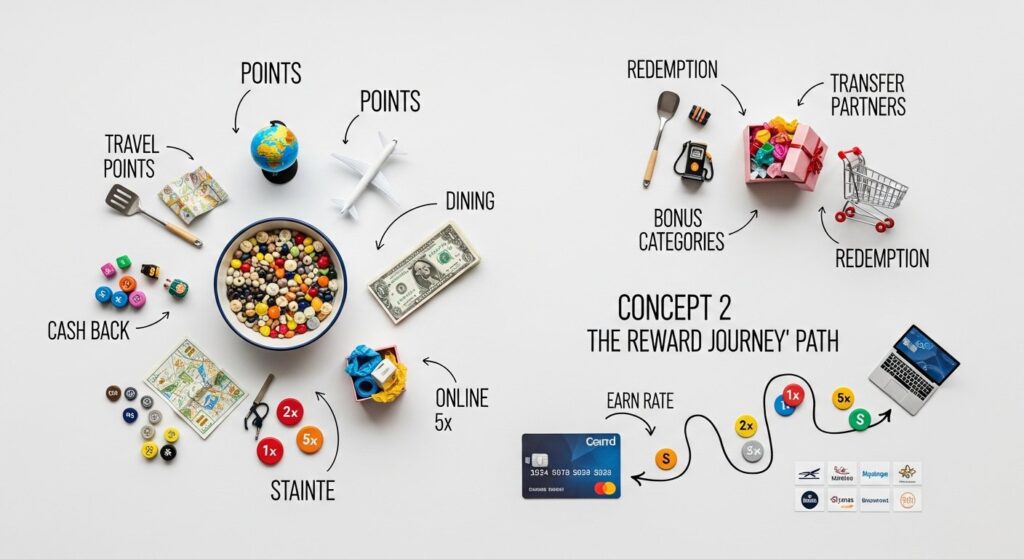
The Ultimate Credit Card Rewards Glossary: Demystifying Points, Miles, and Loyalty Programs
Affiliate disclosure: This article may contain affiliate links. Recommendations are independent and editorially driven.
Welcome to the comprehensive goldpoints Credit Card Rewards Glossary, your essential resource for navigating the exciting, yet often complex, world of points, miles, and loyalty programs. Whether you’re a beginner just starting your journey or an experienced enthusiast looking to deepen your understanding, this guide will equip you with the knowledge to speak the language of credit card rewards fluently.
The landscape of credit card rewards is constantly evolving, offering incredible opportunities to save money, travel the world, and enjoy exclusive perks. However, the jargon can be daunting, from “transfer partners” and “dynamic pricing” to “elite status” and “sweet spots.” Our expert team has meticulously compiled and defined the most critical terms you’ll encounter, providing clear, concise explanations and practical insights.
By mastering the terminology in this glossary, you’ll be better prepared to choose the right credit cards, optimize your earning strategies, maximize the value of your redemptions, and ultimately achieve your financial and travel goals. Let’s dive in and unlock the full potential of your credit card rewards!
Understanding the Fundamentals of Credit Card Rewards
Before delving into advanced strategies, it’s crucial to grasp the basic concepts that underpin all credit card rewards programs. These foundational terms define how your card operates, how rewards are accrued, and the basic financial mechanisms at play.
Annual Fee
An Annual Fee is a yearly charge imposed by a credit card issuer for the privilege of holding a particular credit card. These fees typically range from $0 to several hundred dollars, and in some premium cases, over a thousand dollars. Cards with higher annual fees often come with a more robust suite of benefits, such as travel credits, lounge access, elite status perks, or higher earning rates on specific categories. It’s essential to weigh the benefits against the fee to determine if a card provides sufficient value to justify its cost. Many entry-level or cash-back cards offer no annual fee, while travel rewards cards frequently carry one.
Annual Percentage Rate (APR)
The Annual Percentage Rate (APR) is the yearly interest rate charged on outstanding credit card balances. It represents the true cost of borrowing money on your credit card. APRs vary significantly based on creditworthiness, card type, and market conditions. While rewards enthusiasts generally advocate paying off balances in full each month to avoid interest charges, understanding the APR is vital. Many cards offer an introductory 0% APR period for purchases or balance transfers, which can be a valuable tool if managed responsibly, but interest accrues rapidly once that period expires.
Credit Limit
Your Credit Limit is the maximum amount of money you are permitted to borrow on your credit card at any given time. This limit is determined by the card issuer based on factors such as your income, credit history, credit score, and existing debts. A higher credit limit can improve your credit utilization ratio (the amount of credit you’re using compared to your total available credit), which positively impacts your credit score. Responsible use, including consistent on-time payments and low utilization, can lead to credit limit increases over time, either requested by you or proactively offered by the issuer.
Grace Period
The Grace Period is the time frame between the end of your billing cycle and your payment due date during which you can pay your credit card balance in full without incurring interest charges. Federal law mandates a minimum grace period of 21 days for new purchases on credit cards. If you pay your statement balance in full before the due date, you effectively get an interest-free loan for that billing cycle. However, if you carry a balance, you lose your grace period, and interest will be charged from the date of purchase on new transactions until the full balance is paid.
Minimum Payment
The Minimum Payment is the smallest amount you must pay by the due date each billing cycle to keep your account in good standing and avoid late fees and negative marks on your credit report. This amount typically includes any past-due amounts plus a small percentage of your current balance and any accrued interest. While making only the minimum payment keeps your account current, it can lead to significant interest accumulation over time, as it extends the repayment period and increases the total cost of your purchases. Rewards maximization inherently relies on paying your full statement balance.
Statement Credit
A Statement Credit is a reduction applied directly to your credit card balance, effectively offsetting charges or reducing the amount you owe. Statement credits can come from various sources: as a form of cash back redemption, as a reimbursement for specific purchases (e.g., travel credits on premium cards, Global Entry fees), or as part of a welcome offer bonus. For example, if you have a $100 statement credit and your balance is $500, your new balance becomes $400. While convenient, statement credits for travel often yield a lower value per point compared to transferring points to airline or hotel partners.
[INLINE IMAGE 1: place after second H2 | alt=”credit card rewards glossary concept illustration”]
Decoding Reward Currencies: Points, Miles, and Cash Back


The currency of credit card rewards comes in various forms, each with its own advantages and redemption possibilities. Understanding the distinctions between points, miles, and cash back is fundamental to choosing the right card and strategy.
Cash Back
Cash Back is a straightforward reward where a percentage of your spending is returned to you as cash. This can be issued as a statement credit, a direct deposit into your bank account, or sometimes a check. Cash back cards are popular for their simplicity and flexibility, as the rewards can be used for anything. While often valued at a fixed rate (e.g., 1% or 2% of spending), some cash back programs offer higher rates on specific spending categories that rotate quarterly or remain fixed for everyday spending. For many, cash back represents the most tangible and understandable reward.
Fixed-Value Points
Fixed-Value Points are a type of reward currency where each point has a consistent, predetermined value, typically when redeemed for specific categories like travel booked through the issuer’s portal, statement credits, or gift cards. For instance, 1 point might always be worth 1 cent, meaning 10,000 points equals $100 in value. While this offers predictability and ease of redemption, fixed-value points generally offer less potential for outsized value compared to transferable points, as their value is capped. They are an excellent choice for those who prefer simplicity and consistent value.
Transferable Points (Flexible Points)
Transferable Points, also known as Flexible Points, are highly prized for their versatility. These points are earned through major bank rewards programs (e.g., Chase Ultimate Rewards, American Express Membership Rewards, Citi ThankYou Points) and can be transferred to various airline and hotel loyalty programs at a specific ratio, typically 1:1. This transferability allows cardholders to convert their bank points into airline miles or hotel points, potentially unlocking significantly higher values for premium travel redemptions than a fixed-value redemption or statement credit. The strategic use of transferable points is a cornerstone of advanced rewards travel.
Airline Miles (Frequent Flyer Miles)
Airline Miles, also called Frequent Flyer Miles, are the reward currency specific to an airline’s loyalty program. While they can be earned by flying with the airline or its partners, a significant portion of miles are earned through co-branded airline credit cards or by transferring points from flexible bank programs. Miles are primarily used to book award flights, and their value can vary dramatically depending on the specific route, class of service (economy, business, first), and availability. Strategic redemption of airline miles, often for international business or first-class travel, can yield values far exceeding 1 cent per mile, often referred to as “sweet spots.”
Hotel Points
Hotel Points are the reward currency of a specific hotel chain’s loyalty program (e.g., Marriott Bonvoy, Hilton Honors, World of Hyatt). Like airline miles, they can be earned through stays, co-branded hotel credit cards, or by transferring points from flexible bank programs. Hotel points are predominantly used to book free night stays, and their value fluctuates based on the property, season, and room type. Leveraging hotel points for high-end properties or during peak travel seasons can provide substantial savings, especially when combined with elite status benefits like free breakfast or upgrades.
Co-branded Card
A Co-branded Card is a credit card issued by a bank in partnership with a specific airline, hotel chain, retailer, or other company. These cards primarily earn rewards directly within the partner’s loyalty program (e.g., Delta SkyMiles, Marriott Bonvoy points). Beyond earning points or miles, co-branded cards often come with specific perks related to the brand, such as free checked bags on an airline, complimentary elite status with a hotel, or discounts at a retail store. They are ideal for individuals who are loyal to a particular brand and wish to deepen their benefits within that ecosystem.
Here’s a comparison of common reward currencies:
| Reward Type | Key Features | Best For | Example Value |
|---|---|---|---|
| Cash Back | Simple, flexible, direct financial return. | Budgeting, those who prefer ultimate flexibility. | 1% – 5% of spending returned as cash. |
| Fixed-Value Points | Predictable value, easy redemption via issuer portal. | Simplicity, avoiding complex redemption strategies, general travel. | 1 point = 1 cent (e.g., 10,000 points = $100). |
| Transferable Points | High flexibility, can transfer to various airline/hotel partners. | Maximizing value for premium travel (business/first class, luxury hotels). | Potential for 2+ cents per point when redeemed optimally. |
| Airline Miles | Specific to an airline, used for award flights. | Loyalty to specific airlines, premium cabin travel. | Highly variable, from <1 cent to 5+ cents per mile. |
| Hotel Points | Specific to a hotel chain, used for free nights. | Loyalty to specific hotel brands, luxury hotel stays. | Highly variable, from <0.5 cents to 1+ cent per point. |
Strategies for Earning Credit Card Rewards
Earning rewards isn’t just about swiping your card; it involves strategic planning to maximize the points, miles, or cash back you accumulate. Understanding the various earning mechanisms is key to accelerating your rewards accumulation.
Sign-up Bonus (Welcome Offer)
A Sign-up Bonus, also frequently called a Welcome Offer, is a significant number of points, miles, or cash back offered to new cardholders who meet a specific spending requirement within a certain timeframe after account opening. For example, “Earn 60,000 points after spending $4,000 in the first 3 months.” These bonuses are often the single largest infusion of rewards you’ll receive from a single card and are a primary driver for many enthusiasts to apply for new cards. Always ensure you can comfortably meet the spending requirement without overspending or incurring interest charges.
Category Bonuses (Bonus Categories)
Category Bonuses refer to accelerated earning rates on purchases made in specific spending categories. For example, a card might offer 3x points on dining and groceries, or 5% cash back on gas. These bonus categories can be fixed (e.g., always earns extra on travel) or rotating (e.g., 5% back on Amazon purchases one quarter, then on streaming services the next). Strategically using different cards for their respective bonus categories is a core method for maximizing everyday earnings. This requires careful tracking of your spending and the bonus structures of your cards.
Everyday Spend
Everyday Spend refers to the regular, non-bonus category purchases you make with your credit card. Most cards offer a base earning rate on all purchases that don’t fall into a bonus category, typically 1 point/mile or 1% cash back per dollar spent. While bonus categories are important, a significant portion of your total rewards will still come from everyday spend. It’s often beneficial to have a “default” card that offers a solid flat-rate earning on all purchases (e.g., 1.5x, 2x, or 2% cash back) for purchases that don’t trigger a higher bonus on another card.
Authorized User Bonus
An Authorized User Bonus is a smaller incentive, typically points or miles, offered by some card issuers when you add an authorized user to your account. The primary cardholder is ultimately responsible for all charges made by authorized users. Adding an authorized user can also help meet minimum spending requirements for sign-up bonuses faster. While the bonus is usually modest, it’s a simple way to earn extra rewards, especially if a trusted family member or partner regularly spends money that can contribute to your rewards goals.
Referral Bonus
A Referral Bonus is a reward, usually points or cash back, that a card issuer gives you for referring a new cardholder who successfully applies and is approved for a credit card through your unique referral link. These bonuses can be a lucrative way to boost your rewards balance without additional spending, especially if you have friends or family interested in a card you already hold. There are often limits to how many referral bonuses you can earn in a year, and the amount varies by card and issuer.
Retention Offer
A Retention Offer is an incentive provided by a credit card issuer to existing cardholders who express an intent to cancel their card, often due to an annual fee coming due. These offers are designed to “retain” the customer and can include statement credits, bonus points after meeting certain spending, or a waiver of the annual fee. To inquire about a retention offer, you typically call the card issuer and speak with their retention department. Success often depends on your spending patterns, the card’s profitability to the bank, and your overall credit history.
[INLINE IMAGE 2: place after fourth H2 | alt=”credit card rewards glossary comparison illustration”]
Maximizing Value: How to Redeem Your Rewards Effectively
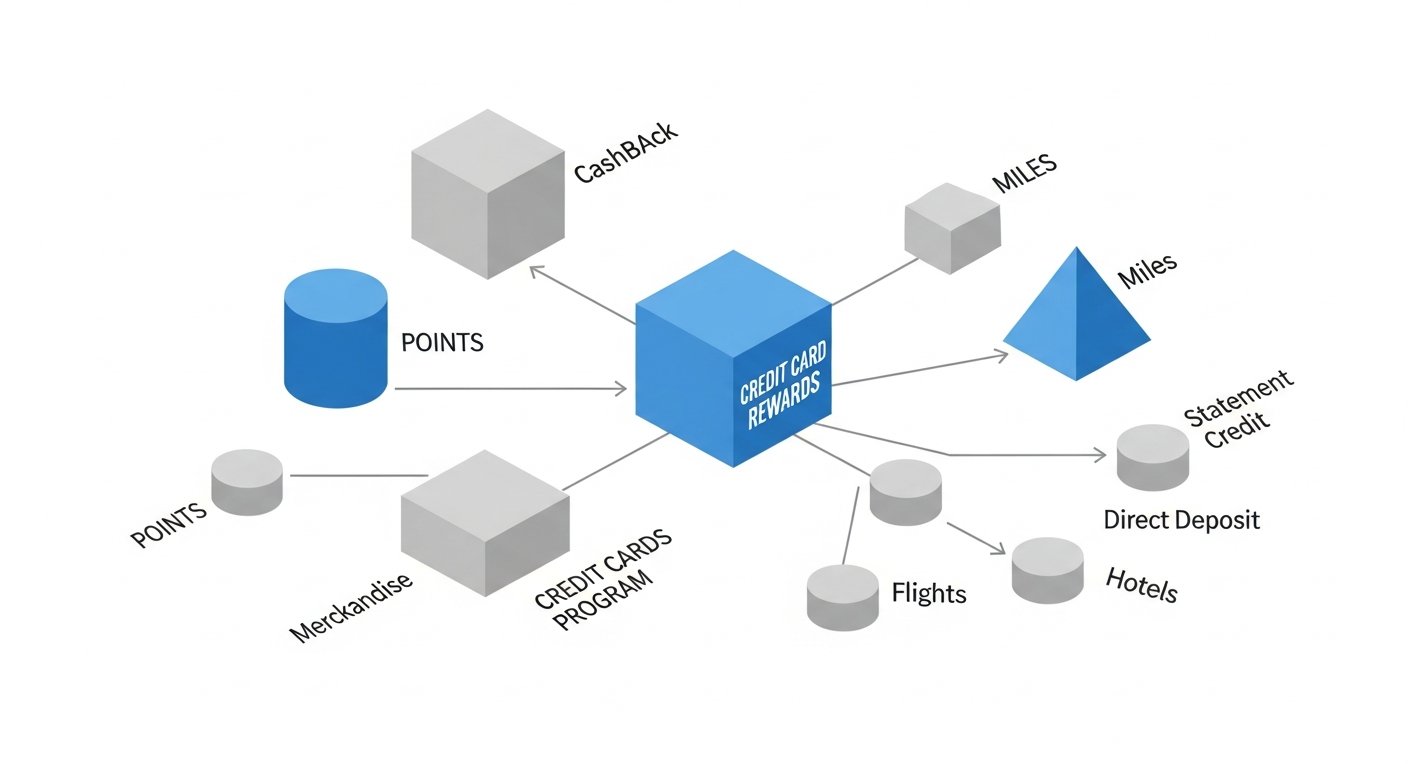
Earning rewards is only half the battle; the true art of points and miles lies in redeeming them for maximum value. This section defines the terms associated with various redemption strategies.
Award Chart
An Award Chart is a traditional pricing model used by airline and hotel loyalty programs that lists the fixed number of points or miles required for a specific redemption, typically based on travel zones, distance, or hotel categories. For example, an award chart might state that a flight from North America to Europe in economy class costs 60,000 miles, or a Category 5 hotel costs 35,000 points per night. While many programs have moved towards dynamic pricing, some still utilize award charts or a hybrid model, providing transparent redemption costs.
Dynamic Pricing
Dynamic Pricing is a redemption model where the number of points or miles required for an award flight or hotel stay fluctuates based on factors such as cash price, demand, season, availability, and lead time. In a dynamic pricing system, when cash prices are high, the points cost will also be high, and vice-versa. This contrasts with fixed award charts and often means that “sweet spots” (exceptionally good redemptions) are harder to find, as the points value tends to track closer to the cash value of the booking. Most major airlines and many hotel chains now use some form of dynamic pricing.
Transfer Partner
A Transfer Partner is an airline or hotel loyalty program that has a partnership with a major credit card rewards program (e.g., Chase Ultimate Rewards, American Express Membership Rewards, Citi ThankYou Points). Cardholders can transfer their flexible bank points directly to these partner programs, converting them into airline miles or hotel points, usually at a 1:1 ratio. This capability is the cornerstone of maximizing value in the points and miles world, as it allows for redemptions at a much higher value per point than is typically available through the bank’s own travel portal.
Learn more about optimizing transferable points for luxury travel.
Travel Portal (Issuer Travel Portal)
A Travel Portal, also known as an Issuer Travel Portal, is an online booking platform operated by a credit card issuer (e.g., Chase Travel, AmexTravel) where cardholders can redeem their points or miles for flights, hotels, rental cars, and activities directly. When booking through a travel portal, points often have a fixed value (e.g., 1 point = 1 cent, or 1.25 cents for premium cards). While convenient and offering broader availability than award space, portal redemptions typically yield less value than transferring points to partners for premium travel, though they can be excellent for cash flights that have low point costs or for simple redemptions.
Value Per Point (VPP)
Value Per Point (VPP) is a metric used by points and miles enthusiasts to assess the worth of their reward currency. It is calculated by dividing the cash value of a redemption by the number of points or miles required for that redemption, then multiplying by 100 to express it in cents. For example, if a flight costs $500 cash or 25,000 miles, the VPP is ($500 / 25,000 miles) * 100 = 2 cents per mile. A higher VPP indicates a better redemption. The goal in rewards travel is often to achieve VPPs significantly higher than 1 cent, especially when redeeming transferable points for premium travel.
Sweet Spot
A Sweet Spot refers to an exceptionally high-value redemption within an airline or hotel loyalty program. These are typically specific routes, destinations, or types of awards (e.g., a particular international business class flight, a luxury hotel for a low points cost) that require a disproportionately low number of points or miles compared to their cash price. Sweet spots often arise from advantageous award chart pricing, specific transfer partner ratios, or unique program quirks. Identifying and leveraging sweet spots is a hallmark of advanced points and miles strategy.
Companion Pass
A Companion Pass is a highly coveted benefit offered by certain airlines, allowing a designated companion to fly with the primary cardholder for only the cost of taxes and fees on eligible flights. The most famous example is the Southwest Companion Pass, which allows an eligible companion to fly for free (plus taxes/fees) on any revenue or award flight for up to two full calendar years. These passes dramatically increase the value of earned miles and are incredibly popular among families and frequent travelers.
Navigating Advanced Loyalty Programs and Elite Status
Beyond the basic credit card rewards, a deeper dive into loyalty programs reveals additional layers of benefits, status tiers, and strategic opportunities for enhanced travel experiences.
Loyalty Program
A Loyalty Program is a structured rewards system operated by an airline, hotel chain, car rental company, or other travel provider, designed to incentivize repeat business. Members earn points or miles based on their spending or activity within the program and can redeem them for free flights, hotel stays, upgrades, and other perks. These programs often feature tiered membership levels (see Elite Status) that unlock increasingly valuable benefits as a member’s engagement grows. Many credit card reward strategies revolve around maximizing earnings within specific loyalty programs.
Elite Status
Elite Status refers to the tiered membership levels within an airline or hotel loyalty program, earned by accumulating a certain amount of qualifying activity (e.g., flying a specific number of miles/segments, staying a certain number of nights, or spending a certain amount) within a calendar year. Higher elite tiers (e.g., Silver, Gold, Platinum, Diamond) unlock progressively valuable benefits such as complimentary upgrades, lounge access, free breakfast, late checkout, bonus points earning, dedicated customer service lines, and waived fees. Co-branded credit cards often offer pathways to earning or even automatically granting elite status.
Lounge Access
Lounge Access is a highly sought-after perk that grants travelers entry to exclusive airport lounges, which typically offer complimentary food and beverages, comfortable seating, Wi-Fi, and sometimes showers or business facilities. Access can be obtained through premium credit cards (e.g., Priority Pass membership, Centurion Lounges), airline elite status, or by purchasing day passes. For frequent travelers, lounge access significantly enhances the airport experience, providing a quiet refuge from the bustling terminal.
Global Entry / TSA PreCheck Credit
A Global Entry / TSA PreCheck Credit is a common benefit offered by many premium travel credit cards. It provides a statement credit, typically up to $100, to reimburse the application fee for either Global Entry (which includes TSA PreCheck) or TSA PreCheck. Global Entry expedites customs and immigration screening for international arrivals, while TSA PreCheck offers faster security screening at domestic airports. This credit is usually available once every four or five years, aligning with the renewal cycles for these programs, and is a valuable perk for travelers looking to save time and reduce stress at airports.
Discover which credit cards offer Global Entry and TSA PreCheck benefits.
Free Night Certificates
Free Night Certificates are vouchers or electronic credits issued by hotel loyalty programs or co-branded hotel credit cards, entitling the holder to a complimentary night’s stay at a participating hotel. These certificates often come with specific restrictions, such as only being valid up to a certain hotel category or points value. They are a popular benefit of hotel credit cards, especially for those with annual fees, as a well-utilized free night certificate can easily offset the card’s cost and provide significant value, particularly at higher-end properties.
Upgrade Certificates
Upgrade Certificates are benefits offered by some airline or hotel loyalty programs, often to elite members or as a perk of premium credit cards. These certificates allow the holder to request a complimentary upgrade to a higher class of service on an airline (e.g., economy to business class) or a better room type at a hotel (e.g., standard room to a suite). Availability of upgrades is typically capacity-controlled and not guaranteed, but successfully using an upgrade certificate can provide a dramatically enhanced travel experience at no additional cost.
Common Fees, Charges, and Financial Terminology
While rewards are the focus, understanding the potential fees and financial terms associated with credit cards is critical to responsible management and maximizing your benefits.
Foreign Transaction Fee
A Foreign Transaction Fee is a surcharge applied by some credit card issuers to purchases made in a foreign currency or processed by a foreign bank, even if the transaction occurs domestically (e.g., an online purchase from an international merchant). These fees typically range from 2.5% to 3% of the transaction amount. Many travel rewards credit cards, particularly those with annual fees, waive foreign transaction fees, making them essential for international travel to avoid unnecessary costs. Always check your card’s terms before traveling abroad or making international online purchases.
Balance Transfer Fee
A Balance Transfer Fee is a charge levied when you transfer an existing debt from one credit card to another. These fees are usually a percentage of the amount transferred, commonly between 3% and 5%. Balance transfers are often utilized in conjunction with introductory 0% APR offers to consolidate high-interest debt and pay it off interest-free for a limited period. While they can be a useful debt management tool, the fee itself should be factored into the overall savings, and rewards are typically not earned on balance transfers.
Late Payment Fee
A Late Payment Fee is a penalty charged by a credit card issuer when you fail to make at least the minimum payment by your due date. These fees can be substantial and are often capped at a maximum amount (e.g., $40). In addition to the fee, late payments can lead to higher penalty APRs, loss of your grace period, and, most importantly, a negative impact on your credit score, which can linger for years. Always strive to pay at least your minimum payment on time, or ideally, your full statement balance.
Cash Advance Fee
A Cash Advance Fee is a charge applied when you use your credit card to obtain cash, whether from an ATM, a bank teller, or by purchasing a cash equivalent (e.g., money order). Cash advances are generally expensive, as they typically incur a fee (often 3-5% of the amount), a higher APR than purchases, and no grace period—interest starts accruing immediately. Rewards are rarely earned on cash advances, and they should be avoided except in dire emergencies due to their high cost and potential impact on credit utilization.
Over-the-Limit Fee
An Over-the-Limit Fee is a charge assessed when your credit card balance exceeds your assigned credit limit. Federal regulations require you to opt-in to allow over-the-limit transactions. If you do not opt-in, transactions that would put you over your limit will simply be declined. If you opt-in and go over your limit, a fee (typically up to $30 for the first offense, $41 for subsequent offenses) may be charged. This fee is largely preventable by tracking your spending and credit limit, and it’s generally advisable to avoid opting-in for over-the-limit transactions.
Key Concepts in Travel Rewards and Booking
For those focused on using their rewards for travel, a specific lexicon exists around booking strategies, flight and hotel quirks, and maximizing the travel experience.
Stopover
A Stopover is a planned break in your journey that lasts for more than 24 hours (for international flights) or typically more than 4 hours (for domestic flights) at an intermediate city before continuing to your final destination. Some airline loyalty programs allow you to include a free or inexpensive stopover on an award ticket, effectively allowing you to visit two destinations for the price of one flight. This can add immense value to an award redemption, transforming a single trip into a multi-destination adventure.
Open-Jaw
An Open-Jaw itinerary is a type of round-trip flight where you fly into one city and depart from another, or where you depart from one city and return to a different one. For example, flying from New York to London, then taking a train to Paris, and flying back from Paris to New York. Or, flying from New York to London, and then flying back from London to Boston. Many airline award programs allow for open-jaw itineraries, providing flexibility for travelers who wish to explore multiple regions without backtracking. It is a fundamental concept for complex award bookings.
Fuel Surcharges (Carrier-Imposed Surcharges)
Fuel Surcharges, also known as Carrier-Imposed Surcharges, are fees added by airlines, often to award tickets, that can significantly increase the cash cost of an “award” flight. These surcharges are distinct from government-imposed taxes and can sometimes be hundreds of dollars, especially on international flights with certain airlines (e.g., British Airways, Lufthansa). Strategic travelers often seek out airline loyalty programs or transfer partners that impose minimal or no fuel surcharges on award tickets to maximize the value of their miles and keep out-of-pocket costs low.
Availability (Award Availability)
Availability, or Award Availability, refers to the number of seats or rooms that an airline or hotel makes available for booking with points or miles rather than cash. This availability is often capacity-controlled, meaning not every seat on a plane or room in a hotel can be booked with rewards. Award availability can fluctuate based on demand, season, and how far in advance you book. Finding good award availability, especially for premium cabins or popular destinations, is a key skill in maximizing travel rewards, often requiring flexibility with dates or destinations.
Travel Insurance (Credit Card Travel Insurance)
Travel Insurance is a benefit offered by many credit cards that provides coverage for various travel-related incidents when you pay for your trip with that card. This can include trip cancellation/interruption insurance, trip delay insurance, baggage delay/loss insurance, rental car collision damage waiver (CDW), and even emergency medical evacuation. The specific coverage and limits vary greatly by card, so it’s crucial to understand your card’s benefits guide. Utilizing these embedded benefits can save you hundreds of dollars compared to purchasing separate policies and provides peace of mind.
Explore the best credit cards for comprehensive travel insurance benefits.
Essential Banking and Program-Specific Terms
Major banks operate their own flexible rewards programs, each with distinct features, rules, and transfer partners. Understanding these program-specific terms is vital for effective strategy.
Ecosystem (Rewards Ecosystem)
A Rewards Ecosystem refers to the entire network of credit cards, transfer partners, and redemption options associated with a specific bank’s flexible points program (e.g., Chase Ultimate Rewards ecosystem, American Express Membership Rewards ecosystem). This includes different cards that earn points, how those points can be combined, the variety of airline and hotel transfer partners, and the specific rules and values associated with different redemption methods. Understanding an ecosystem helps you choose complementary cards and tailor your strategy for maximum benefit.
Point Multipliers
Point Multipliers are features of a credit card that allow you to earn more than 1 point or mile per dollar spent on specific categories of purchases. For example, a card might offer 3x points on dining, meaning for every dollar spent at a restaurant, you earn three points. These multipliers are distinct from simple category bonuses as they refer specifically to points or miles, not cash back percentage. Stacking point multipliers across different cards is a core strategy for maximizing your earnings across various spending habits.
Pooling Points (Combining Points)
Pooling Points, or Combining Points, refers to the ability to merge points from multiple credit cards or accounts within the same household (e.g., between spouses) into a single account. This is particularly useful for meeting a specific redemption threshold for a high-value award. Major bank programs often allow point transfers between members of the same household or business, enabling greater flexibility and faster access to larger award redemptions. Always verify the specific rules for point transfers with your card issuer, as some programs have restrictions or fees.
Churning
Churning is a strategy where individuals repeatedly open and close credit card accounts to continually earn new sign-up bonuses. This practice is often employed by experienced points and miles enthusiasts to accumulate large quantities of rewards quickly. However, churning comes with risks, including potential damage to one’s credit score (due to multiple hard inquiries and new accounts), being flagged by banks, and potentially losing access to future welcome offers. Banks have also implemented rules (e.g., Chase’s 5/24 rule) to limit this practice.
Rule (e.g., Chase’s 5/24 Rule)
A Rule in the context of credit card rewards refers to an unofficial or official policy implemented by a credit card issuer that dictates eligibility for new credit cards or sign-up bonuses. The most famous example is Chase’s 5/24 Rule, which generally prevents applicants from being approved for new Chase credit cards if they have opened five or more personal credit card accounts (from any issuer) in the past 24 months. Understanding and adhering to these rules is crucial for long-term rewards strategy, especially when planning which cards to apply for.
Strategic Planning and Common Pitfalls to Avoid
Mastering credit card rewards isn’t just about earning and redeeming; it also involves strategic planning, avoiding common mistakes, and understanding the long-term implications of your choices.
Credit Score
Your Credit Score is a numerical representation of your creditworthiness, based on your credit history. It is a critical factor in whether you’ll be approved for new credit cards, the interest rates you’ll receive, and even other financial products like mortgages. Responsible credit card management, including paying bills on time, keeping credit utilization low, and having a diverse credit mix, improves your score. Conversely, late payments, high balances, and frequent new account applications can negatively impact it. A strong credit score is essential for accessing the best rewards credit cards.
Credit Utilization Ratio
The Credit Utilization Ratio is the percentage of your total available credit that you are currently using. For example, if you have a total credit limit of $10,000 across all your cards and your current outstanding balances total $3,000, your utilization ratio is 30%. This ratio is a significant factor in your credit score, with lower ratios generally being better. Experts recommend keeping your credit utilization below 30% to maintain a healthy credit score. Actively managing this ratio is vital for those applying for new credit cards or maintaining excellent credit.
Hard Inquiry (Hard Pull)
A Hard Inquiry, also known as a Hard Pull, is a request made by a lender (like a credit card issuer) to check your credit report when you apply for new credit. Each hard inquiry typically causes a small, temporary dip in your credit score, lasting for a few months to a year, although its impact diminishes over time. While a single hard inquiry won’t significantly damage your credit, multiple inquiries in a short period can signal higher risk to lenders. Strategic credit card applications involve timing them to minimize the impact of hard inquiries.
Soft Inquiry (Soft Pull)
A Soft Inquiry, or Soft Pull, is a credit check that does not affect your credit score. These typically occur when you check your own credit score, or when lenders pre-approve you for offers (e.g., credit card offers you receive in the mail) or review your existing accounts. Soft inquiries are a useful tool for monitoring your credit without penalty and for card issuers to manage existing relationships or offer targeted promotions.
Manufactured Spending
Manufactured Spending is a controversial strategy where individuals generate credit card spending on goods or services that can be easily converted back into cash or cash equivalents, with the primary goal of meeting spending requirements for sign-up bonuses or earning points/miles. This might involve buying gift cards that can be liquidated or using payment services. While it can be effective for accumulating rewards, manufactured spending often comes with risks, including fees that erode value, potential account shutdowns by card issuers, and the need for meticulous record-keeping. It is generally not recommended for beginners.
Point Devaluation
Point Devaluation refers to a reduction in the value of points or miles within a loyalty program. This often happens when a program increases the number of points required for award redemptions (e.g., an airline raises the mileage cost for a flight) or decreases the value of points for cash redemptions. Devaluations are a constant risk in the world of points and miles, as loyalty programs can change their terms at any time. This risk is why many experts advocate for earning and burning points rather than hoarding them for extended periods.
The Ultimate Credit Card Rewards Glossary: Demystifying Points, Miles, and Loyalty Programs
Affiliate disclosure: This article may contain affiliate links. Recommendations are independent and editorially driven.
Welcome to the comprehensive goldpoints Credit Card Rewards Glossary, your essential resource for navigating the exciting, yet often complex, world of points, miles, and loyalty programs. Whether you’re a beginner just starting your journey or an experienced enthusiast looking to deepen your understanding, this guide will equip you with the knowledge to speak the language of credit card rewards fluently.
The landscape of credit card rewards is constantly evolving, offering incredible opportunities to save money, travel the world, and enjoy exclusive perks. However, the jargon can be daunting, from “transfer partners” and “dynamic pricing” to “elite status” and “sweet spots.” Our expert team has meticulously compiled and defined the most critical terms you’ll encounter, providing clear, concise explanations and practical insights.
By mastering the terminology in this glossary, you’ll be better prepared to choose the right credit cards, optimize your earning strategies, maximize the value of your redemptions, and ultimately achieve your financial and travel goals. Let’s dive in and unlock the full potential of your credit card rewards!
Understanding the Fundamentals of Credit Card Rewards
Before delving into advanced strategies, it’s crucial to grasp the basic concepts that underpin all credit card rewards programs. These foundational terms define how your card operates, how rewards are accrued, and the basic financial mechanisms at play.
Annual Fee
An Annual Fee is a yearly charge imposed by a credit card issuer for the privilege of holding a particular credit card. These fees typically range from $0 to several hundred dollars, and in some premium cases, over a thousand dollars. Cards with higher annual fees often come with a more robust suite of benefits, such as travel credits, lounge access, elite status perks, or higher earning rates on specific categories. It’s essential to weigh the benefits against the fee to determine if a card provides sufficient value to justify its cost. Many entry-level or cash-back cards offer no annual fee, while travel rewards cards frequently carry one.
Annual Percentage Rate (APR)
The Annual Percentage Rate (APR) is the yearly interest rate charged on outstanding credit card balances. It represents the true cost of borrowing money on your credit card. APRs vary significantly based on creditworthiness, card type, and market conditions. While rewards enthusiasts generally advocate paying off balances in full each month to avoid interest charges, understanding the APR is vital. Many cards offer an introductory 0% APR period for purchases or balance transfers, which can be a valuable tool if managed responsibly, but interest accrues rapidly once that period expires.
Credit Limit
Your Credit Limit is the maximum amount of money you are permitted to borrow on your credit card at any given time. This limit is determined by the card issuer based on factors such as your income, credit history, credit score, and existing debts. A higher credit limit can improve your credit utilization ratio (the amount of credit you’re using compared to your total available credit), which positively impacts your credit score. Responsible use, including consistent on-time payments and low utilization, can lead to credit limit increases over time, either requested by you or proactively offered by the issuer.
Grace Period
The Grace Period is the time frame between the end of your billing cycle and your payment due date during which you can pay your credit card balance in full without incurring interest charges. Federal law mandates a minimum grace period of 21 days for new purchases on credit cards. If you pay your statement balance in full before the due date, you effectively get an interest-free loan for that billing cycle. However, if you carry a balance, you lose your grace period, and interest will be charged from the date of purchase on new transactions until the full balance is paid.
Minimum Payment
The Minimum Payment is the smallest amount you must pay by the due date each billing cycle to keep your account in good standing and avoid late fees and negative marks on your credit report. This amount typically includes any past-due amounts plus a small percentage of your current balance and any accrued interest. While making only the minimum payment keeps your account current, it can lead to significant interest accumulation over time, as it extends the repayment period and increases the total cost of your purchases. Rewards maximization inherently relies on paying your full statement balance.
Statement Credit
A Statement Credit is a reduction applied directly to your credit card balance, effectively offsetting charges or reducing the amount you owe. Statement credits can come from various sources: as a form of cash back redemption, as a reimbursement for specific purchases (e.g., travel credits on premium cards, Global Entry fees), or as part of a welcome offer bonus. For example, if you have a $100 statement credit and your balance is $500, your new balance becomes $400. While convenient, statement credits for travel often yield a lower value per point compared to transferring points to airline or hotel partners.
[INLINE IMAGE 1: place after second H2 | alt=”credit card rewards glossary concept illustration”]
Decoding Reward Currencies: Points, Miles, and Cash Back
The currency of credit card rewards comes in various forms, each with its own advantages and redemption possibilities. Understanding the distinctions between points, miles, and cash back is fundamental to choosing the right card and strategy.
Cash Back
Cash Back is a straightforward reward where a percentage of your spending is returned to you as cash. This can be issued as a statement credit, a direct deposit into your bank account, or sometimes a check. Cash back cards are popular for their simplicity and flexibility, as the rewards can be used for anything. While often valued at a fixed rate (e.g., 1% or 2% of spending), some cash back programs offer higher rates on specific spending categories that rotate quarterly or remain fixed for everyday spending. For many, cash back represents the most tangible and understandable reward.
Fixed-Value Points
Fixed-Value Points are a type of reward currency where each point has a consistent, predetermined value, typically when redeemed for specific categories like travel booked through the issuer’s portal, statement credits, or gift cards. For instance, 1 point might always be worth 1 cent, meaning 10,000 points equals $100 in value. While this offers predictability and ease of redemption, fixed-value points generally offer less potential for outsized value compared to transferable points, as their value is capped. They are an excellent choice for those who prefer simplicity and consistent value.
Transferable Points (Flexible Points)
Transferable Points, also known as Flexible Points, are highly prized for their versatility. These points are earned through major bank rewards programs (e.g., Chase Ultimate Rewards, American Express Membership Rewards, Citi ThankYou Points) and can be transferred to various airline and hotel loyalty programs at a specific ratio, typically 1:1. This transferability allows cardholders to convert their bank points into airline miles or hotel points, potentially unlocking significantly higher values for premium travel redemptions than a fixed-value redemption or statement credit. The strategic use of transferable points is a cornerstone of advanced rewards travel.
Airline Miles (Frequent Flyer Miles)
Airline Miles, also called Frequent Flyer Miles, are the reward currency specific to an airline’s loyalty program. While they can be earned by flying with the airline or its partners, a significant portion of miles are earned through co-branded airline credit cards or by transferring points from flexible bank programs. Miles are primarily used to book award flights, and their value can vary dramatically depending on the specific route, class of service (economy, business, first), and availability. Strategic redemption of airline miles, often for international business or first-class travel, can yield values far exceeding 1 cent per mile, often referred to as “sweet spots.”
Hotel Points
Hotel Points are the reward currency of a specific hotel chain’s loyalty program (e.g., Marriott Bonvoy, Hilton Honors, World of Hyatt). Like airline miles, they can be earned through stays, co-branded hotel credit cards, or by transferring points from flexible bank programs. Hotel points are predominantly used to book free night stays, and their value fluctuates based on the property, season, and room type. Leveraging hotel points for high-end properties or during peak travel seasons can provide substantial savings, especially when combined with elite status benefits like free breakfast or upgrades.
Co-branded Card
A Co-branded Card is a credit card issued by a bank in partnership with a specific airline, hotel chain, retailer, or other company. These cards primarily earn rewards directly within the partner’s loyalty program (e.g., Delta SkyMiles, Marriott Bonvoy points). Beyond earning points or miles, co-branded cards often come with specific perks related to the brand, such as free checked bags on an airline, complimentary elite status with a hotel, or discounts at a retail store. They are ideal for individuals who are loyal to a particular brand and wish to deepen their benefits within that ecosystem.
Here’s a comparison of common reward currencies:
| Reward Type | Key Features | Best For | Example Value |
|---|---|---|---|
| Cash Back | Simple, flexible, direct financial return. | Budgeting, those who prefer ultimate flexibility. | 1% – 5% of spending returned as cash. |
| Fixed-Value Points | Predictable value, easy redemption via issuer portal. | Simplicity, avoiding complex redemption strategies, general travel. | 1 point = 1 cent (e.g., 10,000 points = $100). |
| Transferable Points | High flexibility, can transfer to various airline/hotel partners. | Maximizing value for premium travel (business/first class, luxury hotels). | Potential for 2+ cents per point when redeemed optimally. |
| Airline Miles | Specific to an airline, used for award flights. | Loyalty to specific airlines, premium cabin travel. | Highly variable, from <1 cent to 5+ cents per mile. |
| Hotel Points | Specific to a hotel chain, used for free nights. | Loyalty to specific hotel brands, luxury hotel stays. | Highly variable, from <0.5 cents to 1+ cent per point. |
Strategies for Earning Credit Card Rewards
Earning rewards isn’t just about swiping your card; it involves strategic planning to maximize the points, miles, or cash back you accumulate. Understanding the various earning mechanisms is key to accelerating your rewards accumulation.
Sign-up Bonus (Welcome Offer)
A Sign-up Bonus, also frequently called a Welcome Offer, is a significant number of points, miles, or cash back offered to new cardholders who meet a specific spending requirement within a certain timeframe after account opening. For example, “Earn 60,000 points after spending $4,000 in the first 3 months.” These bonuses are often the single largest infusion of rewards you’ll receive from a single card and are a primary driver for many enthusiasts to apply for new cards. Always ensure you can comfortably meet the spending requirement without overspending or incurring interest charges.
Category Bonuses (Bonus Categories)
Category Bonuses refer to accelerated earning rates on purchases made in specific spending categories. For example, a card might offer 3x points on dining and groceries, or 5% cash back on gas. These bonus categories can be fixed (e.g., always earns extra on travel) or rotating (e.g., 5% back on Amazon purchases one quarter, then on streaming services the next). Strategically using different cards for their respective bonus categories is a core method for maximizing everyday earnings. This requires careful tracking of your spending and the bonus structures of your cards.
Everyday Spend
Everyday Spend refers to the regular, non-bonus category purchases you make with your credit card. Most cards offer a base earning rate on all purchases that don’t fall into a bonus category, typically 1 point/mile or 1% cash back per dollar spent. While bonus categories are important, a significant portion of your total rewards will still come from everyday spend. It’s often beneficial to have a “default” card that offers a solid flat-rate earning on all purchases (e.g., 1.5x, 2x, or 2% cash back) for purchases that don’t trigger a higher bonus on another card.
Authorized User Bonus
An Authorized User Bonus is a smaller incentive, typically points or miles, offered by some card issuers when you add an authorized user to your account. The primary cardholder is ultimately responsible for all charges made by authorized users. Adding an authorized user can also help meet minimum spending requirements for sign-up bonuses faster. While the bonus is usually modest, it’s a simple way to earn extra rewards, especially if a trusted family member or partner regularly spends money that can contribute to your rewards goals.
Referral Bonus
A Referral Bonus is a reward, usually points or cash back, that a card issuer gives you for referring a new cardholder who successfully applies and is approved for a credit card through your unique referral link. These bonuses can be a lucrative way to boost your rewards balance without additional spending, especially if you have friends or family interested in a card you already hold. There are often limits to how many referral bonuses you can earn in a year, and the amount varies by card and issuer.
Retention Offer
A Retention Offer is an incentive provided by a credit card issuer to existing cardholders who express an intent to cancel their card, often due to an annual fee coming due. These offers are designed to “retain” the customer and can include statement credits, bonus points after meeting certain spending, or a waiver of the annual fee. To inquire about a retention offer, you typically call the card issuer and speak with their retention department. Success often depends on your spending patterns, the card’s profitability to the bank, and your overall credit history.
[INLINE IMAGE 2: place after fourth H2 | alt=”credit card rewards glossary comparison illustration”]
Maximizing Value: How to Redeem Your Rewards Effectively
Earning rewards is only half the battle; the true art of points and miles lies in redeeming them for maximum value. This section defines the terms associated with various redemption strategies.
Award Chart
An Award Chart is a traditional pricing model used by airline and hotel loyalty programs that lists the fixed number of points or miles required for a specific redemption, typically based on travel zones, distance, or hotel categories. For example, an award chart might state that a flight from North America to Europe in economy class costs 60,000 miles, or a Category 5 hotel costs 35,000 points per night. While many programs have moved towards dynamic pricing, some still utilize award charts or a hybrid model, providing transparent redemption costs.
Dynamic Pricing
Dynamic Pricing is a redemption model where the number of points or miles required for an award flight or hotel stay fluctuates based on factors such as cash price, demand, season, availability, and lead time. In a dynamic pricing system, when cash prices are high, the points cost will also be high, and vice-versa. This contrasts with fixed award charts and often means that “sweet spots” (exceptionally good redemptions) are harder to find, as the points value tends to track closer to the cash value of the booking. Most major airlines and many hotel chains now use some form of dynamic pricing.
Transfer Partner
A Transfer Partner is an airline or hotel loyalty program that has a partnership with a major credit card rewards program (e.g., Chase Ultimate Rewards, American Express Membership Rewards, Citi ThankYou Points). Cardholders can transfer their flexible bank points directly to these partner programs, converting them into airline miles or hotel points, usually at a 1:1 ratio. This capability is the cornerstone of maximizing value in the points and miles world, as it allows for redemptions at a much higher value per point than is typically available through the bank’s own travel portal.
Learn more about optimizing transferable points for luxury travel.
Travel Portal (Issuer Travel Portal)
A Travel Portal, also known as an Issuer Travel Portal, is an online booking platform operated by a credit card issuer (e.g., Chase Travel, AmexTravel) where cardholders can redeem their points or miles for flights, hotels, rental cars, and activities directly. When booking through a travel portal, points often have a fixed value (e.g., 1 point = 1 cent, or 1.25 cents for premium cards). While convenient and offering broader availability than award space, portal redemptions typically yield less value than transferring points to partners for premium travel, though they can be excellent for cash flights that have low point costs or for simple redemptions.
Value Per Point (VPP)
Value Per Point (VPP) is a metric used by points and miles enthusiasts to assess the worth of their reward currency. It is calculated by dividing the cash value of a redemption by the number of points or miles required for that redemption, then multiplying by 100 to express it in cents. For example, if a flight costs $500 cash or 25,000 miles, the VPP is ($500 / 25,000 miles) * 100 = 2 cents per mile. A higher VPP indicates a better redemption. The goal in rewards travel is often to achieve VPPs significantly higher than 1 cent, especially when redeeming transferable points for premium travel.
Sweet Spot
A Sweet Spot refers to an exceptionally high-value redemption within an airline or hotel loyalty program. These are typically specific routes, destinations, or types of awards (e.g., a particular international business class flight, a luxury hotel for a low points cost) that require a disproportionately low number of points or miles compared to their cash price. Sweet spots often arise from advantageous award chart pricing, specific transfer partner ratios, or unique program quirks. Identifying and leveraging sweet spots is a hallmark of advanced points and miles strategy.
Companion Pass
A Companion Pass is a highly coveted benefit offered by certain airlines, allowing a designated companion to fly with the primary cardholder for only the cost of taxes and fees on eligible flights. The most famous example is the Southwest Companion Pass, which allows an eligible companion to fly for free (plus taxes/fees) on any revenue or award flight for up to two full calendar years. These passes dramatically increase the value of earned miles and are incredibly popular among families and frequent travelers.
Navigating Advanced Loyalty Programs and Elite Status
Beyond the basic credit card rewards, a deeper dive into loyalty programs reveals additional layers of benefits, status tiers, and strategic opportunities for enhanced travel experiences.
Loyalty Program
A Loyalty Program is a structured rewards system operated by an airline, hotel chain, car rental company, or other travel provider, designed to incentivize repeat business. Members earn points or miles based on their spending or activity within the program and can redeem them for free flights, hotel stays, upgrades, and other perks. These programs often feature tiered membership levels (see Elite Status) that unlock increasingly valuable benefits as a member’s engagement grows. Many credit card reward strategies revolve around maximizing earnings within specific loyalty programs.
Elite Status
Elite Status refers to the tiered membership levels within an airline or hotel loyalty program, earned by accumulating a certain amount of qualifying activity (e.g., flying a specific number of miles/segments, staying a certain number of nights, or spending a certain amount) within a calendar year. Higher elite tiers (e.g., Silver, Gold, Platinum, Diamond) unlock progressively valuable benefits such as complimentary upgrades, lounge access, free breakfast, late checkout, bonus points earning, dedicated customer service lines, and waived fees. Co-branded credit cards often offer pathways to earning or even automatically granting elite status.
Lounge Access
Lounge Access is a highly sought-after perk that grants travelers entry to exclusive airport lounges, which typically offer complimentary food and beverages, comfortable seating, Wi-Fi, and sometimes showers or business facilities. Access can be obtained through premium credit cards (e.g., Priority Pass membership, Centurion Lounges), airline elite status, or by purchasing day passes. For frequent travelers, lounge access significantly enhances the airport experience, providing a quiet refuge from the bustling terminal.
Global Entry / TSA PreCheck Credit
A Global Entry / TSA PreCheck Credit is a common benefit offered by many premium travel credit cards. It provides a statement credit, typically up to $100, to reimburse the application fee for either Global Entry (which includes TSA PreCheck) or TSA PreCheck. Global Entry expedites customs and immigration screening for international arrivals, while TSA PreCheck offers faster security screening at domestic airports. This credit is usually available once every four or five years, aligning with the renewal cycles for these programs, and is a valuable perk for travelers looking to save time and reduce stress at airports.
Discover which credit cards offer Global Entry and TSA PreCheck benefits.
Free Night Certificates
Free Night Certificates are vouchers or electronic credits issued by hotel loyalty programs or co-branded hotel credit cards, entitling the holder to a complimentary night’s stay at a participating hotel. These certificates often come with specific restrictions, such as only being valid up to a certain hotel category or points value. They are a popular benefit of hotel credit cards, especially for those with annual fees, as a well-utilized free night certificate can easily offset the card’s cost and provide significant value, particularly at higher-end properties.
Upgrade Certificates
Upgrade Certificates are benefits offered by some airline or hotel loyalty programs, often to elite members or as a perk of premium credit cards. These certificates allow the holder to request a complimentary upgrade to a higher class of service on an airline (e.g., economy to business class) or a better room type at a hotel (e.g., standard room to a suite). Availability of upgrades is typically capacity-controlled and not guaranteed, but successfully using an upgrade certificate can provide a dramatically enhanced travel experience at no additional cost.
Common Fees, Charges, and Financial Terminology
While rewards are the focus, understanding the potential fees and financial terms associated with credit cards is critical to responsible management and maximizing your benefits.
Foreign Transaction Fee
A Foreign Transaction Fee is a surcharge applied by some credit card issuers to purchases made in a foreign currency or processed by a foreign bank, even if the transaction occurs domestically (e.g., an online purchase from an international merchant). These fees typically range from 2.5% to 3% of the transaction amount. Many travel rewards credit cards, particularly those with annual fees, waive foreign transaction fees, making them essential for international travel to avoid unnecessary costs. Always check your card’s terms before traveling abroad or making international online purchases.
Balance Transfer Fee
A Balance Transfer Fee is a charge levied when you transfer an existing debt from one credit card to another. These fees are usually a percentage of the amount transferred, commonly between 3% and 5%. Balance transfers are often utilized in conjunction with introductory 0% APR offers to consolidate high-interest debt and pay it off interest-free for a limited period. While they can be a useful debt management tool, the fee itself should be factored into the overall savings, and rewards are typically not earned on balance transfers.
Late Payment Fee
A Late Payment Fee is a penalty charged by a credit card issuer when you fail to make at least the minimum payment by your due date. These fees can be substantial and are often capped at a maximum amount (e.g., $40). In addition to the fee, late payments can lead to higher penalty APRs, loss of your grace period, and, most importantly, a negative impact on your credit score, which can linger for years. Always strive to pay at least your minimum payment on time, or ideally, your full statement balance.
Cash Advance Fee
A Cash Advance Fee is a charge applied when you use your credit card to obtain cash, whether from an ATM, a bank teller, or by purchasing a cash equivalent (e.g., money order). Cash advances are generally expensive, as they typically incur a fee (often 3-5% of the amount), a higher APR than purchases, and no grace period—interest starts accruing immediately. Rewards are rarely earned on cash advances, and they should be avoided except in dire emergencies due to their high cost and potential impact on credit utilization.
Over-the-Limit Fee
An Over-the-Limit Fee is a charge assessed when your credit card balance exceeds your assigned credit limit. Federal regulations require you to opt-in to allow over-the-limit transactions. If you do not opt-in, transactions that would put you over your limit will simply be declined. If you opt-in and go over your limit, a fee (typically up to $30 for the first offense, $41 for subsequent offenses) may be charged. This fee is largely preventable by tracking your spending and credit limit, and it’s generally advisable to avoid opting-in for over-the-limit transactions.
Key Concepts in Travel Rewards and Booking
For those focused on using their rewards for travel, a specific lexicon exists around booking strategies, flight and hotel quirks, and maximizing the travel experience.
Stopover
A Stopover is a planned break in your journey that lasts for more than 24 hours (for international flights) or typically more than 4 hours (for domestic flights) at an intermediate city before continuing to your final destination. Some airline loyalty programs allow you to include a free or inexpensive stopover on an award ticket, effectively allowing you to visit two destinations for the price of one flight. This can add immense value to an award redemption, transforming a single trip into a multi-destination adventure.
Open-Jaw
An Open-Jaw itinerary is a type of round-trip flight where you fly into one city and depart from another, or where you depart from one city and return to a different one. For example, flying from New York to London, then taking a train to Paris, and flying back from Paris to New York. Or, flying from New York to London, and then flying back from London to Boston. Many airline award programs allow for open-jaw itineraries, providing flexibility for travelers who wish to explore multiple regions without backtracking. It is a fundamental concept for complex award bookings.
Fuel Surcharges (Carrier-Imposed Surcharges)
Fuel Surcharges, also known as Carrier-Imposed Surcharges, are fees added by airlines, often to award tickets, that can significantly increase the cash cost of an “award” flight. These surcharges are distinct from government-imposed taxes and can sometimes be hundreds of dollars, especially on international flights with certain airlines (e.g., British Airways, Lufthansa). Strategic travelers often seek out airline loyalty programs or transfer partners that impose minimal or no fuel surcharges on award tickets to maximize the value of their miles and keep out-of-pocket costs low.
Availability (Award Availability)
Availability, or Award Availability, refers to the number of seats or rooms that an airline or hotel makes available for booking with points or miles rather than cash. This availability is often capacity-controlled, meaning not every seat on a plane or room in a hotel can be booked with rewards. Award availability can fluctuate based on demand, season, and how far in advance you book. Finding good award availability, especially for premium cabins or popular destinations, is a key skill in maximizing travel rewards, often requiring flexibility with dates or destinations.
Travel Insurance (Credit Card Travel Insurance)
Travel Insurance is a benefit offered by many credit cards that provides coverage for various travel-related incidents when you pay for your trip with that card. This can include trip cancellation/interruption insurance, trip delay insurance, baggage delay/loss insurance, rental car collision damage waiver (CDW), and even emergency medical evacuation. The specific coverage and limits vary greatly by card, so it’s crucial to understand your card’s benefits guide. Utilizing these embedded benefits can save you hundreds of dollars compared to purchasing separate policies and provides peace of mind.
Explore the best credit cards for comprehensive travel insurance benefits.
Essential Banking and Program-Specific Terms
Major banks operate their own flexible rewards programs, each with distinct features, rules, and transfer partners. Understanding these program-specific terms is vital for effective strategy.
Ecosystem (Rewards Ecosystem)
A Rewards Ecosystem refers to the entire network of credit cards, transfer partners, and redemption options associated with a specific bank’s flexible points program (e.g., Chase Ultimate Rewards ecosystem, American Express Membership Rewards ecosystem). This includes different cards that earn points, how those points can be combined, the variety of airline and hotel transfer partners, and the specific rules and values associated with different redemption methods. Understanding an ecosystem helps you choose complementary cards and tailor your strategy for maximum benefit.
Point Multipliers
Point Multipliers are features of a credit card that allow you to earn more than 1 point or mile per dollar spent on specific categories of purchases. For example, a card might offer 3x points on dining, meaning for every dollar spent at a restaurant, you earn three points. These multipliers are distinct from simple category bonuses as they refer specifically to points or miles, not cash back percentage. Stacking point multipliers across different cards is a core strategy for maximizing your earnings across various spending habits.
Pooling Points (Combining Points)
Pooling Points, or Combining Points, refers to the ability to merge points from multiple credit cards or accounts within the same household (e.g., between spouses) into a single account. This is particularly useful for meeting a specific redemption threshold for a high-value award. Major bank programs often allow point transfers between members of the same household or business, enabling greater flexibility and faster access to larger award redemptions. Always verify the specific rules for point transfers with your card issuer, as some programs have restrictions or fees.
Churning
Churning is a strategy where individuals repeatedly open and close credit card accounts to continually earn new sign-up bonuses. This practice is often employed by experienced points and miles enthusiasts to accumulate large quantities of rewards quickly. However, churning comes with risks, including potential damage to one’s credit score (due to multiple hard inquiries and new accounts), being flagged by banks, and potentially losing access to future welcome offers. Banks have also implemented rules (e.g., Chase’s 5/24 rule) to limit this practice.
Rule (e.g., Chase’s 5/24 Rule)
A Rule in the context of credit card rewards refers to an unofficial or official policy implemented by a credit card issuer that dictates eligibility for new credit cards or sign-up bonuses. The most famous example is Chase’s 5/24 Rule, which generally prevents applicants from being approved for new Chase credit cards if they have opened five or more personal credit card accounts (from any issuer) in the past 24 months. Understanding and adhering to these rules is crucial for long-term rewards strategy, especially when planning which cards to apply for.
Strategic Planning and Common Pitfalls to Avoid
Mastering credit card rewards isn’t just about earning and redeeming; it also involves strategic planning, avoiding common mistakes, and understanding the long-term implications of your choices.
Credit Score
Your Credit Score is a numerical representation of your creditworthiness, based on your credit history. It is a critical factor in whether you’ll be approved for new credit cards, the interest rates you’ll receive, and even other financial products like mortgages. Responsible credit card management, including paying bills on time, keeping credit utilization low, and having a diverse credit mix, improves your score. Conversely, late payments, high balances, and frequent new account applications can negatively impact it. A strong credit score is essential for accessing the best rewards credit cards.
Credit Utilization Ratio
The Credit Utilization Ratio is the percentage of your total available credit that you are currently using. For example, if you have a total credit limit of $10,000 across all your cards and your current outstanding balances total $3,000, your utilization ratio is 30%. This ratio is a significant factor in your credit score, with lower ratios generally being better. Experts recommend keeping your credit utilization below 30% to maintain a healthy credit score. Actively managing this ratio is vital for those applying for new credit cards or maintaining excellent credit.
Hard Inquiry (Hard Pull)
A Hard Inquiry, also known as a Hard Pull, is a request made by a lender (like a credit card issuer) to check your credit report when you apply for new credit. Each hard inquiry typically causes a small, temporary dip in your credit score, lasting for a few months to a year, although its impact diminishes over time. While a single hard inquiry won’t significantly damage your credit, multiple inquiries in a short period can signal higher risk to lenders. Strategic credit card applications involve timing them to minimize the impact of hard inquiries.
Soft Inquiry (Soft Pull)
A Soft Inquiry, or Soft Pull, is a credit check that does not affect your credit score. These typically occur when you check your own credit score, or when lenders pre-approve you for offers (e.g., credit card offers you receive in the mail) or review your existing accounts. Soft inquiries are a useful tool for monitoring your credit without penalty and for card issuers to manage existing relationships or offer targeted promotions.
Manufactured Spending
Manufactured Spending is a controversial strategy where individuals generate credit card spending on goods or services that can be easily converted back into cash or cash equivalents, with the primary goal of meeting spending requirements for sign-up bonuses or earning points/miles. This might involve buying gift cards that can be liquidated or using payment services. While it can be effective for accumulating rewards, manufactured spending often comes with risks, including fees that erode value, potential account shutdowns by card issuers, and the need for meticulous record-keeping. It is generally not recommended for beginners.
Point Devaluation
Point Devaluation refers to a reduction in the value of points or miles within a loyalty program. This often happens when a program increases the number of points required for award redemptions (e.g., an airline raises the mileage cost for a flight) or decreases the value of points for cash redemptions. Devaluations are a constant risk in the world of points and miles, as loyalty programs can change their terms at any time. This risk is why many experts advocate for earning and burning points rather than hoarding them for extended periods.