


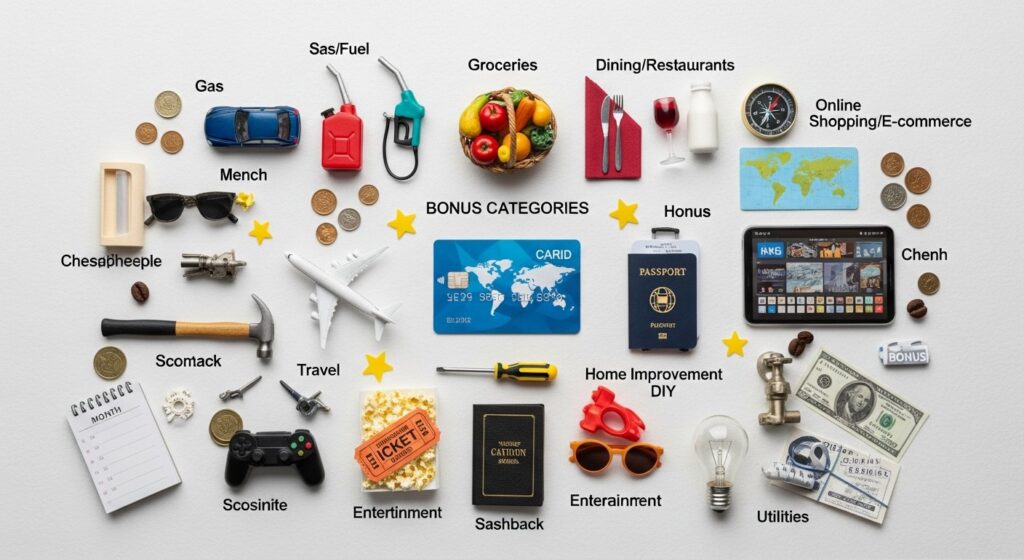
Credit Card Bonus Categories: The Ultimate Guide to Maximizing Your Rewards
Affiliate disclosure: This article may contain affiliate links. Recommendations are independent and editorially driven.
In the expansive and often complex world of credit card rewards, few concepts hold as much power and potential for wealth accumulation as credit card bonus categories. For the savvy consumer, understanding and strategically leveraging these categories is not just a fringe benefit; it’s the cornerstone of an effective points-and-miles strategy, capable of transforming everyday spending into extraordinary travel experiences, significant cash back, or valuable merchandise. At goldpoints, our mission is to demystify these powerful tools, guiding you through the intricacies of bonus categories to unlock their full potential and supercharge your rewards journey.
Imagine a world where every dollar you spend isn’t just a transaction, but an investment in your next adventure, your next big saving, or your next luxury experience. This isn’t a fantasy; it’s the reality for millions who expertly navigate the landscape of credit card bonus categories. From the groceries you buy, the gas you pump, and the meals you savor, to the flights you book and the online shopping sprees you indulge in, virtually every spending habit can be optimized to earn points, miles, or cash back at accelerated rates. But how do these categories work, which cards offer the best deals, and how can you integrate them into a cohesive strategy?
This comprehensive guide from goldpoints will delve deep into the mechanics of credit card bonus categories. We’ll explore the different types of bonus structures, highlight leading cards that exemplify these features, and equip you with advanced strategies to ensure you’re always earning at the highest possible rate. Whether you’re a newcomer eager to dip your toes into the rewards game or a seasoned points-and-miles veteran looking to refine your approach, this article is designed to be your definitive resource. Prepare to transform your spending habits and elevate your rewards game like never before.
Understanding What Credit Card Bonus Categories Are and How They Work
At its core, a credit card bonus category is a specific spending classification (like dining, travel, groceries, or gas) where your credit card earns an elevated rewards rate compared to its standard earning rate for general purchases. While a typical credit card might offer 1 point or 1% cash back per dollar on all purchases, a card with bonus categories might offer 2x, 3x, 5x, or even higher multipliers on spending within those designated categories.
The Basic Mechanics of Bonus Categories
When you make a purchase, the merchant processes the transaction through a specific Merchant Category Code (MCC). Your credit card issuer then reads this MCC to determine what type of business it is. If that MCC aligns with one of your card’s bonus categories, you’ll automatically earn the higher rewards rate for that transaction. If it doesn’t match, you’ll earn the standard base rate.
- Standard Earning Rate: Typically 1 point or 1% cash back per dollar on all purchases outside of bonus categories.
- Bonus Earning Rate: An accelerated rate, often expressed as a multiplier (e.g., 2x points, 3x points, 5% cash back) for spending within specific categories.
For example, if you have a card that offers 3x points on dining, and you spend $100 at a restaurant, you’d earn 300 points instead of the standard 100 points. This seemingly small difference can add up to thousands of extra points over a year, significantly accelerating your rewards accumulation.
Fixed vs. Rotating Bonus Categories
Bonus categories generally fall into two main types, each with its own advantages and strategic considerations:
Fixed Bonus Categories
These are categories that remain constant for the life of the credit card. Many travel-focused cards, for instance, offer perpetual bonus points on travel and dining. Grocery store cards might always offer elevated earnings at supermarkets. Fixed bonus categories are excellent for consistent spending patterns, allowing you to reliably maximize rewards in areas where you spend the most. You don’t need to remember to activate anything; the bonus is simply there.
- Pros: Predictable, no activation required, easy to integrate into long-term spending plans.
- Cons: Categories are fixed, so they might not always align with your highest spending areas throughout the year.
Rotating Bonus Categories
These categories change periodically, most commonly on a quarterly basis. Cards offering rotating bonus categories might feature 5% cash back (or 5x points) on categories like gas stations and streaming services in Q1, grocery stores and fitness clubs in Q2, online shopping and home improvement stores in Q3, and PayPal/digital wallets in Q4. These cards usually require you to “activate” the bonus categories each quarter to earn the elevated rate, and there’s often a spending cap (e.g., $1,500 in spending) after which the bonus rate reverts to the standard rate.
- Pros: Offers incredibly high earning rates (often 5x or 5% back) in diverse categories throughout the year, encouraging adaptability.
- Cons: Requires active management (activation, tracking categories), spending caps limit total bonus earnings.
Flexible or “Choose Your Own” Categories
A less common, but increasingly popular, type of bonus category allows cardholders to select one or more bonus categories from a predefined list each month or quarter. This offers a hybrid approach, giving you more control than fixed categories but with less volatility than rotating ones. For example, you might choose “online shopping” as your 3% back category for the month if you know you have a large purchase coming up.
Understanding these fundamental types is the first step in building a robust credit card strategy that leverages the power of bonus categories to its fullest extent. The optimal approach often involves a combination of cards designed to cover your diverse spending needs.
Why Maximizing Credit Card Bonus Categories Matters for Your Wallet

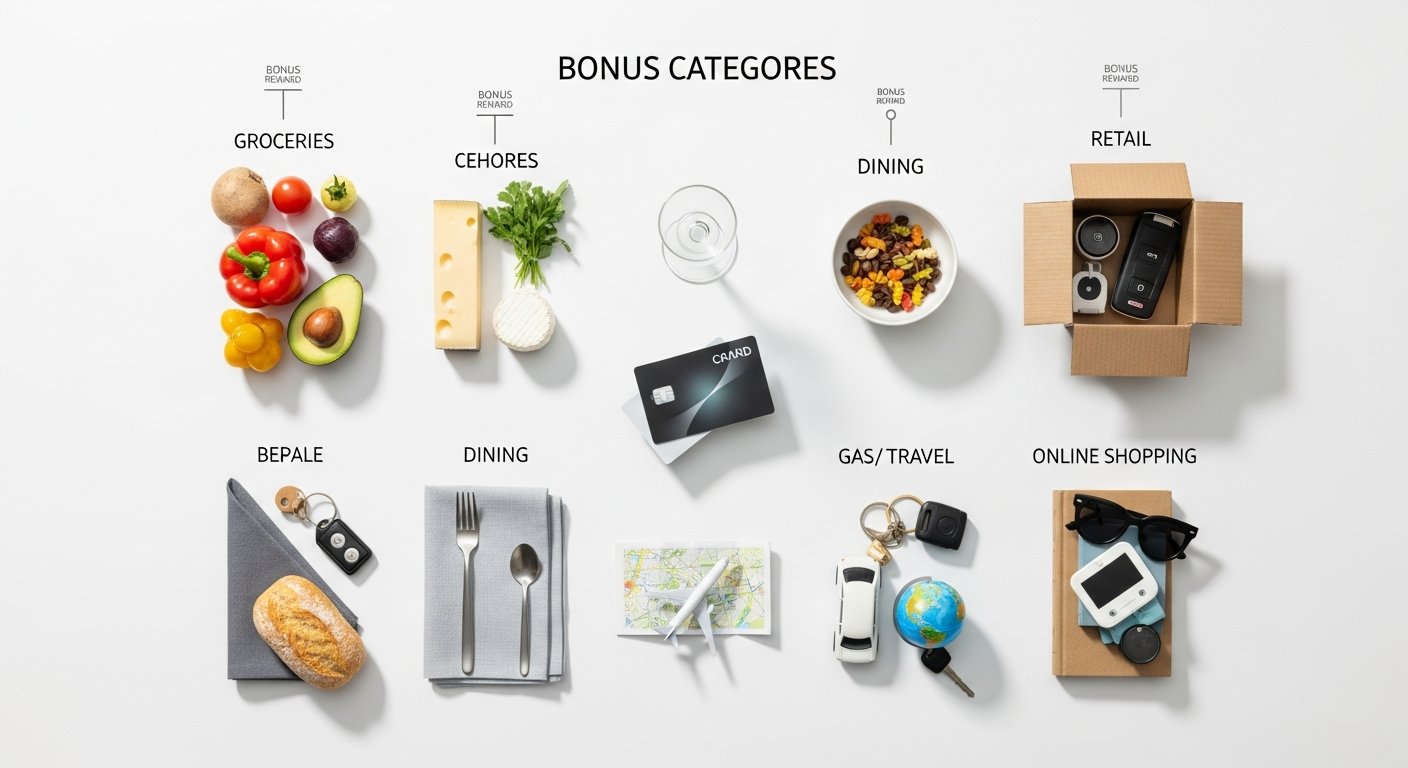
The allure of credit card rewards isn’t just about getting something for free; it’s about optimizing your financial ecosystem, making your money work harder for you, and achieving your financial and lifestyle goals faster. Ignoring credit card bonus categories is akin to leaving money on the table. For anyone serious about travel hacking, maximizing cash back, or simply being financially astute, these categories are indispensable.
[INLINE IMAGE 1: place after second H2 | alt=”credit card bonus categories concept illustration”]
Accelerated Rewards Accumulation
This is the most direct and obvious benefit. Earning 3x, 4x, or even 5x points on your everyday spending means you accumulate rewards at a rate 3 to 5 times faster than with a flat-rate card. Over the course of a year, this can translate into thousands, if not tens of thousands, of additional points or hundreds of dollars in extra cash back. These extra rewards can be the difference between a domestic weekend getaway and an international trip in business class.
- Example: A family spending $1,000 a month on groceries might earn 1,000 points with a flat-rate 1x card. With a 5x grocery bonus card, they’d earn 5,000 points. That’s an extra 4,000 points every month, or 48,000 points annually, simply by using the right card.
Achieving Travel Goals Faster and More Affordably
For travel enthusiasts, bonus categories are the backbone of a robust points-and-miles strategy. By strategically directing spending to categories like travel, dining, and gas, you can earn enough points to cover significant travel expenses, from flights and hotel stays to rental cars and experiences. This can transform aspirational trips into achievable realities, often allowing for experiences that would otherwise be out of budget, such as premium cabin flights or luxury hotel stays. With high-value transfer partners, these points can be redeemed for incredible value, far exceeding simple cash back.
Offsetting Everyday Expenses with Cash Back
Not everyone is focused on travel. For those who prefer direct financial benefits, bonus categories are a powerful tool for earning significant cash back. By consistently earning 2-5% back on categories like groceries, utilities, or online shopping, you’re effectively reducing the cost of these essential expenses. This cash back can be used to pay down your credit card bill, boost your savings, or simply provide more discretionary income. It’s a continuous, subtle form of saving that requires no extra effort beyond choosing the right card for each purchase.
The Core of a Smart “Points and Miles” Strategy
Expert points and miles enthusiasts rarely rely on just one credit card. Instead, they build a diversified “credit card ecosystem” where each card is chosen for its specific strengths – particularly its bonus categories. This allows them to maximize earnings across all major spending areas. By coordinating cards, they ensure that every dollar spent yields the highest possible return, feeding a steady stream of valuable rewards into their loyalty accounts. This sophisticated approach turns ordinary spending into a powerful engine for accumulating rewards.
Understanding the “why” behind bonus categories empowers you to make intentional choices about your credit card portfolio and spending habits. It shifts the perspective from simply paying for things to strategically investing in your future rewards.
Types of Bonus Category Credit Cards
The market for credit cards offering bonus categories is vast and varied, designed to cater to a multitude of spending habits and reward preferences. Recognizing the different types available is crucial for building a diversified and efficient credit card strategy. Here, we’ll categorize the most common structures and discuss their typical applications.
Fixed Bonus Category Cards
These cards offer consistent elevated earning rates in specific categories that remain unchanged over the card’s lifetime. They are ideal for individuals who have predictable spending in certain areas and prefer a “set it and forget it” approach to their rewards strategy.
Travel-Focused Cards
Many premium travel credit cards offer enhanced rewards on travel and dining expenses. These categories are often broadly defined, covering airlines, hotels, car rentals, ride-sharing, and a wide array of restaurants. Examples often include 2x, 3x, or even 5x points on these types of purchases.
- Ideal for: Frequent travelers, foodies, those who prioritize flexibility in travel redemptions.
Grocery Store Cards
For most households, groceries represent a significant monthly expense. Several cards offer elevated rewards (often 3-6%) on supermarket purchases. It’s important to note that these bonuses typically apply to traditional grocery stores and may exclude superstores like Walmart or Target, or warehouse clubs like Costco.
- Ideal for: Families, individuals with large grocery bills, those looking to offset everyday living costs.
Gas Station Cards
Commuters and road trippers can benefit immensely from cards that offer bonus rewards at gas stations. These often provide 2-3% cash back or points on fuel purchases, helping to reduce a recurring and unavoidable expense.
- Ideal for: Drivers, those with long commutes, anyone looking to save on fuel costs.
Dining and Entertainment Cards
Beyond general travel cards, some focus specifically on dining, often including bars, cafes, and sometimes even specific entertainment venues. These can be particularly rewarding for social individuals or those who dine out frequently.
- Ideal for: Social butterflies, food enthusiasts, people who frequent restaurants and entertainment spots.
Rotating Bonus Category Cards
These cards are known for their high earning potential in specific categories that change every quarter. Typically, they offer 5% cash back or 5x points on up to $1,500 in spending within the activated categories each quarter. While they require more active management, the rewards can be substantial.
- Common Categories: Gas stations, grocery stores, Amazon.com, PayPal, digital wallets, streaming services, home improvement stores, wholesale clubs, and more.
- Key Feature: Requires quarterly activation of bonus categories.
- Ideal for: Savvy optimizers, those willing to manage multiple cards, individuals who want to maximize earnings across diverse spending.
Flexible Spending/Choose Your Own Category Cards
These cards empower you to select your bonus categories from a predefined list, typically on a monthly or quarterly basis. This offers a middle ground between fixed and rotating categories, providing a degree of customization without the quarterly upheaval of rotating cards.
- Example Categories: Online shopping, dining, travel, gas, drugstores, home improvement, entertainment, utilities.
- Benefit: Allows you to align your bonus earnings with your current spending patterns or anticipated large purchases.
- Ideal for: Individuals with fluctuating spending habits, those who appreciate customization.
Business Credit Cards with Bonus Categories
Many small business credit cards also offer robust bonus categories tailored to common business expenses. These often include categories like office supply stores, internet/cable/phone services, shipping, advertising, or gas stations. This allows business owners to earn significant rewards on their operational costs.
- Ideal for: Small business owners, freelancers, entrepreneurs looking to optimize business spending.
By understanding these different types, you can begin to identify which cards align best with your individual or household spending profile. A truly optimized strategy often involves holding a combination of these cards to cover all bases and maximize every dollar spent.
Strategies for Optimizing Your Bonus Category Earnings

Having a credit card with bonus categories is one thing; effectively leveraging them to their maximum potential is another. It requires a strategic approach, attention to detail, and sometimes, a willingness to adapt your spending habits. Here are goldpoints’ top strategies for supercharging your bonus category earnings.
1. Conduct a Thorough Spending Audit
Before you can optimize, you need to understand where your money goes. Review your bank statements and credit card bills from the last 6-12 months. Categorize your spending (groceries, dining, travel, utilities, gas, online shopping, etc.). This will reveal your highest spending categories and help you identify which bonus categories will be most valuable to you.
- Action: Use budgeting apps, spreadsheet software, or simply review statements to get a clear picture of your spending profile.
2. The “Wallet Optimization” or Multi-Card Strategy
Rarely does a single credit card cover all bonus categories effectively. The most effective strategy involves holding multiple credit cards, each chosen for its strength in specific bonus categories. This allows you to “category match” your spending.
- Example: Use Card A for 5x points on groceries, Card B for 3x points on dining and travel, and Card C for 5x points on rotating categories like gas or online shopping.
- Benefit: Ensures you’re always using the “best” card for any given purchase, maximizing rewards across your entire spending.
Learn more about building a credit card ecosystem for maximum rewards.
3. Stay Vigilant with Rotating Categories: Activate and Track
For cards with rotating bonus categories, activation is non-negotiable. If you don’t activate the categories each quarter, you’ll only earn the base rate. Make it a habit to check your card issuer’s portal or app at the beginning of each quarter and activate the bonuses. Also, be mindful of any spending caps.
- Tip: Set calendar reminders for category activation deadlines. Keep a small note in your wallet reminding you of the current quarter’s bonus categories.
4. Understand Merchant Category Codes (MCCs)
Credit card issuers use MCCs to classify transactions. While most are straightforward (a grocery store is a grocery store), some can be tricky. For instance, a superstore (like Walmart Supercenter) might code as a “discount store” rather than a “grocery store,” potentially missing a grocery bonus. Similarly, hotel restaurants might code as “lodging” instead of “dining.”
- Action: If you’re unsure how a specific merchant codes, make a small test purchase and check your online statement.
5. Maximize Spending Caps Strategically
Many bonus categories, especially rotating ones, come with spending caps (e.g., $1,500 in bonus category spending per quarter). Plan your spending to hit these caps efficiently. For example, if groceries are a 5x bonus category for the quarter, prioritize using that card for all your grocery purchases until you hit the $1,500 limit, then switch to another card for subsequent grocery spending.
- Tip: Use gift cards. If a bonus category is “grocery stores” and you know you’ll spend more than the cap, consider buying gift cards for other merchants (e.g., Amazon, gas stations, restaurants) at the grocery store to reach the cap and earn the bonus on spending you’ll make anyway.
6. Utilize Authorized Users (Strategically)
Adding authorized users (e.g., a spouse or partner) to your account can help consolidate household spending and hit bonus category caps faster, as all spending on the primary and authorized user cards typically contributes to the same account’s rewards. Just ensure authorized users understand the strategy and use the correct cards for specific purchases.
- Caution: Authorized users also impact your credit responsibly, so choose wisely.
7. Incorporate Shopping Portals and Stacking
Don’t forget that bonus categories can often be stacked with online shopping portals for even greater rewards. If you’re buying something online in a category that also earns a bonus on your credit card (e.g., online shopping is a bonus category), always check if there’s a shopping portal (like Rakuten, TopCashback, or your airline/hotel portal) offering additional points or cash back for that merchant. This is a powerful way to double-dip on rewards.
Explore advanced strategies for stacking rewards with shopping portals.
8. Monitor Changes and Adapt
Credit card benefits, including bonus categories, can change. Issuers might update their rewards structure, introduce new categories, or discontinue old ones. Stay informed by regularly checking your card’s terms and conditions or reading updates from goldpoints and similar expert sources. Be prepared to adapt your strategy as the rewards landscape evolves.
By diligently applying these strategies, you can transform your everyday spending into a highly efficient rewards-generating machine, propelling you towards your travel, cash back, or financial goals at an accelerated pace.
Popular Credit Cards with Excellent Bonus Categories
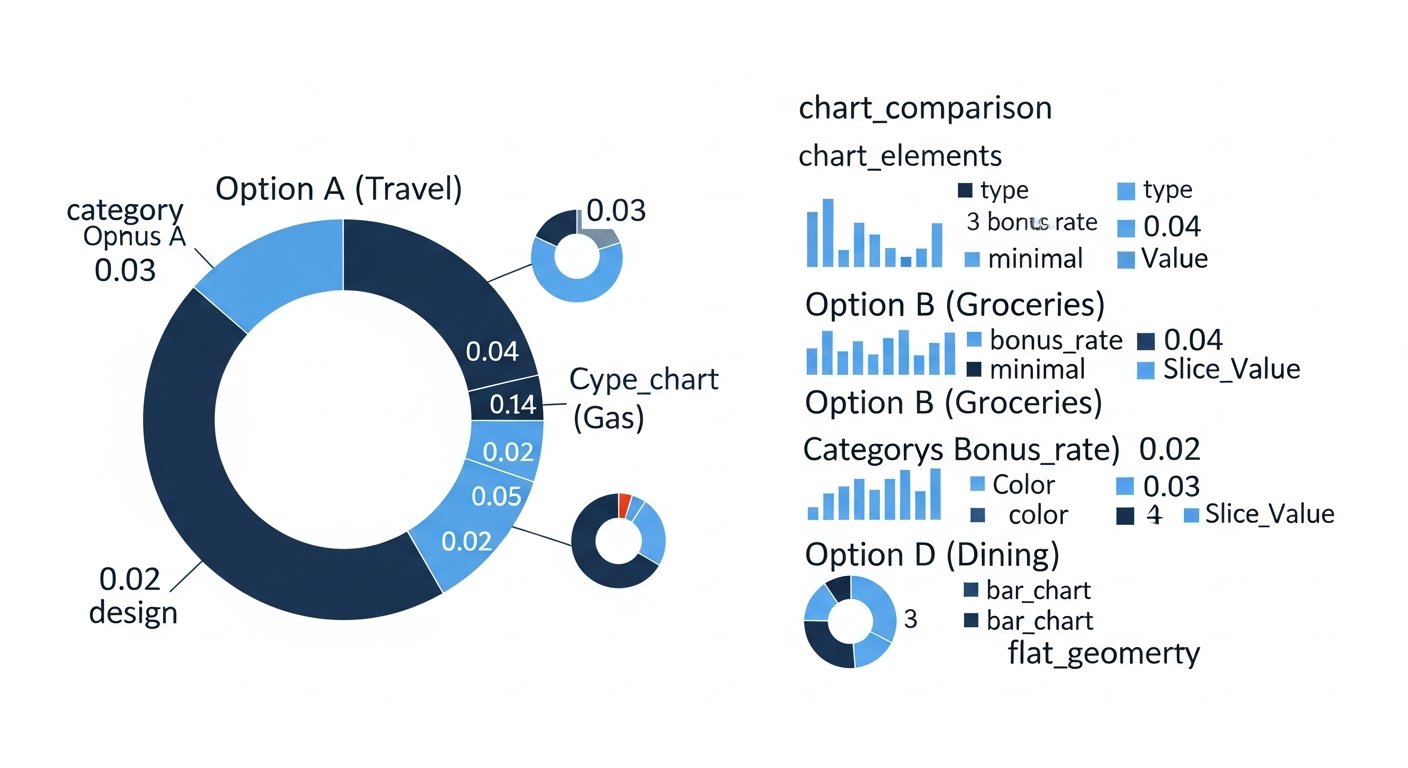
To put strategy into practice, it’s essential to know which credit cards are leading the pack in offering compelling bonus categories. The best card for you will always depend on your unique spending habits, but here’s a look at some perennial favorites and their key bonus structures, illustrating the diversity available in the market. (Note: Card benefits and offers are subject to change by the issuer.)
[INLINE IMAGE 2: place after fourth H2 | alt=”credit card bonus categories comparison illustration”]
Cards Known for Rotating Bonus Categories
Chase Freedom Flex℠ (or similar rotating category card)
- Key Feature: Offers 5% cash back (or 5x points if paired with a Chase Ultimate Rewards card) on up to $1,500 in combined purchases in bonus categories that rotate quarterly. Also earns 3% on dining and drugstores, and 1.5% on all other purchases.
- Typical Categories: Past categories have included gas stations, grocery stores, Amazon.com, PayPal, select streaming services, wholesale clubs, and more.
- Ideal for: Those who are organized enough to activate categories quarterly and willing to track spending. Excellent for pairing with a Chase Sapphire Preferred or Reserve card for higher point valuation.
Discover it® Cash Back (or similar rotating category card)
- Key Feature: Earns 5% cash back on everyday purchases at different places each quarter, up to the quarterly maximum when you activate. Earns 1% cash back on all other purchases.
- Typical Categories: Often similar to Chase Freedom Flex, including gas stations, grocery stores, restaurants, Amazon.com, and digital wallets.
- Ideal for: Individuals who want a straightforward rotating cash back card, often a good starter card for students or those building credit.
Cards Excelling in Fixed Bonus Categories
American Express® Gold Card (or similar dining/grocery card)
- Key Feature: Earns 4x Membership Rewards® points at U.S. supermarkets (on up to $25,000 in purchases per calendar year, then 1x) and at restaurants worldwide. Also 3x points on flights booked directly with airlines or on amextravel.com.
- Ideal for: High spenders on groceries and dining, travelers, those who value flexible Amex Membership Rewards points.
Chase Sapphire Preferred® Card (or similar travel/dining card)
- Key Feature: Earns 2x points on travel and dining worldwide. Also earns 5x points on travel purchased through Chase Ultimate Rewards® and 3x points on online grocery purchases (excluding Walmart, Target, and wholesale clubs) and select streaming services.
- Ideal for: Travelers, foodies, those looking for a strong general travel card with valuable points for transfer partners.
Capital One SavorOne Cash Rewards Credit Card (or similar entertainment/dining card)
- Key Feature: Earns 3% cash back on dining, entertainment, popular streaming services, and at grocery stores (excluding superstores like Walmart® and Target®). Earns 1% on all other purchases.
- Ideal for: Those who frequently spend on dining out, entertainment, and groceries, and prefer simple cash back rewards.
Cards with “Choose Your Own” or Flexible Categories
Bank of America® Customized Cash Rewards credit card (or similar customizable card)
- Key Feature: Earns 3% cash back in a category of your choice (choose from gas, online shopping, dining, travel, drug stores, or home improvement/furnishings). You also earn 2% cash back at grocery stores and wholesale clubs (on up to $2,500 in combined choice category/grocery store/wholesale club purchases each quarter). Earns 1% on all other purchases.
- Ideal for: Individuals who want control over their bonus categories, especially those with varying spending patterns throughout the year.
This is by no means an exhaustive list, but it highlights the diverse offerings available. Many other excellent cards exist from various issuers that cater to specific niches, such as small business expenses, airline loyalty, or specific hotel chains. Researching and comparing options based on your personal spending is key.
Comparison Table: Top Credit Cards for Bonus Categories (2026)
Here’s a snapshot of some leading credit cards and their bonus category strengths:
| Card Name | Primary Bonus Categories | Typical Earning Rate | Annual Fee (2026) | Key Feature/Note |
|---|---|---|---|---|
| Chase Freedom Flex℠ | Rotating quarterly categories (gas, groceries, online shopping, etc.), Dining, Drugstores | 5% (up to cap), 3% | $0 | Requires quarterly activation; great for pairing with UR cards. |
| American Express® Gold Card | U.S. Supermarkets, Restaurants worldwide, Flights | 4x MR points, 3x MR points | $250 | High earning on food; includes valuable statement credits. |
| Chase Sapphire Preferred® Card | Travel, Dining, Online Groceries, Streaming services | 2x-5x UR points, 3x UR points | $95 | Strong travel insurance, 25% point redemption bonus via portal. |
| Capital One SavorOne Cash Rewards Credit Card | Dining, Entertainment, Popular Streaming, Grocery Stores | 3% cash back | $0 | Excellent no-annual-fee option for lifestyle categories. |
| Bank of America® Customized Cash Rewards | Choice Category (Gas, Online Shopping, Dining, etc.), Groceries, Wholesale Clubs | 3% (up to cap), 2% (up to cap) | $0 | Customizable bonus category each month/quarter. |
| Discover it® Cash Back | Rotating quarterly categories (gas, groceries, Amazon, etc.) | 5% (up to cap) | $0 | Cash back match for first year; easy to use. |
When selecting your cards, always review the most current terms and conditions, as offers and benefits can change. Consider your top three to five spending categories and look for cards that offer the highest return in those areas, ideally with no or a manageable annual fee that is offset by the rewards you expect to earn.
Common Pitfalls to Avoid When Using Bonus Categories
While the benefits of credit card bonus categories are undeniable, there are several common traps that can derail your rewards strategy or, worse, lead to financial missteps. Being aware of these pitfalls is just as important as knowing how to maximize your earnings.
1. Overspending to Earn Rewards
This is arguably the most dangerous pitfall. The golden rule of credit card rewards is: never spend money you wouldn’t otherwise spend, just to earn points or cash back. A few extra points are never worth going into debt or buying unnecessary items. The interest you pay on a carried balance will always far outweigh the value of any rewards earned.
- Solution: Stick to your budget. View rewards as a bonus for your normal spending, not a reason to increase it.
2. Ignoring Annual Fees
Many premium credit cards with attractive bonus categories come with annual fees, which can range from $95 to several hundred dollars. It’s crucial to calculate whether the value of the rewards you earn (including sign-up bonuses, category bonuses, and perks like travel credits) genuinely offsets the annual fee. If you’re not utilizing the card enough, a high annual fee can negate your rewards.
- Solution: Regularly evaluate your cards. If a card’s benefits no longer outweigh its fee, consider downgrading to a no-annual-fee version or canceling it.
3. Missing Category Activations or Forgetting Categories
For rotating bonus category cards, failing to activate the categories each quarter means you miss out on the elevated earning rates. Similarly, if you have multiple cards, forgetting which card earns what bonus on which category can lead to suboptimal earnings.
- Solution: Set calendar reminders for quarterly activations. Keep a simple note or use an app to remind you which card to use for different spending categories.
4. Not Understanding Point Valuations
Not all points are created equal. 100 points from one loyalty program might be worth $1, while 100 points from another might be worth $2 or more, especially when transferred to travel partners. Redeeming high-value points for low-value options (e.g., cashing out travel points for 1 cent per point when they could be worth 2 cents per point for flights) is a common mistake.
- Solution: Research the typical redemption values for your points. Understand which redemption options offer the best return. Goldpoints offers extensive guides on point valuations.
5. Carrying a Balance and Paying Interest
Credit card rewards are designed for responsible credit users who pay their statement balance in full every month. If you carry a balance, the interest charges will quickly erase any value you’ve gained from bonus categories. A 20% APR will make any 5% cash back or 5x points earned look insignificant.
- Solution: Always pay your statement balance in full by the due date. If you can’t, focus on paying down debt before pursuing rewards.
6. Complicating Your Wallet Too Much
While a multi-card strategy is powerful, having too many cards or an overly complex system can lead to confusion, missed activations, or a feeling of being overwhelmed. The goal is optimization, not unnecessary complexity.
- Solution: Start simple. Build your credit card portfolio gradually. Only add cards that clearly fill a gap in your bonus category coverage and that you can manage effectively.
By consciously avoiding these common pitfalls, you can ensure that your pursuit of credit card rewards remains a financially sound and genuinely beneficial endeavor, rather than a costly hobby. Responsible credit card use is always the foundation of any successful rewards strategy.
Evolving Trends in Credit Card Bonus Categories
The landscape of credit card rewards is dynamic, constantly adapting to consumer spending habits, technological advancements, and economic shifts. Credit card issuers are always looking for new ways to entice cardholders, and this often translates into evolving bonus categories. Staying abreast of these trends can help you anticipate future opportunities and adjust your strategy accordingly.
1. Emergence of Digital Wallet Bonuses
With the widespread adoption of Apple Pay, Google Pay, and other digital wallets, many issuers have started offering bonus points or cash back for purchases made using these platforms. Sometimes, digital wallet spending itself is a bonus category, or certain rotating categories are specifically enabled when using a digital wallet, covering a broad range of merchants.
- Impact: Encourages contactless payments and provides a flexible way to earn bonuses across various retailers that accept digital payments.
2. Increased Focus on Online Shopping
The surge in e-commerce, accelerated by recent global events, has made “online shopping” a frequently featured bonus category. This can be a broad category covering many online retailers, or sometimes specific merchants like Amazon.com. This reflects a permanent shift in how many consumers make purchases.
- Impact: Offers significant earning potential for a common spending habit, often stackable with online shopping portals.
3. Streaming Services and Subscription Boxes
As subscription models for entertainment and other services have become ubiquitous, some credit cards now offer bonus rewards on streaming services (Netflix, Spotify, Hulu, etc.) and even subscription box services. This caters to a growing segment of regular, automated spending.
- Impact: Provides an easy way to earn rewards on recurring monthly expenses, often seen on cards targeting younger demographics or tech-savvy users.
4. Personalized Offers and Dynamic Bonuses
Leveraging data analytics, some issuers are moving towards more personalized bonus offers. Instead of broad, fixed categories for all users, you might receive targeted offers based on your individual spending history. This could include extra points on categories where you haven’t been using that specific card, or specific merchants.
- Impact: Can lead to highly relevant and rewarding bonuses, but requires active checking of your card’s offers section.
Discover how to best utilize personalized rewards offers from your credit card issuers.
5. Sustainability and Experiential Categories
A nascent trend sees some cards experimenting with bonus categories related to sustainable living or unique experiences. This could include bonuses on purchases from eco-friendly brands, public transportation, bike shares, or even specific types of experiential travel.
- Impact: Appeals to niche markets and values-driven consumers, potentially expanding the definition of traditional bonus categories.
6. Broader Definition of “Travel” and “Dining”
Some issuers are expanding what qualifies for their “travel” and “dining” bonus categories to include more diverse options like ride-sharing services, parking, tolls, food delivery services, and even sometimes unique local experiences. This makes these categories more versatile for modern lifestyles.
- Impact: Makes established bonus categories more relevant to a wider range of spending and modern consumption habits.
These trends highlight the importance of staying informed and regularly reviewing your credit card benefits. What was once a static rewards landscape is now a fluid environment, offering new and exciting opportunities for those willing to adapt and optimize their strategy.
Integrating Bonus Categories into a Broader Points and Miles Strategy
While maximizing credit card bonus categories is a powerful individual tactic, its true potential is realized when integrated into a comprehensive points and miles strategy. This involves not just earning, but also understanding how points transfer, how they’re valued, and how they can be redeemed for maximum impact.
The Power of Transferable Points Programs
Many of the best bonus category cards earn points in flexible, transferable rewards programs (e.g., Chase Ultimate Rewards, American Express Membership Rewards, Capital One Miles, Citi ThankYou Rewards). These programs allow you to transfer your accumulated points to various airline and hotel loyalty programs, often at a 1:1 ratio. This is where the magic happens:
- Higher Redemption Value: By transferring points to partners, you can often unlock significantly higher redemption values than simply cashing them out or booking through the card issuer’s portal. For example, a point might be worth 1 cent as cash back but 2-5 cents when redeemed for a premium cabin flight.
- Access to Premium Travel: Transfer partners give you access to award charts for business and first-class flights, luxury hotel stays, and unique experiences that would be prohibitively expensive to pay for with cash.
Strategically earning through bonus categories directly fuels these transferable points balances, accelerating your path to aspirational travel.
Building a “Credit Card Trifecta” (or Quadfecta)
A common advanced strategy involves building a small portfolio of cards from the same issuer (e.g., Chase or American Express) that complement each other’s bonus categories. This is often referred to as a “trifecta” or “quadfecta.”
- Example (Chase Trifecta):
- Chase Sapphire Reserve® (or Preferred®): Your premium card, offering strong travel and dining bonuses, travel protections, and (crucially) allows you to transfer points to partners.
- Chase Freedom Flex℠: For 5x points on rotating bonus categories.
- Chase Freedom Unlimited®: For 1.5x points on all non-category spending.
By using these cards synergistically, you ensure that virtually every dollar spent earns an elevated rate, and all those points can be pooled and transferred from your premium card’s account, maximizing their value.
Strategic Redemption Planning
Earning points through bonus categories is only half the battle; knowing how and when to redeem them is equally vital. Your redemption strategy should align with your travel goals:
- High-Value Redemptions:
Credit Card Bonus Categories: The Ultimate Guide to Maximizing Your Rewards
Affiliate disclosure: This article may contain affiliate links. Recommendations are independent and editorially driven.
In the expansive and often complex world of credit card rewards, few concepts hold as much power and potential for wealth accumulation as credit card bonus categories. For the savvy consumer, understanding and strategically leveraging these categories is not just a fringe benefit; it’s the cornerstone of an effective points-and-miles strategy, capable of transforming everyday spending into extraordinary travel experiences, significant cash back, or valuable merchandise. At goldpoints, our mission is to demystify these powerful tools, guiding you through the intricacies of bonus categories to unlock their full potential and supercharge your rewards journey.
Imagine a world where every dollar you spend isn’t just a transaction, but an investment in your next adventure, your next big saving, or your next luxury experience. This isn’t a fantasy; it’s the reality for millions who expertly navigate the landscape of credit card bonus categories. From the groceries you buy, the gas you pump, and the meals you savor, to the flights you book and the online shopping sprees you indulge in, virtually every spending habit can be optimized to earn points, miles, or cash back at accelerated rates. But how do these categories work, which cards offer the best deals, and how can you integrate them into a cohesive strategy?
This comprehensive guide from goldpoints will delve deep into the mechanics of credit card bonus categories. We’ll explore the different types of bonus structures, highlight leading cards that exemplify these features, and equip you with advanced strategies to ensure you’re always earning at the highest possible rate. Whether you’re a newcomer eager to dip your toes into the rewards game or a seasoned points-and-miles veteran looking to refine your approach, this article is designed to be your definitive resource. Prepare to transform your spending habits and elevate your rewards game like never before.
Understanding What Credit Card Bonus Categories Are and How They Work
At its core, a credit card bonus category is a specific spending classification (like dining, travel, groceries, or gas) where your credit card earns an elevated rewards rate compared to its standard earning rate for general purchases. While a typical credit card might offer 1 point or 1% cash back per dollar on all purchases, a card with bonus categories might offer 2x, 3x, 5x, or even higher multipliers on spending within those designated categories.
The Basic Mechanics of Bonus Categories
When you make a purchase, the merchant processes the transaction through a specific Merchant Category Code (MCC). Your credit card issuer then reads this MCC to determine what type of business it is. If that MCC aligns with one of your card’s bonus categories, you’ll automatically earn the higher rewards rate for that transaction. If it doesn’t match, you’ll earn the standard base rate.
- Standard Earning Rate: Typically 1 point or 1% cash back per dollar on all purchases outside of bonus categories.
- Bonus Earning Rate: An accelerated rate, often expressed as a multiplier (e.g., 2x points, 3x points, 5% cash back) for spending within specific categories.
For example, if you have a card that offers 3x points on dining, and you spend $100 at a restaurant, you’d earn 300 points instead of the standard 100 points. This seemingly small difference can add up to thousands of extra points over a year, significantly accelerating your rewards accumulation.
Fixed vs. Rotating Bonus Categories
Bonus categories generally fall into two main types, each with its own advantages and strategic considerations:
Fixed Bonus Categories
These are categories that remain constant for the life of the credit card. Many travel-focused cards, for instance, offer perpetual bonus points on travel and dining. Grocery store cards might always offer elevated earnings at supermarkets. Fixed bonus categories are excellent for consistent spending patterns, allowing you to reliably maximize rewards in areas where you spend the most. You don’t need to remember to activate anything; the bonus is simply there.
- Pros: Predictable, no activation required, easy to integrate into long-term spending plans.
- Cons: Categories are fixed, so they might not always align with your highest spending areas throughout the year.
Rotating Bonus Categories
These categories change periodically, most commonly on a quarterly basis. Cards offering rotating bonus categories might feature 5% cash back (or 5x points) on categories like gas stations and streaming services in Q1, grocery stores and fitness clubs in Q2, online shopping and home improvement stores in Q3, and PayPal/digital wallets in Q4. These cards usually require you to “activate” the bonus categories each quarter to earn the elevated rate, and there’s often a spending cap (e.g., $1,500 in spending) after which the bonus rate reverts to the standard rate.
- Pros: Offers incredibly high earning rates (often 5x or 5% back) in diverse categories throughout the year, encouraging adaptability.
- Cons: Requires active management (activation, tracking categories), spending caps limit total bonus earnings.
Flexible or “Choose Your Own” Categories
A less common, but increasingly popular, type of bonus category allows cardholders to select one or more bonus categories from a predefined list each month or quarter. This offers a hybrid approach, giving you more control than fixed categories but with less volatility than rotating ones. For example, you might choose “online shopping” as your 3% back category for the month if you know you have a large purchase coming up.
Understanding these fundamental types is the first step in building a robust credit card strategy that leverages the power of bonus categories to its fullest extent. The optimal approach often involves a combination of cards designed to cover your diverse spending needs.
Why Maximizing Credit Card Bonus Categories Matters for Your Wallet
The allure of credit card rewards isn’t just about getting something for free; it’s about optimizing your financial ecosystem, making your money work harder for you, and achieving your financial and lifestyle goals faster. Ignoring credit card bonus categories is akin to leaving money on the table. For anyone serious about travel hacking, maximizing cash back, or simply being financially astute, these categories are indispensable.
[INLINE IMAGE 1: place after second H2 | alt=”credit card bonus categories concept illustration”]
Accelerated Rewards Accumulation
This is the most direct and obvious benefit. Earning 3x, 4x, or even 5x points on your everyday spending means you accumulate rewards at a rate 3 to 5 times faster than with a flat-rate card. Over the course of a year, this can translate into thousands, if not tens of thousands, of additional points or hundreds of dollars in extra cash back. These extra rewards can be the difference between a domestic weekend getaway and an international trip in business class.
- Example: A family spending $1,000 a month on groceries might earn 1,000 points with a flat-rate 1x card. With a 5x grocery bonus card, they’d earn 5,000 points. That’s an extra 4,000 points every month, or 48,000 points annually, simply by using the right card.
Achieving Travel Goals Faster and More Affordably
For travel enthusiasts, bonus categories are the backbone of a robust points-and-miles strategy. By strategically directing spending to categories like travel, dining, and gas, you can earn enough points to cover significant travel expenses, from flights and hotel stays to rental cars and experiences. This can transform aspirational trips into achievable realities, often allowing for experiences that would otherwise be out of budget, such as premium cabin flights or luxury hotel stays. With high-value transfer partners, these points can be redeemed for incredible value, far exceeding simple cash back.
Offsetting Everyday Expenses with Cash Back
Not everyone is focused on travel. For those who prefer direct financial benefits, bonus categories are a powerful tool for earning significant cash back. By consistently earning 2-5% back on categories like groceries, utilities, or online shopping, you’re effectively reducing the cost of these essential expenses. This cash back can be used to pay down your credit card bill, boost your savings, or simply provide more discretionary income. It’s a continuous, subtle form of saving that requires no extra effort beyond choosing the right card for each purchase.
The Core of a Smart “Points and Miles” Strategy
Expert points and miles enthusiasts rarely rely on just one credit card. Instead, they build a diversified “credit card ecosystem” where each card is chosen for its specific strengths – particularly its bonus categories. This allows them to maximize earnings across all major spending areas. By coordinating cards, they ensure that every dollar spent yields the highest possible return, feeding a steady stream of valuable rewards into their loyalty accounts. This sophisticated approach turns ordinary spending into a powerful engine for accumulating rewards.
Understanding the “why” behind bonus categories empowers you to make intentional choices about your credit card portfolio and spending habits. It shifts the perspective from simply paying for things to strategically investing in your future rewards.
Types of Bonus Category Credit Cards
The market for credit cards offering bonus categories is vast and varied, designed to cater to a multitude of spending habits and reward preferences. Recognizing the different types available is crucial for building a diversified and efficient credit card strategy. Here, we’ll categorize the most common structures and discuss their typical applications.
Fixed Bonus Category Cards
These cards offer consistent elevated earning rates in specific categories that remain unchanged over the card’s lifetime. They are ideal for individuals who have predictable spending in certain areas and prefer a “set it and forget it” approach to their rewards strategy.
Travel-Focused Cards
Many premium travel credit cards offer enhanced rewards on travel and dining expenses. These categories are often broadly defined, covering airlines, hotels, car rentals, ride-sharing, and a wide array of restaurants. Examples often include 2x, 3x, or even 5x points on these types of purchases.
- Ideal for: Frequent travelers, foodies, those who prioritize flexibility in travel redemptions.
Grocery Store Cards
For most households, groceries represent a significant monthly expense. Several cards offer elevated rewards (often 3-6%) on supermarket purchases. It’s important to note that these bonuses typically apply to traditional grocery stores and may exclude superstores like Walmart or Target, or warehouse clubs like Costco.
- Ideal for: Families, individuals with large grocery bills, those looking to offset everyday living costs.
Gas Station Cards
Commuters and road trippers can benefit immensely from cards that offer bonus rewards at gas stations. These often provide 2-3% cash back or points on fuel purchases, helping to reduce a recurring and unavoidable expense.
- Ideal for: Drivers, those with long commutes, anyone looking to save on fuel costs.
Dining and Entertainment Cards
Beyond general travel cards, some focus specifically on dining, often including bars, cafes, and sometimes even specific entertainment venues. These can be particularly rewarding for social individuals or those who dine out frequently.
- Ideal for: Social butterflies, food enthusiasts, people who frequent restaurants and entertainment spots.
Rotating Bonus Category Cards
These cards are known for their high earning potential in specific categories that change every quarter. Typically, they offer 5% cash back or 5x points on up to $1,500 in spending within the activated categories each quarter. While they require more active management, the rewards can be substantial.
- Common Categories: Gas stations, grocery stores, Amazon.com, PayPal, digital wallets, streaming services, home improvement stores, wholesale clubs, and more.
- Key Feature: Requires quarterly activation of bonus categories.
- Ideal for: Savvy optimizers, those willing to manage multiple cards, individuals who want to maximize earnings across diverse spending.
Flexible Spending/Choose Your Own Category Cards
These cards empower you to select your bonus categories from a predefined list, typically on a monthly or quarterly basis. This offers a middle ground between fixed and rotating categories, providing a degree of customization without the quarterly upheaval of rotating cards.
- Example Categories: Online shopping, dining, travel, gas, drugstores, home improvement, entertainment, utilities.
- Benefit: Allows you to align your bonus earnings with your current spending patterns or anticipated large purchases.
- Ideal for: Individuals with fluctuating spending habits, those who appreciate customization.
Business Credit Cards with Bonus Categories
Many small business credit cards also offer robust bonus categories tailored to common business expenses. These often include categories like office supply stores, internet/cable/phone services, shipping, advertising, or gas stations. This allows business owners to earn significant rewards on their operational costs.
- Ideal for: Small business owners, freelancers, entrepreneurs looking to optimize business spending.
By understanding these different types, you can begin to identify which cards align best with your individual or household spending profile. A truly optimized strategy often involves holding a combination of these cards to cover all bases and maximize every dollar spent.
Strategies for Optimizing Your Bonus Category Earnings
Having a credit card with bonus categories is one thing; effectively leveraging them to their maximum potential is another. It requires a strategic approach, attention to detail, and sometimes, a willingness to adapt your spending habits. Here are goldpoints’ top strategies for supercharging your bonus category earnings.
1. Conduct a Thorough Spending Audit
Before you can optimize, you need to understand where your money goes. Review your bank statements and credit card bills from the last 6-12 months. Categorize your spending (groceries, dining, travel, utilities, gas, online shopping, etc.). This will reveal your highest spending categories and help you identify which bonus categories will be most valuable to you.
- Action: Use budgeting apps, spreadsheet software, or simply review statements to get a clear picture of your spending profile.
2. The “Wallet Optimization” or Multi-Card Strategy
Rarely does a single credit card cover all bonus categories effectively. The most effective strategy involves holding multiple credit cards, each chosen for its strength in specific bonus categories. This allows you to “category match” your spending.
- Example: Use Card A for 5x points on groceries, Card B for 3x points on dining and travel, and Card C for 5x points on rotating categories like gas or online shopping.
- Benefit: Ensures you’re always using the “best” card for any given purchase, maximizing rewards across your entire spending.
Learn more about building a credit card ecosystem for maximum rewards.
3. Stay Vigilant with Rotating Categories: Activate and Track
For cards with rotating bonus categories, activation is non-negotiable. If you don’t activate the categories each quarter, you’ll only earn the base rate. Make it a habit to check your card issuer’s portal or app at the beginning of each quarter and activate the bonuses. Also, be mindful of any spending caps.
- Tip: Set calendar reminders for category activation deadlines. Keep a small note in your wallet reminding you of the current quarter’s bonus categories.
4. Understand Merchant Category Codes (MCCs)
Credit card issuers use MCCs to classify transactions. While most are straightforward (a grocery store is a grocery store), some can be tricky. For instance, a superstore (like Walmart Supercenter) might code as a “discount store” rather than a “grocery store,” potentially missing a grocery bonus. Similarly, hotel restaurants might code as “lodging” instead of “dining.”
- Action: If you’re unsure how a specific merchant codes, make a small test purchase and check your online statement.
5. Maximize Spending Caps Strategically
Many bonus categories, especially rotating ones, come with spending caps (e.g., $1,500 in bonus category spending per quarter). Plan your spending to hit these caps efficiently. For example, if groceries are a 5x bonus category for the quarter, prioritize using that card for all your grocery purchases until you hit the $1,500 limit, then switch to another card for subsequent grocery spending.
- Tip: Use gift cards. If a bonus category is “grocery stores” and you know you’ll spend more than the cap, consider buying gift cards for other merchants (e.g., Amazon, gas stations, restaurants) at the grocery store to reach the cap and earn the bonus on spending you’ll make anyway.
6. Utilize Authorized Users (Strategically)
Adding authorized users (e.g., a spouse or partner) to your account can help consolidate household spending and hit bonus category caps faster, as all spending on the primary and authorized user cards typically contributes to the same account’s rewards. Just ensure authorized users understand the strategy and use the correct cards for specific purchases.
- Caution: Authorized users also impact your credit responsibly, so choose wisely.
7. Incorporate Shopping Portals and Stacking
Don’t forget that bonus categories can often be stacked with online shopping portals for even greater rewards. If you’re buying something online in a category that also earns a bonus on your credit card (e.g., online shopping is a bonus category), always check if there’s a shopping portal (like Rakuten, TopCashback, or your airline/hotel portal) offering additional points or cash back for that merchant. This is a powerful way to double-dip on rewards.
Explore advanced strategies for stacking rewards with shopping portals.
8. Monitor Changes and Adapt
Credit card benefits, including bonus categories, can change. Issuers might update their rewards structure, introduce new categories, or discontinue old ones. Stay informed by regularly checking your card’s terms and conditions or reading updates from goldpoints and similar expert sources. Be prepared to adapt your strategy as the rewards landscape evolves.
By diligently applying these strategies, you can transform your everyday spending into a highly efficient rewards-generating machine, propelling you towards your travel, cash back, or financial goals at an accelerated pace.
Popular Credit Cards with Excellent Bonus Categories
To put strategy into practice, it’s essential to know which credit cards are leading the pack in offering compelling bonus categories. The best card for you will always depend on your unique spending habits, but here’s a look at some perennial favorites and their key bonus structures, illustrating the diversity available in the market. (Note: Card benefits and offers are subject to change by the issuer.)
[INLINE IMAGE 2: place after fourth H2 | alt=”credit card bonus categories comparison illustration”]
Cards Known for Rotating Bonus Categories
Chase Freedom Flex℠ (or similar rotating category card)
- Key Feature: Offers 5% cash back (or 5x points if paired with a Chase Ultimate Rewards card) on up to $1,500 in combined purchases in bonus categories that rotate quarterly. Also earns 3% on dining and drugstores, and 1.5% on all other purchases.
- Typical Categories: Past categories have included gas stations, grocery stores, Amazon.com, PayPal, select streaming services, wholesale clubs, and more.
- Ideal for: Those who are organized enough to activate categories quarterly and willing to track spending. Excellent for pairing with a Chase Sapphire Preferred or Reserve card for higher point valuation.
Discover it® Cash Back (or similar rotating category card)
- Key Feature: Earns 5% cash back on everyday purchases at different places each quarter, up to the quarterly maximum when you activate. Earns 1% cash back on all other purchases.
- Typical Categories: Often similar to Chase Freedom Flex, including gas stations, grocery stores, restaurants, Amazon.com, and digital wallets.
- Ideal for: Individuals who want a straightforward rotating cash back card, often a good starter card for students or those building credit.
Cards Excelling in Fixed Bonus Categories
American Express® Gold Card (or similar dining/grocery card)
- Key Feature: Earns 4x Membership Rewards® points at U.S. supermarkets (on up to $25,000 in purchases per calendar year, then 1x) and at restaurants worldwide. Also 3x points on flights booked directly with airlines or on amextravel.com.
- Ideal for: High spenders on groceries and dining, travelers, those who value flexible Amex Membership Rewards points.
Chase Sapphire Preferred® Card (or similar travel/dining card)
- Key Feature: Earns 2x points on travel and dining worldwide. Also earns 5x points on travel purchased through Chase Ultimate Rewards® and 3x points on online grocery purchases (excluding Walmart, Target, and wholesale clubs) and select streaming services.
- Ideal for: Travelers, foodies, those looking for a strong general travel card with valuable points for transfer partners.
Capital One SavorOne Cash Rewards Credit Card (or similar entertainment/dining card)
- Key Feature: Earns 3% cash back on dining, entertainment, popular streaming services, and at grocery stores (excluding superstores like Walmart® and Target®). Earns 1% on all other purchases.
- Ideal for: Those who frequently spend on dining out, entertainment, and groceries, and prefer simple cash back rewards.
Cards with “Choose Your Own” or Flexible Categories
Bank of America® Customized Cash Rewards credit card (or similar customizable card)
- Key Feature: Earns 3% cash back in a category of your choice (choose from gas, online shopping, dining, travel, drug stores, or home improvement/furnishings). You also earn 2% cash back at grocery stores and wholesale clubs (on up to $2,500 in combined choice category/grocery store/wholesale club purchases each quarter). Earns 1% on all other purchases.
- Ideal for: Individuals who want control over their bonus categories, especially those with varying spending patterns throughout the year.
This is by no means an exhaustive list, but it highlights the diverse offerings available. Many other excellent cards exist from various issuers that cater to specific niches, such as small business expenses, airline loyalty, or specific hotel chains. Researching and comparing options based on your personal spending is key.
Comparison Table: Top Credit Cards for Bonus Categories (2026)
Here’s a snapshot of some leading credit cards and their bonus category strengths:
Card Name Primary Bonus Categories Typical Earning Rate Annual Fee (2026) Key Feature/Note Chase Freedom Flex℠ Rotating quarterly categories (gas, groceries, online shopping, etc.), Dining, Drugstores 5% (up to cap), 3% $0 Requires quarterly activation; great for pairing with UR cards. American Express® Gold Card U.S. Supermarkets, Restaurants worldwide, Flights 4x MR points, 3x MR points $250 High earning on food; includes valuable statement credits. Chase Sapphire Preferred® Card Travel, Dining, Online Groceries, Streaming services 2x-5x UR points, 3x UR points $95 Strong travel insurance, 25% point redemption bonus via portal. Capital One SavorOne Cash Rewards Credit Card Dining, Entertainment, Popular Streaming, Grocery Stores 3% cash back $0 Excellent no-annual-fee option for lifestyle categories. Bank of America® Customized Cash Rewards Choice Category (Gas, Online Shopping, Dining, etc.), Groceries, Wholesale Clubs 3% (up to cap), 2% (up to cap) $0 Customizable bonus category each month/quarter. Discover it® Cash Back Rotating quarterly categories (gas, groceries, Amazon, etc.) 5% (up to cap) $0 Cash back match for first year; easy to use. When selecting your cards, always review the most current terms and conditions, as offers and benefits can change. Consider your top three to five spending categories and look for cards that offer the highest return in those areas, ideally with no or a manageable annual fee that is offset by the rewards you expect to earn.
Common Pitfalls to Avoid When Using Bonus Categories
While the benefits of credit card bonus categories are undeniable, there are several common traps that can derail your rewards strategy or, worse, lead to financial missteps. Being aware of these pitfalls is just as important as knowing how to maximize your earnings.
1. Overspending to Earn Rewards
This is arguably the most dangerous pitfall. The golden rule of credit card rewards is: never spend money you wouldn’t otherwise spend, just to earn points or cash back. A few extra points are never worth going into debt or buying unnecessary items. The interest you pay on a carried balance will always far outweigh the value of any rewards earned.
- Solution: Stick to your budget. View rewards as a bonus for your normal spending, not a reason to increase it.
2. Ignoring Annual Fees
Many premium credit cards with attractive bonus categories come with annual fees, which can range from $95 to several hundred dollars. It’s crucial to calculate whether the value of the rewards you earn (including sign-up bonuses, category bonuses, and perks like travel credits) genuinely offsets the annual fee. If you’re not utilizing the card enough, a high annual fee can negate your rewards.
- Solution: Regularly evaluate your cards. If a card’s benefits no longer outweigh its fee, consider downgrading to a no-annual-fee version or canceling it.
3. Missing Category Activations or Forgetting Categories
For rotating bonus category cards, failing to activate the categories each quarter means you miss out on the elevated earning rates. Similarly, if you have multiple cards, forgetting which card earns what bonus on which category can lead to suboptimal earnings.
- Solution: Set calendar reminders for quarterly activations. Keep a simple note or use an app to remind you which card to use for different spending categories.
4. Not Understanding Point Valuations
Not all points are created equal. 100 points from one loyalty program might be worth $1, while 100 points from another might be worth $2 or more, especially when transferred to travel partners. Redeeming high-value points for low-value options (e.g., cashing out travel points for 1 cent per point when they could be worth 2 cents per point for flights) is a common mistake.
- Solution: Research the typical redemption values for your points. Understand which redemption options offer the best return. Goldpoints offers extensive guides on point valuations.
5. Carrying a Balance and Paying Interest
Credit card rewards are designed for responsible credit users who pay their statement balance in full every month. If you carry a balance, the interest charges will quickly erase any value you’ve gained from bonus categories. A 20% APR will make any 5% cash back or 5x points earned look insignificant.
- Solution: Always pay your statement balance in full by the due date. If you can’t, focus on paying down debt before pursuing rewards.
6. Complicating Your Wallet Too Much
While a multi-card strategy is powerful, having too many cards or an overly complex system can lead to confusion, missed activations, or a feeling of being overwhelmed. The goal is optimization, not unnecessary complexity.
- Solution: Start simple. Build your credit card portfolio gradually. Only add cards that clearly fill a gap in your bonus category coverage and that you can manage effectively.
By consciously avoiding these common pitfalls, you can ensure that your pursuit of credit card rewards remains a financially sound and genuinely beneficial endeavor, rather than a costly hobby. Responsible credit card use is always the foundation of any successful rewards strategy.
Evolving Trends in Credit Card Bonus Categories
The landscape of credit card rewards is dynamic, constantly adapting to consumer spending habits, technological advancements, and economic shifts. Credit card issuers are always looking for new ways to entice cardholders, and this often translates into evolving bonus categories. Staying abreast of these trends can help you anticipate future opportunities and adjust your strategy accordingly.
1. Emergence of Digital Wallet Bonuses
With the widespread adoption of Apple Pay, Google Pay, and other digital wallets, many issuers have started offering bonus points or cash back for purchases made using these platforms. Sometimes, digital wallet spending itself is a bonus category, or certain rotating categories are specifically enabled when using a digital wallet, covering a broad range of merchants.
- Impact: Encourages contactless payments and provides a flexible way to earn bonuses across various retailers that accept digital payments.
2. Increased Focus on Online Shopping
The surge in e-commerce, accelerated by recent global events, has made “online shopping” a frequently featured bonus category. This can be a broad category covering many online retailers, or sometimes specific merchants like Amazon.com. This reflects a permanent shift in how many consumers make purchases.
- Impact: Offers significant earning potential for a common spending habit, often stackable with online shopping portals.
3. Streaming Services and Subscription Boxes
As subscription models for entertainment and other services have become ubiquitous, some credit cards now offer bonus rewards on streaming services (Netflix, Spotify, Hulu, etc.) and even subscription box services. This caters to a growing segment of regular, automated spending.
- Impact: Provides an easy way to earn rewards on recurring monthly expenses, often seen on cards targeting younger demographics or tech-savvy users.
4. Personalized Offers and Dynamic Bonuses
Leveraging data analytics, some issuers are moving towards more personalized bonus offers. Instead of broad, fixed categories for all users, you might receive targeted offers based on your individual spending history. This could include extra points on categories where you haven’t been using that specific card, or specific merchants.
- Impact: Can lead to highly relevant and rewarding bonuses, but requires active checking of your card’s offers section.
Discover how to best utilize personalized rewards offers from your credit card issuers.
5. Sustainability and Experiential Categories
A nascent trend sees some cards experimenting with bonus categories related to sustainable living or unique experiences. This could include bonuses on purchases from eco-friendly brands, public transportation, bike shares, or even specific types of experiential travel.
- Impact: Appeals to niche markets and values-driven consumers, potentially expanding the definition of traditional bonus categories.
6. Broader Definition of “Travel” and “Dining”
Some issuers are expanding what qualifies for their “travel” and “dining” bonus categories to include more diverse options like ride-sharing services, parking, tolls, food delivery services, and even sometimes unique local experiences. This makes these categories more versatile for modern lifestyles.
- Impact: Makes established bonus categories more relevant to a wider range of spending and modern consumption habits.
These trends highlight the importance of staying informed and regularly reviewing your credit card benefits. What was once a static rewards landscape is now a fluid environment, offering new and exciting opportunities for those willing to adapt and optimize their strategy.
Integrating Bonus Categories into a Broader Points and Miles Strategy
While maximizing credit card bonus categories is a powerful individual tactic, its true potential is realized when integrated into a comprehensive points and miles strategy. This involves not just earning, but also understanding how points transfer, how they’re valued, and how they can be redeemed for maximum impact.
The Power of Transferable Points Programs
Many of the best bonus category cards earn points in flexible, transferable rewards programs (e.g., Chase Ultimate Rewards, American Express Membership Rewards, Capital One Miles, Citi ThankYou Rewards). These programs allow you to transfer your accumulated points to various airline and hotel loyalty programs, often at a 1:1 ratio. This is where the magic happens:
- Higher Redemption Value: By transferring points to partners, you can often unlock significantly higher redemption values than simply cashing them out or booking through the card issuer’s portal. For example, a point might be worth 1 cent as cash back but 2-5 cents when redeemed for a premium cabin flight.
- Access to Premium Travel: Transfer partners give you access to award charts for business and first-class flights, luxury hotel stays, and unique experiences that would be prohibitively expensive to pay for with cash.
Strategically earning through bonus categories directly fuels these transferable points balances, accelerating your path to aspirational travel.
Building a “Credit Card Trifecta” (or Quadfecta)
A common advanced strategy involves building a small portfolio of cards from the same issuer (e.g., Chase or American Express) that complement each other’s bonus categories. This is often referred to as a “trifecta” or “quadfecta.”
- Example (Chase Trifecta):
- Chase Sapphire Reserve® (or Preferred®): Your premium card, offering strong travel and dining bonuses, travel protections, and (crucially) allows you to transfer points to partners.
- Chase Freedom Flex℠: For 5x points on rotating bonus categories.
- Chase Freedom Unlimited®: For 1.5x points on all non-category spending.
By using these cards synergistically, you ensure that virtually every dollar spent earns an elevated rate, and all those points can be pooled and transferred from your premium card’s account, maximizing their value.
Strategic Redemption Planning
Earning points through bonus categories is only half the battle; knowing how and when to redeem them is equally vital. Your redemption strategy should align with your travel goals:
- High-Value Redemptions: