


The Ultimate Guide to Chase Ultimate Rewards Points Value: Maximize Your Travel and Cash Back
Affiliate disclosure: This article may contain affiliate links. Recommendations are independent and editorially driven.
For anyone navigating the complex world of credit card rewards, understanding the intrinsic and potential Chase Ultimate Rewards points value is paramount. Chase Ultimate Rewards (UR) stands as one of the most highly coveted and flexible points currencies available today. With a diverse portfolio of credit cards designed for different spending habits and a robust ecosystem of redemption options, Chase UR points offer unparalleled opportunities for value maximization.
This comprehensive guide from goldpoints will delve deep into every facet of Chase Ultimate Rewards points value. We’ll explore the foundational ways to earn and redeem points, uncover the lucrative strategies that unlock premium travel experiences, and meticulously compare the value propositions across various redemption categories. Whether you’re a seasoned points and miles enthusiast or just beginning your journey, our aim is to equip you with the knowledge and tactics to consistently achieve the highest possible value from your Chase Ultimate Rewards points in 2026 and beyond.
From straightforward cash back redemptions to aspirational first-class international flights and luxurious hotel stays, the true power of Chase UR points lies in their versatility and the strategic choices you make. We’ll break down the redemption landscape, highlight transfer partners, pinpoint sweet spots, and even compare Chase UR to its closest competitors, ensuring you have a complete picture of why these points are so highly regarded and how to make them work best for your financial and travel goals.
Understanding Chase Ultimate Rewards: A Foundation
Before we can truly dissect the varying Chase Ultimate Rewards points value, it’s crucial to establish a solid understanding of what these points are, how they’re earned, and the primary credit cards within the Chase ecosystem that generate them. Ultimate Rewards is Chase’s proprietary rewards program, distinct from other bank-specific points systems like American Express Membership Rewards or Citi ThankYou Points. Its flexibility, coupled with high-earning potential on everyday spending, makes it a cornerstone for many points and miles strategies.
What are Ultimate Rewards Points?
Ultimate Rewards points are a proprietary currency offered by Chase Bank through a select range of their credit cards. Unlike traditional airline miles or hotel points which are typically tied to a single loyalty program, Ultimate Rewards points are highly flexible. They exist as a bank currency that can be redeemed in multiple ways: for cash back, gift cards, travel booked through Chase’s portal, or most powerfully, transferred to a diverse group of airline and hotel loyalty programs. This flexibility is a primary driver of their high perceived and actual value.
The beauty of Ultimate Rewards points lies in their fungibility. A single point earned on a Chase Sapphire Preferred Card holds the same core value as a point earned on a Chase Freedom Unlimited or a Chase Ink Business Preferred card, assuming they are combined into an account linked to a premium Chase card. This pooling capability is a key element for maximizing redemption value, allowing points earned on everyday spend cards to be elevated to the higher value redemptions typically associated with premium travel cards.
How Ultimate Rewards Points are Earned
Earning Ultimate Rewards points is primarily done through specific Chase credit cards, each offering different bonus categories and earning rates. The most common ways to accrue points include:
- Sign-up Bonuses: The initial bonus offered when opening a new Chase Ultimate Rewards-earning credit card and meeting a minimum spending requirement within a set timeframe. These bonuses are often the largest single influx of points you’ll receive.
- Category Bonuses: Many Chase cards offer accelerated earning rates (e.g., 2x, 3x, 5x points per dollar) on specific spending categories such as dining, travel, gas, groceries, or office supplies. Strategically using the right card for the right purchase is essential for maximizing earnings.
- Everyday Spending: All Ultimate Rewards cards earn at least 1 point per dollar on non-bonus category spending. Some cards, like the Chase Freedom Unlimited, offer a flat higher rate (e.g., 1.5x points per dollar) on all non-category spend.
- Chase Offers: These are targeted, opt-in discounts or bonus points opportunities available through your Chase online account, often for specific merchants.
- Shop Through Chase Portal: An online shopping portal that offers bonus points for purchases made at participating retailers when initiated through the portal.
Understanding which card to use for which purchase is a fundamental aspect of accumulating a significant points balance. For instance, using a Chase Sapphire Preferred for dining and travel, a Chase Freedom Flex for its quarterly rotating bonus categories, and a Chase Freedom Unlimited for all other non-category spending creates a powerful earning “trifecta” that ensures optimal point accumulation across nearly all spending types.
Key Chase Credit Cards Earning Ultimate Rewards
The Chase Ultimate Rewards ecosystem is built around a family of cards that work synergistically. These can be broadly categorized into premium travel cards and no-annual-fee everyday spending cards:
Premium Travel Cards:
- Chase Sapphire Reserve: Offers 3x points on dining and travel (after earning the $300 annual travel credit), 1x on all other purchases. Points are worth 1.5 cents each when redeemed through the Chase Travel Portal.
- Chase Sapphire Preferred Card: Offers 3x points on dining, select streaming services, and online grocery purchases (excluding Walmart and Target), 2x points on all other travel, and 1x on all other purchases. Points are worth 1.25 cents each when redeemed through the Chase Travel Portal.
- Chase Ink Business Preferred Credit Card: A business card offering 3x points on the first $150,000 spent annually on travel, shipping purchases, internet, cable, phone services, and advertising purchases made with social media sites and search engines, and 1x on all other purchases. Points are worth 1.25 cents each when redeemed through the Chase Travel Portal.
No-Annual-Fee Everyday Spending Cards:
- Chase Freedom Flex: Offers 5x points on rotating quarterly bonus categories (up to $1,500 in spending per quarter), 5x on travel purchased through Chase Ultimate Rewards, 3x on dining and drugstores, and 1x on all other purchases.
- Chase Freedom Unlimited: Offers 5x points on travel purchased through Chase Ultimate Rewards, 3x on dining and drugstores, and 1.5x on all other purchases.
- Chase Ink Business Cash Credit Card: A business card offering 5x points on the first $25,000 spent annually at office supply stores and on internet, cable, and phone services; 2x points on the first $25,000 spent annually at gas stations and restaurants; and 1x on all other purchases.
- Chase Ink Business Unlimited Credit Card: A business card offering 1.5x points on all purchases.
The critical strategy here is that points earned on the no-annual-fee cards can be combined and transferred to a premium Sapphire or Ink Business Preferred card. Once transferred, these points then gain the enhanced redemption values and transfer partner access of the premium card, significantly boosting their potential Chase Ultimate Rewards points value. This synergistic relationship is a cornerstone of maximizing the program.
Decoding the Base Value of Chase Ultimate Rewards Points

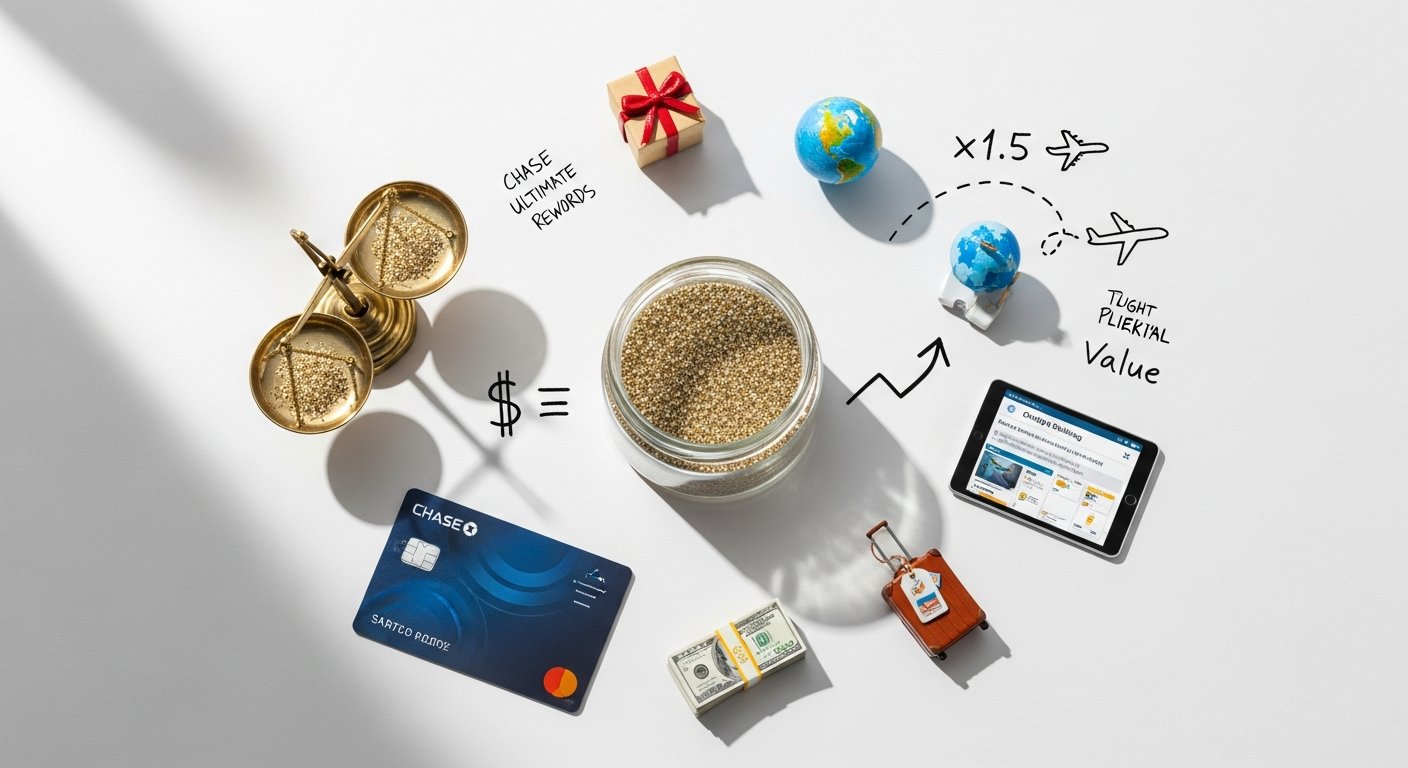
While the aspirational value of Chase Ultimate Rewards points often comes from strategic transfers to airline and hotel partners, it’s essential to understand their baseline value. This provides a floor for what your points are worth and helps in making informed decisions about whether to save for a premium redemption or use them for more immediate needs. The base Chase Ultimate Rewards points value can vary significantly depending on the redemption method, ranging from a standard one cent per point to slightly higher values through specific portals.
Cash Back and Statement Credits: The Baseline Redemption
The most straightforward and often considered “default” redemption for Ultimate Rewards points is for cash back or a statement credit. When you opt for this redemption method, each Ultimate Rewards point is consistently worth 1 cent. For example, 10,000 Ultimate Rewards points can be redeemed for $100 in cash back or applied as a $100 statement credit to your Chase account.
This 1 cent per point (CPP) value is the minimum you should generally accept for your Ultimate Rewards points. While it offers unparalleled simplicity and liquidity, it rarely represents the maximum potential value of your points, especially if you hold a premium Chase Sapphire or Ink Business Preferred card. Redeeming for cash back can be a sensible option if you need immediate funds, prefer simplicity, or struggle to find travel redemptions that offer a higher value. However, for those aiming to maximize their points for travel, cash back should typically be viewed as a fallback rather than a primary strategy.
Gift Cards: Often a Fixed Value Proposition
Redeeming Ultimate Rewards points for gift cards is another option available through the Chase portal. Similar to cash back, gift card redemptions usually provide a fixed value of 1 cent per point. For instance, 5,000 points might get you a $50 gift card to a popular retailer, restaurant, or service.
Occasionally, Chase may offer promotional discounts on specific gift cards, where you might get a $50 gift card for 4,500 points, slightly boosting the Chase Ultimate Rewards points value above 1 CPP. However, these promotions are infrequent and usually for specific brands, making them an inconsistent strategy for value maximization. Like cash back, gift card redemptions are simple and offer tangible value, but they rarely outperform the enhanced values available through the Chase Travel Portal or transfer partners. They can be useful if you frequently shop at a particular merchant and happen to find a discounted gift card that aligns with your spending.
Shopping Portals: The “Shop Through Chase” Pitfall and Potential
Chase also offers the “Shop Through Chase” portal, which allows you to use your Ultimate Rewards points to pay for purchases at various online retailers. While this might seem convenient, it often represents one of the poorer redemption values for your points.
When you use points directly through the “Shop Through Chase” portal, your points are typically valued at 1 cent each. However, the critical pitfall here is that these purchases often don’t earn additional points, and you might miss out on sales or promotions available directly from the retailer. Moreover, using points this way prevents you from earning points on the purchase itself if you were to pay with a credit card. It essentially turns your points into a fixed-value payment method, rather than unlocking their higher potential.
There’s a subtle distinction to be made regarding shopping portals: the “Shop Through Chase” *earning* portal, which allows you to earn *additional* points for clicking through to a retailer and paying with your Chase card, and the “Shop Through Chase” *redemption* portal. The earning portal can be a great way to boost point accumulation on everyday spending, as it’s essentially a bonus on top of your credit card’s regular earning rate. However, using points for *redemption* through “Shop Through Chase” is generally not recommended unless you are truly struggling to find better uses for your points or a very specific item is on a deep discount only available through this redemption method.
In summary, while cash back, gift cards, and direct shopping portal redemptions offer simplicity and a guaranteed 1 cent per point value, they seldom represent the optimal way to utilize your Ultimate Rewards points. The true power and higher Chase Ultimate Rewards points value begins to emerge when looking at travel redemptions, especially through the Chase Travel Portal and, most significantly, through their valuable transfer partners.
[INLINE IMAGE 1: 

Maximizing Value Through the Chase Travel Portal
Beyond the baseline 1 cent per point redemptions, the next tier of increased Chase Ultimate Rewards points value comes into play when redeeming through the Chase Travel Portal. This dedicated booking engine, powered by Expedia, allows cardholders to use their points to book flights, hotels, rental cars, and even cruises directly. The critical distinction here is that holding a premium Chase card significantly boosts the value of your points when used in this manner, effectively offering a built-in discount on travel.
Preferred Card Enhancements: 1.25 Cents Per Point
For cardholders of the Chase Sapphire Preferred Card or the Chase Ink Business Preferred Credit Card, redeeming Ultimate Rewards points through the Chase Travel Portal unlocks a significant value boost. Instead of the standard 1 cent per point, your points become worth 1.25 cents each. This means that 10,000 Ultimate Rewards points can be redeemed for $125 worth of travel through the portal.
This 25% increase in value is a compelling reason for many to hold one of these cards. It provides a straightforward path to getting more value for your points without the complexity often associated with transferring points to loyalty partners. If you prefer the convenience of booking travel directly without navigating airline or hotel loyalty programs, or if you’re booking travel where transfer partners don’t offer a better deal, the 1.25 CPP redemption through the portal is an excellent option. It’s particularly useful for niche flights, independent hotels, or car rentals where dynamic pricing might make traditional points transfers less optimal.
Reserve Card Enhancements: 1.5 Cents Per Point
For those who hold the Chase Sapphire Reserve, the value proposition through the Chase Travel Portal is even more impressive. With this premium card, Ultimate Rewards points are worth a remarkable 1.5 cents each when redeemed for travel through the portal. This means that 10,000 Ultimate Rewards points can be redeemed for $150 worth of travel.
This 50% increase over the base 1 CPP value makes the Chase Sapphire Reserve an incredibly powerful tool for travel redemption. It’s often the most accessible way to achieve a high Chase Ultimate Rewards points value for a wide range of travel expenses. This value boost, combined with the Sapphire Reserve’s other benefits like the annual travel credit and Priority Pass Select membership, cements its status as a top-tier travel card. The 1.5 CPP redemption is excellent for those looking to book specific flights, chain hotels when cash rates are good, or even cruises and car rentals, all while maintaining the simplicity of a single booking platform.
Strategic Booking Tips for the Travel Portal
While the Chase Travel Portal offers enhanced value for premium cardholders, a few strategic considerations can further optimize your redemptions:
- Compare Cash Rates: Always compare the cash price of the travel you’re booking on other sites (like Google Flights, Kayak, directly with airlines/hotels) to the price listed on the Chase Travel Portal. Occasionally, the portal’s pricing might be slightly inflated, which could diminish your effective CPP.
- Check Transfer Partner Availability: Even with the 1.25 CPP or 1.5 CPP boost, sometimes transferring points to an airline or hotel partner can yield an even higher value, especially for premium cabin international flights or luxury hotel stays. Always do a quick check to see if a transfer partner could offer a better deal before committing to the portal.
- Hotel Loyalty Status: Be aware that bookings made through third-party portals like the Chase Travel Portal (which is powered by Expedia) generally do not earn hotel loyalty points or status credits, and existing elite status benefits (like complimentary upgrades, free breakfast, late checkout) may not be honored. If hotel status or earning points is important to you, consider transferring points directly to a hotel partner instead, or booking directly and paying cash.
- Flexibility: The Chase Travel Portal is great for booking specific flights or hotels with less flexibility, as changes or cancellations can sometimes be more complex than booking directly with the provider. Understand the change/cancellation policies before booking.
- Small Bookings: For smaller, less complex travel bookings like a domestic flight or a one-night hotel stay where a transfer partner might not be ideal, the portal offers a very convenient way to redeem points efficiently.
In essence, the Chase Travel Portal provides a valuable middle ground between low-value cash back redemptions and high-value, but sometimes more complex, transfer partner redemptions. It consistently elevates the Chase Ultimate Rewards points value for millions of cardholders, making travel more accessible and affordable.
The Pinnacle of Value: Chase Ultimate Rewards Transfer Partners
For those seeking the absolute maximum Chase Ultimate Rewards points value, transferring points to one of Chase’s airline or hotel loyalty partners is often the most rewarding strategy. This is where points can frequently yield significantly more than 1.5 cents per point, sometimes reaching 3, 4, 5 cents, or even higher, especially for premium cabin international travel or luxury hotel stays. This strategy requires a bit more research and flexibility but can unlock truly aspirational travel experiences.
Understanding 1:1 Point Transfers
One of the most attractive features of Chase Ultimate Rewards is its 1:1 transfer ratio to a select group of leading airline and hotel loyalty programs. This means that 1,000 Ultimate Rewards points convert into 1,000 airline miles or 1,000 hotel points in the partner program. This straightforward conversion eliminates complex calculations and makes it easy to compare the value of an Ultimate Rewards point against the value of a partner’s mile or point.
However, it’s crucial to understand that while the transfer ratio is 1:1, the *value* you get from those miles or points can vary wildly depending on the specific partner, the redemption you choose, and market conditions. For example, 1,000 Hyatt points might reliably get you a good redemption, while 1,000 United miles might not be enough for anything meaningful unless combined with a larger sum. The key is not just the transfer ratio, but the underlying value of the partner currency for your desired redemption.
Airline Transfer Partners: Unlocking Premium Travel
Chase boasts an excellent roster of airline transfer partners, offering access to numerous alliances and routes worldwide. This is typically where the highest Chase Ultimate Rewards points value is found, particularly when redeeming for business or first-class international flights that would otherwise cost thousands of dollars in cash.
Southwest Airlines Rapid Rewards
- Value Proposition: Southwest Rapid Rewards points have a relatively fixed value, typically around 1.4-1.5 cents per point, though this can fluctuate slightly with fare sales. They are revenue-based, meaning the number of points required for a flight generally correlates with the cash price.
- Best Use: Domestic and short-haul international flights. Ideal for those who value flexibility (no change fees), free checked bags, and consistent value. Pairing with the Southwest Companion Pass can effectively double the value of your points for two people traveling together.
United Airlines MileagePlus
- Value Proposition: United miles can offer highly variable value. While domestic economy redemptions might yield around 1.3-1.5 CPP, their true value often shines with international business and first-class flights, especially on Star Alliance partners, where you can easily achieve 3-5 CPP or more.
- Best Use: International premium cabin travel on United or its Star Alliance partners (e.g., Lufthansa, SWISS, ANA, EVA Air). Also good for booking unique experiences through their Excursionist Perk.
Hyatt Globalist & World of Hyatt Program Synergy
- Value Proposition: World of Hyatt points are widely considered the most valuable hotel currency. They consistently offer excellent redemptions, often yielding 2+ cents per point for luxury hotels.
- Best Use: Luxury hotel stays globally. Category 1-4 free night certificates (from certain Hyatt cards) can be paired with points for even greater value. High-end properties like Park Hyatt or Andaz often provide incredible value, far exceeding the cash price.
Marriott Bonvoy, IHG One Rewards, and Other Hotel Partners
- Marriott Bonvoy: While Marriott points can occasionally offer decent value (especially for their high-end brands or 5th-night-free redemptions), their average value is often lower than Hyatt, usually around 0.7-0.8 CPP.
- IHG One Rewards: IHG points generally offer lower value, often around 0.5-0.6 CPP. However, specific promotions or their “fourth night free” benefit (with certain co-branded cards) can occasionally boost this.
- Best Use: If you’re loyal to Marriott or IHG, transferring points can make sense, particularly if cash rates are exceptionally high, or if you’re topping off an existing points balance for a specific redemption.
Virgin Atlantic Flying Club and Other International Airlines
- Virgin Atlantic Flying Club: Often referred to as a “partner redemption powerhouse,” Virgin Atlantic miles can unlock incredible value, especially for premium cabin flights on partner airlines like ANA (All Nippon Airways) for their renowned first and business class. It’s common to see values of 5-10+ CPP with these specific redemptions.
- Other Partners: Other partners like British Airways Executive Club (great for short-haul flights to/from Europe and within certain regions), Air France/KLM Flying Blue (often has promo awards with discounted rates), Iberia Plus, Aer Lingus AerClub, and Singapore Airlines KrisFlyer (excellent for their own premium cabins) each have their own unique sweet spots and ideal uses.
Hotel Transfer Partners: From Economy Stays to Luxury Suites
While airline transfers often grab headlines for ultra-high value, hotel transfers shouldn’t be overlooked. Hyatt, in particular, consistently offers excellent value. Transfers to Marriott and IHG can also be useful in specific scenarios.
- World of Hyatt: As mentioned, Hyatt is a standout. Whether it’s a Category 1 property for 5,000 points or a top-tier luxury resort for 30,000-40,000 points, the cash equivalent is often much higher than the points cost. This makes Hyatt the go-to hotel transfer partner for many UR enthusiasts.
- Marriott Bonvoy: Despite generally lower per-point value than Hyatt, Marriott’s massive global footprint means you’ll always find a property. Transfers can be worthwhile for aspirational stays (e.g., Ritz-Carlton) or for taking advantage of the “stay 4 nights, get the 5th night free” benefit on award bookings.
- IHG One Rewards: Less frequently recommended for direct transfers due to lower baseline value, but can be useful for specific PointBreaks promotions (when available) or for topping up an account for a hotel that would otherwise be very expensive in cash.
When to Transfer and When Not To
Deciding when to transfer points is critical to maximizing your Chase Ultimate Rewards points value. Here are key considerations:
- Transfer Only When You Have a Specific Redemption in Mind: Points transfers are irreversible. Once you move your UR points to an airline or hotel program, you cannot get them back. Only transfer when you’ve confirmed award availability for your desired dates and destination.
- Compare Value: Always compare the value you’d get from transferring points (e.g., how many points for a flight that costs $X in cash?) versus redeeming through the Chase Travel Portal (1.25 CPP or 1.5 CPP) or even cash back (1 CPP).
- Consider Transfer Bonuses: Chase occasionally offers transfer bonuses to specific partners (e.g., 20% more points when you transfer to Virgin Atlantic). These can dramatically increase your effective CPP. Always factor these in when available.
- Flexibility: Keep your points in your Chase Ultimate Rewards account for as long as possible to maintain maximum flexibility. This hedges against potential devaluations by partner programs and allows you to pivot if your travel plans change.
By understanding the nuances of each transfer partner and adopting a strategic approach, you can unlock incredible travel experiences that would be prohibitively expensive to book with cash, truly realizing the pinnacle of Chase Ultimate Rewards points value.
[INLINE IMAGE 2: 
Advanced Redemption Strategies and Sweet Spots
Beyond the fundamental ways to redeem points, there are several advanced strategies and “sweet spots” within the Chase Ultimate Rewards ecosystem that can dramatically elevate your Chase Ultimate Rewards points value. These tactics often involve leveraging card synergies, identifying specific high-value redemptions with transfer partners, and taking advantage of unique program features.
The Chase Trifecta (and Quadfecta): Synergistic Earning
The “Chase Trifecta” is a popular strategy designed to maximize point earning across various spending categories. It typically involves holding one premium Sapphire card (Sapphire Preferred or Sapphire Reserve) and a combination of no-annual-fee Freedom and/or Ink Business cards. The beauty of this strategy is that points earned on the no-annual-fee cards (like Freedom Flex for rotating categories or Freedom Unlimited for flat-rate earning) can be transferred to the premium Sapphire card. Once transferred, these points then gain the enhanced redemption capabilities (1.25 or 1.5 CPP via the travel portal) and, critically, access to Chase’s valuable transfer partners.
- Classic Trifecta: Chase Sapphire Preferred/Reserve + Chase Freedom Flex + Chase Freedom Unlimited. This covers dining, travel, rotating categories, and all unbonused spending.
- Business Trifecta: Chase Ink Business Preferred + Chase Ink Business Cash + Chase Ink Business Unlimited. Similar structure but tailored for business expenses.
- Quadfecta/Expanded Trifecta: Combining elements of both personal and business cards, such as Sapphire Reserve + Freedom Flex + Freedom Unlimited + Ink Business Cash. This offers unparalleled earning rates across an even wider spectrum of spending.
The core principle is to earn points at the highest possible rate using the right card for each purchase, then pool those points into the account linked to your premium travel card to unlock their maximum redemption potential. This systematic approach ensures that every dollar spent contributes meaningfully to a robust Ultimate Rewards balance, boosting your overall Chase Ultimate Rewards points value significantly.
Hyatt Sweet Spots: Unlocking Outsized Value
World of Hyatt is consistently lauded as Chase’s most valuable hotel transfer partner. Its award chart, which charges a fixed number of points per night based on hotel category, often provides incredible value compared to cash rates, especially at higher-end properties. Here are some examples of Hyatt sweet spots:
- Category 1 & 2 Hotels: Often 5,000-8,000 points per night. These can include perfectly adequate business hotels or even some resorts in less-trafficked areas, easily providing 2+ CPP.
- Category 4 Hotels: Max 15,000 points per night. This is a crucial sweet spot because free night certificates from the Chase World of Hyatt credit card (earned annually or through spending) are often valid for Category 1-4 hotels. Redeeming 15,000 points for a hotel that costs $300-$400+ in cash is common, yielding 2-2.5 CPP.
- Luxury Park Hyatt/Andaz Properties: While top-tier properties can cost 25,000-40,000 points per night, they often command cash rates of $600-$1,000+ per night. Redeeming points here can easily push your Chase Ultimate Rewards points value to 3 CPP or more, especially for aspirational stays in cities like Tokyo, Paris, or Sydney.
Always check the cash rate for a Hyatt property before transferring, but more often than not, Hyatt redemptions offer an outstanding return on your Ultimate Rewards points.
International Business and First Class Through Airline Partners
This is arguably where Chase Ultimate Rewards points achieve their peak value. Redeeming for international business or first-class flights that would otherwise cost thousands of dollars can push your CPP well into the 5-10+ range. The key is to leverage the right transfer partner for the right route and airline.
- Virgin Atlantic Flying Club for ANA First Class: One of the most famous sweet spots. You can book ANA First Class from the US to Japan for as few as 110,000-120,000 Virgin Atlantic miles roundtrip (depending on departure city). A cash ticket for this often costs $10,000-$20,000+, leading to an astronomical Chase Ultimate Rewards points value.
- United MileagePlus for Star Alliance: While United’s own awards can fluctuate, using MileagePlus to book business class on partners like SWISS, EVA Air, or Turkish Airlines can still offer excellent value, especially to Europe or Asia.
- Exploring other partner airlines like Singapore Airlines KrisFlyer for their Suites Class (though fuel surcharges can be a factor) or Air France/KLM Flying Blue for their discounted Promo Rewards can also yield outsized value for specific routes.
These types of redemptions require flexibility, advance planning, and patience to find award availability, but the reward is a truly luxurious travel experience at a fraction of the cash cost.
“Lie-Flat” Dreams: Specific Airline Partner Examples
The dream of “lie-flat” business or first class is often a driving force for accumulating Ultimate Rewards. Here are some specific examples of how UR points facilitate this:
- ANA First Class via Virgin Atlantic: As mentioned, flying ANA’s “The Room” or “The Suite” from the US to Tokyo is a quintessential lie-flat experience that provides immense value.
- Air France Business Class via Flying Blue: Flying Blue’s dynamic pricing means you need to search for deals, but their business class often offers a comfortable lie-flat seat from the US to Europe, especially during Promo Rewards sales.
- United Polaris Business Class: Bookable directly through United MileagePlus, Polaris offers a highly regarded lie-flat product on international routes, providing a solid business class experience.
- Turkish Airlines Business Class via United MileagePlus: Turkish Airlines, a Star Alliance partner, offers a strong business class product with lie-flat seats and excellent catering. Booking via United can be a great use of UR points.
Leveraging Transfer Bonuses (When Available)
Chase occasionally offers promotional bonuses when transferring points to specific airline or hotel partners. These bonuses can range from 20% to 50% extra points and are a golden opportunity to supercharge your redemptions. For example, a 30% transfer bonus to Virgin Atlantic means that 10,000 Ultimate Rewards points become 13,000 Virgin Atlantic miles, instantly boosting your effective Chase Ultimate Rewards points value by 30% for that specific partner.
Always keep an eye out for these announcements from Chase. If you have a specific transfer partner redemption in mind, waiting for a transfer bonus can make a significant difference in the number of points you need to spend, making your existing points go much further.
Combining Points Across Accounts
Chase allows you to combine Ultimate Rewards points across your personal and business cards, as well as with other members of your household. This is a critical strategy for the Trifecta approach, but also for general maximization.
- You can transfer points between your own Chase cards (e.g., from Freedom Unlimited to Sapphire Reserve).
- You can transfer points to another Chase Ultimate Rewards cardholder living at the same physical address (e.g., from your account to your spouse’s Sapphire Preferred account).
This flexibility ensures that points earned on lower-tier cards can be elevated by combining them with a premium card, unlocking transfer partner access and higher portal redemption values for the entire household’s accumulated points. This pooling capability is a powerful feature that distinguishes Chase from some other rewards programs.
Factors Influencing Your Personal Chase Ultimate Rewards Points Value
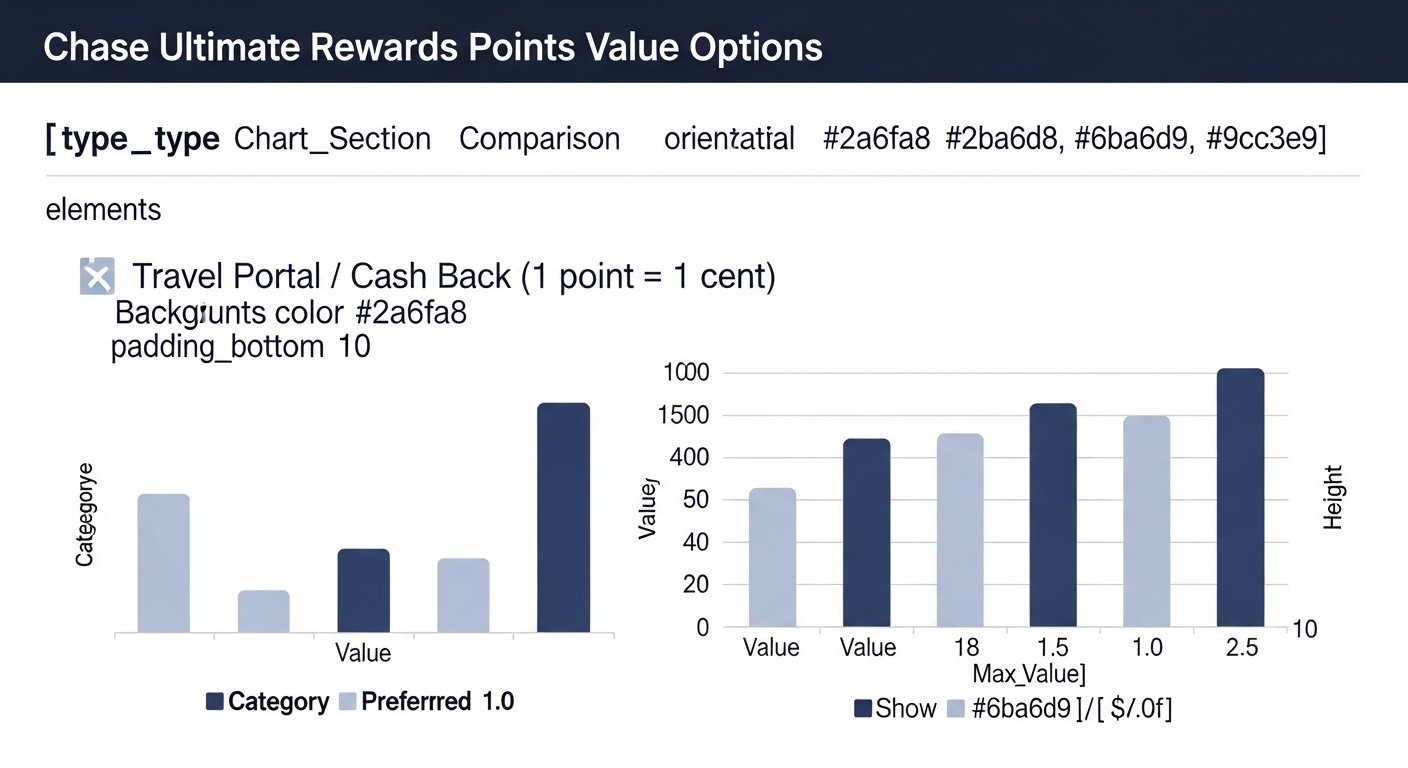
While we can establish general benchmarks for Chase Ultimate Rewards points value, the “best” value is ultimately subjective and depends heavily on individual circumstances, preferences, and financial habits. What constitutes an excellent redemption for one person might be suboptimal for another. Understanding these influencing factors is key to crafting a personalized strategy that truly maximizes your points.
Your Travel Habits and Flexibility
The single biggest determinant of your personal Ultimate Rewards points value is your travel profile:
- Travel Frequency: If you travel often, especially internationally or in premium cabins, you’ll naturally derive much higher value from transferring points to airline partners for business/first-class flights.
- Destination Preferences: If you primarily travel to destinations with expensive cash rates for flights and hotels, points can offer tremendous savings and therefore higher value. Conversely, if you only travel domestically to low-cost areas, the outsized value might be harder to achieve.
- Flexibility with Dates: The most valuable award redemptions (e.g., aspirational international business class) often require flexibility with travel dates, as award availability can be scarce. If your travel dates are rigid, you might find it harder to hit the highest CPP redemptions.
- Travel Style: Do you prefer luxury hotels, budget accommodations, or cruising? Your preference will dictate which redemption channels (Hyatt transfers, Chase Travel Portal, or even cash back) offer the most practical value for you.
A traveler who can spontaneously book an ANA First Class flight with Virgin Atlantic miles will achieve a far greater effective CPP than someone who only uses points for domestic economy flights that are already inexpensive in cash.
The Cost of Cash: Opportunity Cost Analysis
When you redeem points, you’re essentially choosing to forgo the cash equivalent of those points. It’s important to consider the “opportunity cost” – what else could you have done with that money if you hadn’t used points, or what else could you have done with those points if you hadn’t used them for this specific redemption?
- Emergency Fund: If your emergency fund is thin, a 1 CPP cash back redemption might be more valuable to you than an aspirational flight if it prevents you from incurring high-interest debt.
- Investment Potential: Some argue that if you can reliably get 1.5 CPP on travel, but would have otherwise used cash for that travel, those points essentially saved you cash that could have been invested. However, this is a complex calculation and highly dependent on market performance.
- Desired Experience: Sometimes the “value” isn’t purely monetary. The experience of flying in a lie-flat seat or staying in a luxury hotel that you would never pay cash for can provide an intangible value that outweighs a strict CPP calculation.
Understanding your personal financial priorities and what you would genuinely spend cash on helps contextualize the true worth of your Ultimate Rewards redemptions.
Card Ownership and Premium Card Benefits (Sapphire Preferred vs. Reserve)
The specific Chase cards you hold dramatically impact your potential Chase Ultimate Rewards points value:
- No Premium Card: Without a Chase Sapphire Preferred, Sapphire Reserve, or Ink Business Preferred, your Ultimate Rewards points are generally capped at 1 CPP for cash back, gift cards, or basic travel portal bookings. You also cannot transfer to airline/hotel partners. This severely limits your value potential.
- Sapphire Preferred/Ink Business Preferred: Unlocks 1.25 CPP through the travel portal and access to 1:1 transfer partners. This is a significant jump in potential value.
- Sapphire Reserve: Offers the highest portal value at 1.5 CPP and also access to 1:1 transfer partners. The travel credit and other benefits further enhance the overall value proposition, often offsetting the higher annual fee for frequent travelers.
The ability to transfer points from no-annual-fee cards (like Freedom Flex/Unlimited or
The Ultimate Guide to Chase Ultimate Rewards Points Value: Maximize Your Travel and Cash Back
Affiliate disclosure: This article may contain affiliate links. Recommendations are independent and editorially driven.
For anyone navigating the complex world of credit card rewards, understanding the intrinsic and potential Chase Ultimate Rewards points value is paramount. Chase Ultimate Rewards (UR) stands as one of the most highly coveted and flexible points currencies available today. With a diverse portfolio of credit cards designed for different spending habits and a robust ecosystem of redemption options, Chase UR points offer unparalleled opportunities for value maximization.
This comprehensive guide from goldpoints will delve deep into every facet of Chase Ultimate Rewards points value. We’ll explore the foundational ways to earn and redeem points, uncover the lucrative strategies that unlock premium travel experiences, and meticulously compare the value propositions across various redemption categories. Whether you’re a seasoned points and miles enthusiast or just beginning your journey, our aim is to equip you with the knowledge and tactics to consistently achieve the highest possible value from your Chase Ultimate Rewards points in 2026 and beyond.
From straightforward cash back redemptions to aspirational first-class international flights and luxurious hotel stays, the true power of Chase UR points lies in their versatility and the strategic choices you make. We’ll break down the redemption landscape, highlight transfer partners, pinpoint sweet spots, and even compare Chase UR to its closest competitors, ensuring you have a complete picture of why these points are so highly regarded and how to make them work best for your financial and travel goals.
Understanding Chase Ultimate Rewards: A Foundation
Before we can truly dissect the varying Chase Ultimate Rewards points value, it’s crucial to establish a solid understanding of what these points are, how they’re earned, and the primary credit cards within the Chase ecosystem that generate them. Ultimate Rewards is Chase’s proprietary rewards program, distinct from other bank-specific points systems like American Express Membership Rewards or Citi ThankYou Points. Its flexibility, coupled with high-earning potential on everyday spending, makes it a cornerstone for many points and miles strategies.
What are Ultimate Rewards Points?
Ultimate Rewards points are a proprietary currency offered by Chase Bank through a select range of their credit cards. Unlike traditional airline miles or hotel points which are typically tied to a single loyalty program, Ultimate Rewards points are highly flexible. They exist as a bank currency that can be redeemed in multiple ways: for cash back, gift cards, travel booked through Chase’s portal, or most powerfully, transferred to a diverse group of airline and hotel loyalty programs. This flexibility is a primary driver of their high perceived and actual value.
The beauty of Ultimate Rewards points lies in their fungibility. A single point earned on a Chase Sapphire Preferred Card holds the same core value as a point earned on a Chase Freedom Unlimited or a Chase Ink Business Preferred card, assuming they are combined into an account linked to a premium Chase card. This pooling capability is a key element for maximizing redemption value, allowing points earned on everyday spend cards to be elevated to the higher value redemptions typically associated with premium travel cards.
How Ultimate Rewards Points are Earned
Earning Ultimate Rewards points is primarily done through specific Chase credit cards, each offering different bonus categories and earning rates. The most common ways to accrue points include:
- Sign-up Bonuses: The initial bonus offered when opening a new Chase Ultimate Rewards-earning credit card and meeting a minimum spending requirement within a set timeframe. These bonuses are often the largest single influx of points you’ll receive.
- Category Bonuses: Many Chase cards offer accelerated earning rates (e.g., 2x, 3x, 5x points per dollar) on specific spending categories such as dining, travel, gas, groceries, or office supplies. Strategically using the right card for the right purchase is essential for maximizing earnings.
- Everyday Spending: All Ultimate Rewards cards earn at least 1 point per dollar on non-bonus category spending. Some cards, like the Chase Freedom Unlimited, offer a flat higher rate (e.g., 1.5x points per dollar) on all non-category spend.
- Chase Offers: These are targeted, opt-in discounts or bonus points opportunities available through your Chase online account, often for specific merchants.
- Shop Through Chase Portal: An online shopping portal that offers bonus points for purchases made at participating retailers when initiated through the portal.
Understanding which card to use for which purchase is a fundamental aspect of accumulating a significant points balance. For instance, using a Chase Sapphire Preferred for dining and travel, a Chase Freedom Flex for its quarterly rotating bonus categories, and a Chase Freedom Unlimited for all other non-category spending creates a powerful earning “trifecta” that ensures optimal point accumulation across nearly all spending types.
Key Chase Credit Cards Earning Ultimate Rewards
The Chase Ultimate Rewards ecosystem is built around a family of cards that work synergistically. These can be broadly categorized into premium travel cards and no-annual-fee everyday spending cards:
Premium Travel Cards:
- Chase Sapphire Reserve: Offers 3x points on dining and travel (after earning the $300 annual travel credit), 1x on all other purchases. Points are worth 1.5 cents each when redeemed through the Chase Travel Portal.
- Chase Sapphire Preferred Card: Offers 3x points on dining, select streaming services, and online grocery purchases (excluding Walmart and Target), 2x points on all other travel, and 1x on all other purchases. Points are worth 1.25 cents each when redeemed through the Chase Travel Portal.
- Chase Ink Business Preferred Credit Card: A business card offering 3x points on the first $150,000 spent annually on travel, shipping purchases, internet, cable, phone services, and advertising purchases made with social media sites and search engines, and 1x on all other purchases. Points are worth 1.25 cents each when redeemed through the Chase Travel Portal.
No-Annual-Fee Everyday Spending Cards:
- Chase Freedom Flex: Offers 5x points on rotating quarterly bonus categories (up to $1,500 in spending per quarter), 5x on travel purchased through Chase Ultimate Rewards, 3x on dining and drugstores, and 1x on all other purchases.
- Chase Freedom Unlimited: Offers 5x points on travel purchased through Chase Ultimate Rewards, 3x on dining and drugstores, and 1.5x on all other purchases.
- Chase Ink Business Cash Credit Card: A business card offering 5x points on the first $25,000 spent annually at office supply stores and on internet, cable, and phone services; 2x points on the first $25,000 spent annually at gas stations and restaurants; and 1x on all other purchases.
- Chase Ink Business Unlimited Credit Card: A business card offering 1.5x points on all purchases.
The critical strategy here is that points earned on the no-annual-fee cards can be combined and transferred to a premium Sapphire or Ink Business Preferred card. Once transferred, these points then gain the enhanced redemption values and transfer partner access of the premium card, significantly boosting their potential Chase Ultimate Rewards points value. This synergistic relationship is a cornerstone of maximizing the program.
Decoding the Base Value of Chase Ultimate Rewards Points
While the aspirational value of Chase Ultimate Rewards points often comes from strategic transfers to airline and hotel partners, it’s essential to understand their baseline value. This provides a floor for what your points are worth and helps in making informed decisions about whether to save for a premium redemption or use them for more immediate needs. The base Chase Ultimate Rewards points value can vary significantly depending on the redemption method, ranging from a standard one cent per point to slightly higher values through specific portals.
Cash Back and Statement Credits: The Baseline Redemption
The most straightforward and often considered “default” redemption for Ultimate Rewards points is for cash back or a statement credit. When you opt for this redemption method, each Ultimate Rewards point is consistently worth 1 cent. For example, 10,000 Ultimate Rewards points can be redeemed for $100 in cash back or applied as a $100 statement credit to your Chase account.
This 1 cent per point (CPP) value is the minimum you should generally accept for your Ultimate Rewards points. While it offers unparalleled simplicity and liquidity, it rarely represents the maximum potential value of your points, especially if you hold a premium Chase Sapphire or Ink Business Preferred card. Redeeming for cash back can be a sensible option if you need immediate funds, prefer simplicity, or struggle to find travel redemptions that offer a higher value. However, for those aiming to maximize their points for travel, cash back should typically be viewed as a fallback rather than a primary strategy.
Gift Cards: Often a Fixed Value Proposition
Redeeming Ultimate Rewards points for gift cards is another option available through the Chase portal. Similar to cash back, gift card redemptions usually provide a fixed value of 1 cent per point. For instance, 5,000 points might get you a $50 gift card to a popular retailer, restaurant, or service.
Occasionally, Chase may offer promotional discounts on specific gift cards, where you might get a $50 gift card for 4,500 points, slightly boosting the Chase Ultimate Rewards points value above 1 CPP. However, these promotions are infrequent and usually for specific brands, making them an inconsistent strategy for value maximization. Like cash back, gift card redemptions are simple and offer tangible value, but they rarely outperform the enhanced values available through the Chase Travel Portal or transfer partners. They can be useful if you frequently shop at a particular merchant and happen to find a discounted gift card that aligns with your spending.
Shopping Portals: The “Shop Through Chase” Pitfall and Potential
Chase also offers the “Shop Through Chase” portal, which allows you to use your Ultimate Rewards points to pay for purchases at various online retailers. While this might seem convenient, it often represents one of the poorer redemption values for your points.
When you use points directly through the “Shop Through Chase” portal, your points are typically valued at 1 cent each. However, the critical pitfall here is that these purchases often don’t earn additional points, and you might miss out on sales or promotions available directly from the retailer. Moreover, using points this way prevents you from earning points on the purchase itself if you were to pay with a credit card. It essentially turns your points into a fixed-value payment method, rather than unlocking their higher potential.
There’s a subtle distinction to be made regarding shopping portals: the “Shop Through Chase” *earning* portal, which allows you to earn *additional* points for clicking through to a retailer and paying with your Chase card, and the “Shop Through Chase” *redemption* portal. The earning portal can be a great way to boost point accumulation on everyday spending, as it’s essentially a bonus on top of your credit card’s regular earning rate. However, using points for *redemption* through “Shop Through Chase” is generally not recommended unless you are truly struggling to find better uses for your points or a very specific item is on a deep discount only available through this redemption method.
In summary, while cash back, gift cards, and direct shopping portal redemptions offer simplicity and a guaranteed 1 cent per point value, they seldom represent the optimal way to utilize your Ultimate Rewards points. The true power and higher Chase Ultimate Rewards points value begins to emerge when looking at travel redemptions, especially through the Chase Travel Portal and, most significantly, through their valuable transfer partners.
[INLINE IMAGE 1:
Maximizing Value Through the Chase Travel Portal
Beyond the baseline 1 cent per point redemptions, the next tier of increased Chase Ultimate Rewards points value comes into play when redeeming through the Chase Travel Portal. This dedicated booking engine, powered by Expedia, allows cardholders to use their points to book flights, hotels, rental cars, and even cruises directly. The critical distinction here is that holding a premium Chase card significantly boosts the value of your points when used in this manner, effectively offering a built-in discount on travel.
Preferred Card Enhancements: 1.25 Cents Per Point
For cardholders of the Chase Sapphire Preferred Card or the Chase Ink Business Preferred Credit Card, redeeming Ultimate Rewards points through the Chase Travel Portal unlocks a significant value boost. Instead of the standard 1 cent per point, your points become worth 1.25 cents each. This means that 10,000 Ultimate Rewards points can be redeemed for $125 worth of travel through the portal.
This 25% increase in value is a compelling reason for many to hold one of these cards. It provides a straightforward path to getting more value for your points without the complexity often associated with transferring points to loyalty partners. If you prefer the convenience of booking travel directly without navigating airline or hotel loyalty programs, or if you’re booking travel where transfer partners don’t offer a better deal, the 1.25 CPP redemption through the portal is an excellent option. It’s particularly useful for niche flights, independent hotels, or car rentals where dynamic pricing might make traditional points transfers less optimal.
Reserve Card Enhancements: 1.5 Cents Per Point
For those who hold the Chase Sapphire Reserve, the value proposition through the Chase Travel Portal is even more impressive. With this premium card, Ultimate Rewards points are worth a remarkable 1.5 cents each when redeemed for travel through the portal. This means that 10,000 Ultimate Rewards points can be redeemed for $150 worth of travel.
This 50% increase over the base 1 CPP value makes the Chase Sapphire Reserve an incredibly powerful tool for travel redemption. It’s often the most accessible way to achieve a high Chase Ultimate Rewards points value for a wide range of travel expenses. This value boost, combined with the Sapphire Reserve’s other benefits like the annual travel credit and Priority Pass Select membership, cements its status as a top-tier travel card. The 1.5 CPP redemption is excellent for those looking to book specific flights, chain hotels when cash rates are good, or even cruises and car rentals, all while maintaining the simplicity of a single booking platform.
Strategic Booking Tips for the Travel Portal
While the Chase Travel Portal offers enhanced value for premium cardholders, a few strategic considerations can further optimize your redemptions:
- Compare Cash Rates: Always compare the cash price of the travel you’re booking on other sites (like Google Flights, Kayak, directly with airlines/hotels) to the price listed on the Chase Travel Portal. Occasionally, the portal’s pricing might be slightly inflated, which could diminish your effective CPP.
- Check Transfer Partner Availability: Even with the 1.25 CPP or 1.5 CPP boost, sometimes transferring points to an airline or hotel partner can yield an even higher value, especially for premium cabin international flights or luxury hotel stays. Always do a quick check to see if a transfer partner could offer a better deal before committing to the portal.
- Hotel Loyalty Status: Be aware that bookings made through third-party portals like the Chase Travel Portal (which is powered by Expedia) generally do not earn hotel loyalty points or status credits, and existing elite status benefits (like complimentary upgrades, free breakfast, late checkout) may not be honored. If hotel status or earning points is important to you, consider transferring points directly to a hotel partner instead, or booking directly and paying cash.
- Flexibility: The Chase Travel Portal is great for booking specific flights or hotels with less flexibility, as changes or cancellations can sometimes be more complex than booking directly with the provider. Understand the change/cancellation policies before booking.
- Small Bookings: For smaller, less complex travel bookings like a domestic flight or a one-night hotel stay where a transfer partner might not be ideal, the portal offers a very convenient way to redeem points efficiently.
In essence, the Chase Travel Portal provides a valuable middle ground between low-value cash back redemptions and high-value, but sometimes more complex, transfer partner redemptions. It consistently elevates the Chase Ultimate Rewards points value for millions of cardholders, making travel more accessible and affordable.
The Pinnacle of Value: Chase Ultimate Rewards Transfer Partners
For those seeking the absolute maximum Chase Ultimate Rewards points value, transferring points to one of Chase’s airline or hotel loyalty partners is often the most rewarding strategy. This is where points can frequently yield significantly more than 1.5 cents per point, sometimes reaching 3, 4, 5 cents, or even higher, especially for premium cabin international travel or luxury hotel stays. This strategy requires a bit more research and flexibility but can unlock truly aspirational travel experiences.
Understanding 1:1 Point Transfers
One of the most attractive features of Chase Ultimate Rewards is its 1:1 transfer ratio to a select group of leading airline and hotel loyalty programs. This means that 1,000 Ultimate Rewards points convert into 1,000 airline miles or 1,000 hotel points in the partner program. This straightforward conversion eliminates complex calculations and makes it easy to compare the value of an Ultimate Rewards point against the value of a partner’s mile or point.
However, it’s crucial to understand that while the transfer ratio is 1:1, the *value* you get from those miles or points can vary wildly depending on the specific partner, the redemption you choose, and market conditions. For example, 1,000 Hyatt points might reliably get you a good redemption, while 1,000 United miles might not be enough for anything meaningful unless combined with a larger sum. The key is not just the transfer ratio, but the underlying value of the partner currency for your desired redemption.
Airline Transfer Partners: Unlocking Premium Travel
Chase boasts an excellent roster of airline transfer partners, offering access to numerous alliances and routes worldwide. This is typically where the highest Chase Ultimate Rewards points value is found, particularly when redeeming for business or first-class international flights that would otherwise cost thousands of dollars in cash.
Southwest Airlines Rapid Rewards
- Value Proposition: Southwest Rapid Rewards points have a relatively fixed value, typically around 1.4-1.5 cents per point, though this can fluctuate slightly with fare sales. They are revenue-based, meaning the number of points required for a flight generally correlates with the cash price.
- Best Use: Domestic and short-haul international flights. Ideal for those who value flexibility (no change fees), free checked bags, and consistent value. Pairing with the Southwest Companion Pass can effectively double the value of your points for two people traveling together.
United Airlines MileagePlus
- Value Proposition: United miles can offer highly variable value. While domestic economy redemptions might yield around 1.3-1.5 CPP, their true value often shines with international business and first-class flights, especially on Star Alliance partners, where you can easily achieve 3-5 CPP or more.
- Best Use: International premium cabin travel on United or its Star Alliance partners (e.g., Lufthansa, SWISS, ANA, EVA Air). Also good for booking unique experiences through their Excursionist Perk.
Hyatt Globalist & World of Hyatt Program Synergy
- Value Proposition: World of Hyatt points are widely considered the most valuable hotel currency. They consistently offer excellent redemptions, often yielding 2+ cents per point for luxury hotels.
- Best Use: Luxury hotel stays globally. Category 1-4 free night certificates (from certain Hyatt cards) can be paired with points for even greater value. High-end properties like Park Hyatt or Andaz often provide incredible value, far exceeding the cash price.
Marriott Bonvoy, IHG One Rewards, and Other Hotel Partners
- Marriott Bonvoy: While Marriott points can occasionally offer decent value (especially for their high-end brands or 5th-night-free redemptions), their average value is often lower than Hyatt, usually around 0.7-0.8 CPP.
- IHG One Rewards: IHG points generally offer lower value, often around 0.5-0.6 CPP. However, specific promotions or their “fourth night free” benefit (with certain co-branded cards) can occasionally boost this.
- Best Use: If you’re loyal to Marriott or IHG, transferring points can make sense, particularly if cash rates are exceptionally high, or if you’re topping off an existing points balance for a specific redemption.
Virgin Atlantic Flying Club and Other International Airlines
- Virgin Atlantic Flying Club: Often referred to as a “partner redemption powerhouse,” Virgin Atlantic miles can unlock incredible value, especially for premium cabin flights on partner airlines like ANA (All Nippon Airways) for their renowned first and business class. It’s common to see values of 5-10+ CPP with these specific redemptions.
- Other Partners: Other partners like British Airways Executive Club (great for short-haul flights to/from Europe and within certain regions), Air France/KLM Flying Blue (often has promo awards with discounted rates), Iberia Plus, Aer Lingus AerClub, and Singapore Airlines KrisFlyer (excellent for their own premium cabins) each have their own unique sweet spots and ideal uses.
Hotel Transfer Partners: From Economy Stays to Luxury Suites
While airline transfers often grab headlines for ultra-high value, hotel transfers shouldn’t be overlooked. Hyatt, in particular, consistently offers excellent value. Transfers to Marriott and IHG can also be useful in specific scenarios.
- World of Hyatt: As mentioned, Hyatt is a standout. Whether it’s a Category 1 property for 5,000 points or a top-tier luxury resort for 30,000-40,000 points, the cash equivalent is often much higher than the points cost. This makes Hyatt the go-to hotel transfer partner for many UR enthusiasts.
- Marriott Bonvoy: Despite generally lower per-point value than Hyatt, Marriott’s massive global footprint means you’ll always find a property. Transfers can be worthwhile for aspirational stays (e.g., Ritz-Carlton) or for taking advantage of the “stay 4 nights, get the 5th night free” benefit on award bookings.
- IHG One Rewards: Less frequently recommended for direct transfers due to lower baseline value, but can be useful for specific PointBreaks promotions (when available) or for topping up an account for a hotel that would otherwise be very expensive in cash.
When to Transfer and When Not To
Deciding when to transfer points is critical to maximizing your Chase Ultimate Rewards points value. Here are key considerations:
- Transfer Only When You Have a Specific Redemption in Mind: Points transfers are irreversible. Once you move your UR points to an airline or hotel program, you cannot get them back. Only transfer when you’ve confirmed award availability for your desired dates and destination.
- Compare Value: Always compare the value you’d get from transferring points (e.g., how many points for a flight that costs $X in cash?) versus redeeming through the Chase Travel Portal (1.25 CPP or 1.5 CPP) or even cash back (1 CPP).
- Consider Transfer Bonuses: Chase occasionally offers transfer bonuses to specific partners (e.g., 20% more points when you transfer to Virgin Atlantic). These can dramatically increase your effective CPP. Always factor these in when available.
- Flexibility: Keep your points in your Chase Ultimate Rewards account for as long as possible to maintain maximum flexibility. This hedges against potential devaluations by partner programs and allows you to pivot if your travel plans change.
By understanding the nuances of each transfer partner and adopting a strategic approach, you can unlock incredible travel experiences that would be prohibitively expensive to book with cash, truly realizing the pinnacle of Chase Ultimate Rewards points value.
[INLINE IMAGE 2:
Advanced Redemption Strategies and Sweet Spots
Beyond the fundamental ways to redeem points, there are several advanced strategies and “sweet spots” within the Chase Ultimate Rewards ecosystem that can dramatically elevate your Chase Ultimate Rewards points value. These tactics often involve leveraging card synergies, identifying specific high-value redemptions with transfer partners, and taking advantage of unique program features.
The Chase Trifecta (and Quadfecta): Synergistic Earning
The “Chase Trifecta” is a popular strategy designed to maximize point earning across various spending categories. It typically involves holding one premium Sapphire card (Sapphire Preferred or Sapphire Reserve) and a combination of no-annual-fee Freedom and/or Ink Business cards. The beauty of this strategy is that points earned on the no-annual-fee cards (like Freedom Flex for rotating categories or Freedom Unlimited for flat-rate earning) can be transferred to the premium Sapphire card. Once transferred, these points then gain the enhanced redemption capabilities (1.25 or 1.5 CPP via the travel portal) and, critically, access to Chase’s valuable transfer partners.
- Classic Trifecta: Chase Sapphire Preferred/Reserve + Chase Freedom Flex + Chase Freedom Unlimited. This covers dining, travel, rotating categories, and all unbonused spending.
- Business Trifecta: Chase Ink Business Preferred + Chase Ink Business Cash + Chase Ink Business Unlimited. Similar structure but tailored for business expenses.
- Quadfecta/Expanded Trifecta: Combining elements of both personal and business cards, such as Sapphire Reserve + Freedom Flex + Freedom Unlimited + Ink Business Cash. This offers unparalleled earning rates across an even wider spectrum of spending.
The core principle is to earn points at the highest possible rate using the right card for each purchase, then pool those points into the account linked to your premium travel card to unlock their maximum redemption potential. This systematic approach ensures that every dollar spent contributes meaningfully to a robust Ultimate Rewards balance, boosting your overall Chase Ultimate Rewards points value significantly.
Hyatt Sweet Spots: Unlocking Outsized Value
World of Hyatt is consistently lauded as Chase’s most valuable hotel transfer partner. Its award chart, which charges a fixed number of points per night based on hotel category, often provides incredible value compared to cash rates, especially at higher-end properties. Here are some examples of Hyatt sweet spots:
- Category 1 & 2 Hotels: Often 5,000-8,000 points per night. These can include perfectly adequate business hotels or even some resorts in less-trafficked areas, easily providing 2+ CPP.
- Category 4 Hotels: Max 15,000 points per night. This is a crucial sweet spot because free night certificates from the Chase World of Hyatt credit card (earned annually or through spending) are often valid for Category 1-4 hotels. Redeeming 15,000 points for a hotel that costs $300-$400+ in cash is common, yielding 2-2.5 CPP.
- Luxury Park Hyatt/Andaz Properties: While top-tier properties can cost 25,000-40,000 points per night, they often command cash rates of $600-$1,000+ per night. Redeeming points here can easily push your Chase Ultimate Rewards points value to 3 CPP or more, especially for aspirational stays in cities like Tokyo, Paris, or Sydney.
Always check the cash rate for a Hyatt property before transferring, but more often than not, Hyatt redemptions offer an outstanding return on your Ultimate Rewards points.
International Business and First Class Through Airline Partners
This is arguably where Chase Ultimate Rewards points achieve their peak value. Redeeming for international business or first-class flights that would otherwise cost thousands of dollars can push your CPP well into the 5-10+ range. The key is to leverage the right transfer partner for the right route and airline.
- Virgin Atlantic Flying Club for ANA First Class: One of the most famous sweet spots. You can book ANA First Class from the US to Japan for as few as 110,000-120,000 Virgin Atlantic miles roundtrip (depending on departure city). A cash ticket for this often costs $10,000-$20,000+, leading to an astronomical Chase Ultimate Rewards points value.
- United MileagePlus for Star Alliance: While United’s own awards can fluctuate, using MileagePlus to book business class on partners like SWISS, EVA Air, or Turkish Airlines can still offer excellent value, especially to Europe or Asia.
- Exploring other partner airlines like Singapore Airlines KrisFlyer for their Suites Class (though fuel surcharges can be a factor) or Air France/KLM Flying Blue for their discounted Promo Rewards can also yield outsized value for specific routes.
These types of redemptions require flexibility, advance planning, and patience to find award availability, but the reward is a truly luxurious travel experience at a fraction of the cash cost.
“Lie-Flat” Dreams: Specific Airline Partner Examples
The dream of “lie-flat” business or first class is often a driving force for accumulating Ultimate Rewards. Here are some specific examples of how UR points facilitate this:
- ANA First Class via Virgin Atlantic: As mentioned, flying ANA’s “The Room” or “The Suite” from the US to Tokyo is a quintessential lie-flat experience that provides immense value.
- Air France Business Class via Flying Blue: Flying Blue’s dynamic pricing means you need to search for deals, but their business class often offers a comfortable lie-flat seat from the US to Europe, especially during Promo Rewards sales.
- United Polaris Business Class: Bookable directly through United MileagePlus, Polaris offers a highly regarded lie-flat product on international routes, providing a solid business class experience.
- Turkish Airlines Business Class via United MileagePlus: Turkish Airlines, a Star Alliance partner, offers a strong business class product with lie-flat seats and excellent catering. Booking via United can be a great use of UR points.
Leveraging Transfer Bonuses (When Available)
Chase occasionally offers promotional bonuses when transferring points to specific airline or hotel partners. These bonuses can range from 20% to 50% extra points and are a golden opportunity to supercharge your redemptions. For example, a 30% transfer bonus to Virgin Atlantic means that 10,000 Ultimate Rewards points become 13,000 Virgin Atlantic miles, instantly boosting your effective Chase Ultimate Rewards points value by 30% for that specific partner.
Always keep an eye out for these announcements from Chase. If you have a specific transfer partner redemption in mind, waiting for a transfer bonus can make a significant difference in the number of points you need to spend, making your existing points go much further.
Combining Points Across Accounts
Chase allows you to combine Ultimate Rewards points across your personal and business cards, as well as with other members of your household. This is a critical strategy for the Trifecta approach, but also for general maximization.
- You can transfer points between your own Chase cards (e.g., from Freedom Unlimited to Sapphire Reserve).
- You can transfer points to another Chase Ultimate Rewards cardholder living at the same physical address (e.g., from your account to your spouse’s Sapphire Preferred account).
This flexibility ensures that points earned on lower-tier cards can be elevated by combining them with a premium card, unlocking transfer partner access and higher portal redemption values for the entire household’s accumulated points. This pooling capability is a powerful feature that distinguishes Chase from some other rewards programs.
Factors Influencing Your Personal Chase Ultimate Rewards Points Value
While we can establish general benchmarks for Chase Ultimate Rewards points value, the “best” value is ultimately subjective and depends heavily on individual circumstances, preferences, and financial habits. What constitutes an excellent redemption for one person might be suboptimal for another. Understanding these influencing factors is key to crafting a personalized strategy that truly maximizes your points.
Your Travel Habits and Flexibility
The single biggest determinant of your personal Ultimate Rewards points value is your travel profile:
- Travel Frequency: If you travel often, especially internationally or in premium cabins, you’ll naturally derive much higher value from transferring points to airline partners for business/first-class flights.
- Destination Preferences: If you primarily travel to destinations with expensive cash rates for flights and hotels, points can offer tremendous savings and therefore higher value. Conversely, if you only travel domestically to low-cost areas, the outsized value might be harder to achieve.
- Flexibility with Dates: The most valuable award redemptions (e.g., aspirational international business class) often require flexibility with travel dates, as award availability can be scarce. If your travel dates are rigid, you might find it harder to hit the highest CPP redemptions.
- Travel Style: Do you prefer luxury hotels, budget accommodations, or cruising? Your preference will dictate which redemption channels (Hyatt transfers, Chase Travel Portal, or even cash back) offer the most practical value for you.
A traveler who can spontaneously book an ANA First Class flight with Virgin Atlantic miles will achieve a far greater effective CPP than someone who only uses points for domestic economy flights that are already inexpensive in cash.
The Cost of Cash: Opportunity Cost Analysis
When you redeem points, you’re essentially choosing to forgo the cash equivalent of those points. It’s important to consider the “opportunity cost” – what else could you have done with that money if you hadn’t used points, or what else could you have done with those points if you hadn’t used them for this specific redemption?
- Emergency Fund: If your emergency fund is thin, a 1 CPP cash back redemption might be more valuable to you than an aspirational flight if it prevents you from incurring high-interest debt.
- Investment Potential: Some argue that if you can reliably get 1.5 CPP on travel, but would have otherwise used cash for that travel, those points essentially saved you cash that could have been invested. However, this is a complex calculation and highly dependent on market performance.
- Desired Experience: Sometimes the “value” isn’t purely monetary. The experience of flying in a lie-flat seat or staying in a luxury hotel that you would never pay cash for can provide an intangible value that outweighs a strict CPP calculation.
Understanding your personal financial priorities and what you would genuinely spend cash on helps contextualize the true worth of your Ultimate Rewards redemptions.
Card Ownership and Premium Card Benefits (Sapphire Preferred vs. Reserve)
The specific Chase cards you hold dramatically impact your potential Chase Ultimate Rewards points value:
- No Premium Card: Without a Chase Sapphire Preferred, Sapphire Reserve, or Ink Business Preferred, your Ultimate Rewards points are generally capped at 1 CPP for cash back, gift cards, or basic travel portal bookings. You also cannot transfer to airline/hotel partners. This severely limits your value potential.
- Sapphire Preferred/Ink Business Preferred: Unlocks 1.25 CPP through the travel portal and access to 1:1 transfer partners. This is a significant jump in potential value.
- Sapphire Reserve: Offers the highest portal value at 1.5 CPP and also access to 1:1 transfer partners. The travel credit and other benefits further enhance the overall value proposition, often offsetting the higher annual fee for frequent travelers.
The ability to transfer points from no-annual-fee cards (like Freedom Flex/Unlimited or